Carp reel sizes aren't the same across brands: one 10000 can be quite different from another. Check the actual line capacity, drag, weight and balance on your rod. That tells you more than the number on the box.
As a practical guide, compact reels often suit 9ft or 10ft rods and smaller waters, while large big-pit reels suit many 12ft or 13ft setups, long-range work, thicker line and situations where extra capacity is genuinely useful. Bigger is not automatically stronger, smoother or better.
Which carp reel size suits your fishing?
| Reel style | Often suits | Check before buying |
|---|---|---|
| Compact or baby big pit | 9ft-10ft rods, mobile fishing and small to medium waters | Capacity at your chosen line diameter and balance with the rod |
| Large big pit | 12ft-13ft rods, greater range, thicker line or boat work where allowed | Weight, bulk, actual capacity and retrieve per turn |
| Free-spool | Anglers who prefer a separate low-tension setting while the rod is on the alarms | Rear-drag adjustment, normal drag and correct lever use |
| Quick front drag | A simple big-pit layout with fast clutch adjustment | How quickly and progressively the specific clutch changes |
| Spod reel | Repeated baiting casts | Shallow braid-ready spool, robust clips, rotor brake and fast retrieve |
Why reel-size numbers cause confusion
There's no governing standard that says every 10000 reel must hold the same line, use the same diameter spool or weigh the same. The number is useful when comparing sizes within one current product family, but it becomes unreliable when comparing different manufacturers or even different ranges from the same manufacturer.
A 12000 version will usually be larger than a 10000 version in the same family. It may offer a longer or deeper spool and more capacity, but that doesn't tell you whether it retrieves line faster or balances better. Across unrelated ranges, the label alone tells you very little.
Marketing terms are loose as well. One maker's compact big pit can be close in size to another maker's standard long-cast reel. Work from the specification table, not the product name.
The seven measurements that matter
1. Line capacity at the diameter you use
Capacity should be written as a length of line at a stated diameter, for example metres of 0.35mm mono. A reel that holds a large quantity of thin line may hold far less of the thicker main line required by your venue. Compare like with like and remember that printed breaking strains are not consistent indicators of diameter.
You need enough usable line for the fishing distance, a safe margin, line lost through damage and any boat work permitted by the fishery. You don't need hundreds of metres of expensive main line buried underneath never to see daylight. Sensible backing can fill unused spool depth, provided the joining knot is secure and will not be reached during fishing.
2. Spool diameter, length and lip
A large-diameter, long-cast spool can reduce the number of coils leaving during a cast. Good line lay and a smooth lip also help. That can support distance, but it doesn't create it on its own: rod choice, line diameter, rig aerodynamics and casting technique remain important.
A shallow spool needs less backing and can be convenient with braid on a dedicated spod setup. A deep spool carries more line but may add unnecessary bulk for normal bank fishing.
3. Retrieve per handle turn
Gear ratio describes the relationship between handle and rotor movement; it doesn't directly tell you how many centimetres of line the reel recovers. Spool diameter and the amount of line on it affect the result. Compare the manufacturer's stated retrieve per crank when fast recovery matters.
For normal carp fishing, a moderate retrieve is usually manageable. For repeated spodding or long-range marker work, recovering more than a metre per turn can save considerable effort. This is why a dedicated spod reel prioritises fast recovery rather than fish-playing features.
4. Reel weight and rod balance
A larger reel can help balance a long, powerful distance rod, but the same reel may feel awkward on a 9ft stalking rod. Rod test curve alone doesn't decide the match. Fit the reel if possible, hold the rod around the reel seat and check whether the outfit feels controlled rather than excessively butt-heavy.
A difference of 100g per reel also becomes noticeable when carrying three rods and when repeatedly recasting. If your fishing is mobile and close range, compactness can be more useful than surplus capacity.
5. Drag or clutch design
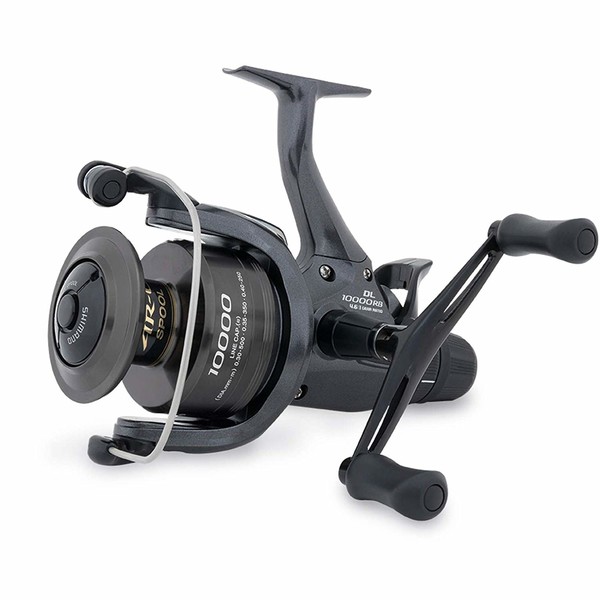
The clutch allows line to leave under controlled pressure. A front drag acts on the main spool, while a free-spool reel has a second, low-tension setting engaged by a lever. Turning the handle normally returns a Shimano Baitrunner-style reel to its main drag, but always learn the controls of the exact model before putting a baited rod down.
Quick-drag labels are also relative. One reel may move from loose to firm in part of a turn, while another offers a longer adjustment. Fast is useful only when it remains predictable. Set the clutch deliberately; don't lock it down and rely on rod power to absorb every lunge.
6. Line lay and oscillation
Even line lay helps line leave the spool cleanly. Slow oscillation and cross-wrap systems are design approaches rather than automatic proof of superior distance. Look for a tidy, even fill with the line and tension you intend to use. Washers supplied with some reels allow the lay to be adjusted if it bunches at the top or bottom.
7. Line clips
Clips let you repeat a measured distance, but their shape and material matter. A smooth sprung clip is preferable to a sharp edge that can damage line. Spod reels often offer two or three clips so several spots can be recorded. Whatever the type, check it regularly and cushion the impact when casting to the clip.
Compact reel or big pit?
Choose a compact reel when the water is modest, the rods are short, casts are comfortable and you value a light, mobile setup. Its capacity still needs checking against the main-line diameter and any fishery minimum.
A large big-pit reel becomes worthwhile when its spool and capacity solve a real problem: repeated longer casts, 12ft or 13ft distance rods, thicker abrasion-resistant line, or authorised boat work that uses significant line. It can also retrieve quickly, although the exact figure must be checked.
Don't buy a large reel simply because larger carp are present. Reel capacity is about line management and the fishing situation, not fish weight.
Big pit or baitrunner reel for carp fishing?
Both systems can fish effectively. A free-spool reel lets you pre-set a low-tension secondary drag while the rod is on the alarms, then engage the main clutch by turning the handle or moving the lever. Some anglers find that clear and reassuring, especially when learning.
A front-drag big-pit reel has fewer controls. Loosen the clutch enough for the bank situation, then adjust it as you pick up the rod. Quick-drag versions reduce the movement between loose and playing tensions. Neither design removes the need to stay close to attended rods, secure the rod on rests and set the tension for wind, undertow and nearby snags.
“Baitrunner” is Shimano's trademark for its free-spool system. Other manufacturers use terms such as free-spool or free-run, which are better generic descriptions.
What size carp reel do I need for my rod?
Start with the venue and main line
Write down the realistic fishing range, the main-line diameter required by the rules, the amount of weed or abrasion and whether boat work is allowed. Those facts determine useful capacity. A deep spool is not an advantage if most of it will be filled with backing, but too little capacity leaves no sensible margin after damaged line has been cut away.
Match the reel to the rod
Fit the reel to the actual reel seat and hold the rod in a casting position. Check that your hand can reach the spool lip when feathering a cast and that the outfit doesn't feel excessively heavy at the butt. A compact reel can make a 10ft setup lively; a larger reel may settle a powerful 12ft or 13ft rod. The best match is the one you can control repeatedly, not the combination with the largest numbers.
Choose controls you understand
Decide whether you prefer a separate free-spool lever or a front clutch, then operate it before buying if possible. Move from the loose rod-rest setting to a sensible playing tension several times. The adjustment should feel predictable enough that you could make it while watching a fish rather than staring at the reel.
Compare the whole specification
Only after capacity, balance and controls are right should you compare retrieve per turn, weight, line clips, spare spools and service support. These details decide how pleasant the reel is to use over several seasons. The size badge is simply a label within that final comparison.
Our guides to budget carp reels, budget big-pit reels and Shimano free-spool reels can help once you know which format suits you.
How much line should a carp reel hold?
Begin with the farthest distance you fish and add a generous working margin. That margin accounts for the bow in the line, water depth, a fish taking line and the short sections removed after abrasion. It should not be confused with filling a spool simply because it accepts several hundred metres. Most normal bank fishing uses far less line than the deepest big-pit spools can hold.
Capacity figures are only comparable when the diameter is similar. If one reel is quoted with 0.30mm mono and another with 0.35mm, the larger metre figure doesn't prove it has the larger spool. Main lines sold at the same nominal breaking strain also vary in actual diameter, so use the stated millimetres wherever possible.
Backing is useful when a deep spool would otherwise swallow costly main line. Load enough backing to leave room for the full working length, join it with a compact reliable knot and position that knot well below any line you expect to cast or let a fish take. A spare empty spool and a line counter can make the job more repeatable, but careful measurement between banksticks also works.
Don't calculate capacity so tightly that one damaged section leaves the reel short. If the line has been cut back repeatedly, replace or reverse it before the remaining length becomes questionable. Line is a working part of the system, not something to preserve at the expense of safe fishing.
Try a reel on the rod before buying
A specification table cannot show whether the reel foot fits the seat cleanly, whether the stem gives your knuckles enough room or whether the handle falls naturally to hand. Fit the exact reel where a retailer allows it, tighten the seat without forcing it and check that nothing rocks. Hold the setup horizontally and in a casting grip.
Reach forward as if feathering the spool. On a very large reel, a smaller hand may struggle to control the lip comfortably. Turn the handle under light clutch pressure and listen for roughness at the roller. Move the bail by hand rather than snapping it repeatedly, then check how positively it closes. These simple checks tell you more than counting bearings.
If you use three rods, remember that reel weight is multiplied across the holdall and every setup. A heavy reel may be worthwhile on a distance rod, yet tiring on a mobile water where you recast and move frequently. Balance the benefit against the fishing you actually do.
Spare spools, care and long-term ownership
A spare spool can be more useful than another cosmetic feature. It lets you keep a thicker abrasion-resistant mono for rough venues, a more supple main line for open water or dedicated braid for marker work where the fishery permits it. Label spools by diameter and date so they are not confused after a winter in storage.
Check the price and availability of spare spools before choosing an unusual reel family. Handles, line clips, drag washers and line rollers are wear parts, and a range supported by the manufacturer or a reputable service centre is easier to keep running. A cheaper reel that cannot be serviced may cost more over several seasons.
After a wet trip, wipe the reel and let it dry naturally with the clutch backed off. Don't pressure-wash it or immerse it, because water and grit can be driven into the body. Remove obvious line from behind the spool and roller, and follow the maker's instructions before adding oil or opening any covers.
At the start of a session, turn the handle, test the anti-reverse if fitted and pull line through the clutch. Any sticking, grinding or uneven release deserves attention before a baited rod is put out. Smooth basic maintenance is more valuable than a large size number printed on a neglected reel.
Spooling and setup checks
Before loading line, inspect the spool lip and line roller for rough edges. Follow the reel maker's direction for mono or braid attachment; braid can slip around a smooth spool unless suitable backing or an approved braid-ready fixing is used. Fill to the stated level under steady, moderate tension rather than piling loose coils onto the spool.
After loading, check that line lay is even and the bail, roller and clutch operate smoothly. Tie and pull-test the final connection, follow venue rules for leaders, and replace damaged line. A premium reel cannot compensate for a weak knot or abraded main line.
Make a reel shortlist you can compare fairly
Write down your rod, required fishing range, line diameter, preferred clutch controls and budget before comparing model numbers. A “10000” from one range is not a universal size that can be compared with every “12000”. Use actual dimensions, weight and capacity where published.
Big-pit describes a style of reel and spool, while free-spool describes a control feature. They are not perfectly opposite categories. Choose the body and capacity for the job, then decide whether you prefer a separate low-tension setting or a familiar front-drag adjustment.
Work out the useful line, then the backing
Use the Line Capacity & Backing Calculator with the stated capacity at a known diameter. Treat the output as an estimate, because real line diameter, tension and lay affect the fill. Follow the reel's instructions for the final level rather than forcing in a calculated length.
Leave enough usable main line for the actual fishing and any line lost through damage; the backing knot should not become part of an ordinary cast or fish-playing situation. The spooling guide explains the physical process.
Check the controls before the first take
With the setup safely assembled and no exposed hook, practise the transition from the resting setting to the playing clutch. Read the manual for the exact model. Do not discover during a run that the handle or lever behaves differently from your old reel.
Fit the reel to your intended rod if possible. The rod guide explains balance and handle fit; the Tackle Setup Builder helps keep the whole outfit within budget.
Return to the beginner's guide if you are still deciding what equipment is necessary. A reel that fits your normal fishing and has controls you understand is a better choice than surplus capacity bought for an imagined extreme-range session.
Frequently asked questions
Is a 10000 or 12000 reel better for carp fishing?
Neither number is automatically better. Within one reel family, the 12000 is commonly the larger-capacity option; across brands, compare actual specifications. Choose the smallest reel that comfortably holds the required line and balances your rod, unless another feature justifies the larger model.
What reel size suits a 10ft carp rod?
A compact or baby big-pit reel often balances well, but there's no universal number. Check capacity at your line diameter and try the combination. A large reel can work, although its weight and body may make a short setup feel clumsy.
What reel size suits a 12ft carp rod?
Many medium and large big-pit reels suit 12ft rods. The right choice depends on the rod's build, fishing distance and required capacity. Don't assume every 12000 balances better than every 10000.
Do you need a big-pit reel to catch big carp?
No. A sound clutch, suitable line, enough capacity and balanced tackle are what matter. Big-pit reels are primarily line-management and casting tools.
Can a normal carp reel be used for spodding?
It can cast a light baiting tool if the whole setup is suitable, but repeated spodding benefits from a dedicated reel with a shallow braid spool, robust clips and high retrieve. Check the reel and rod makers' limits before use.