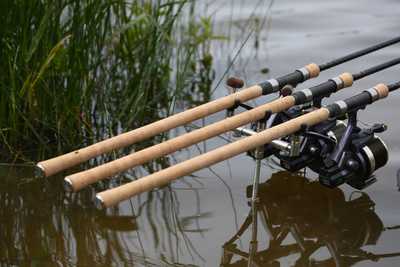

The Baitrunner lever gives you a separate waiting setting. The main drag is still the one you use to play a fish once you’ve switched out of free-spool. Before buying by model number, work out how much line you need and try the controls with the reel on your rod.
Check the exact name from the reel foot, box or manual. Shimano’s ST-RB reel specification separates that family and size from older Baitrunners. The pictures below are family references; buy or order parts using the code on the reel in front of you.
The older reel families pictured below can help you recognise the names. We haven’t tested them side by side, and you will need to check which versions are still available.
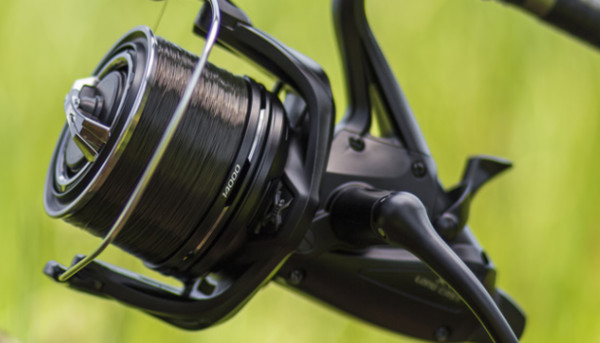
Is a Baitrunner right for your fishing?
Try the controls on a rod if possible. Check that you can switch from the waiting setting to the fighting drag in a controlled way, following the exact model's instructions. Practise without a hook before fishing. Never assume the main drag is correctly set just because the free-spool feels light.
Compare the reel's weight, usable line capacity, line lay, service support and how it balances with your rod. A larger model number is not a direct measure of casting ability or the size of carp you can land.
Shimano Baitrunner ST RB
The linked option is the ST 10000 RB. Check the full model code and line-capacity marking before buying: different generations and sizes are not interchangeable specifications. Ask whether the handle arrangement and rear controls feel comfortable for you.
The ST RB family includes 6000 and 10000 sizes. Compare the capacity printed for the line diameter you actually use. Buying the deeper spool to fish close in also means filling more of it, or adding suitable backing. The double handle is worth trying in your normal grip; with cold or gloved hands, check that you can find a handle knob and operate the rear lever by feel.
View the Shimano Baitrunner ST 10000 RB on Amazon (paid link)
Try the controls and check the reel’s balance on your rod if you can. We haven’t compared its drag, casting distance or long-term wear against the other reels.
DL, X-Aero, XT and XT-B: check the generation
These names appeared in the original article. They cover different designs and generations; this list does not establish that every version is still sold new. If you are comparing a used reel, ask for its exact model code, condition, service history, spool and included parts.
Looking at a second-hand pair? An X-Aero has the wide-spool design that made it attractive for casting; an XT-B Longcast is a different family. Ask for a photo of each reel foot and the capacity lettering on each spool. Two reels described simply as “Shimano Baitrunners” can have different spools, handles or spare-part numbers. That matters if you want a matched pair or a second spool of line.
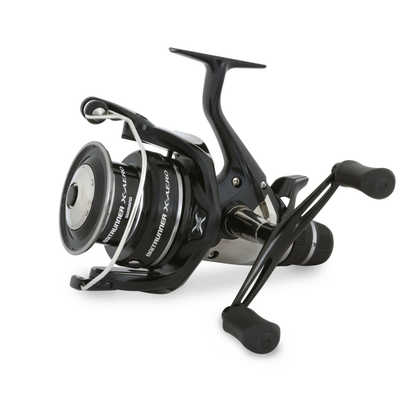
The X-Aero photograph is retained as a family reference. Do not infer the specification of a reel for sale from this picture. Match the code on the actual reel to its manual and check spare-spool compatibility before buying accessories.
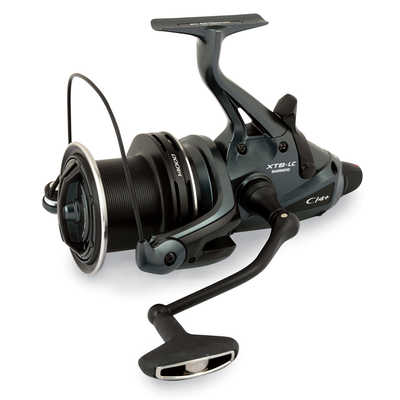
For an older XT or XT-B, match the full model code to its manual before buying parts. Your rod, line and casting technique will still shape the distance you reach. official manual and technical-document search.
Five checks before buying
- Confirm the complete model code, size and generation.
- Compare line capacity at the diameter you will use, including any backing.
- Try the handle, main drag and free-spool controls with the reel on a suitable rod.
- Check the condition, servicing options, returns and total price.
- Read the manual and practise setting both controls before fishing.
What if you do not need free-spool?
A suitable front-drag reel is another option. For occasional modest-range fishing, keeping a sound reel you already own may be the best saving. For repeated baiting casts, our spod and marker reel comparison explains why retrieval, line clips and casting-load compatibility matter more than a free-spool feature.
Choose the line separately using the breaking-strain guide, then use the line-capacity calculator for a line-capacity estimate. Check the actual spool marking before loading it.
A quick test before your first cast
With hook and lead removed, set the fighting drag and have someone draw a little line against it in a controlled way. Set the separate waiting resistance. Switch back according to the manual and feel the difference. If either setting sticks or changes suddenly, sort it out before fishing. Practise with the rod where you can hold it and stay in attendance during the session.