Feed pellets, hard hook pellets and soft expanders do different jobs, and they aren't all prepared the same way. Here's how to choose and prepare pellets for coarse fishing, whether you're using a float, pole or feeder.
Pellets are not only for carp. Roach, bream, skimmers, tench, crucians, barbel and F1s can all respond according to the water and formulation. The correct choice is therefore based on species, method, venue rules and feeding response rather than the largest size or strongest flavour.
Let's sort out feed pellets, hook pellets, bands and expanders, then decide how to use them. Follow the instructions on your actual bag when preparing them. Pellet recipes vary, so a soaking time that works for one brand may leave another too hard or too soft.
Coarse fishing with pellets: which type needs preparation?
Check the fishery rules before buying bait. Some commercial venues require their own feed pellets, distinguish feed from hook pellets, limit sizes or ban floating feed. Keep pellets in original labelled packaging so their type can be confirmed.
For a simple start, use a small quantity of two-millimetre feed pellets and one hookbait option matched to the tackle. Prepare micros for a Method feeder exactly as directed, or feed them dry in a pole cup only if permitted and appropriate. Use a banded hard pellet or correctly pumped soft expander on the hook.
Feed a measured amount to one accurately plumbed line and watch bites. Add more when fish are actively consuming it; reduce or pause when indications become erratic. Store dry pellets away from moisture, keep prepared bait cool and take every leftover home.
What fishing pellets are made to do
Coarse-fishing pellets are compressed feeds made from milled ingredients that can include fishmeal, cereals, plant proteins, oils, vitamins and binders. Recipes and densities differ. A high protein claim, dark colour or strong smell doesn't by itself establish suitability for a particular species or water.
Feed pellets are intended for introduction into the swim. Hook pellets are made to remain attached or have a softer texture. Expander pellets begin buoyant and take on water to become soft and sinking when prepared. Some wafters and dumbbells resemble pellets but have different buoyancy and are sold as hookbaits.
Use products labelled for angling or accepted by the fishery. Livestock, pet or ornamental-fish feeds may have different formulations, oil levels, storage guidance and venue acceptance. Low cost is not a reason to introduce an unidentified sack into a lake.
Why pellet size matters
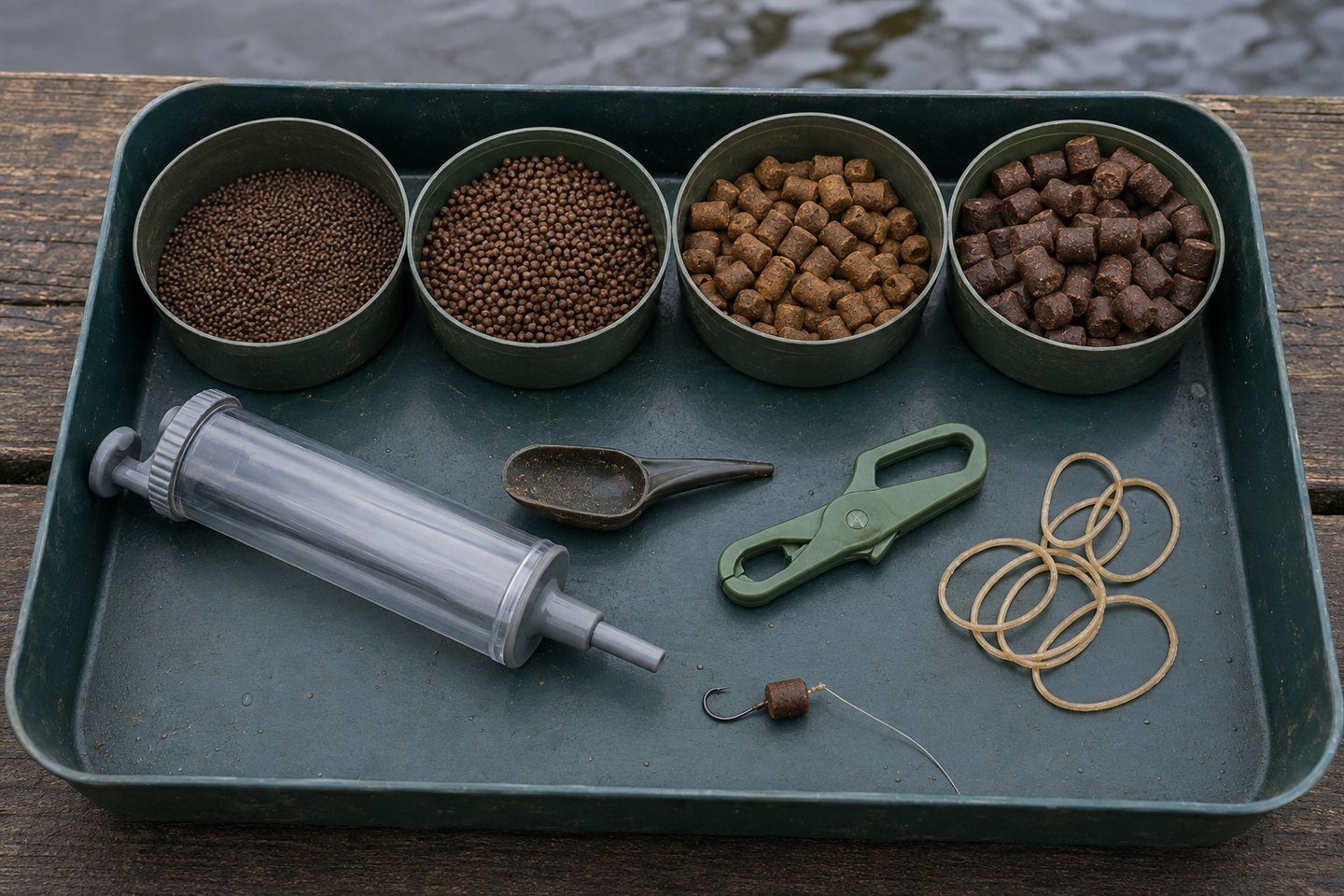
Two-millimetre micros create many small food items and bind around a Method feeder when prepared. Four-millimetre pellets are a useful feed and hookbait bridge for silverfish, F1s and tench. Six- and eight-millimetre pellets offer larger mouthfuls and can select fish to a degree, but small species can still attack them.
Size affects sink speed, number of items per measure, preparation and attachment. A cup of micros contains far more individual pellets than a cup of eights. Comparing only volume can therefore hide a substantial difference in feeding opportunity.
Larger pellets don't necessarily reach the bed untouched. Rudd or carp can intercept them, while very oily pellets may behave differently in cold water. Choose enough size for the hook, depth and target without assuming it eliminates nuisance fish.
Feed pellets and hook pellets are different
A hard feed pellet may be ideal through a catapult but split when pierced by a hook. A soft durable hook pellet can take a hook directly yet dissolve or swell differently from loose feed. Read the description rather than treating all pellets of one diameter as interchangeable.
Feeding the same size and colour as the hookbait can create a natural match. A contrasting or slightly larger hook pellet can be easier for fish to find. Neither approach is universally better; clear water, stock and pressure influence it.
For a beginner, one feed size and two compatible hook options are enough. The coarse-fishing baits guide explains how pellets sit alongside maggots, worms, sweetcorn and bread rather than replacing them all.
Read the venue's pellet rule carefully
“Fishery pellets only” usually means the controlling venue's specified loose feed, not any branded bag. A rule may still allow another hook pellet, or may restrict that too. Ask staff before opening packets, and retain the receipt or container where requested.
Rules may cap the amount, prohibit feeding floating pellets, limit feeder types or require barbless hooks. Natural waters can have different bait restrictions from commercials. A day ticket is permission only within those conditions.
If the wording is uncertain, carry an allowed alternative rather than argue from a general article. Pellet practice evolves, and fishery managers can change policy for water quality, wildlife, disease control or stock welfare.
Store dry pellets properly
Keep unopened and opened pellets cool, dry and away from direct sun. Close the original bag inside a sealed bait container to protect from damp and rodents. Retain the batch and date information until the bait is used.
Pellets containing oils can become stale or rancid. Discard bait with mould, pests, unexpected sour or paint-like odour, water damage or uncertain age. Flavour doesn't make spoiled feed safe.
Don't leave pellets loose in a hot vehicle. Take only the expected quantity to the bank and keep reserve bait covered. A small labelled measure makes feeding repeatable and reduces exposure of the main bag.
Do pellets always need soaking?
No. Hard loose-feed pellets are often introduced dry by hand, cup or catapult, while micros for moulding normally need controlled moisture. Expanders require specific preparation to become sinking soft hookbaits. The product and method decide.
Soaking alters weight, texture, binding and breakdown. The popular shortcut of one minute per millimetre is not reliable across every recipe and temperature. Follow the maker's current water quantity, immersion, draining and resting instructions.
Prepare a small test batch before an important session. A pellet that squeezes correctly at home may behave differently in cold lake water. Note product, size, water and time so a successful texture can be repeated.
Do I need to soak micro pellets for feeder fishing?
Measure the dry pellets, add the specified amount of clean water or cover them only when the instructions say so, and distribute moisture evenly. Drain at the stated stage, shake or turn the tub, then rest so the centres hydrate.
Correct Method micros compress into a neat parcel but separate when rubbed. If they remain hard and fall from the mould, add a tiny measured amount of water to a working portion. If they become paste, combine a reserved dry portion only if the product instructions support correction.
Test the prepared micros in the matching feeder and mould. Watch breakdown in a bait tub or shallow margin where allowed. Depth and compression slow release, so repeat the same pressure used for fishing.
The Sonubaits Fin Perfect 2mm feed pellets (paid link) are one current option. Verify their ingredients, preparation directions and seller storage, and confirm that the fishery accepts them.
What is an expander pellet?
An expander is porous and normally buoyant from the bag. Water must enter its structure so it softens and sinks. Once prepared, it can be hooked directly for roach, skimmers, crucians, tench and other coarse fish, particularly with pole or close float presentation.
Expanders vary by size and brand. Some can be soaked without a pump; others are most reliably prepared under reduced pressure. Follow the exact product method. A soft pellet should stay on the hook during lowering but compress without a hard centre.
Prepared expanders are fragile compared with hard pellets. Keep them in a small lidded tub with the moisture recommended by the maker. Don't leave them drying in wind or floating in excess water unless the instructions require it.
How to prepare expander pellets for coarse fishing
A pellet pump removes air from a water-filled chamber. Releasing the vacuum encourages water into porous expanders, helping them sink. It is a preparation tool, not a storage vessel or toy; the lid and seals experience pressure.
Fill, pump and release only as the pump and pellet manufacturers direct. Don't overfill, use hot water or force a lid that remains under vacuum. Point the release away from eyes and inspect seals and chamber for cracks.
After pumping, drain or rest pellets for the specified time. Confirm that a sample sinks and remains hookable. The Preston Super Pellet Pump (paid link) is one current option; check its capacity, release valve, replacement seals and instructions rather than relying on maximum claimed pressure.
Hooking a soft expander
Use a fine-wire hook with enough gape for the pellet and likely fish. Pass the point through the side so the pellet is supported across its structure, leaving point and barb area clear. If it splits, reassess softness, hook diameter and direction rather than adding glue.
Lower soft pellets with a pole or make only a gentle short cast. They are not intended to withstand every distance technique. Retrieve after a missed bite to confirm the bait remains; fishing a bare hook can create meaningless float movements.
Banding a hard pellet
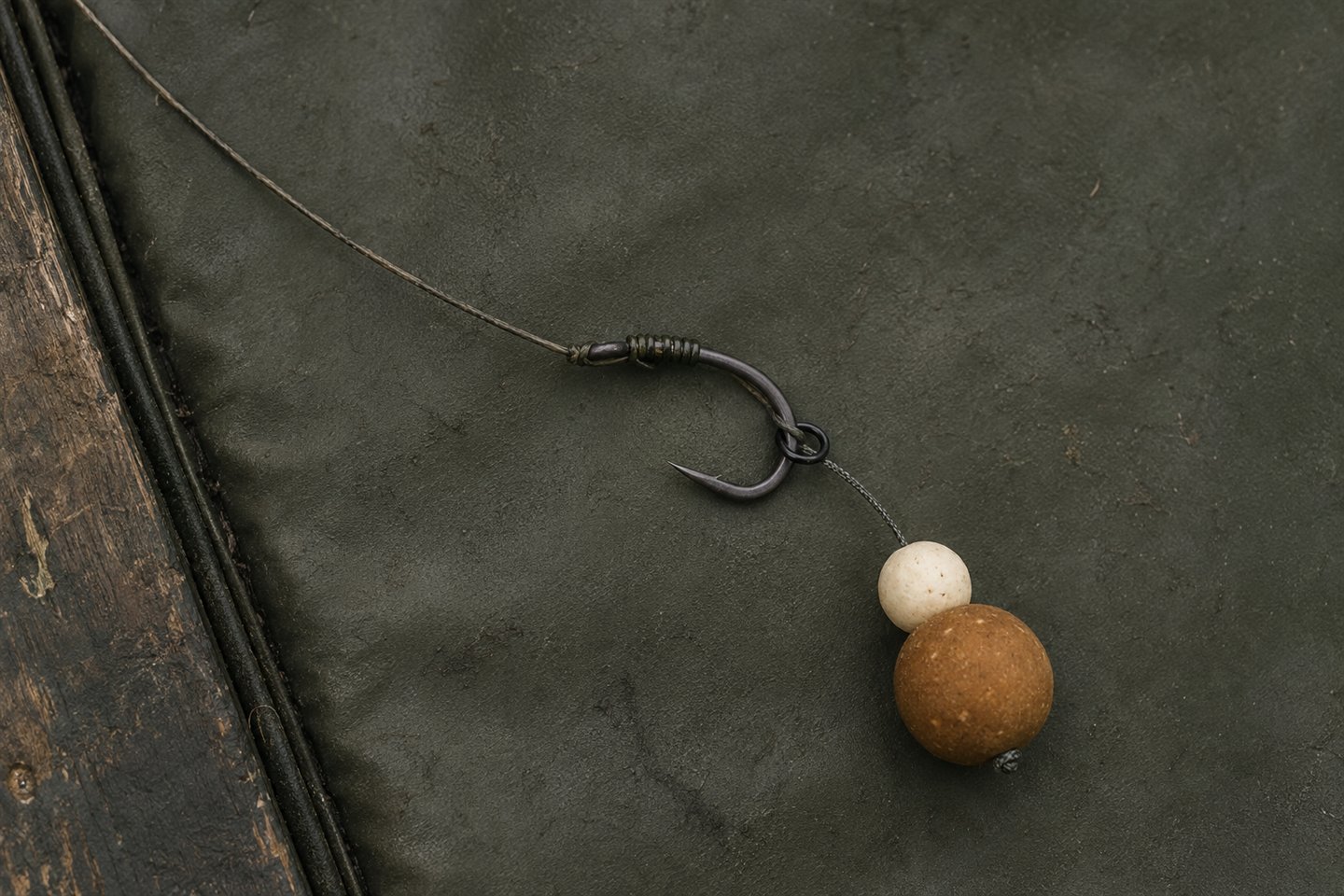
A small elastic band grips the outside of a hard pellet and connects it to a hair or hook. The hook point remains clear. Match band diameter to pellet so it holds without cutting the bait; a band stretched far beyond its design may split or fail.
A banding tool opens the band while the pellet is inserted. Work away from eyes and keep the hook secured. Pull-test the hair, knot and band, then cast smoothly. If pellets repeatedly leave during flight, use a firmer bait, better-sized band or shorter cast.
Some anglers trap a band directly in the hook bend, while hair-rigged arrangements give separation. Follow fishery rules and balance the hook to the complete bait. Ready-tied banded hooklengths are practical if line, hook and hair length suit the setup.
Compare a pellet bander tool for coarse fishing (paid link) by supported band sizes and spare availability. Keep tiny bands contained; loose rubber and packaging must never remain on the bank.
Drilled pellets, bayonets and bait stops
Pre-drilled hard pellets can slide onto a hair and be retained with a stop. This avoids piercing a brittle bait on the bank. Check the hole is clear and sized for the needle; forcing a needle towards the hand is unsafe.
A bayonet screws or pushes into compatible semi-soft hookbaits. It is not suitable for every hard pellet and can become exposed if the bait splits. Test attachment before casting and inspect after every retrieval.
Direct-hooking is best reserved for hook pellets made for it. Pushing a thick hook through a hard feed pellet often breaks it or masks the point. Product description, not appearance, determines the technique.
Float fishing with pellets
Pellets can be fished on or just off bottom under a waggler, pole float or whip. Plumb accurately because a hard pellet lying well above the feed is a different proposition. The depth and shotting guide explains dead depth and dropper control.
Feed a few pellets at a time on the same line, using the sound and fall to draw fish only when the venue and species respond. If bites occur during the fall, spread shot or shallow the rig. If fish remain on bottom, group shot and allow the hookbait to settle.
A banded hard pellet tolerates waggler casting better than a soft expander. Feather the line before landing and check bait after missed casts. For close pole work, a soft expander offers delicate presentation without needing casting durability.
Pole fishing with pellets
A pole cup can deposit a measured group of pellets exactly over the rig. A small toss pot supports frequent tiny amounts. Don't fill it automatically on every put-in; count pellets or measures and use bites to set rhythm.
For mixed fish, a soft expander over micros or a banded four-millimetre pellet can provide a clear starting point. Elastic, line and hook must suit any tench, F1 or carp likely to arrive. The pole-fishing beginner's guide covers that balance.
Pellets can pull fish off bottom when fed little and often. Mark depth and prepare a shallower adjustment only when indications support it. Foul hooking or erratic elastic movement means stop, reduce feed and reassess fish position.
Method feeder fishing with pellets
Prepared micros can be compressed around a Method feeder, placing feed and hookbait together. Use a compatible mould and test release. The bait must survive flight and entry yet open on the bed; harder squeezing cannot rescue incorrectly wetted pellets.
Count each loaded feeder as a feed introduction. Frequent recasting can put hundreds of pellets on a small spot. Use a smaller feeder or partial load when fish are inactive, and inspect any full payload returned after the expected breakdown time.
The Method feeder beginner's guide explains safe inline systems, loading and casting. Pellet preparation never overrides a venue requirement for free-running or non-elasticated feeders.
Cage and pellet feeders
A cage can carry micros mixed with groundbait, while a dedicated pellet feeder protects damp feed through the drop. Use each design according to its maker. Loose hard pellets may leave an open cage before it reaches the target.
Groundbait changes binding and adds fine attraction. Prepare the two components separately, then combine a small portion and test it. The groundbait guide covers water, resting and riddling.
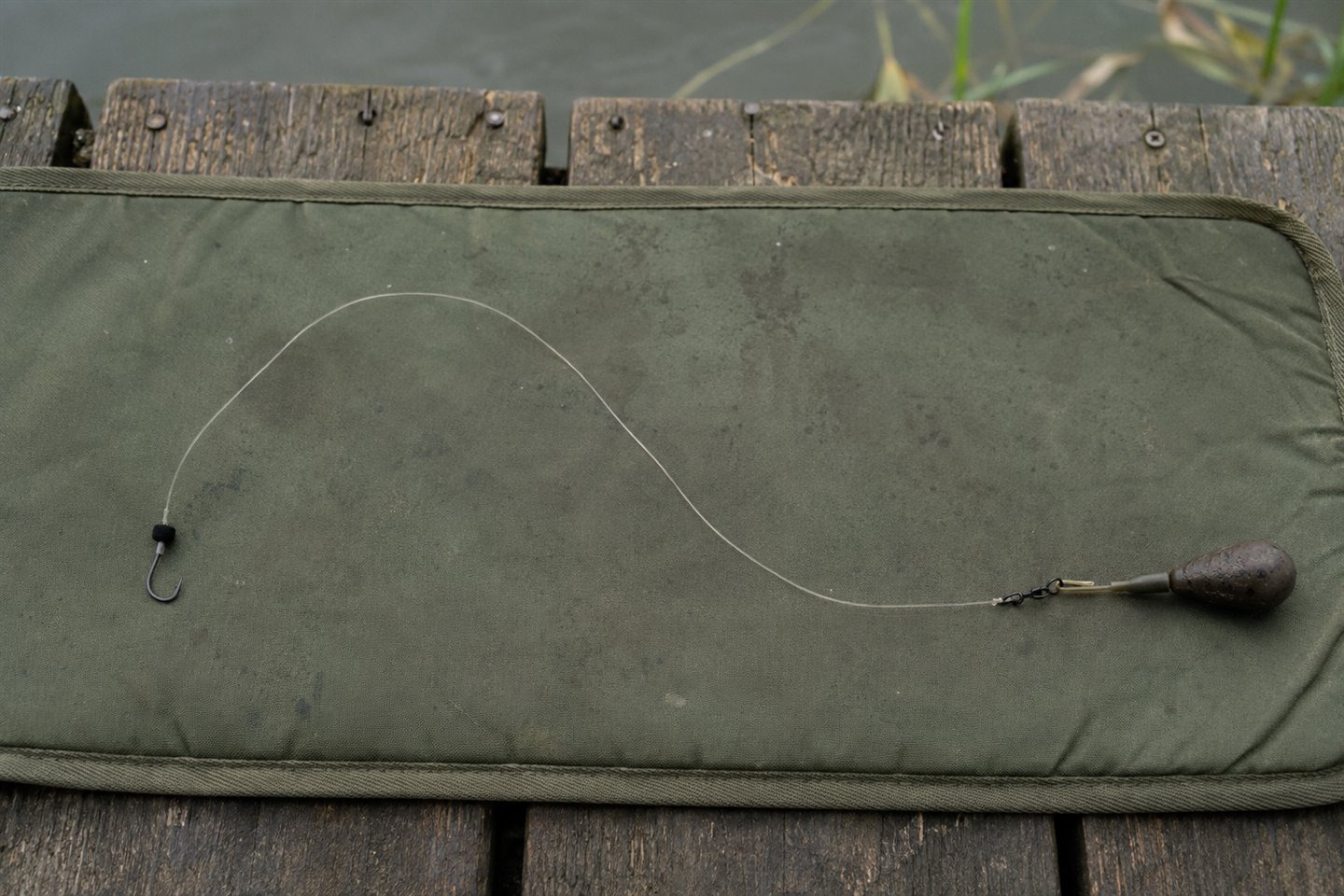
A longer conventional feeder hooklength behaves differently from a short Method rig. Don't shorten it simply because the loose feed contains pellets. Let bite response, feeder style and venue rules determine the arrangement.
River coarse fishing with pellets
Pellets can target chub, barbel and bream on rivers, but river conditions demand adequate tackle and safe positioning. The annual coarse close season and local byelaws apply where relevant, and floodwater can make an open stretch unfishable.
A feeder can carry small pellets and groundbait to the bed; banded or drilled pellets provide durable hookbaits. Use enough feeder weight to hold within the rod rating, and avoid laying bait beside snags where a strong fish cannot be stopped safely.
Feeding by hand upstream is difficult to predict because pellet size, depth and pace alter the path. Start conservatively and observe. Don't pour pellets into margins as prebait without permission and a clear plan.
Choosing feed quantity
Measure by pot, feeder or counted catapult pouch. Small pellets are easy to overfeed because a modest volume contains many items. Begin with less than the venue maximum and add only when fish are feeding cleanly.
Regular positive bites, pellets leaving the feeder and fish staying in the swim can justify a steady rhythm. Liners, foul hooking, smaller fish rising or a sudden stop can mean the shoal has changed level or enough food is present.
Cold water often calls for fewer solid items, but no calendar formula replaces observation. A dense bream shoal may consume feed in winter, while a quiet summer pond may not. Location and stock set the scale.
Loose feeding by hand or catapult
Hand feeding works close in. Use the same motion and height so pellets land together. A catapult extends range, but pouch size and elastic determine spread. Practise without hooks and never draw elastic towards another person.
Feed before or immediately after casting so hookbait and pellets fall in a related window. Wind can push small pellets off line. Adjust aim, switch to a cup or shorten distance rather than scattering extra bait.
Hard pellets make a distinct sound on entry. This can attract conditioned commercial-fishery fish, but it can also move cautious natural-water fish. Test a quiet cup or feeder presentation when noise produces no response.
Fish care when pellets bring a bonus fish
Prepare a soft knotless landing net, wetted unhooking mat, disgorger and forceps before feeding. A short pole line or fine silverfish rig can still hook a tench or carp. Don't wait until that happens to find a net.
Keep the fish low, wet hands and clear the hook promptly. Never scatter dry pellets across the mat, where they can abrade slime or enter gills. Sweep the unhooking area and wet it again between fish.
The coarse fish-care guide covers handling different body shapes and returning tired fish. Stop feeding if birds, distressed fish or low-oxygen conditions make continued fishing irresponsible.
Prepared-pellet storage and hygiene
Once wetted, pellets are perishable. Prepare small batches, keep them cool and covered and follow product instructions for maximum storage. Don't keep a tub through several warm sessions merely because it still looks intact.
Use clean water, pump and containers. Wash away old residue and allow equipment to dry. Don't mix fresh pellets into a questionable old batch or disguise spoilage with flavour.
Take leftovers home. Don't throw softened pellets into water, hedges or bins open to wildlife. Record waste and prepare less next time.
Common pellet-fishing mistakes
The first is preparing by a generic timing. Two brands of the same size can absorb differently. Read the bag and test. The second is feeding all prepared bait to avoid waste; unused bait is safer taken home than forced into the swim.
Another mistake is using a hard pellet with direct hooking when it needs a band or hair. Splits, masked points and bare hooks follow. Match attachment to the product.
Finally, anglers can choose line and hook for small pellets while ignoring large fish in the venue. Balance tackle for the likely capture and avoid snaggy lines. A tiny bait doesn't prevent a powerful fish taking it.
A first pellet session
Take one small feed pellet and two hookbaits, such as a matching expander and banded hard pellet. Confirm rules, prepare only a working amount and plumb one safe line. Measure the initial feed.
Begin with a steady conservative rhythm. Note whether bites arrive on the fall, on bottom or after a pause. Change one variable—hookbait, depth or feed quantity—and keep the other parts constant.
At pack-up, separate dry and damp bait, clean the pump or mould, collect bands and packaging, and record product-specific preparation. That simple log is more valuable than carrying six flavours next time.
Frequently asked questions
What size pellets should I use as hookbait?
Two-millimetre feed pellets and a four- or six-millimetre hookbait cover many mixed venues, but fishery rules and stock decide. Start small in quantity, not necessarily fragile in tackle.
How long should pellets soak?
Use the current manufacturer's instructions. Size alone doesn't determine time because recipes, temperature and purpose differ. Include any stated draining and resting stage.
Do I need a pellet pump?
A pump is useful for expanders designed for vacuum preparation, but some can be soaked by another maker-approved method. It is not needed for dry hard feed pellets or every Method micro.
Can I put pellets directly on a hook?
Only soft hook pellets and prepared expanders intended for direct hooking. Hard feed pellets normally need a band, drilled hair or compatible bayonet bait. Keep the hook point clear.
Final thoughts
Coarse fishing with pellets rewards precise preparation and restrained feeding. Identify whether the pellet is feed, hard hookbait or expander, follow its own directions and use an attachment that leaves the hook working freely.
Feed measured amounts onto one line and watch the fish's response. Keep the pellets stored properly and have your landing and unhooking kit ready. Get to know one or two pellet types first; there's no need to try every size and flavour before you've enjoyed a few sessions with the basics.