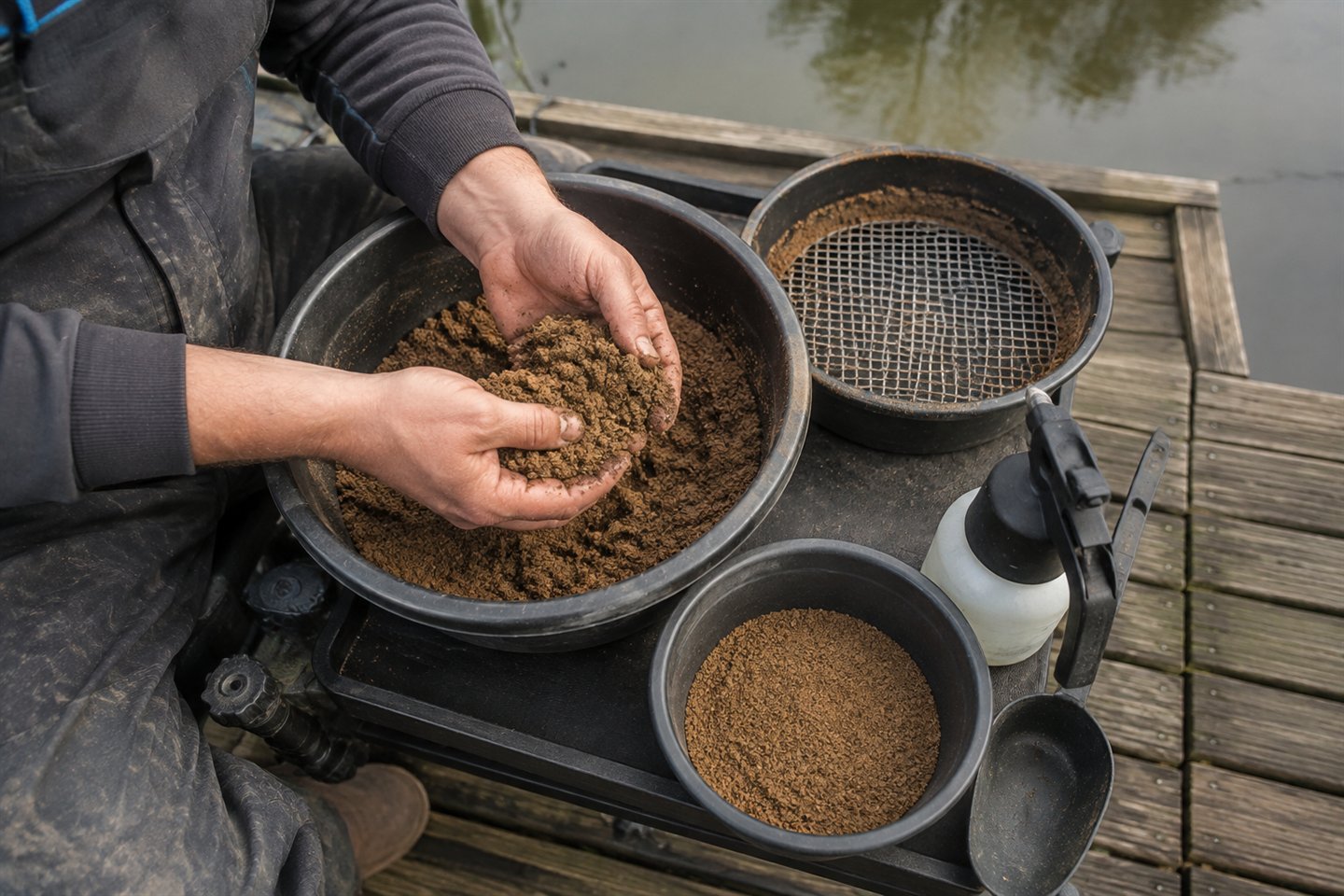
Mixing groundbait is easier if you add water a little at a time. Start with one suitable mix, let it rest and test how a small amount breaks down. We'll show you how to get the texture right without turning the bowl into porridge.
Groundbait is a dry mixture of finely milled food particles designed to carry attraction and selected feed into a swim. Once dampened, it can be squeezed into balls, cupped by pole, packed into a cage or Method feeder, or introduced as a loose cloud according to its formulation.
We'll choose a mix for your fishing, add the water gradually, let it rest and pass it through a riddle. Then we'll test what it does in water before feeding. Use the packet directions for your mix and keep within the fishery's bait rules.
How to mix groundbait and test its breakdown
Check that the venue permits groundbait and whether it limits quantity or delivery method. Tip a measured amount into a roomy round bowl, break up the dry powder and add the manufacturer's initial water quantity gradually while turning the whole mix. Don't pour the full estimate into one dry patch.
Leave the damp mix for the stated absorption time. Fine grains continue taking up moisture, so texture changes during the rest. Pass it through a suitable riddle if instructed, then squeeze a test handful. It should hold for the intended delivery yet separate at the required depth or in the feeder.
Keep the main supply covered and adjust only a small working portion with a mist of water or dry mix. Begin with a conservative introduction, watch bites and returned feeders, and add more only for a clear reason. Unused bait goes home rather than into the lake at pack-up.
What groundbait is—and is not
Most coarse groundbaits use milled cereals, breadcrumbs, crushed seeds, fishmeal, pellets, biscuits, spices or similar ingredients. Particle size, density, oil and binding vary. The bag name may suggest a species, but roach, bream, tench, perch and carp don't read labels; presentation and venue form decide response.
Groundbait is not simply hookbait thrown in bulk. Its fine particles can make colour, scent and a food signal while offering fewer large mouthfuls. Maggots, casters, chopped worm, sweetcorn, hemp or pellets may be added as feed, but each addition changes food content and texture.
It is also not harmless dust. Large quantities still introduce nutrients and can overfeed fish, attract birds or remain uneaten. Fishery limits reflect stock and water management. Use the smallest amount that performs the intended job.
Decide the job before choosing a bag
For small roach and silverfish, a fine mix that creates a light cloud can draw interest without many coarse particles. For bream and skimmers on the bottom, a heavier, more inert blend may hold the shoal. Tench often respond to a bed containing selected particles, but that doesn't justify a bucketful.
On a river, groundbait may need enough binding to reach the chosen depth before breaking. In a shallow stillwater it can open rapidly. A Method feeder needs cohesion for casting; a cage feeder needs release through openings. One mix can sometimes be adjusted, but extreme jobs deserve products designed for them.
Colour affects how the feed area appears against the bed. Dark groundbait can be less conspicuous in clear cold water, while a lighter mix may form a visible patch. There's no universal safest colour for fish; inspect water clarity and bottom, and avoid claiming that one shade guarantees confidence.
The beginner coarse-baits guide helps choose hookbaits and loose feed around the mix. Keep the first groundbait compatible with those simple baits rather than building an ingredient list that cannot be evaluated.
Fishmeal, sweet and natural mixes
Fishmeal-based blends are familiar on commercial fisheries and can suit bream, skimmers, tench, F1s and carp. Strength varies widely; “fishmeal” describes an ingredient family, not a feeding rate. High oil or protein claims don't automatically make a product better in every season.
Sweet cereal and biscuit mixes are traditional choices for roach, bream and mixed natural venues. Seed- or spice-based blends can create another profile. Rather than combine three bags immediately, learn the water absorption and breakdown of one versatile mix.
How much groundbait to mix
Session length, stock density, water temperature, nuisance fish, delivery method and venue limits all matter. A short pleasure session may need only part of a bag. Mixing the full kilogram because the packet is open creates pressure to use it.
Measure dry mix with a bait tub or scoop and record the amount. Prepare a small first batch; more can be mixed after a response. Keeping dry mix sealed separately also provides a way to correct an over-wet portion.
Don't treat summer as permission for unlimited feed or winter as a complete ban. Active bream may consume substantial food, while a low-stock lake on a hot still day may not. Fish location and bites are stronger evidence than the calendar.
Equipment that makes mixing repeatable
A round, smooth-sided bowl lets the hand or whisk reach every part without dry corners. It should have ample space above the mix because turning groundbait in a full bucket spills fine powder. Use a separate marked container to measure water.
A riddle sits over the bowl or bucket and breaks lumps into an even crumb. Mesh size changes what passes. Fine mesh creates a very uniform texture; coarser mesh preserves larger items. Choose for the product and method rather than believing the finest mesh is always best.
A lid or cover controls drying and rain. An atomiser adjusts a small portion more evenly than a splash. A clean scoop keeps bait and wet hands out of the reserve. Wash equipment between sessions and allow it to dry fully.
The Korum EVA groundbait bowl and riddle set (paid link) is one current option; check its diameter, mesh, lid and fit. Check the listing dimensions; a riddle that balances poorly on the chosen bucket is frustrating and easy to spill.
Measure water rather than guessing
Water-to-groundbait ratios differ with ingredients, batch, air humidity and intended presentation. A manufacturer's quoted ratio is a product-specific starting point, not a rule for other brands. Use the current bag instructions and a marked measure.
Lake water is commonly used on the bank, provided it can be collected safely without entering the water. Don't lean over a dangerous edge. Clean tap water is practical for advance mixing when the manufacturer permits it; storage and temperature then need attention.
Flavoured liquids are not substitutes for water measurement. Syrups, oils and liquid foods can alter binding and may be restricted. Learn the plain mix first. If adding an approved liquid later, include it within the total moisture and follow its label dose.
How to mix groundbait without making it too wet
Pour the measured dry groundbait into the bowl and stir it before adding water. This distributes fine and coarse components that may have settled in transport. Break any dry compressed lumps and check for contamination or damaged packaging.
Add roughly the first planned portion of water in a wide, controlled pour while the other hand turns the mix. Rub damp clusters between fingers and lift material from the bottom. Rotate the bowl until colour and texture are consistent, then add smaller amounts rather than chasing one wet patch.
Stop while the mixture seems slightly drier than the final target and let it rest for the packet's stated time. During this period, particles hydrate and the mix often becomes drier to touch. Cover it so wind, sun or rain doesn't create a second uncontrolled variable.
After resting, remix from the bottom and squeeze a ball. If it will not form for the chosen method, add water as a fine mist, distribute fully and wait again. If it is over-wet, combine a measured amount of reserved dry groundbait rather than tipping in unrecorded handfuls.
Why should groundbait rest before fishing?
Different particles absorb water at different speeds. Immediate use can leave fine dust wet while larger crumbs remain dry, so balls crack or feeders release unpredictably. A rest lets moisture move through the mixture.
Rest time is product-specific. Some fine Method mixes are ready quickly, while coarse blends may need longer or be prepared in advance. Follow the maker rather than automatically applying a thirty-minute or overnight rule.
When preparing ahead, cool and store the mix as directed and avoid sealing warm or contaminated bait. Smell, appearance and age are not reliable reasons to rescue a questionable batch. Discard spoiled groundbait away from the fishery and wildlife.
Why should I riddle groundbait after mixing?
Place the riddle securely over a bowl. Add manageable portions and rub them through with a gentle circular motion, keeping fingers clear of broken mesh. The goal is an even texture, not forcing stones, stalks or hard foreign pieces through.
Riddling breaks moist lumps and adds air, which can make a mix lighter and more responsive. It also reveals dry pockets. If the mix smears across the mesh rather than crumbling through, it may be over-wet or too sticky for that mesh.
Coarse ingredients left behind are not automatically waste. They may be deliberately removed for a fine winter feed or returned for a bream mix where larger food is wanted. Decide before riddling and measure additions so the finished food content remains known.
The Preston Innovations groundbait riddle (paid link) is one current option. Check its mesh and bucket diameter. Look for smooth, robust construction; exposed wire or a poor fit can cut hands and spill bait.
The squeeze test
Take a small handful and compress it with the same pressure intended on the bank. A ball for a deep river should survive handling and entry; a loose shallow-water ball may need to open on impact. A cage-feeder plug needs to retain feed in flight but release after settling.
Drop the test into a clear bait tub or the water's edge where safe and permitted. Watch when the surface cracks, particles rise and the core opens. A bucket test doesn't perfectly reproduce depth or flow, but it identifies a mix that remains solid or explodes immediately.
Repeat after altering water or pressure. Record the result rather than relying on feel alone. Consistency means reproducing both moisture and compression.
Active versus inert groundbait
An active mix releases particles upward, clouds and changes level. It can attract roach and other fish feeding through the water, but may pull them away from a bottom rig. Dry or lightly compressed fine groundbait often behaves more actively.
An inert mix stays close to the bed with fewer rising particles. Thorough hydration, riddling and firm compression can reduce activity, depending on formulation. It can suit bream and tench when the hookbait should remain among bottom feed.
Terms are relative. Test the actual blend, because ingredients such as crushed hemp, buoyant crumbs and oils behave differently. If bites occur above the bottom, that activity may be useful; if foul hooking starts, reduce feed, adjust depth and reassess.
Making balls for hand feeding
Form balls of consistent size so each introduction is measurable. Compress evenly with wet but clean hands. Cracks show that the mix is too dry, the ball too large or the coarse content poorly bound. Don't solve every crack by adding a flood of water.
For close pole lines, smaller balls make quieter, adjustable feed. For deeper water or a modest river flow, denser balls may be required to reach the area. Soil or gravel should be added only where legal, permitted and understood; unknown bank material can introduce contamination.
Throw from a stable position with a repeatable underarm or compact overhead motion, checking other anglers and wildlife. If accuracy is poor, use a cup or feeder rather than spreading bait across several swims.
Feeding by pole cup
A pole pot or cupping kit places groundbait accurately with little splash. Fill within the cup rating and keep the pole balanced. Deposit the ball directly over the plumbed spot or tip loose groundbait to create a controlled cloud.
Match cup contents to the rig line. On a slope, a ball can roll beyond the float; flattening it slightly may help if the mix and venue allow. The pole fishing guide covers safe shipping and accurate distance.
Don't assume accuracy permits more bait. A small cup can still overfeed if used frequently. Count cups, note bites and maintain a second line only when the first is understood.
Groundbait in a cage feeder
For a cage feeder, press groundbait lightly into the open ends with a looser centre. Cast shape and depth decide compression. It should remain through flight and release after the feeder settles, leaving the hookbait near an attractive patch.
Retrieve at planned intervals and check whether feed has gone. A full feeder means the mix is too wet, compressed too hard or unsuited to the design. An empty feeder before impact may be too dry or cast too violently.
The feeder-fishing beginner's guide explains a free-running rig and bite indication. Groundbait cannot compensate for an unsafe feeder attachment or casting beyond the rod rating.
Groundbait on a Method feeder
A Method mix needs enough binding for moulding and casting. Use a matching mould to create a consistent payload and place the hookbait according to the feeder instructions. Deep water may require firmer compression, but test release rather than guessing.
Micro pellets can be combined with groundbait only after each is prepared correctly. Pellets alter moisture and food value. The Method feeder beginner's guide covers inline safety, mould use and hookbait position.
Keep the feeder clean around its stem and attachment. Bait wedged into a moving connector can compromise the running system. Slide-test the rig after loading if any material reaches the mechanism.
Loose cloud and shallow-water feeding
Very loose damp groundbait can be tapped from a cup or squeezed lightly to break high in the water. This may draw small roach or rudd, but it also scatters feed. Pair it with a shallow or on-the-drop rig rather than leaving the hookbait motionless on bottom.
Start with tiny amounts and observe fish level. If small fish become difficult to hook, reduce cloud or group shot to push the bait through. Feeding and presentation must change together.
Don't throw dry powder into wind. It wastes bait, affects other users and can enter eyes. Damp it adequately and keep the bowl covered.
Adding particles and live bait
A few hookbait samples can give fish something to find after fine groundbait disperses. Add maggots, casters, chopped worm, hemp, sweetcorn or pellets only where permitted and in quantities suited to the target.
Live maggots can break apart a loose ball as they move, while dead maggots remain more stable. Chopped worm releases liquid and changes texture. Dry pellets absorb moisture from the mix. Add them to a small working portion and retest.
A sealed Roddarch lidded bait-tub set (paid link) can keep additions measured and separate. Confirm ventilation requirements for live bait and never leave containers in a hot vehicle.
How much to feed during a session
Begin below the venue limit and below the amount you think might eventually be required. Initial balls or feeders should establish a test area, not commit the whole session. Count or measure each introduction.
Regular bites and fish releasing groundbait through the net can indicate active feeding, but don't top up automatically after every capture. Small fish can arrive before bream or tench; pause to see whether size changes.
When bites fade, check hookbait, depth and presentation first. More feed may restore competition, move fish off bottom or finish the swim. A second small line can test the distinction without adding heavily to the first.
Weather, water and texture changes
Sun and wind dry the top layer, while rain makes exposed groundbait sticky. Keep the reserve covered and take out only a working amount. Remix regularly from the bottom, where moisture can collect.
Warm water doesn't automatically require wet groundbait, nor does winter always require dry dust. Select consistency for depth, flow and feeding response. In hot, low-oxygen conditions, fishery welfare restrictions may stop fishing or baiting altogether.
Canal boat traffic creates tow that can spread an active mix. Wait for boats, protect the towpath and observe where the ball settles after the flow reverses. Re-plumb when level changes materially.
Storage, transport and disposal
Keep dry groundbait sealed, labelled and within its use-by guidance. Moisture entering a bag can create mould or clumps. Don't use bait with pests, unexpected odour, visible mould or damaged unknown contents.
Prepared mix is perishable. Follow manufacturer storage instructions and keep it cool in a clean covered container. Don't repeatedly freeze and thaw unless the product maker permits it. Label any frozen portion with contents and date.
Take leftovers home for safe storage or disposal. Never tip a bucket into water, a hedge or a bin accessible to wildlife. Wash bowls away from the bank where wastewater cannot enter the fishery.
Common mixing mistakes
Adding all water at once creates paste outside and dry pockets inside. Progressive measured addition and resting prevent this. Skipping the rest is another common cause of a mix that changes after the first few casts.
Riddling cannot rescue every error. A saturated mix smears and a contaminated mix remains unsafe. Reserve dry groundbait for careful correction, but discard a batch when identity or condition is doubtful.
Combining multiple bags before learning them makes water demand and food content unpredictable. Start with one mix and record it. Complexity can be added only when a specific behaviour is missing.
A first-session groundbait plan
Check the fishery rule, then mix half the amount you expect to need. Measure both powder and water, note the time, rest and riddle. Test one ball or feeder at the edge and correct only a small portion.
Introduce a conservative amount over a plumbed line. Fish a simple bait and record when bites begin and at what depth. Top up in smaller measured amounts only when the response supports it.
At the end, save or dispose of leftovers away from the water, clean equipment and record the final ratio and behaviour. Repeating that process builds judgement faster than buying another flavour.
Frequently asked questions
How much water should I add?
Use the quantity and stages stated on the current packet. Ingredients absorb differently. Measure water, add progressively, rest the mix and adjust a small portion; there's no reliable universal ratio.
Do I have to riddle groundbait?
Not every product requires it, but riddling creates even texture, removes lumps and can add air. Follow the manufacturer's method and choose mesh for the intended particle size.
Can I mix groundbait the night before?
Only when the product directions and storage conditions allow it. Advance mixing can make a blend more inert, but prepared bait is perishable. Keep it cool, covered and clearly dated.
Can I use one mix for pole and feeder?
Sometimes, with controlled moisture and compression adjustments. Pole balls, cages and Method moulds require different binding. Test each working portion rather than assuming one bucket texture performs every job.
Final thoughts
Groundbait for beginners is a lesson in control. Pick one suitable mix, measure water, allow absorption and riddle for even texture. Test how it breaks down before committing feed to the swim.
Start with a small amount of feed and watch the response before adding more. Use a method the venue permits and keep the mix simple enough to make the same way next time. Once you understand how that mix behaves, you'll have a much better idea of whether another ingredient would actually help.