You don't need to reach the far bank to enjoy feeder fishing. Start with a small cage feeder, a free-running rig and a distance you can cast repeatedly. We'll cover the tackle, bait and quivertip signs to watch during your first session.
The method works on stillwaters and rivers because feeder weight, feed release and hooklength can be adjusted without abandoning the basic system. It is not necessary to cast to the horizon, use braid or copy a specialist match rig. Control and a rig that cannot tether a fish matter more.
We'll start with mono, then choose a feeder, load it and build a casting rhythm. Match the filled feeder to the rod's rating and the rig to the fishery. If you're unsure how the components release after a break, ask a competent coach or tackle shop to check them before fishing.
Feeder fishing for beginners: build a simple running rig
Use a feeder rod within its stated casting rating, a balanced fixed-spool reel and sound monofilament main line. Thread a recognised free-running feeder link or the feeder's designed running attachment onto the line, add a protective bead, tie a suitable swivel and connect a separate hooklength. The feeder must move freely and every knot must pass a firm pull test.
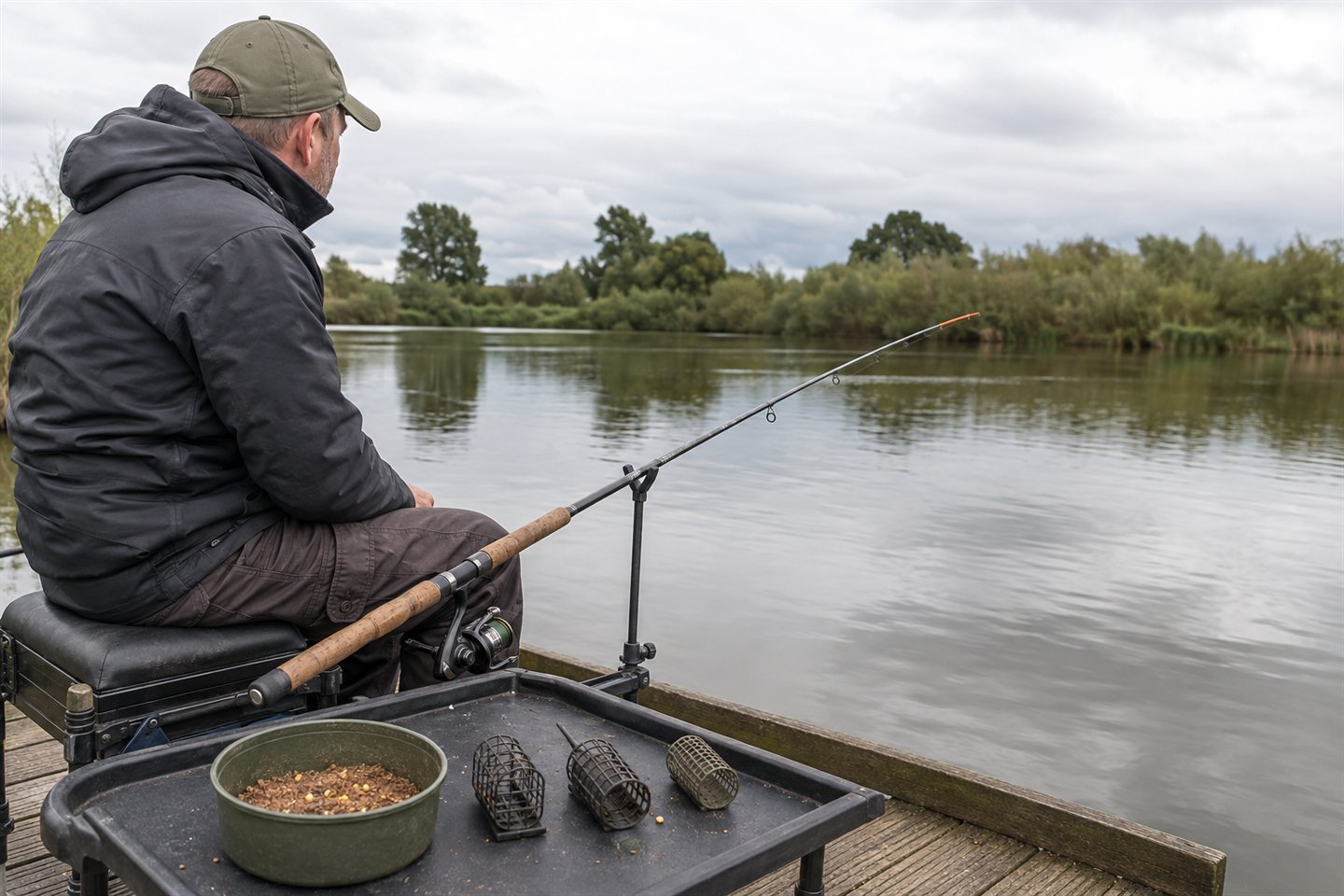
Begin with a small cage feeder carrying groundbait mixed to the packet directions and only a few loose particles. Cast to one modest distance, place the rod securely and tighten until the quivertip holds a gentle curve. Strike or lift into a positive pull, sustained movement or clear drop-back rather than every vibration.
Keep the rod attended and the clutch correctly set. If the feeder will not hold position, the cast is unsafe or the rig tangles repeatedly, retrieve and change it. Prepare the landing net and unhooking tools before casting, and stop when wind, flow or bank conditions prevent control.
What feeder fishing actually does
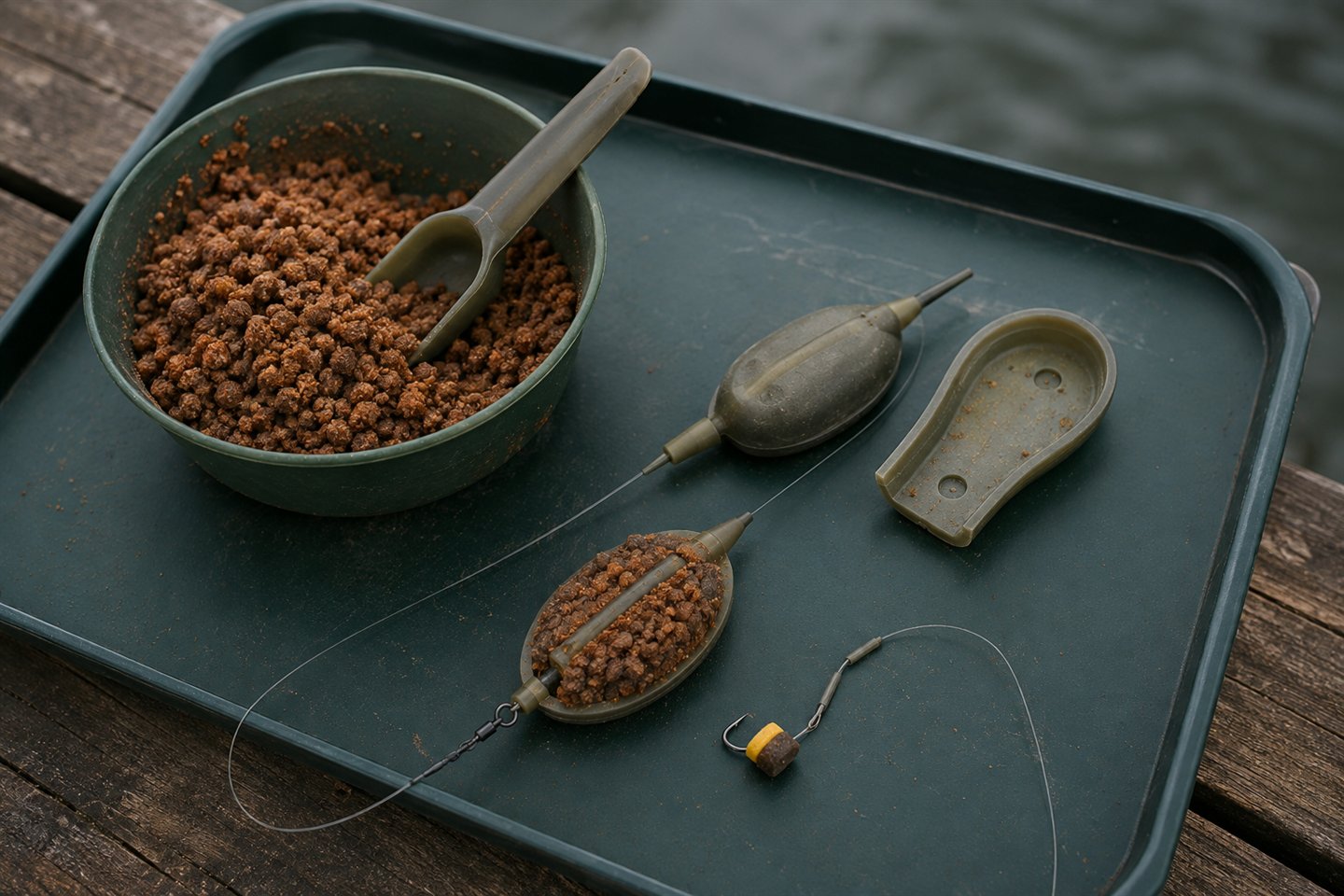
A swimfeeder is a weighted container or frame that delivers bait around the hookbait. Groundbait washes from an open cage, maggots crawl from a closed block-end feeder, and window or open-ended designs control other mixtures. The feeder also supplies casting weight and anchors the line sufficiently for bite indication.
The hookbait normally fishes nearby on a hooklength. Fish investigate the released feed, find the larger offering and transmit movement through the main line to the quivertip. In a running arrangement, line can move through the feeder attachment, reducing the fixed resistance associated with a permanently tethered weight.
A feeder is one coarse-fishing method, not a species guarantee. Small roach may give rapid tremors, bream can produce steady pulls or slack line, and a tench may take line strongly. The broad beginner coarse-fishing guide helps decide when a float or pole is more suitable.
Choose a feeder rod, not a carp rod
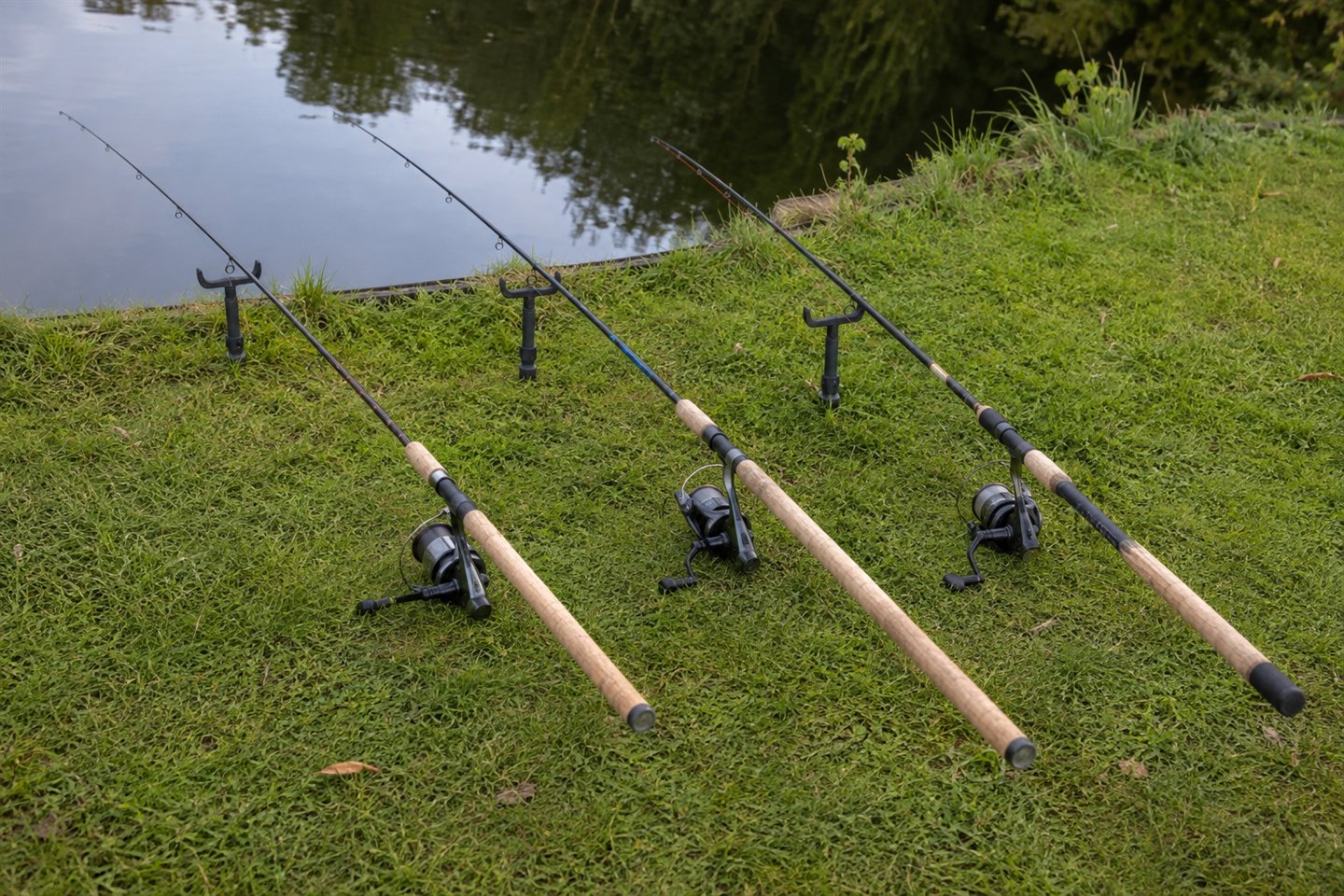
A general feeder rod between roughly 10 and 12 feet covers many modest stillwater and small-river situations, but length alone doesn't define capability. Read the maker's casting-weight range and intended use. A light rod for small feeders must not be overloaded for a deep fast river.
Feeder rods accept interchangeable quivertips. Tips may be marked in ounces or by colour, yet markings are not perfectly comparable across brands. Use only tips designed for that rod and seat them fully with clean joints. A mismatched replacement can break or alter safe casting behaviour.
A progressive blank helps cast and absorb lunges. Powerful distance rods exist for large reservoirs and strong flow, but their extra stiffness is unnecessary for a beginner's short line and can make small bites harder to interpret. The coarse rod guide explains action and intended method.
Compare a Hunter Pro 11ft feeder rod-and-reel combo (paid link) by stated casting weight, supplied tips, line capacity and warranty rather than a claimed species list. Check whether a listing includes a reel, line or merely illustrates them.
Reel, main line and clutch
A fixed-spool reel around the common small-to-medium coarse sizes balances many feeder rods. Size labels differ between makers, so spool dimensions, weight, line capacity and retrieval matter more than a number. The reel should lay mono evenly and have a clutch that starts smoothly.
Monofilament is a forgiving first main line because it stretches under casting and fish pressure. Choose diameter and breaking strain for feeder weight, distance, snags and likely fish. The rod and reel specifications set boundaries. Don't use a fine match line simply because the target is expected to be small.
Braid gives low-stretch indication in specialist feeder work, but knots, shock leaders, casting protection and venue bans add complexity. It is not required for an introductory short cast. The coarse line guide covers material and balance in more detail.
Set the clutch before fishing by pulling line under steady load. It should protect the hooklength during a surge but not slip whenever the feeder is retrieved. A freespool facility is unnecessary when the rod remains properly attended; never rely on it as permission to leave a baited rod.
Cage, block-end and window feeders
An open cage releases groundbait quickly and visibly, making it a good learning tool in moderate depth and pace. Plastic and metal cages behave differently in flight and on the bottom. Use the smallest feeder that delivers the needed amount and remains stable.
A block-end feeder encloses maggots or small particles behind holes. Release depends on hole size, bait activity, depth and whether groundbait plugs the ends. In cold water or for small fish it can feed very little at a time, but always check that the chosen live bait is allowed and stored responsibly.
A window feeder protects bait during the drop and releases it through an opening. It can be useful in deeper water or where accuracy at range is needed, but it is not essential for a first trip. Method and hybrid feeders use a different short-hooklength presentation and are covered in the beginner method-feeder guide.
Feeder weights marked in grams refer to the empty product; damp feed adds mass. Remain within the rod's full casting rating, allowing for payload. The Fladen 10-piece wire cage feeder set (paid link) is one current option; check its weights, material, attachment and intended use.
Why start with a free-running rig?
A correctly assembled running rig lets the main line travel through the feeder attachment. When a fish moves the hookbait, that movement can register at the tip without immediately dragging the full feeder weight. If the main line parts above a freely running component, the feeder should not remain fixed to the hooklength.
“Running” must be tested, not assumed. A link can catch on a bulky knot, soft bead or damaged swivel eye. Slide the feeder along several metres of the actual line before fishing and check that it passes away from the hooklength connection under light pressure.
Avoid homemade fixed stops, clips and elasticated arrangements unless the entire system is specifically designed to release or run and you understand it. Fishery rules may prescribe free-running feeders or ban certain rigs. Their requirement takes priority even if a commercial package uses another description.
How to set up a running feeder rig for beginners
With the rod assembled and every guide aligned, thread the main line through all rings. Add a purpose-made feeder link or the feeder according to its instructions, followed by a soft protective bead. Tie on a small swivel using a knot suitable for the line and trim the tag without damaging the knot.
Attach a separate hooklength to the swivel by a tested loop or approved quick-change connection. The hooklength should be long enough to separate hookbait from feeder and show confident bites, without becoming unmanageable. Start around a conventional moderate length, then adjust from tangles and bite response rather than chasing an exact formula.
Run fingers carefully over the line above the feeder. Replace abrasion or flattened sections. Hold the hook safely and pull the main line, swivel and hooklength progressively. Finally slide the feeder to confirm it remains free. Never cast a rig that has not been tested after tying.
Choosing hooklength and hook
A mono hooklength slightly finer than the main line can create a controlled replaceable lower section, but it still needs strength for the stock and cover. Fluorocarbon and braid have specialist uses; neither automatically improves a basic feeder. Stiffness, stretch and knot compatibility all affect behaviour.
Hook size follows bait and fish. Maggots, casters, worms, sweetcorn and small pellets require different gape and wire. Keep the point exposed and obey barbless, maximum-size and bait rules. Replace a turned or dulled hook rather than striking harder.
Hair rigs and bait bands can present pellets or corn, but tying them adds variables. A ready-tied hooklength from a recognised maker is acceptable if its material, length and hook suit the water. Pull-test it and carry exact replacements so a damaged section can be changed immediately.
Selecting the right quivertip
Use the lightest tip that remains stable against wind, flow and feeder weight without being dragged into an excessive curve. A softer tip can show small movements, but a tip continuously waving or folded round hides bites. A slightly stronger stable tip communicates more useful information.
Glass and carbon tips differ in response, but the rod maker's description is the reliable guide. Insert the tip with clean, aligned rings and never force a tight joint. If it loosens or has a crack, stop. Carry tips protected in a rigid tube.
Point the rod roughly towards the feeder on stillwater with a modest sideways angle so movement bends the tip. On a river, placing the rod higher can lift line clear of conflicting flow and debris. The bank, wind and other anglers decide the exact angle.
Groundbait consistency and feeder loading
Mix groundbait progressively to its packet directions, allow it to absorb water and pass it through a riddle if instructed. It should hold for the cast yet leave the cage once it reaches the swim. Depth, compression and current change breakdown, so test a loaded feeder in the edge where visibility and rules allow.
Fill without crushing bait into an immovable plug. For a cage feeder, lightly compressing the ends can retain the centre during a gentle cast. Add only a few hookbait samples at first. The groundbait for beginners guide explains water addition, resting and adjustment.
Keep the mixture covered so wind and sun don't dry it. If it stops releasing, mist and remix a small portion instead of flooding the whole bucket. Take unused bait home; never empty it into the water at pack-up.
Choosing distance and clipping up
Begin within comfortable casting range, often no farther than necessary to reach a clear depth change or fish-holding feature. An accurate 20-metre line is more productive than scattered long casts. Check fishery boundaries and leave generous clearance from islands, ropes, boats and the far bank.
A reel line clip can make distance repeatable, but a strong fish pulling against a clipped line may break tackle. Learn how to unclip quickly, keep the rod attended and don't clip at hazardous range near snags. A marker on the line or counted reel turns offers another reference.
Choose a fixed horizon marker directly beyond the target. After a successful cast, measure the line using distance sticks only in open bank space, or record reel turns without crossing paths. Never stretch line where another person could walk into it.
Safe feeder casting
Inspect behind, above and across the water before every cast. Leave enough drop from tip to feeder for a smooth swing without ground contact. Keep the hookbait controlled, bring the rod through gradually and release without a sudden punch. Overhead power lines make the peg unusable.
Feather the line just before the feeder lands so the rig straightens, then let it reach bottom on a controlled line. Don't trap line so violently that the feeder springs back. If the cast lands off line, retrieve, refill and cast again rather than dragging feed into a second area.
Practise first with an empty feeder and no hooklength at a fishery where casting is allowed. This isolates weight and timing. Never exceed the rod rating, remembering wet bait adds weight, and stop if the spool, line or tip behaves unexpectedly.
Setting the rod and tip
Allow the feeder to settle, then wind slowly until slack disappears and the tip holds a gentle curve. Place the rod on stable front and rear rests with the butt secure and within immediate reach. Pointing at a steep angle to the line can exaggerate wind and weaken striking contact.
Commercial rests with side arms can reduce the chance of a rod being pulled, but they don't replace attention. The feeder and rear rod-rest heads (paid link) are one current option; check their stability, line-safe surfaces and compatibility with the chair or bankstick.
Keep line clear of vegetation and passing boats. On a river, floating debris can load the tip and move the feeder. Reel in before a branch or weed raft reaches the line; trying to fish through it risks a break and lost tackle.
How to read bites on a feeder rod tip
Small plucks may be fish touching bait or line. Wait for a positive pull, repeated building movement or the tip springing clearly straight. A drop-back can occur when a fish moves towards the rod and slackens line. Lift the rod smoothly and begin winding rather than striking with a violent sweep.
Fast rattles with untouched bait can mean small fish around the feeder. A chewed bait with missed indications may call for earlier response, a shorter hooklength or smaller bait. Deep-hooked fish indicate that bites are not being recognised soon enough and demand an immediate change.
No movement doesn't prove the rig is fishing correctly. After a planned interval, retrieve and inspect whether feed has left, the hookbait remains present and the hooklength is untangled. Each cast should answer a question about location, timing or presentation.
A sensible recasting rhythm
Early casts can be made more frequently to establish a small feed area, but there's no mandatory five- or ten-minute rule. Cold water, low stock, large fish and rivers all need different rhythms. Start conservatively and measure each feederful.
If bites arrive promptly, repeat the successful interval and loading. If fish appear but hook-ups fall, reduce particles or change hooklength before increasing feed. If the swim is silent, check a different distance or feature rather than depositing a large amount in an unproductive place.
Use a timer only as a reminder. Retrieve sooner after a line bite, boat or suspected tangle. Leave longer when disturbance is clearly harmful. The goal is deliberate feeding, not casting because an alarm sounded.
Playing and landing fish
Keep the rod bent and use the clutch to give line on strong runs. Don't wind against a slipping clutch or pump a small fish aggressively. Guide it away from other lines and obstacles, shortening the line until it can be led head first over a submerged landing net.
Keep the feeder outside the net if practical, but don't reach near a loaded hook while the fish moves. Once netted, release line tension and locate the feeder and hook. Transfer over a wetted mat where needed. The coarse fish-care guide covers safe unhooking and return.
Check the hooklength after every better fish and the main line after the feeder has rubbed bottom. Replace damage immediately. A fish lost to a clean hook pull can happen; a fish towing avoidable broken tackle points to a setup or peg that must be corrected.
Common feeder-fishing mistakes
Using too heavy a feeder is common. Extra weight can overload the rod, bury into silt and mask the rig's behaviour. Choose enough weight to cast accurately and hold, allowing for feed, and increase only when flow or wind proves it necessary.
Tightening until the tip is folded round also reduces indication and may move the feeder. Take up slack gently. If flow keeps increasing the bend, raise or reposition the rod, use a suitable feeder or leave unsafe conditions.
Another mistake is changing distance, feed and hookbait together. Keep a simple record and alter one variable. A final error is packing the landing net away because small fish are expected; coarse fishing regularly produces surprises, and care equipment must precede the cast.
Your first two-hour feeder session
Spend the opening period assembling and testing the running rig, mixing a small quantity of groundbait and selecting a clear short line. Make several empty-feeder practice casts without the hooklength if needed, then attach a tested hooklength and start fishing.
Use small consistent feederfuls and inspect every return. Note where the feeder lands, how long feed takes to leave and what the hookbait shows. After several comparable casts, change one element only: distance, interval, hooklength or bait.
Finish with time to pack safely. Remove the hooklength, empty and clean feeders away from wildlife, dry nets and collect line. Record the rod tip, feeder weight, distance and productive adjustment; those facts are more useful next time than copying a stranger's entire setup.
Frequently asked questions
What feeder should a beginner use?
A small open cage feeder is easy to load and observe on a moderate stillwater. Choose weight for casting and stability within the rod's rating. Use another design only when depth, flow or bait gives a clear reason.
How long should the hooklength be?
Begin with a manageable medium-length hooklength and adjust from bites, tangles and bait condition. Longer can give a natural fall; shorter can sharpen indication. Venue rules and feeder style may set minimums or maximums.
Which quivertip should I use for feeder fishing?
Use the lightest compatible tip that remains stable and only gently loaded in the conditions. If it waves continuously or folds under flow, a stronger tip or different rod position will communicate more clearly.
Do I need to strike every tap?
No. Learn the background movement and respond to a positive pull, sustained sequence or clear drop-back. If fish are deeply hooked, react sooner and revise the rig; if bait is untouched, investigate line bites and tangles.
Final thoughts
Feeder fishing for beginners is most effective when each cast is controlled and each feederful is accountable. A tested free-running rig, modest cage, stable quivertip and one repeatable line provide all the complexity a first session needs.
Watch the tip and check the rig when it comes back. Change the feeder, distance or feed because you've noticed something, not simply because a few minutes have passed. Stay within the rod's casting rating and have your fish-care gear ready. A steady, accurate routine is a good place to build your feeder fishing from.