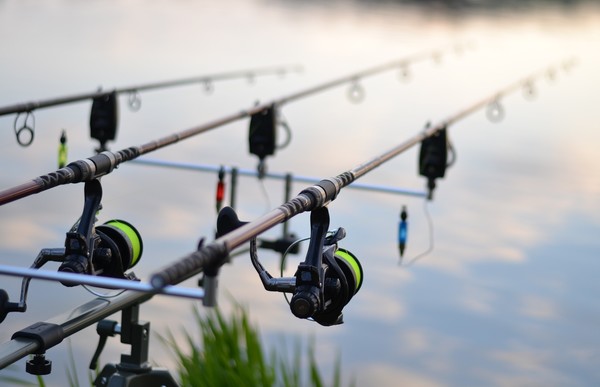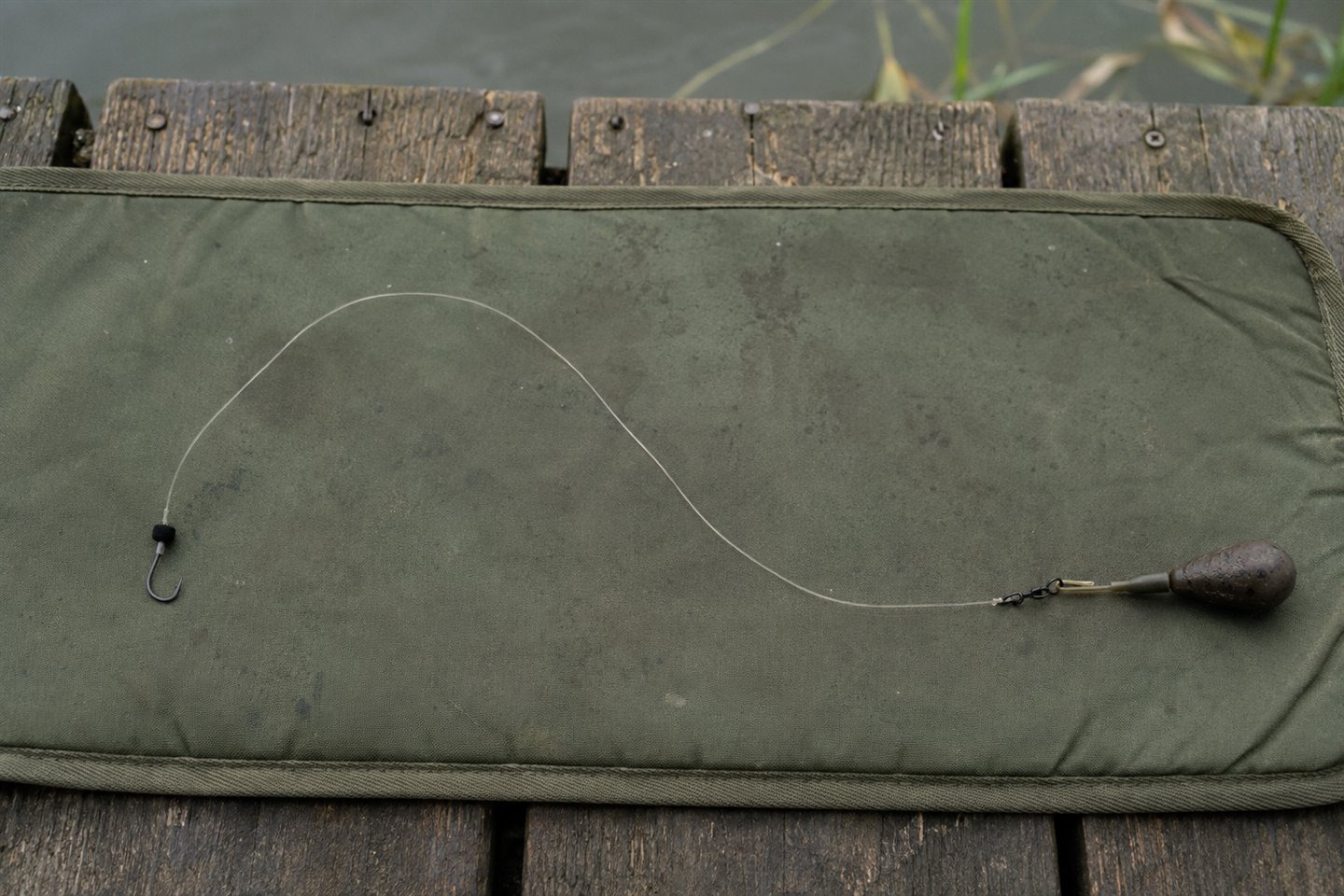
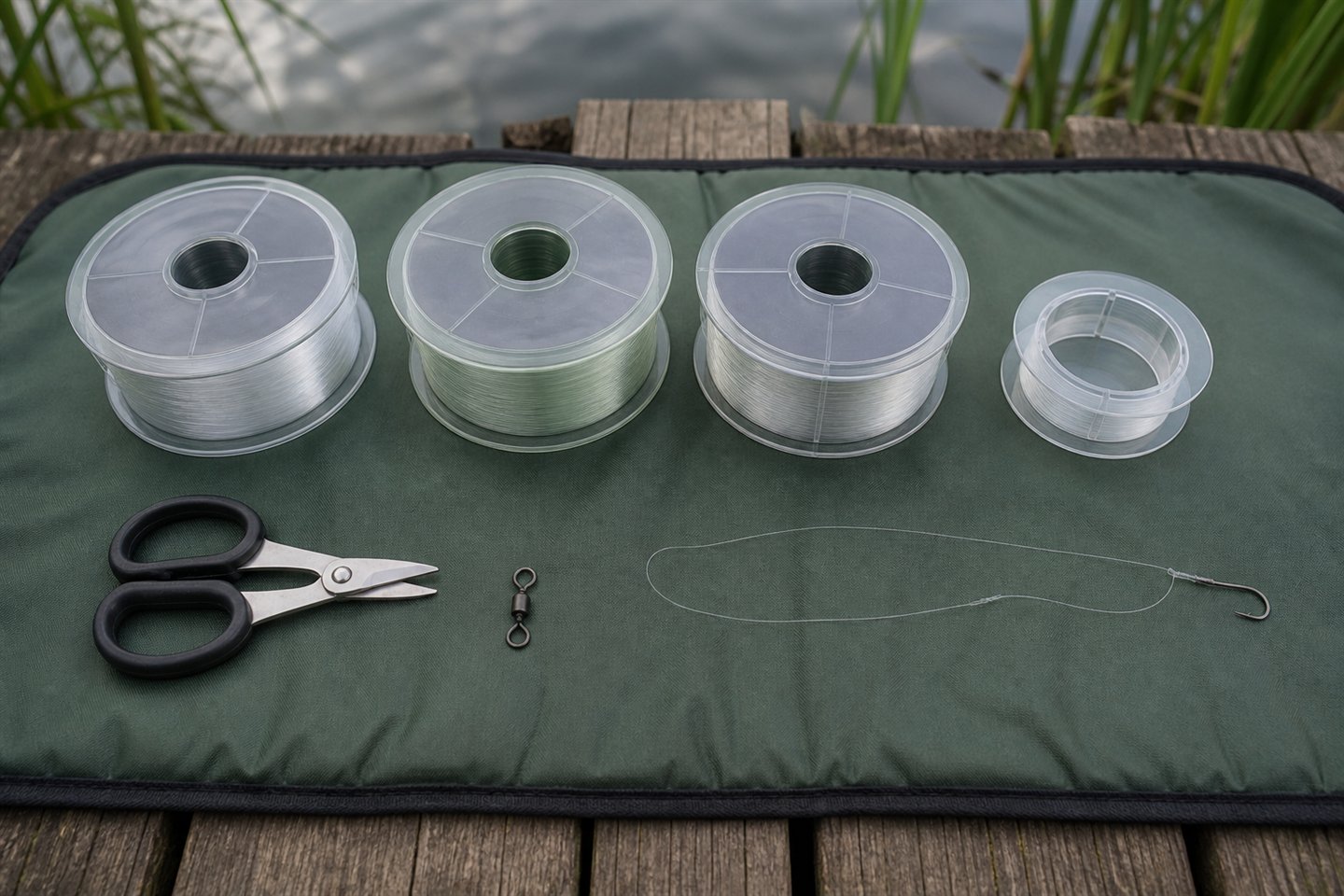
Coarse fishing line and hooklengths work as a team. The main line fills the reel; the shorter hooklength sits next to the hook. We'll explain strengths, diameters and materials so you can choose a balanced setup for your bait, method and likely catch.
Main line fills the reel or forms most of a pole rig. The hooklength is the shorter section closest to the hook, often made from a different diameter or material and joined by loops or a swivel. That separation makes hook changes convenient and can create a deliberate, controlled weak point, but only when every component is suitable.
Monofilament is a good place to begin, so we'll spend most of the guide on choosing it, checking its condition and making simple connections. We'll also explain where fluorocarbon and braid fit. Ask locally about line strength before buying; a clear pond and a snaggy river can need very different tackle.
Coarse fishing line and hooklengths: what should you choose?
Use fresh, reputable monofilament for most beginner reel lines and rigs. Select it from the rod maker’s guidance, the expected species and size, the method, distance and obstacles. Choose a hooklength that presents the bait and fits the hook while remaining strong enough to land fish without an unnecessarily long fight.
Where a finer hooklength is appropriate, the difference from the main line should be modest and understood. In open water for small silverfish it may improve presentation; near weed, roots, rocks or platforms it may create an unacceptable breakage risk. Some venues state minimum line strengths or require particular rig arrangements, and those rules come first.
The beginner coarse tackle guide explains the full outfit. Match the line to a suitable rod and reel using the coarse rod guide and coarse reel guide rather than selecting a spool in isolation.
Breaking strain and diameter are different
Breaking strain is a manufacturer’s stated load associated with the line, usually printed in pounds and kilograms. Diameter is its thickness, normally shown in millimetres. Two lines with the same stated breaking strain can have different diameters, stiffness, knot behaviour and abrasion resistance.
For presentation and reel capacity, diameter is often the clearer comparison. It affects how line catches wind, passes through guides, sinks, behaves around a float and fills a spool. Breaking strain remains important, but a label cannot account for knots, age, sunlight, surface damage or sudden impact.
Some specialist rig lines publish knot strength rather than an unknotted laboratory figure. Read the label carefully and don't compare unlike claims as though they were one standard test. Use manufacturer data to narrow the choice, then test the finished knot and rig under controlled conditions.
What line strength should I use for coarse fishing?
A canal peg containing small roach over clean bottom bears little resemblance to a weedy commercial pool with frequent tench and carp, or a fast river with rocks and chub. The same line cannot optimise all three. Fish size is only one factor; habitat and the pressure required to guide a fish matter just as much.
Method changes the demand too. Light pole rigs may use fine diameters over a short controlled distance, while feeder casting adds shock and abrasion. Waggler line must leave the spool and respond to mending. A specimen-style bottom rig may need strength that would make delicate silverfish presentation clumsy.
Ask a local tackle shop, coach or fishery for the usual main-line and hooklength range at the exact venue. Describe the swim and method, not just the target species. If the answer changes after heavy weed grows or a river rises, that is sensible adjustment rather than inconsistency.
Monofilament as the beginner default
Nylon monofilament is a practical starting material because it is widely available, relatively forgiving, easy to knot and offers some stretch. It can serve as reel line, pole-rig line and hooklength material when the specific product is intended for that use.
“Mono” describes a broad family, not one behaviour. Some lines are supple for casting; others are stiffer or more abrasion resistant. A dedicated reel line usually comes in longer lengths and is designed for spool handling, while hooklength or rig line often comes on compact labelled spools with closely graded diameters.
A Drennan Float Fish monofilament line (paid link) can help compare diameters, spool lengths and colours. Verify the actual manufacturer table and seller, and reject any listing that omits the diameter needed to judge capacity and presentation.
Main line on a fixed-spool reel
Choose reel line after confirming the rod’s recommendations and spool capacity. It needs enough strength for casting and fish playing, a diameter the reel can manage and a length that provides working reserve. Filling a deep spool with unnecessarily fine line wastes material and can hide old backing joins.
Wind line under steady, moderate tension in the orientation recommended for the product and reel. Stop below the lip by the maker’s advised amount. Too little line increases friction; too much allows coils to spill. If line twists or forms severe cones, correct the loading before tying a rig.
Label the spool with product, diameter, stated strength and fitting date. Memory is unreliable when several clear lines look identical. The fixed-spool reel loading guide is carp-titled but its practical checks for fill level, twist and line lay also apply to ordinary coarse reels.
What a hooklength does
A hooklength allows fast hook changes, isolates the hook from reusable main rig sections and can refine bait presentation. On float tackle it may be connected loop-to-loop below the last shot; on running feeder rigs a swivel can reduce twist and provide a clear junction.
It can also be designed to fail before the main line if the rig becomes irretrievably snagged. That principle must not be reduced to “always use the lightest hooklength possible”. The difference should be small enough for safe fishing, and any feeder or terminal components must be able to release rather than tether a fish after a break.
Pre-tied hooks to nylon are valuable for beginners because the hook, line and knot are assembled consistently and labelled. Check the diameter, not only hook size, and inspect each one before use. Packaging can be damaged and old nylon can deteriorate.
What hooklength diameter should I use for float fishing?
Begin with the venue’s recommendation for the expected fish. In clear open water for roach and skimmers, a fine hooklength can allow a small bait to move naturally. The silver fishing guide gives useful context, but its finesse should not be transferred automatically to snaggy water.
Increase diameter when larger fish are regular, vegetation is present, casting is forceful or the bait and hook need more support. A stronger hooklength can still present well when shotting, hook pattern and length are balanced. Fewer bites are preferable to tackle that predictably breaks on the likely catch.
Don't create a large step between a heavy main line and extremely fine hooklength simply because the combination is easy to buy. A stiff powerful rod can overload a delicate link during a strike. The action of the rod and any pole elastic must cushion the complete rig.
Hooklength length
Hooklength length changes how freely the bait moves and how quickly a bite reaches the float or tip. Short feeder hooklengths can give direct indication; longer ones allow a more gradual fall or separation from the feeder. Float anglers often use a manageable replaceable section below the main shot.
There's no single correct length. Start from a recognised local rig and alter in small steps. If a feeder produces sharp indications without hookups, a length or hook adjustment may help; if bites barely register, a shorter link may increase directness. Location and feeding remain more important than constant rig changes.
Measure and record useful lengths so successful rigs can be repeated. Store pre-tied hooklengths straight on a suitable box or winder, keeping hooks separated. Kinked nylon near the knot should be replaced rather than straightened repeatedly.
Line colour and visibility
Clear, green, brown and darker monofilaments are available, but water rarely matches a packaging colour exactly. Light, depth, suspended material and bottom colour change visibility. Diameter, behaviour and sound presentation normally matter more than selecting a fashionable tint.
A coloured reel line can help the angler watch slack or find the line during setup, while a clear hooklength may appear less obvious near the bait. Venue rules can restrict high-visibility lines, so confirm before buying. Never assume “invisible” means a fish cannot detect it.
Keep a small sample label with the spool. Once separated from packaging, clear lines of different strengths are almost impossible to identify reliably by eye.
Fluorocarbon in coarse fishing
Fluorocarbon is denser and generally stiffer than nylon monofilament of comparable diameter. It can sink readily and resist some abrasion, which makes it useful for certain hooklengths and leaders. Its stiffness can also make a small bait behave unnaturally or produce bulky knots.
Products sold as fluorocarbon-coated line are not the same as solid fluorocarbon. Read the construction and use the manufacturer’s knot guidance. Wet and tighten knots smoothly, inspect for whitening or damage and test them before fishing.
Fluorocarbon is not a mandatory upgrade. Supple mono is often simpler for beginner float and feeder work, particularly with small hooks. Choose a material because its behaviour solves an observed presentation problem, not because the packet promises invisibility.
Braid and when not to use it
Braided line has very low stretch at normal angling loads and a high strength for its diameter. Specialist feeder anglers may use it for bite indication at distance, often with a suitable shock leader or cushioning arrangement. Those systems demand compatible guides, knots, casting protection and experience.
Many venues and matches restrict or prohibit braided main lines or hooklengths. Check rules explicitly. Never substitute braid for mono on a beginner rig without understanding how low stretch increases shock at the rod tip, hook hold and line clip.
Braid can cut skin when pulled under tension. Don't wrap any fishing line around fingers or hands to free a snag. Point the rod safely, use a purpose-made puller or protected method appropriate to the tackle and seek experienced help.
A coarse hooklength line-spool search (paid link) offers monofilament and fluorocarbon choices. Filter by material and diameter and verify the exact product; a search result mixing braid, leaders and reel line is not a recommendation to use them interchangeably.
Abrasion resistance and snags
Abrasion resistance describes a line’s ability to withstand surface contact, but no line survives unlimited rubbing against concrete, shells or sharp rock. Feel the working section frequently between clean fingers and look for flat spots, roughness or whitening. Cut well above damage and retie.
Using tougher line doesn't make fishing directly into an inescapable snag responsible. Consider the direction a fish will run, the angle of line and the bank position needed to net it. If safe pressure cannot turn a fish before the obstacle, move the presentation.
Margins beside metal pilings, boat hulls and platforms can be especially abrasive. Canals also require attention to moving craft. Retrieve promptly when a boat approaches and follow the waterway’s etiquette rather than trying to hold submerged line against a propeller risk.
Knots change line strength
Every knot bends and compresses line. The finished connection will not necessarily retain the unknotted label strength, and performance depends on material, knot choice and tying quality. Use a proven knot recommended for the line and terminal item.
Form turns neatly, moisten as the manufacturer advises and tighten slowly. A knot that stacks, crosses or curls should be retied. Trim the tag with line scissors, leaving the recommended small margin, and never bite line because wet tackle can carry contamination and hooks can injure the mouth.
Test each knot with a steady protected pull before casting. Don't yank it near the face or hook a rig to clothing. A knot puller or safe tool makes controlled testing easier, particularly with fine line.
Loop-to-loop connections
Small consistent loops create a simple hooklength change for float and feeder rigs. The loops should seat squarely and remain compact. A figure-eight loop is commonly used, but whichever proven knot is selected, practise until it can be tied without overlapping turns.
Join the loops carefully so the hooklength draws straight. Inspect the main-line loop after several changes, because repeated tightening and shot movement can damage it. Replace the whole lower rig section when wear appears.
Swivels are appropriate where a feeder rig needs twist reduction or a defined stop, but they add weight and another knot. Use the smallest sound component suited to the rig and ensure any feeder can move or release as the venue requires.
Shot and line damage
Split shot can flatten, nick or slide along nylon. Use current legal, venue-approved weights sized for the line and close them with a proper tool or controlled fingers as directed. Never bite shot. England’s national rules restrict most lead weights between 0.06 grams and 28.35 grams, subject to stated exceptions.
If shot slips, don't crush it harder until the line is visibly pinched. Replace it with the correct size or a line-friendly alternative. When moving shot, open or rotate it as the maker recommends rather than dragging a tight weight down the hooklength.
Check the line immediately below bulk shot, around float attachments and beside feeder stops. These repeated contact points fail before undisturbed sections. Retie proactively rather than waiting for a break on a fish.
Balancing rod, elastic, line and hook
A soft float-rod tip or correctly selected pole elastic absorbs sudden movement and protects fine line. A powerful rod, tight elastic or locked drag transfers more shock into knots and hook holds. Balance means each element performs its part without one being disproportionately heavy or fragile.
Hooks also have strength and wire gauge. A heavy main line ending in a fine-wire hook may straighten it; a thick powerful hook on a tiny bait can ruin presentation. The separate hook guide explains matching patterns and sizes without relying on number alone.
Set a reel drag to release before unsafe pressure reaches the weak link. Test the system with the rod curved, not by pulling straight line from a locked spool. Adjust during a fight in small steps and keep the rod away from extreme high angles.
Line for float fishing
Float reel line must cast the float, allow control and remain strong enough for the fish and features. Very thick line catches more wind and can hinder light floats; very fine line may tangle, sink unpredictably or lack safety margin. Choose from the rod and venue recommendation.
The hooklength can refine the last section and permit quick changes. For waggler fishing, keep most locking shot on the stronger main line where the rig design allows, and avoid repeatedly pinching heavy shot onto a delicate hooklength.
For pole or whip rigs, diameter is often the main language because closely graded changes affect presentation. Use a recognised rig from a coach and match line to elastic. The Canal & River Trust’s starter figures apply to a specific light canal setting, not every water.
Line for feeder fishing
Feeder line must withstand repeated casting of the total loaded feeder and contact with the bottom. Use the rod’s line and casting guidance and keep safely within its rating. Heavier or long-distance feeders can require a shock leader, but only where rules permit and the knot passes guides safely.
A hooklength below a running feeder should allow the feeder to separate from a broken rig rather than tether the fish. Test movement in shallow water and avoid improvised stops that jam. Ask the fishery for its accepted setup.
Twist can build when baits spin or feeders tumble during retrieval. A suitable swivel and controlled winding help, but replace line that has become heavily coiled. Allowing twisted line to spill across the bank creates tangles and wildlife hazards.
Storage, inspection and replacement
Store line cool, dry and away from direct sunlight, solvents and heat. Keep hooklength spools in their cases with labels intact. A vehicle in summer is a poor long-term store, and loose spools collect grit that can score every metre.
Inspect before each session, after a snag and after every sizeable fish. Pay attention to the last several metres of reel line, knots, float stops and shot. Replace line that is rough, flattened, brittle, badly coiled or of uncertain history.
There's no honest calendar interval that suits every line and usage pattern. Frequency, ultraviolet exposure, abrasion, storage and material vary. Condition checks and manufacturer guidance are better than an annual ritual that may be too early or dangerously late.
A line cutters and spool-labelling search (paid link) can show compact organisation tools. Choose covered cutters and labels that remain readable, and keep blades away from children and exposed hooks.
Dispose of line responsibly
Every trimming should go immediately into a closed line container, not a pocket from which it can escape. At home, use an angling line-recycling scheme where accepted, following its instructions on hooks, swivels and spool material.
Never leave tangled line in vegetation or a waterside bin that can overflow. Search the peg at pack-up and safely collect abandoned line if it can be reached without entering the water or handling embedded hooks.
Common mistakes
The first mistake is choosing a breaking strain by target species alone. Watercraft, snags, rod action, casting load and hook strength matter. The second is assuming a finer hooklength always catches more; poor depth, feeding or location often explains quiet fishing.
Another error is mixing unknown lines. Unlabelled clear spools lead to guessed diameters and unsafe joins. Keep original labels and write dates. Don't rely on colour or feel to distinguish close sizes.
Finally, don't keep fishing after a mysterious crack-off. Inspect the tip guide, spool lip, knot and contact points until a cause is found. Replacing the rig without diagnosing a damaged guide can lose another fish and more tackle.
Frequently asked questions
Should a hooklength be weaker than the mainline?
It often forms a controlled weaker link, but the correct difference depends on rig, fish and venue. It must remain strong enough for likely catches, and feeder components must release safely. Some situations use straight-through line, so follow local expert guidance.
Is diameter more important than breaking strain?
Both matter. Diameter strongly affects presentation, spool capacity and water or wind resistance, while stated breaking strain provides load context. Compare both, then account for knots, condition and the actual fishing situation.
Can beginners use fluorocarbon hooklengths?
Yes when stiffness, density or abrasion behaviour serves a clear purpose, but it requires suitable knots and careful testing. Supple monofilament is usually simpler for small hooks and light float presentations.
When should fishing line be replaced?
Replace it whenever inspection finds abrasion, flattening, brittleness, severe twist or uncertain age. There's no universal time interval. Follow manufacturer storage advice and check more often after snags, heavy casting and large fish.
Final thoughts
Coarse fishing line and hooklengths are not separate shopping decisions. Begin with the venue and method, use diameter and stated strength together, then balance the rod, reel or elastic, knots and hook. Fresh, well-labelled monofilament is a sound beginner foundation.
Keep checking the line and knots, cut back past damage and collect every trimming. You want tackle that presents the bait well and can land the likely fish without a drawn-out fight. If you're unsure about the balance, ask locally. It's easier to sort out at the tackle shop than after a line break.
Sources and further reading
Angling Trust: freshwater angling best practice; Canal & River Trust: beginner canal-rig guidance; Drennan: example hooklength diameter and knot-strength specification; Canal & River Trust: fishing-line recycling; and Environment Agency: national rod-fishing byelaws for England. Product specifications are examples, not endorsements.