A good coarse fishing reel doesn't need to be the most expensive one. Match it to your rod and method, then look for a smooth drag and suitable line capacity. Here's how to compare the options without getting lost in the numbers.
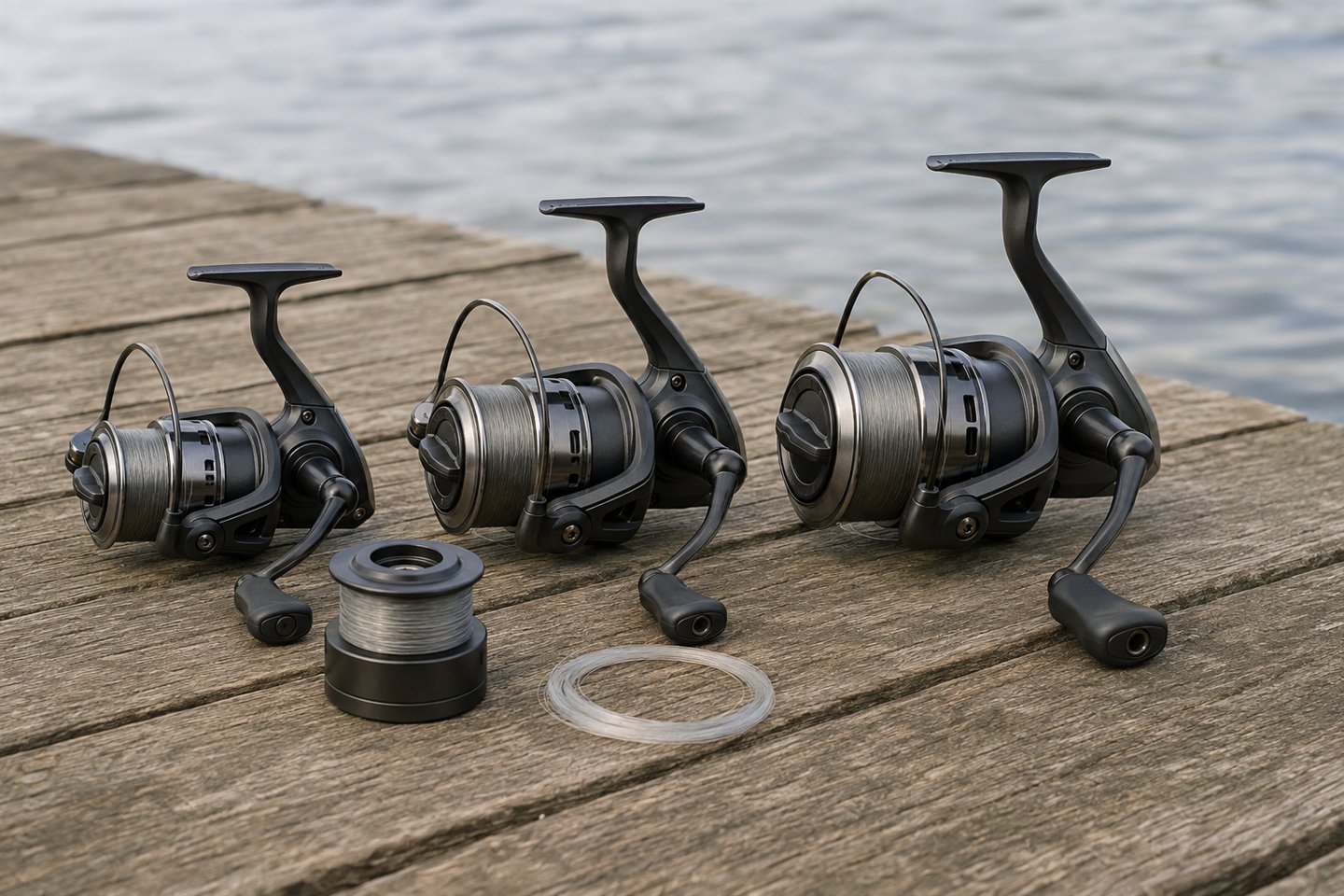
Reel labels can make a simple purchase look complicated. Numbers such as 2500, 3000 and 4000 suggest a place within a manufacturer’s range, but they are not an industry-wide measurement. Spool diameter, body weight, line capacity and retrieve can differ between models carrying the same number.
We'll compare the things you'll notice when fishing: size, drag, spool depth, line clip and retrieve. Keep your rod and usual venue in mind as you read. A reel that feels right on that outfit is more useful than one chosen because it has another bearing or a bigger number.
How to choose a coarse fishing reel that balances your rod
For light float fishing, look for a compact reel that balances the rod, carries the chosen monofilament without excessive backing, lays line evenly and has a progressive drag. For feeder fishing, add a suitably sized spool, a safe rounded line clip, adequate retrieve and gears intended for the loaded feeders being used.
A size around 3000 is common in float ranges and 4000 is common in feeder or mixed ranges, but those are comparison starting points, not recommendations by themselves. Read weight, spool diameter, capacity in millimetres and metres, retrieve per handle turn, spare-spool provision and manufacturer application for the exact product.
Set a budget for fresh line as well as the reel. The coarse fishing tackle for beginners guide explains the rest of a balanced outfit, while the coarse rod guide helps establish which reel the blank needs.
Choose the rod and method first
A reel is part of a system. A long float rod held all day benefits from compact weight and a spool that releases light line cleanly. A feeder rod resting on supports can accept a little more reel weight if the larger spool, clip and winding power improve accuracy and recovery.
Fit the candidate reel to the rod whenever possible. Hold the outfit at the normal grip, lift the tip and mimic casting and retrieving. It should not feel awkwardly handle-heavy or exaggerate an already tip-heavy rod. Balance is subjective, but obvious discomfort in a shop rarely improves after several hours.
Define the regular job rather than an exceptional one. A reel for small-waggler fishing on a 25-metre lake need not carry hundreds of metres of heavy line. A feeder reel for a broad reservoir needs enough suitable line and a spool that supports distance, but a very large big-pit design is unnecessary for most beginner coarse sessions.
Why reel-size numbers are only labels
Manufacturers usually use higher numbers for larger spools or bodies within their own family. Compact prefixes, shallow-spool suffixes and revised generations complicate direct comparison. A C3000 may share a smaller body with a larger spool, while another company’s 3000 can have different proportions entirely.
Don't convert a size number directly into breaking strain, casting distance or target species. Open the specification table. Compare physical weight, spool-ring diameter where published, line capacity, drag range and retrieve. Product photographs are often scaled independently and cannot establish size.
Within one range, moving up a size may add capacity and retrieve without much body weight; in another it may create a substantially heavier reel. That's why a blanket statement such as “all float rods need a 3000” is unreliable. The rod, reel and user decide whether the pairing works.
A 3000 and 4000 coarse-reel search (paid link) can show typical current options. Use it to reach exact specifications, then verify the seller, model code and included spool. Search position and customer wording are not substitutes for manufacturer data.
Spool diameter and shape
As line leaves a fixed spool it sheds coils around the lip. A larger-diameter spool can release line in broader coils and may assist casting, particularly with feeder tackle. It also adds scale and capacity, so the largest available spool is not automatically best for a light float rod.
Spool-lip condition matters. A dent, burr or corrosion spot can catch line during a cast and abrade it under pressure. Inspect new and used reels by sight and with a soft cloth, avoiding fingers on any sharp damage. Replace a questionable spool rather than filing an engineered lip casually.
Long-cast and tapered-spool claims describe design intentions, not guaranteed distance. Line diameter, fill level, line lay, rod, payload, wind and technique remain important. A sound compact spool filled correctly will outperform a larger spool carrying old, twisted or uneven line.
Deep, shallow and spare spools
A deep spool holds more line than many coarse anglers need. Filling it entirely with premium fine monofilament wastes line, while running it half empty creates a high spool edge that restricts release. Backing or manufacturer-supplied line reducers can bring the working line close to the lip without overfilling.
A shallow spool is designed for a smaller volume and can suit float or light feeder lines. It reduces backing and makes changes easier, but its capacity still has to exceed the casting distance with a safe reserve. Confirm capacity for the actual diameter, because pound-test labels vary between line makers.
Spare spools let one reel carry different diameters for float and feeder work or provide a ready replacement after damage. Label every spool with line brand, diameter, breaking strain and date fitted. Don't assume two visually similar spools fit; use the manufacturer’s compatibility code.
A Nytro NTR Mk2 4002 shallow-spool reel (paid link) can help compare capacity formats. Check whether photographs show optional rather than included spools and whether spare parts are genuinely available for the exact generation.
Read line capacity correctly
Capacity may be printed as diameter and length, such as a certain number of metres of 0.25-millimetre line, or as breaking strain and yards. Diameter is the more transferable measurement because breaking strain doesn't correspond to one universal thickness. Use the line maker’s stated diameter when planning.
A capacity table normally offers several combinations, not permission to interpolate without limits. If the desired line is much finer, use a reputable capacity calculator or manufacturer advice to estimate backing, then confirm by filling carefully. Avoid tying multiple hidden joins within the working length.
Keep enough reserve beyond the longest realistic cast for retying and unexpected movement, but don't carry excessive line for its own sake. Coarse float and feeder fishing usually values controlled, fresh line more than huge capacity. Venue size and fish strength set the sensible reserve.
How full should the spool be?
Line generally casts more freely when it finishes close to, but not beyond, the spool lip. The exact clearance depends on line behaviour and spool design, so follow the reel manual. Overfilling encourages loose coils to fall away together; underfilling increases friction against the lip.
Wind monofilament under steady moderate tension and let the reel lay it naturally. Don't clamp line hard through bare fingers or wind so quickly that heat builds. Manufacturer guidance can specify spooling tension, and excessive force can damage line or even deform a spool.
After filling, make a controlled practice cast on the water with no bystanders in range. If coils spring off at rest, remove a little line rather than hoping it settles. The reel-spooling guide is carp-titled but its core checks for twist, fill level and line lay also apply to fixed-spool coarse reels.
Front drag or rear drag reel for float fishing?
A front-drag reel adjusts pressure through a knob on the spool. A rear-drag reel moves the control to the back of the body. Both can work for float and feeder fishing when the mechanism is smooth, the range is usable and the angler can reach it without looking away from the fish.
Front drag often uses a direct stack of washers in the spool and is widely available. Rear drag can feel convenient when the rod is held and may be familiar to anglers who backwind. Design quality matters more than the location of the knob.
Try adjustment before buying. The useful range should change progressively across several clicks or turns rather than moving abruptly from no resistance to nearly locked. Check that the spool releases line without pulsing, particularly at the lighter pressure intended for fine hooklengths.
Quick-drag systems can move from loose to firm with little rotation. They are useful in some specialist contexts but require familiarity and can be over-adjusted during a fight. A beginner is often better served by a predictable conventional drag that rewards small changes.
Set drag for the weakest practical link
Drag protects the line and hooklength by allowing the spool to turn before pressure becomes excessive. Set it with the rod assembled, line through the guides and a safe steady pull, never by tugging line directly against a stationary spool edge. Leave a margin for knots, abrasion and sudden lunges.
The weakest link is not always the printed hooklength. Knots, damaged line, small hooks and the rod angle affect the system. Test knots at home and inspect the first metres repeatedly. If the drag must be locked to stop fish reaching an immediate snag, the swim may require stronger balanced tackle or should not be fished with that outfit.
Don't judge a coarse reel by its maximum drag figure alone. Very high pressure may be irrelevant to float and light-feeder work, where smooth release at modest settings is more valuable. Maximum figures are manufacturer laboratory specifications, not recommended playing pressure.
Drag or backwinding?
Some fixed-spool reels include an anti-reverse switch, allowing the handle to turn backwards so an angler can give line manually. Other modern reels have permanent anti-reverse. Both approaches can land fish safely when used well; neither compensates for an unsuitable drag or poor line.
Backwinding requires coordination. A fish changing direction can cause the handle to spin unexpectedly or loose line to form. Beginners should first learn to set and use the drag, then explore backwinding under experienced guidance if the reel supports it.
Never disengage anti-reverse casually while the rod is under heavy load. Keep fingers clear of a rapidly reversing handle. Even anglers who prefer backwinding should set the drag as a protective fallback rather than locking it completely.
Gear ratio and line retrieve
Gear ratio states how many rotor turns occur for one handle turn, but spool diameter also affects how much line comes back. Retrieve per crank, normally given in centimetres, is the clearer comparison. A higher number retrieves rigs quickly, while a moderate retrieve can feel controlled when playing fish.
Feeder anglers value efficient retrieval from distance because an empty feeder is wound back repeatedly. Very high gearing can trade some mechanical advantage and may encourage winding against a fish rather than using the rod. Match retrieve to the job, not the largest number.
Float fishing rarely needs extreme speed. Smooth pickup, clean line entry and comfortable control are more important. When a fish runs towards the angler, use steady winding and rod movement to restore contact without snatching.
Line clips for accurate feeder fishing
A line clip helps repeat casting distance when used with a fixed far-bank marker and appropriate technique. The clip should be smooth, rounded and free from sharp edges. Inspect it before committing to a cast, especially on a used spool.
Clipping up doesn't remove judgement. Feather the feeder before impact, keep the rod in a cushioning position and avoid repeatedly hitting the clip at full speed. Where large fish may run far, learn a safe way to mark distance and release or manage the clip under local guidance.
Some reels have twin clips, spring clips or protected shapes. More clips are not inherently better. A single reliable clip that doesn't damage the chosen line is enough for a beginner’s accurate feeder work.
A 4000 feeder reel with line-clip search (paid link) can show likely products. Confirm clip material, spool capacity, reel weight and intended rod length on the maker’s page before purchasing.
Bail arm and line roller
The bail arm guides line to the roller and closes the rotor after a cast. It should open positively, remain open during the casting movement and close without grinding. Close it by hand rather than cranking the handle, then confirm the line has entered the roller.
A roller that sticks can flatten or twist monofilament. Turn it gently during inspection and clean only as the manual permits. Don't spray penetrating oil across a reel, because it can move contamination into the drag and dissolve intended grease.
Before casting, check line has not looped around the drag knob, beneath the spool or behind the rotor. These faults can stop a cast suddenly and break a tip. Good line management prevents more tangles than extra bearings.
Line lay and oscillation
A reel should distribute line reasonably evenly from front to back. Severe cones, dips or crossed loose bands reduce capacity and casting reliability. Some reels include washers to adjust spool height; use only the supplied parts and follow the manual.
Line lay can look poor when line was wound without tension or the spool was underfilled, so diagnose the loading process before blaming the reel. Strip and refill the working line carefully. Persistent unevenness on a correctly loaded new reel warrants retailer or manufacturer support.
Don't chase cosmetic perfection by overfilling. A slightly conservative, even fill is easier for a beginner than line perched at the very edge. Make changes in small amounts and test on open water.
Reels for float fishing
A float reel should balance the rod, protect the intended lines and retrieve smoothly through repeated casts. A shallow or reduced-capacity spool can prevent waste, while a good bail and roller support line control. Extreme capacity and maximum drag are normally unnecessary.
For waggler work, spool diameter and clean line lay help the float leave the rod without hesitation. A line clip is useful for some stillwater accuracy but must be managed carefully when fish can run. The waggler beginner guide explains the wider setup.
Fine-line fishing still requires a suitable landing net and calm playing technique. A smooth reel cannot make severely underpowered tackle safe around weed or platforms. Ask the venue for realistic fish sizes before selecting the lightest option.
Reels for feeder fishing
A feeder reel benefits from adequate spool diameter, positive retrieve, a safe clip and capacity for the chosen line plus reserve. Balance it with the feeder rod and maximum regular distance. A compact reel may suit a 9- or 10-foot short-range rod; longer distance rods often feel better with a larger body and spool.
Repeatedly winding loaded feeders places work through gears and handle. Choose a reel intended for feeder use and use the rod to lift pressure before winding. Grinding the handle against a snag or heavy fish accelerates wear and can damage the line.
If using braid for specialist feeder work, follow venue rules and manufacturer guidance and add the appropriate shock-absorption strategy. Braid’s low stretch and fine diameter change casting, clipping and fish playing. Monofilament is the simpler starting point for many beginners.
Maintenance without guesswork
After fishing, wipe the exterior with a lightly damp cloth and dry it. Remove obvious groundbait from the spool lip, bail and handle before it hardens. Don't immerse the reel or use high-pressure water, which can force grit and moisture inside.
Follow the manual for lubrication and servicing. Applying the wrong oil or grease can affect drag washers and seals. A rough gear train, bent bail or damaged anti-reverse should be inspected by a competent service centre rather than dismantled casually on the bank.
Loosen the drag for storage if the manufacturer recommends it, keep the reel dry and shade the line from heat and ultraviolet exposure. Store spare spools so their lips cannot strike metal tools. Before each trip, check handle security, bail operation, roller and drag.
Buying new or used
With a new reel, verify the exact model code, retrieve-hand orientation, included spool and warranty. Product families can contain several capacities and gear ratios. Rotate it before spooling, because returns become more complicated after line and backing have been fitted.
For a used reel, inspect the spool lip, foot, bail alignment, roller, handle play, drag and anti-reverse. Look for corrosion and ask whether spare spools are included. Old line has no reliable value; remove and recycle it through an appropriate scheme.
A bargain with unavailable spares can cost more than a supported current model. Check spare-spool codes, line clips and service access. Cosmetic paint wear is less concerning than a pulsing drag, bent shaft or grinding under gentle load.
Common mistakes
The first mistake is buying by number: assuming a 4000 is automatically a feeder reel or that every 3000 balances every float rod. The second is choosing capacity from breaking strain without checking diameter. Both disappear when specifications are compared line by line.
Overfilling the spool, closing the bail by winding and ignoring loops beneath the spool create avoidable tangles. Learn the operating routine before tying a hook. A few minutes of dry practice with no terminal tackle is worthwhile.
Finally, don't tighten the drag to stop every run. The drag exists to protect balanced tackle. If a fish can reach an immediate hazard before controlled pressure turns it, change the swim or equipment rather than converting a light reel into a locked winch.
Frequently asked questions
3000 or 4000 reel for coarse fishing?
Neither number is universally better. A 3000-sized model is often compact for float fishing, while a 4000 may offer feeder-friendly spool diameter and retrieve, but makers use different dimensions. Compare weight, capacity and balance on the intended rod.
Do I need a rear-drag reel?
No. Front and rear drags can both work when smooth and predictable. Choose the control you can adjust safely while holding the rod, and test that the useful range suits your line and hooklength.
How much line should a coarse fishing reel hold?
Enough for the longest cast, a sensible reserve, retying and the fish expected at the venue. Large unused capacity adds backing and cost. A shallow spool or approved reducer can make a deep model practical.
How many bearings should a good reel have?
There's no dependable minimum that establishes quality. Gear design, alignment, materials, drag and bearing placement matter. Judge smoothness under gentle load, specification, warranty and service support rather than the headline count.
Final thoughts
To choose a coarse fishing reel, ignore shortcuts and compare the complete specification. Match actual spool capacity, weight, retrieve, drag and clip to the rod, line and method. Use size numbers only to navigate a single range, not as universal measurements.
A modest reel that balances the rod, lays line neatly and has a smooth drag is plenty to get started. Fill it carefully and get used to the controls before the trip. Look after it as the manual suggests, and spend the money you save on getting out fishing.
Sources and further reading
Angling Trust: introduction to coarse-fishing methods; Drennan: example coarse-reel spool and drag specification; Shimano: example match-reel specification table; Shimano: official line-spooling tension guidance; and Environment Agency: current freshwater fishing rules. Manufacturer pages demonstrate how specifications vary and are not product endorsements.