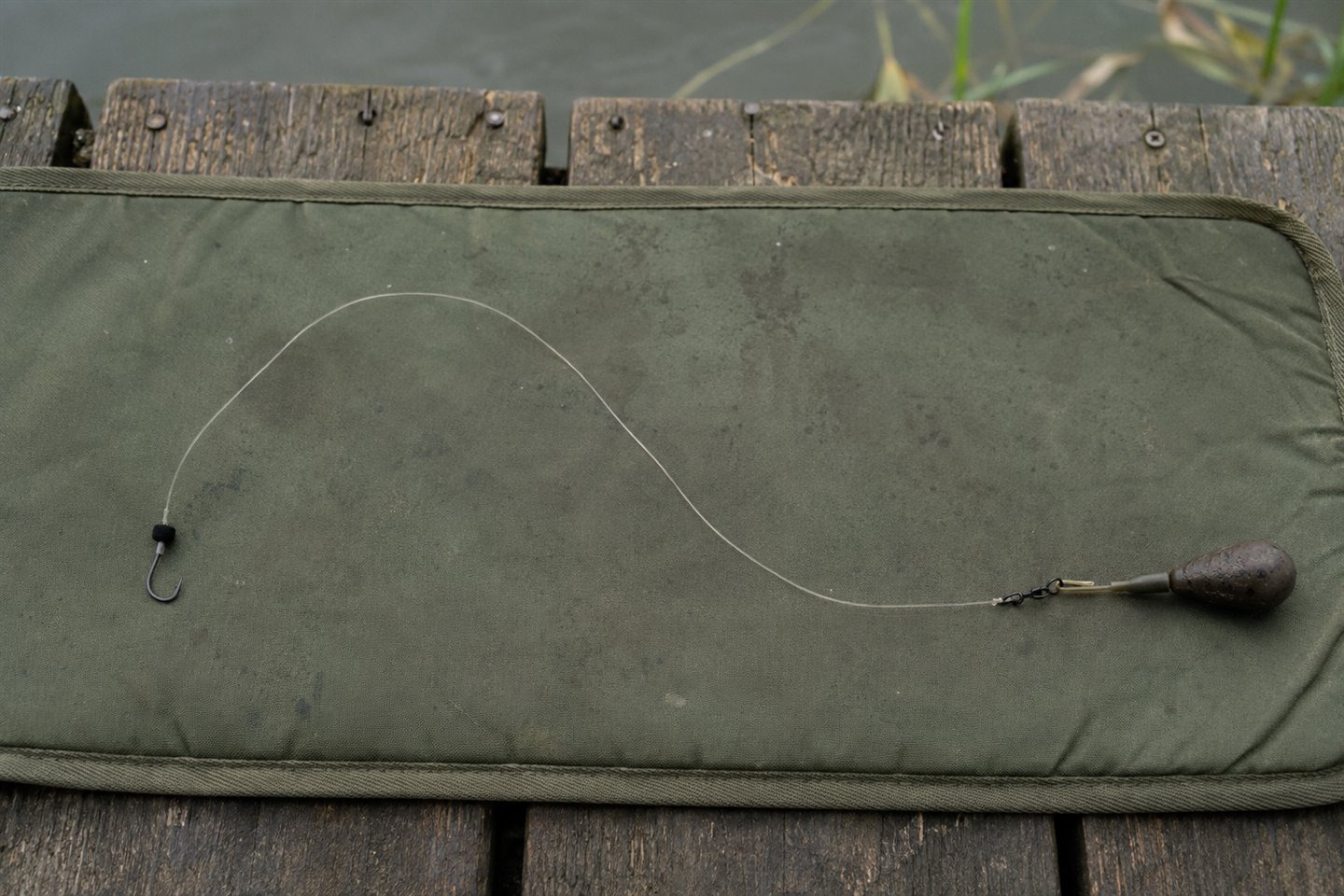
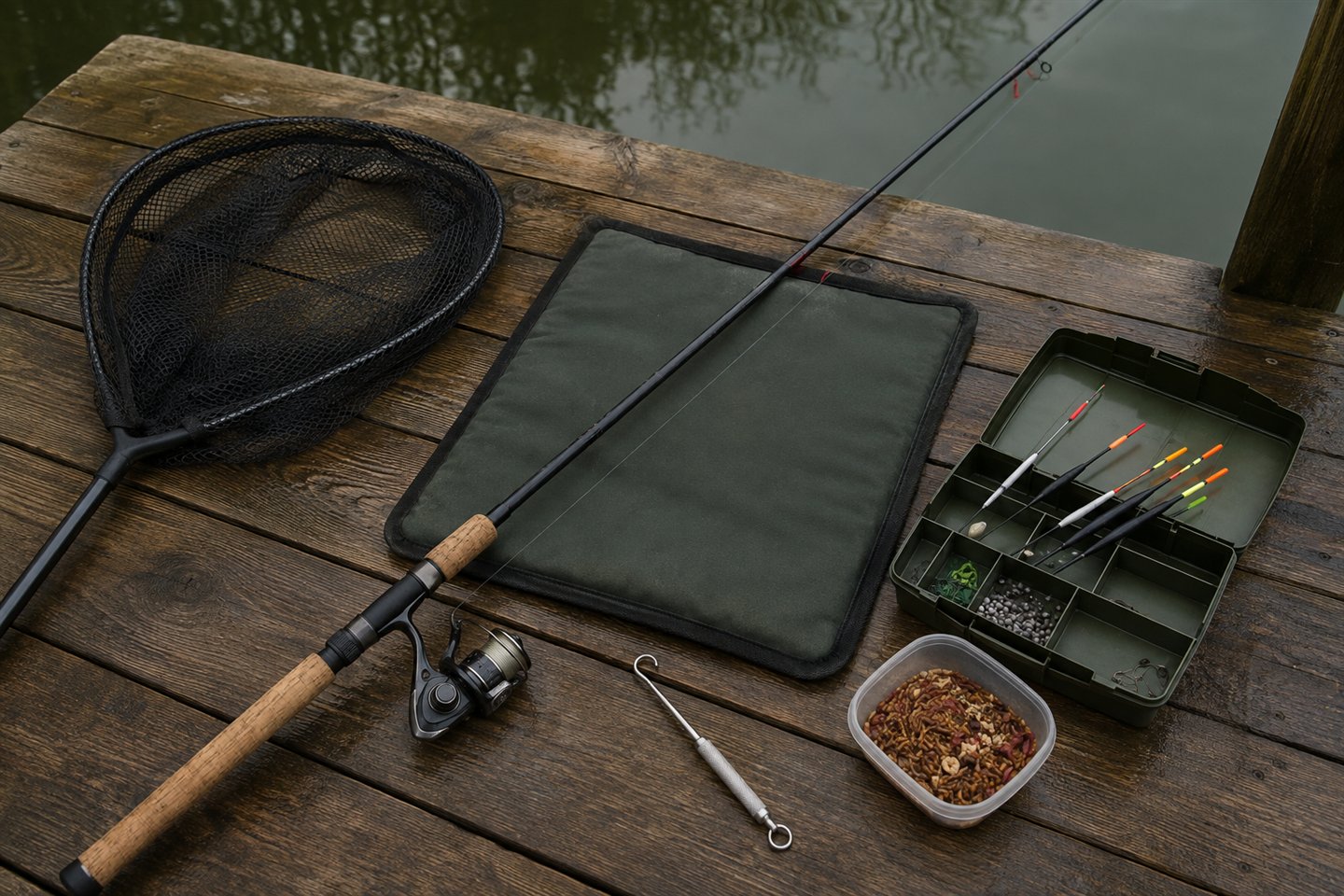
You don't need a mountain of tackle to start coarse fishing. Pick one method, buy the essentials and leave the specialist extras until you know you need them.
A general-purpose setup can cover roach, perch, skimmers, bream and tench on many canals and stillwaters. Ask your local tackle shop whether your chosen venue needs stronger tackle. Buy for the fishing you'll do and make sure you can look after the catch.
Read the fishery's rules before shopping. A local tackle shop can help you choose a setup for that water, especially if it holds larger fish or has awkward swims. Here's what to buy first and which extras can wait.
Coarse fishing tackle for beginners: what is essential?
For straightforward float fishing, begin with a suitable float or general-purpose rod, a compatible fixed-spool reel, fresh monofilament line, a small waggler selection, approved split shot or non-toxic alternatives, barbless hooks to nylon, a plummet, disgorgers, bait containers and a rod rest. Add a soft knotless landing net with a handle long enough for the bank and a wet padded mat when fish may be too large to unhook safely in the net.
Take only a few baits and learn to feed them accurately. Maggots, sweetcorn or bread may be suitable, but fishery rules decide what is allowed. The existing beginner guide to coarse fishing baits helps narrow the choice without carrying half a tackle shop.
A Hunter Pro 10ft carbon rod-and-reel starter kit (paid link) can show typical bundles and prices. Treat the results as a comparison starting point: inspect the rod length, reel size, supplied line and included accessories, because a large accessory count doesn't prove that the outfit is balanced or suitable for your venue.
Licence, permission and venue rules come first
Equipment doesn't grant permission to fish. In England and Wales, anglers aged 13 or over generally need the appropriate rod fishing licence, with the official licence currently free for eligible 13-to-16-year-olds. You also need the fishery owner’s permission, normally through a day ticket, club membership or permit. The rod-licence guide explains the distinction.
Read national and regional byelaws as well as venue rules before the trip. They can govern seasons, tackle, bait, the number of rods and retention. England’s national byelaws also restrict particular lead weights and prohibit knotted or metallic landing-net mesh. A fishery can impose tighter requirements, such as barbless hooks, a particular net size or a compulsory unhooking mat.
Don't buy terminal tackle solely from a generic checklist and assume it will be permitted. Show the venue rules to a local tackle-shop member of staff, a club official or a coach. This short check can prevent arriving with the wrong hooks, keepnet, feeder system or line strength and is especially valuable on commercial pools with their own detailed policies.
Choose one main method
Beginners learn faster when the kit supports one simple method. Float fishing gives a clear visual bite signal and teaches depth, feeding and line control. Light feeder fishing can be easier when wind or distance makes a float difficult. A short pole or whip offers accurate close-range presentation but is a separate buying route rather than an accessory for a rod-and-reel outfit.
If the first venue is a small stillwater or canal and local advice supports it, a waggler outfit is an accessible starting point. It can catch several coarse species and leaves room to develop casting and loose-feeding skills. The broader coarse fishing for beginners guide explains how the main methods differ.
Avoid buying float, feeder, pole and specimen equipment simultaneously. Each method needs slightly different rods, indicators and terminal components. One complete, coherent setup is safer and more useful than four incomplete ones. Borrowing tackle at a coached Get Fishing or Let’s Fish session can reveal which method feels comfortable before you spend.
The rod
A float rod is designed to cast light floats, control line and cushion relatively fine hooklengths. Many are longer than general spinning rods because length helps pick line from the water and guide a fish around the landing net. A feeder rod carries interchangeable quivertips that show bites and must be rated for the feeder weights being cast.
A general-purpose coarse rod can be a reasonable compromise for occasional fishing, but the label alone is not enough. Check its length, casting range, action, transport length and the type of tips supplied. A rod that feels manageable and balances with the reel will be used more effectively than a longer, heavier model bought because it appears more powerful.
Inspect every joint and guide before fishing. Sections should seat securely without being forced, and guide liners must be smooth because a cracked insert can damage line. Assemble the rod away from overhead cables, trees and people. Carbon-fibre rods conduct electricity, so keep well clear of power lines and stop during thunderstorms.
The reel
A compact fixed-spool reel is the normal partner for beginner float and light-feeder fishing. It should hold enough of the chosen line without requiring an excessively deep spool, turn smoothly, have a reliable line clip where feeder accuracy is planned, and provide a drag that adjusts progressively rather than jumping from loose to locked.
Reel-size numbers are not a universal standard. One maker’s 3000 may not match another’s in spool diameter, weight or capacity, so compare the specification rather than the badge. Fit the reel to the rod if possible. The outfit should not feel sharply tip-heavy, and the reel foot must sit firmly in the seat without overtightening.
Learn the bail arm, anti-reverse if present and drag at home with no hook attached. Close the bail arm by hand after casting, check that the line enters the roller and wind only when the line is under gentle tension. These habits reduce loose coils and make tangles less likely.
Main line and hooklength
Quality monofilament is forgiving, economical and appropriate for many first coarse-fishing outfits. Choose diameter and breaking strain for the method, expected fish, snags and venue rules rather than copying a number from an unrelated water. Replace unknown or aged line supplied on a second-hand reel, because its storage history and condition cannot be judged reliably.
The hooklength is the short section between main line and hook. It may be finer than the reel line to improve presentation and create a controlled weaker link, but it must still be strong enough for the fish and surroundings. Don't use very light hooklengths beside roots, platforms or dense weed merely to gain more bites.
Check line by sight and touch during the session. Cut back any section that feels rough, flattened or kinked and retie with a knot you can form consistently. Dispose of every trimming securely; discarded monofilament can entangle birds and mammals. A small lidded line bin belongs in even the most basic tackle box.
Floats, weights and plummets
For stillwater rod-and-reel fishing, a small selection of straight and insert wagglers covers more situations than a large mixed packet of unidentified floats. The float must carry enough weight to cast and remain stable, while leaving a visible tip. Choose tip colour for the light and background rather than assuming fluorescent red is always clearest.
Use only legal and venue-approved weights. In England, national byelaws prohibit most lead weights between 0.06 grams and 28.35 grams, with stated exceptions that include weighted lines, swimfeeders and fishing flies or lures. Buying shot and weights sold for current UK angling use from a reputable supplier reduces uncertainty, but the angler remains responsible for compliance.
A plummet helps establish depth before fishing. It is not optional decoration: knowing whether the bait is on the bottom, just touching it or suspended transforms float presentation. Select a plummet that grips the hook securely without crushing it, use it only for plumbing, and remove it before casting a baited rig.
Hooks, shot and small terminal tackle
Pre-tied barbless hooks to nylon simplify the first setup and provide a known hooklength. Choose the pattern, size and wire gauge for the bait and likely fish, then follow any stricter venue requirement. Hook numbering runs backwards in the common coarse range, so a size 20 is smaller than a size 14; size alone doesn't describe strength.
A small shot dispenser, silicone float attachments if required, a few swivels for appropriate feeder rigs, line scissors and a knot puller can fit in one shallow box. Label compartments and avoid carrying loose hooks. Check that shot is applied without damaging the line; if a weight pinches or flattens monofilament, replace that section.
Resist buying novelty terminal systems before understanding how they release or behave after a breakage. For feeder work, the rig must not leave a fish tethered to a feeder. Ask the venue for an approved beginner arrangement and test it in shallow water before casting. Simplicity makes faults visible.
Landing net and handle
A landing net is core fish-care equipment, not an upgrade reserved for large fish. The mesh should be soft and knotless, and the frame should accommodate the largest realistic catch without folding fins or forcing the fish. England’s byelaws prohibit knotted or metallic landing-net mesh, while venues often set additional requirements.
Match handle length to the peg. A short handle that works from a level platform may be unsafe on a raised canal bank or reed-fringed lake. Assemble it before casting and lay it within easy reach with the mesh free of hooks. Never lift a fish through the air using only the extended handle; draw the net close and support the frame or net block as appropriate.
A knotless coarse landing-net and handle search (paid link) can help compare frame size, mesh depth and transport length. Confirm the actual listing meets current law and fishery rules, and favour a sound connection over decorative extras.
Disgorgers, forceps and an unhooking surface
Carry at least two disgorgers of suitable sizes and know how to use them before fishing alone. A disgorger follows the taut line to the hook and helps reverse it from the mouth without pulling. Forceps can suit larger hooks or fish, but long tools are not automatically safer if the user cannot see the hook or control the fish.
Small roach, perch, gudgeon and skimmers can often be unhooked while supported in the wet landing net. Larger bream, tench, chub, barbel and carp require an appropriately sized, wet, padded unhooking surface if they must come onto the bank. Prepare that area before casting and keep it low, clear and shaded where possible.
A SS Instrumentx curved fishing forceps (paid link) shows different tool lengths and packs. Buy tools you can grip securely, practise with an unbaited hook under supervision, and seek help rather than repeatedly probing when a hook cannot be removed promptly.
The dedicated large-fish care guide is carp-specific but contains useful preparation principles when a mixed coarse fishery holds carp. Venue rules take priority, and a beginner targeting small silverfish should still be equipped for the largest fish that may reasonably take the bait.
Rod rests, seating and tackle storage
A simple rod rest prevents a rod being laid on grit and keeps a feeder tip or spare baited rig controlled. Use a stable bankstick or a platform-compatible support and position it without creating a towpath trip hazard. A feeder rod normally needs a front rest shaped to allow line movement and a secure butt support.
Seating should be stable on the actual bank, not merely comfortable in a shop. A basic folding chair or fishing box can work if all feet are secure and don't obstruct other users. Don't level a seat at the crumbling edge of a bank. On public towpaths, keep possessions tight to the water side and preserve a clear route.
One small tackle box, a bait bag and a lidded bucket are usually enough. Organise by task: hooks and line tools together, fish-care tools immediately accessible, and spare floats protected from crushing. Waterproof pouches help, but they don't replace drying equipment thoroughly after the trip.
Bait containers and feeding tools
Use lidded containers that prevent live bait escaping and keep food separate from tackle chemicals. Carry a modest quantity appropriate to the session. A catapult may improve loose-feed accuracy at waggler range, but practise with an empty swim and never aim where people, boats or wildlife could be struck.
A small bowl helps mix groundbait consistently, while a feeder method may need a bait box that fits beside the rod. Avoid taking open tins with sharp edges onto the bank. Remove all packaging and unused line, and follow venue instructions for leftover bait rather than tipping a large quantity into the water at pack-up.
Clothing and personal safety
Waterproof layers, a brimmed hat, polarised eye protection and footwear with dependable grip contribute more to a safe session than many tackle accessories. Dress for the forecast but take an extra layer, because a static angler cools quickly. Sunscreen, drinking water and any personal medication should be part of the plan.
Choose an accessible peg and tell someone where you're going. A charged phone in a waterproof pouch is useful, although reception cannot be assumed. Avoid steep, flooded or undercut banks, never wade simply to recover tackle, and stop fishing when lightning, rapidly rising water or unsafe wind makes the session unreasonable.
A personal flotation device may be appropriate near deep, cold or fast water and where a venue requires one. Select and maintain it for the conditions and wearer. It is additional protection, not permission to fish an unstable bank or work beyond a barrier.
Build a realistic budget
Protect spending on the elements that affect safety and reliability: an appropriate rod, sound reel, fresh line, knotless net, secure handle and unhooking tools. Floats and hooks are consumable, so buy a small coherent selection with spares. A premium chair or matching luggage can wait.
Price the complete method rather than the headline rod. A cheap rod that still requires a reel, line, net, handle and terminal kit may exceed a genuinely complete starter package. Conversely, a bundle containing unusable floats, brittle line or an undersized net is not good value merely because the item count is high.
Match tackle to the likely catch
Coarse fishing covers tiny gudgeon and roach through to powerful barbel, tench and carp, so there's no universal beginner line or hook. Ask what species and sizes are normally caught in the chosen lake, canal or river and whether snags are present. That answer should shape the whole system.
For small silverfish in open water, sensitive presentation and modest tackle are productive. The silver fishing guide explains that style in more depth. If perch are likely, handle the spiny dorsal fin carefully and use the advice in the perch fishing guide without transferring specialist predator methods into a general float setup.
When a water holds sizeable tench or bream, a light outfit may still be suitable if it is balanced and the swim is open, but local knowledge matters. The tench fishing guide can help with location and bait while the fishery advises the minimum safe tackle.
Pack for one simple session
At home, assemble the rod, fit the reel and practise threading the line with no hook attached. Learn one dependable loop or swivel knot and one hooklength connection. Prepare two spare rigs in labelled winders or packets so a tangle doesn't end the trip.
On arrival, read the rules and inspect the peg before unloading. Position the wet unhooking mat if needed, assemble the landing net, place disgorgers within reach and only then tackle up. Plumb the depth carefully, feed a small amount and make the first cast without rushing.
During the session, change one thing at a time. Adjust depth, shot distribution, casting line or feed quantity only after observing the result. A beginner learns more from one well-understood float than from switching repeatedly among unfamiliar rigs.
At pack-up, check the bank for line and hooks, count tools, dry the net and mat away from domestic areas, and inspect the rod and reel. Note what was used and what stayed untouched. After several trips, this record produces a personal essentials list based on evidence rather than advertising.
Common buying mistakes
The most common mistake is buying by species image rather than actual specification. Packaging showing a large fish doesn't establish that the rod, line and net work together. Another is choosing every component independently, which can produce a heavy reel on a light rod or a strong main line ending in an unsuitable hooklength.
Beginners also underestimate fish-care equipment because it doesn't catch fish directly. The net, disgorger and suitable wet surface must be ready from the first cast. Buying them after the first unexpected tench or bream is too late.
Finally, avoid carrying complexity as insurance. Spare hooks, one extra float and a second disgorger are sensible redundancy; three unrelated methods are clutter. The best coarse fishing tackle for beginners leaves enough attention for watercraft, feeding and safe handling.
Frequently asked questions
What should be in a beginner coarse fishing kit?
Enough for one complete method, safe fish care and a few predictable breakages. A rod, reel, fresh line, suitable terminal rig, net and handle, unhooking tools, bait, seating or a stable box, clothing and permissions cover the core. Add items only when the venue or repeated experience establishes a need.
Is a starter set worth buying?
It can be, provided the specifications are clear and every safety-critical item is suitable. Compare the bundle with buying the rod, reel, line and net separately. Replace questionable supplied line or hooks and don't assume an accessory pack complies with a particular fishery.
Should a beginner start with float or feeder fishing?
Float fishing is visual and teaches depth and feeding, while feeder fishing can cope better with wind and distance. The best start depends on the venue. Ask which method produces regular bites there and choose one coherent outfit rather than buying both immediately.
Do I need an unhooking mat for small coarse fish?
Small fish can often be unhooked in a wet, soft landing net, but a padded mat is needed when larger fish may be placed on the bank and is compulsory at many venues. Plan for the largest realistic capture and follow the fishery’s exact rule.
Final thoughts
Coarse fishing tackle for beginners works best as a small, balanced system. Start with the venue, obtain the right licence and permission, select one method, then match rod, reel, line and terminal tackle to the fish and conditions. Put the landing net and unhooking tools on the essentials list, not the optional one.
Get out and use the basic kit before adding more. You'll soon find out what makes your sessions easier and what would stay in the bag. Being able to set up confidently, cast neatly and look after your catch is a much better start than arriving with a trolley full of tackle you haven't used.
Sources and further reading
Angling Trust: how to start coarse fishing; Angling Trust: freshwater best-practice guidance; Canal & River Trust: beginner’s guide to canal fishing; and Environment Agency: national rod-fishing byelaws for England. Check the official pages and local fishery rules again before fishing, as requirements can change.