
Maggots plus one alternative are plenty on many first trips, where the venue allows them. Choose the bait by the fish you’re after, what your hook can carry and how the bait behaves in the swim. A few well-placed free offerings will teach you more than a different bait on every cast.
1. Maggots for mixed bites
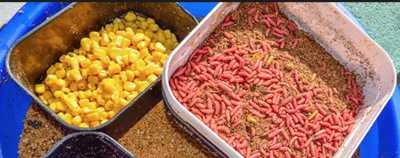
A maggot is a small bait for roach, perch and other fish. Pierce the skin lightly at the blunt end and leave the point clear, so the maggot can still move. Keep the pot cool and secure. Add a few as loose feed only where allowed and watch what arrives.
Tackle shops often sell maggots by the pint, so ask for a smaller measure if you’re only going for the afternoon. Red, white and yellow maggots give you a few colours to try from one small bait box. If a couple of reds are getting tentative bites, try a white one on the same hook and keep feeding the same line. Change the hookbait before changing the whole swim.
2. Sweetcorn for a larger mouthful
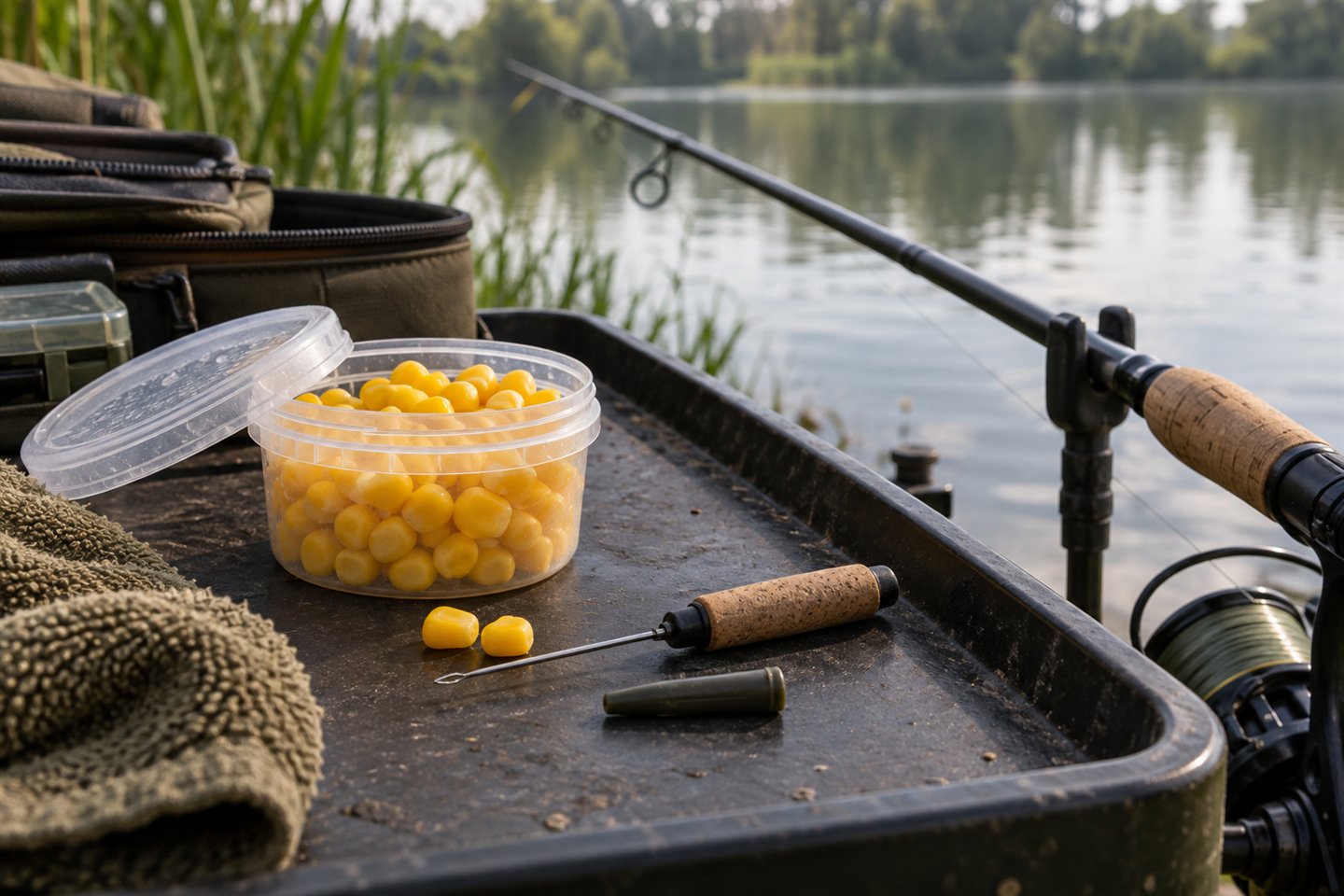
Try drained corn on a clean bottom for species such as tench or carp. Put the hook through the tougher skin and expose the point, or hair-mount it if the method suits. Wet corn straight from the tin can affect PVA. Separate lidded tubs, such as the Roddarch four-box bait-tub set (paid link), let you keep each bait apart.
3. Luncheon meat for a soft bait
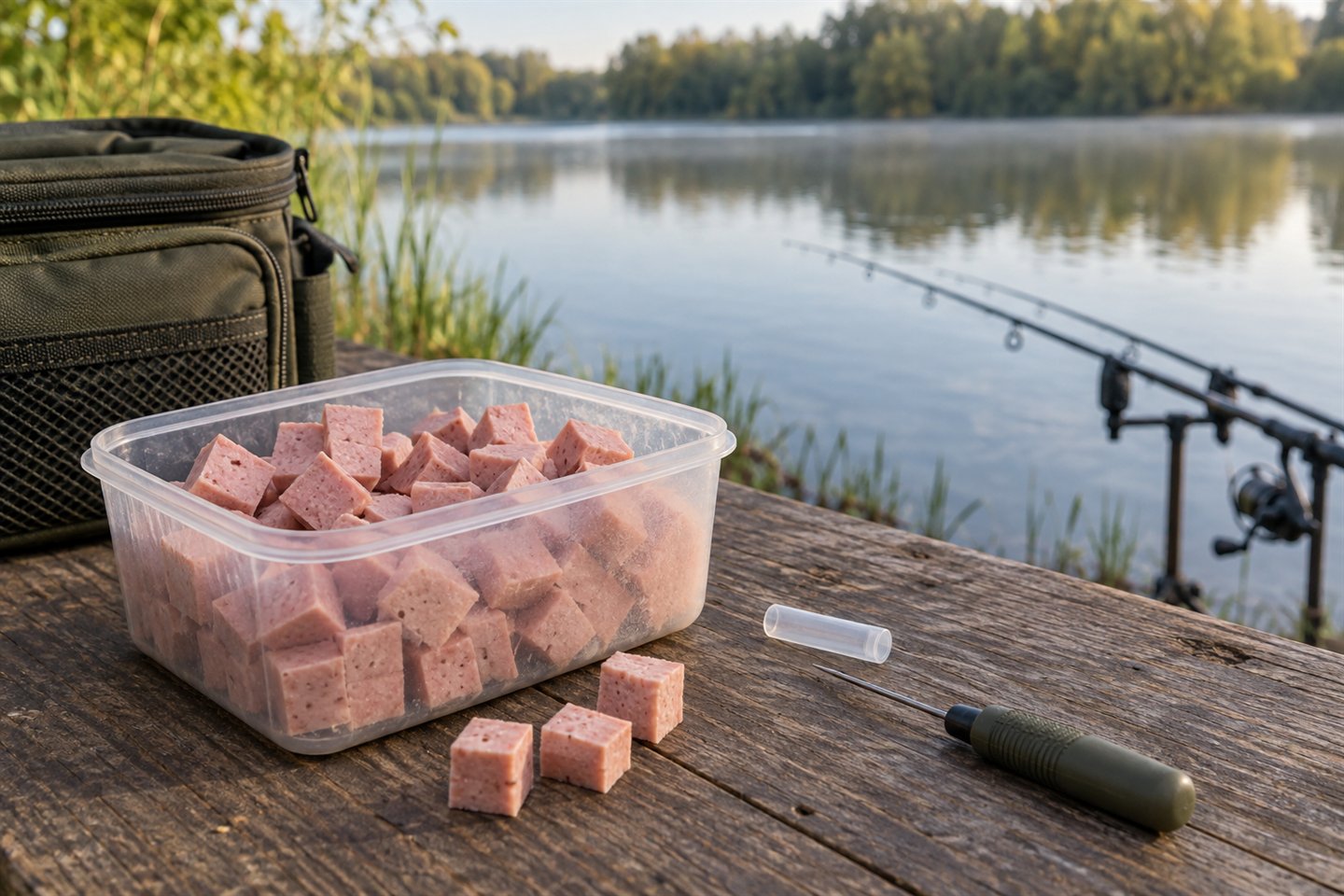
Cut a small cube and see what stays on during a gentle cast. Use a suitable stop or mount when hair-rigging it. Check your first retrieve. A smaller, firmer piece can help if the bait keeps falling off.
4. Small boilies when you want a firmer bait
Try one when soft baits keep being knocked off, or when you want a small hookbait that will survive a cast. Choose a size your chosen hook can carry with the point clear. Use a properly fitted stop and check the mounting close in before fishing it further out.
5. Bread for the surface or below it
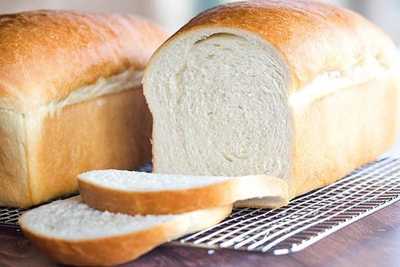
Pinch bread around the shank without squeezing the whole piece into a hard lump. Try it beside you to see how it behaves. If surface fishing is permitted, reel in before birds can reach the bait or line.
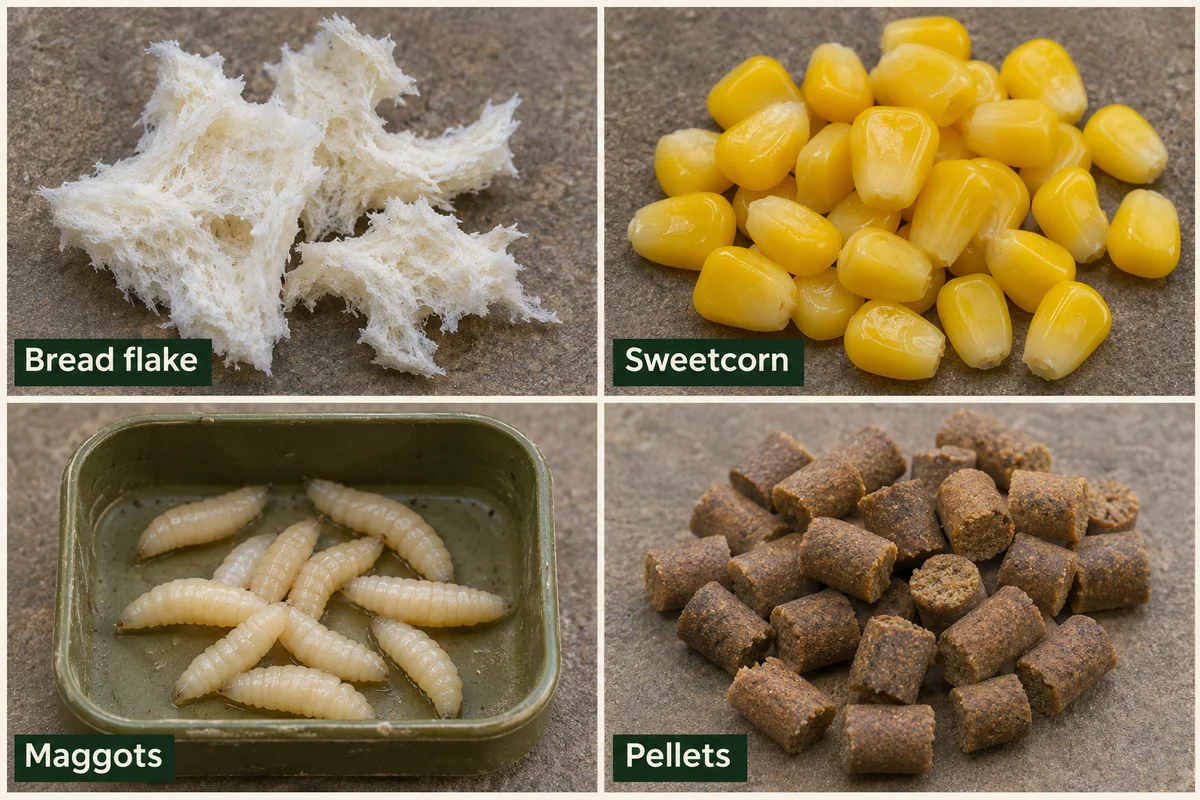
Use the crust and the white centre for different jobs. A little crust can stay afloat, while a soft pinch of flake round the shank can be fished below a float for roach. Try a spare pinch at your feet. If the whole lot drops off before it reaches depth, pinch the bread more firmly at the shank and leave the rest soft.
6. Worms for perch or tench
A small section can suit a fine float setup. Put it on through enough skin to hold it, with the point clear, and respond promptly to a positive bite to reduce the chance of a deep hook.
7. Prepared hemp as a fine feed
Start with a few ready-prepared seeds where allowed. Hemp can be useful loose feed while you fish a different small hookbait. Use preparation and storage instructions for the exact product, and don’t put raw, unprepared seed in the water.
8. Imitation bait where rules allow it
A permitted imitation can offer a different shape, firmness or buoyancy. Check the actual bait and hook in water, and recover lost offcuts from the bank. There is no need to carry one unless it does a job your other bait can’t do.
One combination the original author used for carp was real corn as loose feed and imitation corn on the hair, sometimes alongside a boilie. That keeps a grain on the rig when small fish pull soft corn off. Test the imitation with the actual hook in water. A buoyant grain can lift the hook or change how a sinking boilie sits.
Put together a two-bait plan
Try a maggot for mixed silverfish and keep a little corn for a larger mouthful. If smaller fish grab everything on the drop, decide whether you want those bites. To fish for something larger, try a firmer bait or change the shot so the bait drops through the fish. Neither excludes small fish altogether. See the first float-session guide to get the depth and feeding spot right.