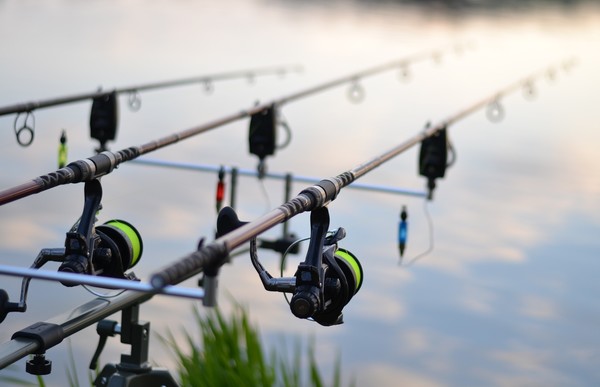

Start with the cast you make most often and the space around you. A rod you can control on a small swim is more useful there than one chosen to reach the far bank. Fit your reel and think about how you will cast, play a fish and move the rod beside the net.
Choose the length around the swim and the walk
A shorter rod can help where branches, cramped banks or transport limit a longer one. A longer rod gives you room to manage line around some near-bank features, provided you have room behind and overhead. Measure the rod’s packed sections against the space in your car, rod holdall or public transport. Try the handle length as well as the length of the blank.
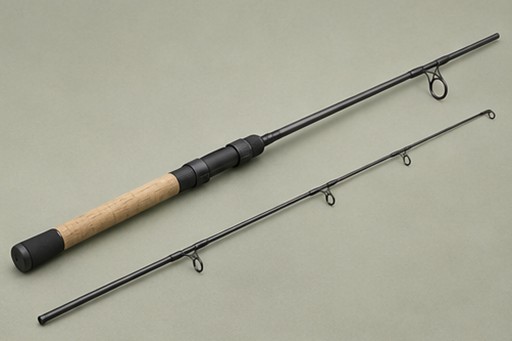
Test curve and action tell you different things
Test curve is the load that draws the tip to a right angle relative to the butt in the test. Action describes where the rod bends. Neither gives a guaranteed casting distance. Follow the maker’s advice for the full payload, including lead and feed, and handle the rod with your usual reel fitted. If you regularly fish close, compare how much each rod gives when the tip is loaded. See the test curve comparison for more on choosing between powers.
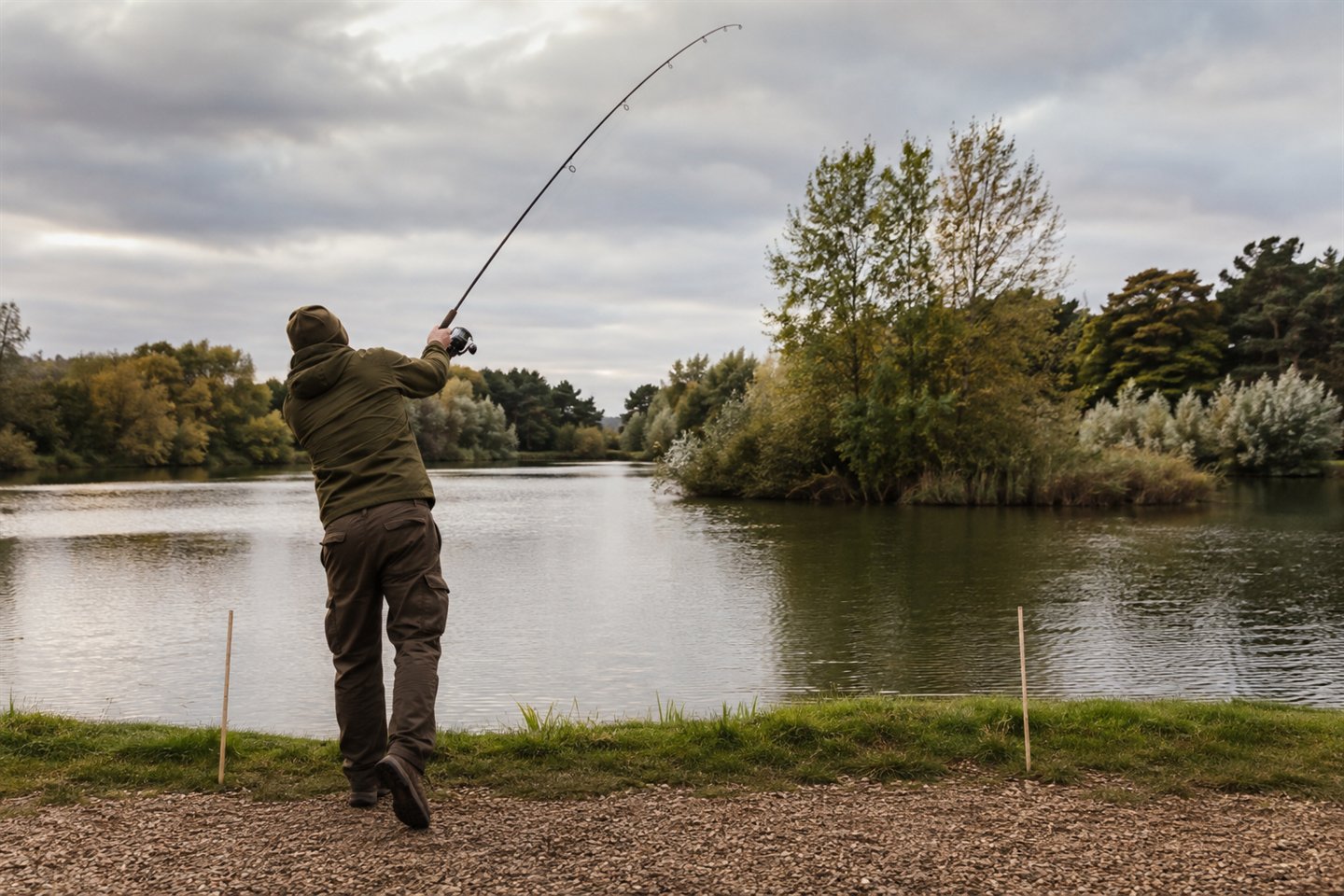
Three rods to compare
These are specification examples, not a result from a side-by-side casting or long-term wear test. Confirm the full model and variant against Daiwa’s Black Widow XT specification or the current maker’s listing. Guide sizes can change across versions.
What to look for on a second-hand carp rod
The earlier Daiwa Black Widow G50 in this guide had a 50mm butt guide. If you are matching an existing rod, ask for a photo of its name, length, test curve and first guide beside a ruler. A pair described simply as ‘Black Widows’ can have different rings. The original Fox EOS and the later EOS-X are also worth identifying by the lettering on the blank, particularly if you are replacing one rod in a set.
With a Shakespeare Cypry, check the ceramic inserts all the way to the tip for cracks or missing sections. On an older Wychwood Riot, check the fixed line clip and guide whippings. Fit your reel and tighten the seat by hand. A reel foot that rocks around or a guide that moves can spoil the saving on a second-hand rod.
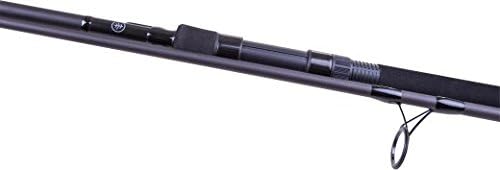
Other names to recognise in used listings are Shimano Tribal TX2 and XS1, TF Gear Banshee and Sonik Vader X. Ask for the section lengths and a photo of both joints on the actual rod. That makes it easier to spot a mismatched tip and work out whether the rod will travel in your holdall.
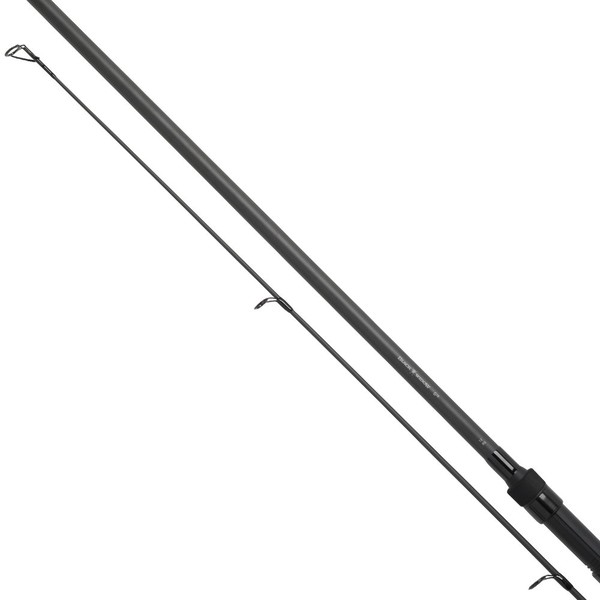
Daiwa Black Widow XT 12ft 3.5lb
The Black Widow remains an option worth looking at when you want a dedicated carp rod without moving into premium prices. This link is for the XT with a 50mm starter guide and a 3.5lb test curve. It is a more powerful choice than a softer rod for close-range work.
Before you buy: Check that a 12ft, two-piece rod suits your transport and fishing. A 3.5lb test curve is not a casting-weight limit; follow the rod maker’s guidance for the complete lead and bait load.
View Daiwa Black Widow XT 12ft 3.5lb on Amazon (paid link)
Fox EOS-X 12ft 3.5lb
The EOS-X gives you another established carp brand to compare. It is worth handling alongside the Daiwa if you can: the balance with your own reel matters more than choosing by brand alone.
Before you buy: This listing is the 12ft 3.5lb model, not every rod in the EOS range. Check handle style, guide size and the number of rods supplied.
View Fox EOS-X 12ft 3.5lb on Amazon (paid link)
Daiwa Black Widow XT 12ft 3lb
For general carp fishing, you may prefer the less powerful 3lb Black Widow XT. It is a sensible one to compare if you do not need the heavier version for your usual casting and fishing.
Before you buy: This version has a 40mm starter guide. Match the rod to the water, lead weight and reel, rather than buying a stronger rod simply because it sounds better.