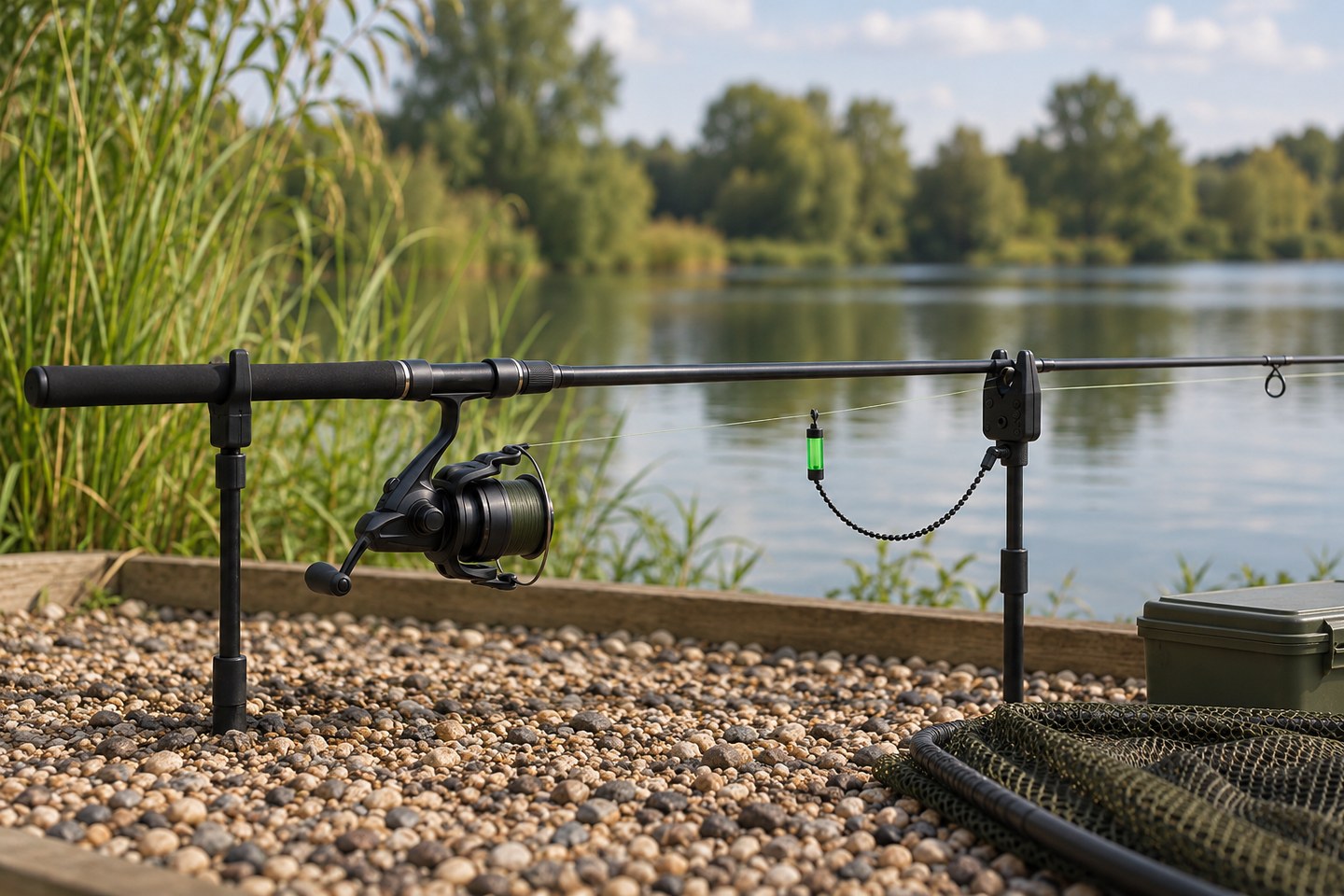

Start with the number of rods you actually fish and how you will see or hear them. One reliable alarm and a bobbin may be all you need for a short, attended session. If you are looking at a wireless set, check which receiver works with it before buying.
What the alarm is telling you
A carp alarm registers movement or vibration in the line. It cannot tell the difference between a fish, wind and floating weed on its own. Match it to a suitable bobbin or other indicator. A bobbin can fall when a fish moves towards you. Keep the rod close enough to pick it up at once, whatever the receiver’s advertised range.
On a roller-wheel head, the line turns a small wheel as it moves through the alarm. A vibration-sensing head picks up movement through a sensor instead. If the bobbin moves during your dry test but a roller head stays quiet, first check that the line actually sits on the wheel. Turning the volume up only makes a registered movement louder.
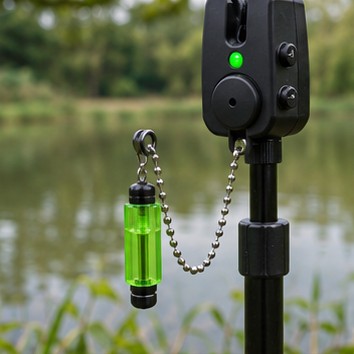
What to check in a budget bundle
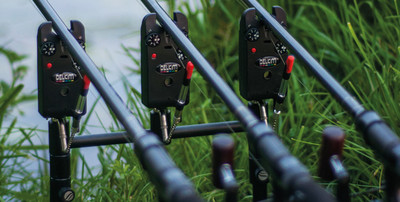
Count the heads and receiver shown in the listing and ask what actually comes in the box. Compare power type, spare batteries, attachment thread, volume and whether the LED is easy to see. Look for clear pairing and water-care instructions. If you might buy another head later, confirm that the same receiver can pair to that exact generation.
With two rods out after dark, it helps to know which one sounded. If the set offers different tones or colours, assign one to each head and check the receiver matches. Try mute mode while you fit the bobbins, then switch the heads back on and test each one. Pack spares for both the receiver and the heads; they may take different batteries.
Fox Mini Micron Multicolour V2
A single Mini Micron is worth considering if you do not need a wireless receiver. It keeps the setup simple, and you can buy the number of alarms you actually need.
Before you buy: This is the V2 single alarm, not the wireless Mini Micron X. Check battery type and whether bobbins or other accessories are supplied.
View Fox Mini Micron Multicolour V2 on Amazon (paid link)
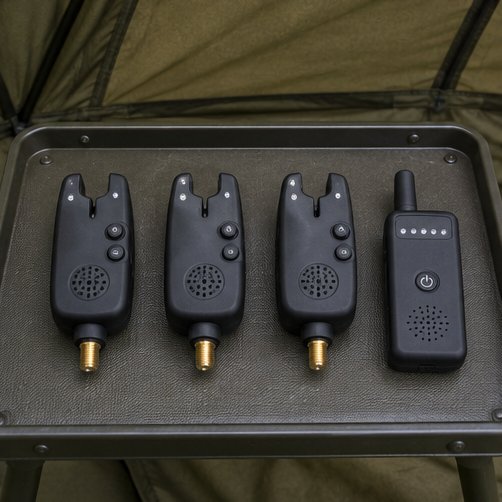
NGT XT3 wireless 3+1 set
The XT3 set gives you three alarms with a receiver and case. That is a practical bundle to compare if you use more than one rod and want a receiver with the alarms.
Before you buy: Check the exact set contents, batteries and receiver functions. A receiver does not mean you can leave your rods unattended or move too far away to respond.
View NGT XT3 wireless 3+1 set on Amazon (paid link)
Saber S4 wireless alarm set
The S4 set is another option for anglers who want alarms and a receiver together. Adjustable volume and tone let you set things up to suit you without making every movement noisy for everyone on the lake.
Before you buy: Check the number of alarms, receiver and battery requirements. Test your own bobbins with the alarms, including a drop-back, before fishing.
View Saber S4 wireless alarm set on Amazon (paid link)
A wireless set for two rods
If you normally fish two rods, look for two alarm heads and a separate receiver. The Korum KBI-R two-rod presentation set gives you that arrangement. A useful check at home is to sound each head in turn and make sure you can tell which rod needs attention from the receiver alone.
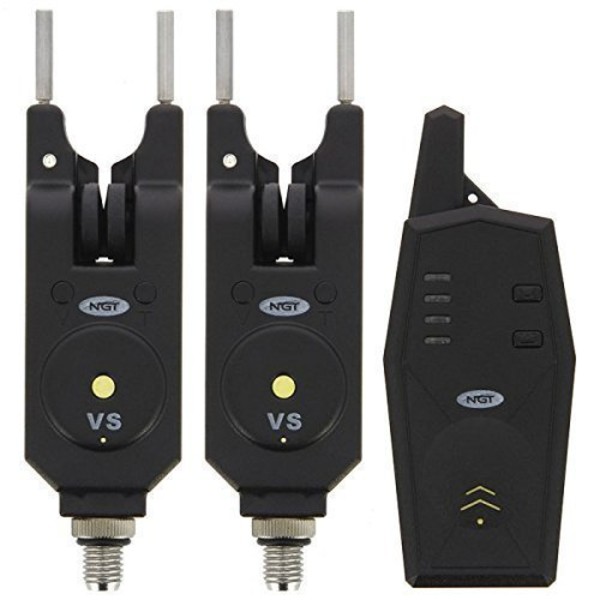
Before you buy: Compare the seller’s delivery total and included transmitter/receiver contents. Read the setup instructions and test the range at your swim rather than relying on the advertised maximum.
View the Korum KBI-R two-rod presentation set (paid link)
Test both directions before fishing
With no hook or lead attached, draw line away from the alarm and then reduce tension so the bobbin falls. Check that any receiver reports the movement and learn what the two indications look or sound like while you can concentrate on them. Follow the maker’s instructions. Use the bite alarm setup guide to check how rod support, bobbin and line affect the result.