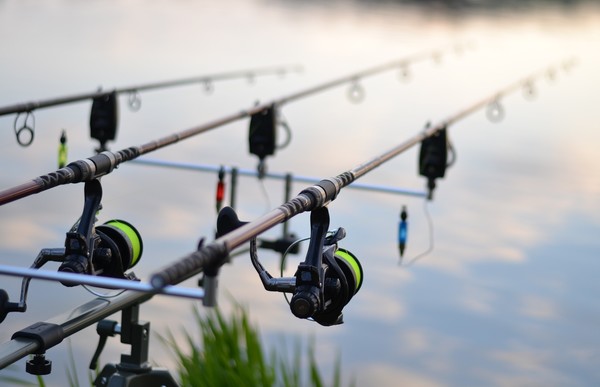
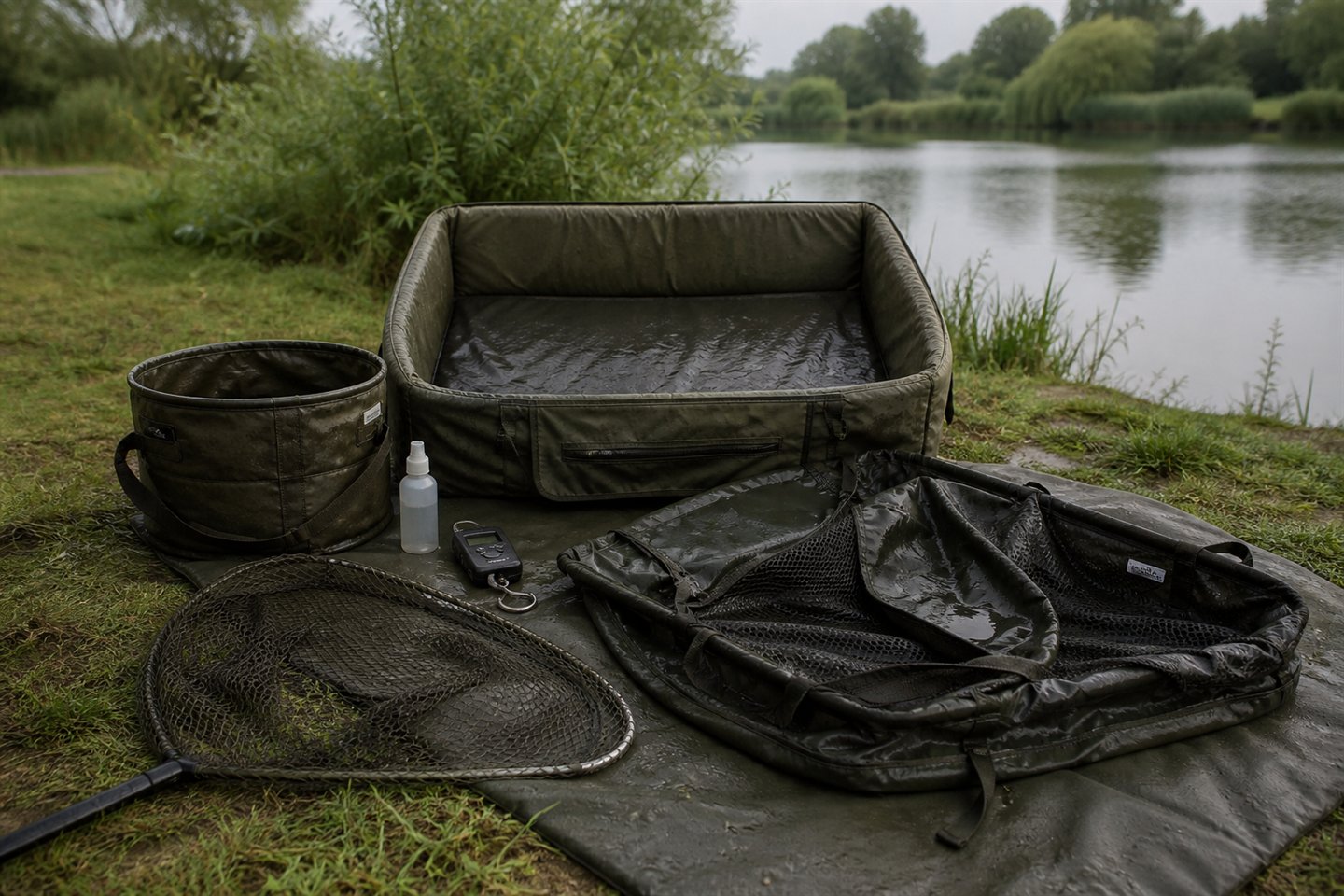
Good carp care starts before the first cast. Assemble the net, prepare a wet mat or cradle and keep your bucket, unhooking tools and wet sling within reach. If you're using scales or a camera, get those ready too. Once a carp is in the net, you don't want to be rummaging through bags.
After netting, keep the fish upright in deep, well-oxygenated water while you make a final check of the bank. Transfer it with full support, keep it low over wet padding, remove the hook calmly and return it as soon as practical. Weighing and photographs are optional; safe handling and a strong release are not.
This carp care guide explains that sequence in detail. Fishery rules take priority because venues may require particular net, mat, sling or treatment equipment and may prohibit retaining fish. Conditions also matter. During very hot weather or signs of low oxygen, the responsible decision may be to stop fishing rather than place extra demand on carp.
Carp care: what to prepare before the first cast
Choose a level area away from stones, roots, gravel, steep drops and direct traffic through the swim. The route from water to mat should be short and free from rods, guy lines and boxes. If the bank is too awkward to move a fish safely, either create a safer position within the rules or choose another swim.
Open the landing net and check the mesh, arms, spreader block and handle. The net must be large and deep enough for the carp expected at the venue, with no split mesh that could catch a fin. Place it where it can be reached without stepping over a rod, then wet the mat or cradle with lake water.
Keep a bucket of lake water beside the mat, but use it only where collecting water is safe. Forceps should open cleanly and suit the hooks being used. Put the wet weigh sling, scales and any fishery-approved care product within reach. Don't leave exposed hooks, baiting needles or scissors on the mat.
Prepare the camera before fishing if a photograph matters to you. Choose the framing, self-timer or remote and focus using an object of similar size. A phone or camera that is still in a bag is not a reason to prolong air exposure. If the setup fails when a carp is on the mat, release the fish and solve the photography later.
Choose tackle that lets you land the carp safely
Carp care includes the fight. Main line, hooklink, hook pattern, rod and clutch need to suit the venue, distance, weed and snags. Fishing tackle that is too light for the situation can lengthen the fight or leave a fish towing line after a break. Follow the fishery's minimum line and terminal-tackle rules.
Use a complete lead system assembled from compatible parts and check how it behaves if the main line breaks. Never assume a mixture of clips, swivels, beads and leaders is safe because the pieces can be pushed together. Our guide to safe carp lead systems compares lead clips, inline leads and helicopter arrangements.
Don't cast to a place from which you have little prospect of controlling a hooked fish. Tight snags, closed weedbeds, unsafe banks and lines running behind islands can make capture irresponsible. Stay close enough to attended rods to respond immediately, particularly when fishing near any obstruction.
Land a carp without chasing it with the net
As the fish approaches, place the landing net fully in the water with the mesh sunk and the arms open. Keep steady pressure with the rod and guide the carp over the centre. Chasing at it with the rim can catch the line, hook a fin or cause another powerful run at close range.
Wait until the head, body and tail are over the mesh before lifting the arms enough to contain it. Don't lever a heavy carp from the water using the handle. Once the fish is secure, loosen pressure carefully, place the rod safely and check whether the rig or lead is caught in the mesh.
If another rod remains fishing, reel it in before dealing with the carp unless a second competent person can control it immediately. A recast is never more important than the fish already in the net. Keep the area calm and prevent dogs or spectators crowding the water's edge.
Let the carp settle in the landing net
Hold the net in water deep enough to support the carp without allowing it to strike the bottom, posts or reeds. The fish should remain upright and the net must be secure in your hand or by a purpose-designed safe arrangement. Never leave a netted carp unattended or rely on a loose handle laid on the bank.
This pause is for recovery and a final equipment check, not an opportunity to tidy the whole swim or wait for somebody to arrive. Make sure the mat is wet, the sling is open, forceps are ready and the route is clear. In warm, shallow margins, water can be hot and poorly oxygenated, so minimise the delay and use a safer depth where the venue permits.
How to transfer a carp from net to mat
Where it can be done safely, remove the hook while the carp remains supported in the water. Otherwise, disconnect the hooklink or cut the line in a controlled way so a rod doesn't have to be carried beside the fish. Secure the loose rig immediately, keeping the hook away from mesh, fins and hands.
Detach the landing-net arms from the spreader block and roll the mesh carefully towards the fish. Check that the pectoral, pelvic and dorsal fins lie flat against the body rather than folding underneath. A trapped fin can split when the fish's weight is lifted.
Slide a fully wetted, zipped-end weigh sling beneath the bundled mesh and centre the carp within it. Use both carrying handles and support the load evenly. Never lift a carp by the landing-net handle or unsupported mesh, and never carry it against your clothing where it can slip.
Walk slowly to the mat with the fish close to the ground. If the route is more than a few careful steps, reconsider the position of the unhooking area. Place the sling in the centre of the wet mat or cradle before opening it, then remove the net mesh without dragging it across fins or gill covers.
Unhook a carp calmly and efficiently
Keep the fish low and supported by the wet mat. Wet your hands before contact to protect the surface mucus and avoid dry towels or gloves. Locate the hook and understand its angle before applying force. Hold the hook shank with suitable forceps and reverse it through the entry path rather than twisting blindly.
A normally positioned hook should come free with controlled pressure. If it is awkward, tangled with the mesh, deeply placed or close to the gills or eye, stop pulling and seek experienced help from the fishery team. Cutting a hook or hooklink may be safer than causing additional tissue damage, but the right response depends on the exact position and fishery procedure.
Once removed, put the complete rig somewhere secure. A loose hook beside a moving carp can create a second injury. Check that no line is wrapped around the body and inspect the mouth, both sides, belly and visible fins without repeatedly turning the fish.
Check the carp without extending bank time
Look for the hook hold, lifted scales, split fins, abrasions, ulcers or signs of previous line damage. Distinguish a small superficial mark from something that needs the fishery manager's attention. Don't diagnose disease or apply household antiseptics, alcohol, powders or unapproved substances.
If the venue permits a purpose-made carp-care liquid, use it exactly as directed and only where appropriate. Fishery staff may want to examine or record significant wounds before release. Their management plan takes priority over a generic bottle carried in a tackle bag.
Keep pouring small amounts of lake water over the carp when necessary, avoiding forceful water into the mouth or gills. Wetness reduces drying but doesn't make prolonged air exposure harmless. Organise the process so inspection, weighing and any photograph follow without repeated transfers.
How to weigh a carp safely in a sling
Wet the sling completely and zero, or tare, the scales with that same sling before the fish is lifted. Check that zips and retaining flaps close properly and that the carp is centred with every fin flat. Attach both weighing handles to the scale hook; missing one can tip the fish towards an opening.
Weigh directly over the unhooking mat or cradle. Lift only far enough for the sling to clear the padding, keeping the movement smooth and brief. A weigh staff or stable tripod designed for the load can be easier to control than holding a heavy set of scales at arm's length, but it must stand securely and remain over the mat.
Wait for the reading to settle, then lower the sling immediately. Don't swing a carp to display it or carry the suspended sling towards another person. If the scales, staff or ground feel uncertain, abandon the weight. An estimated memory is preferable to a dropped fish.
Record weight in the unit shown by the scales and subtract the sling only if it was not already zeroed. Accuracy is useful, but repeated lifts to chase an ounce are not. Our guide to carp-fishing scales discusses readable, suitably rated models.
How to photograph a carp without taking risks
Photography begins with the camera already ready. Ask a helper to confirm framing while the carp remains supported, or use the self-take setup tested before the rods went out. Keep the number of attempts small and accept that some captures are better recorded without a photograph.
Kneel or crouch over the centre of the mat. Slide one wet hand beneath the pectoral area and the other towards the anal fin and tail wrist, supporting the body rather than squeezing it. Lift the carp only a short distance above the padding and keep your elbows close enough to lower it smoothly.
A carp often stiffens before it struggles. If you feel the body tense, bring it gently into your forearms and lower it onto the mat. Don't try to hold a flapping fish higher, grip the gill plates, insert fingers into the gills or stand for a dramatic photograph.
Keep the head and body level. Forced perspective, outstretched arms and repeated repositioning are unnecessary. The welfare of the fish matters more than making it look larger. If strong sunlight, freezing air or delay increases the risk, take a quick low-level picture or none at all.
Extra carp care in hot weather
Warm water holds less dissolved oxygen, and hot, dry conditions can place fish under additional stress. The Angling Trust advises anglers to consider local conditions and fishery instructions carefully. Watch for fish gasping, unusual lethargy, sudden mortalities or emergency aeration, and report concerns to the venue.
Shorten fights where tackle and circumstances allow, keep the process ready and minimise air exposure. Don't retain a carp in a warm shallow margin for better light. If recovery is slow or the fishery asks anglers to stop, reel in. A planned session is never more important than welfare during a low-oxygen event.
Air temperature alone cannot tell you dissolved oxygen, so avoid invented cut-off numbers. Venue managers may measure the water and understand aerators, stocking and recent conditions. Follow their decision even if carp still appear active.
Retain a carp only when it is permitted and necessary
Immediate release is the simplest default. A purpose-made retainer sling may be allowed for a short period, but a weigh sling is not automatically suitable for retention. Read its instructions and the fishery rules. Never use a carp sack unless the venue expressly permits it and you're trained in its safe use.
A retained fish must remain upright in sufficiently deep, clean, oxygenated water, away from weed, snags, boat traffic and a hard bottom. Secure the tether to a reliable point and maintain direct supervision. Check the fish frequently without repeatedly lifting it.
Keep the period as short as practical and don't wait hours for daylight or a preferred photographer. Conditions can change quickly in a margin. If depth, temperature, wave action or oxygen is doubtful, don't retain the fish.
How to release a carp after catching it
Close and secure the wet sling, check all fins again and carry the carp low with both handles. Enter the water only where the rules allow and the footing is known to be safe. Otherwise kneel at a stable edge and lower the sling into enough depth for the fish to remain submerged without touching the bottom.
Open the sling and support the carp upright, normally facing clean open water or gentle flow rather than forcing water backwards through the gills. Keep one hand beneath the belly and another near the tail wrist without gripping. Allow the fish to regain balance and move its fins.
Don't push the carp back and forth. It should leave under its own power. A fish that rolls, cannot remain upright or shows poor recovery needs help from the fishery team, not another photograph. Stay until you see it swim away strongly and clear of nearby obstacles.
What to do if a carp falls or becomes distressed
If a carp moves on the mat, cover its eyes gently with the wet sling and keep it centred without pinning it down. If it begins to slide, block the route with your forearms and cradle sides rather than grabbing a fin or tail. This is why every handling action takes place close to wet padding.
If a fish falls, suffers significant bleeding, has damaged gills or cannot recover, contact the bailiff or fishery manager immediately. Keep it supported in suitable water while following their instructions. Don't release a visibly distressed fish simply to make the problem disappear, and don't attempt improvised surgery.
Clean fish-care equipment between waters
Nets, slings, mats, boots and waders can carry water, sediment, invasive organisms and disease between fisheries. Follow Check, Clean, Dry: inspect and remove visible material, clean and disinfect where the venue or official guidance requires, then dry the equipment thoroughly before using it elsewhere.
Pay attention to folds, seams, net mesh and damp bags. Storing a wet sling in a closed holdall keeps it suitable for transferring organisms and also damages the equipment. Some fisheries provide mandatory dipping stations; use them correctly without treating a dip as a replacement for complete drying.
Common carp-care mistakes
Leaving the mat folded until a bite is the error that causes many later problems. So does lifting in unsupported net mesh, carrying a carp with fins folded beneath it, weighing away from the mat and standing for photographs. Each shortcut saves seconds while creating an avoidable drop or injury risk.
Another mistake is turning optional tasks into obligations. A weight, photograph, recast or social update can always be abandoned. Prepare them in advance, complete them efficiently when conditions suit, and skip them whenever the fish needs to go back.
Finally, carp care is not limited to the bank. Unsafe snag fishing, unattended rods, unsuitable line and a lead arrangement that can tether a fish are welfare failures even if the unhooking mat is excellent. The complete routine begins with swim and tackle choice and ends only when the carp swims away strongly.
Frequently asked questions
How long can a carp stay out of water?
There's no responsible target time to use as an allowance. Prepare everything, minimise air exposure and return the fish as soon as practical. Heat, fish condition and handling all affect risk, so a shorter, calmer process is always preferable.
Should I wet an unhooking mat?
Yes. Use clean lake water to wet the mat, sling and your hands before contact. This reduces abrasion and drying of the carp's protective mucus, although it doesn't justify keeping the fish out longer.
Can I carry a carp in a landing net?
Don't lift it using the handle or unsupported mesh. Break the net down, check the fins and support the bundled mesh within a suitable wet sling for the short move to a nearby mat.
Do I have to weigh and photograph every carp?
No. Both are optional. If equipment is not ready, the fish is distressed or conditions are unsuitable, release it without a weight or photograph.
Final carp care checklist
Before casting, prepare the net, wet mat, water, forceps and sling. Choose tackle and a swim from which a carp can be landed safely. Once a fish is netted, keep it upright in suitable water, make a supported transfer, unhook it calmly and keep every lift low over the mat.
Keep weighing and photographs brief, and only retain a fish when it's necessary, permitted and safe. Return the carp in the sling, support it until it can stay upright and let it swim away under its own power. Clean and dry the gear before visiting another water. Have that routine ready before you need it.