
If you want to catch a bigger carp, start with a lake where those fish are known to live and you can fish often enough to learn it. The venue, regular visits and safe opportunities will give you more control than a larger hookbait or a different name on the rig packet.
Find out what the catch reports can tell you
Start with the venue’s own information and recent reports. Check which lake a catch came from and when it was caught. A large fish may show up a few times in a season; weigh-ins can vary. The number of catch photos will not tell you how many large carp are in the stock because the same fish may appear more than once. Try to find out how many sessions you can realistically fish.
There is a difference between wanting your first twenty-pounder and trying to catch one recognisable mirror. For the former, several recent captures of different fish in that bracket tell you more about your chances than one famous fish. For the latter, look for repeatable details in the photographs, such as a distinctive cluster of scales, and ask whether the reports refer to separate captures. Two reports of the same event still tell you about only one visit to that swim.
Choose a spot you can fish repeatedly
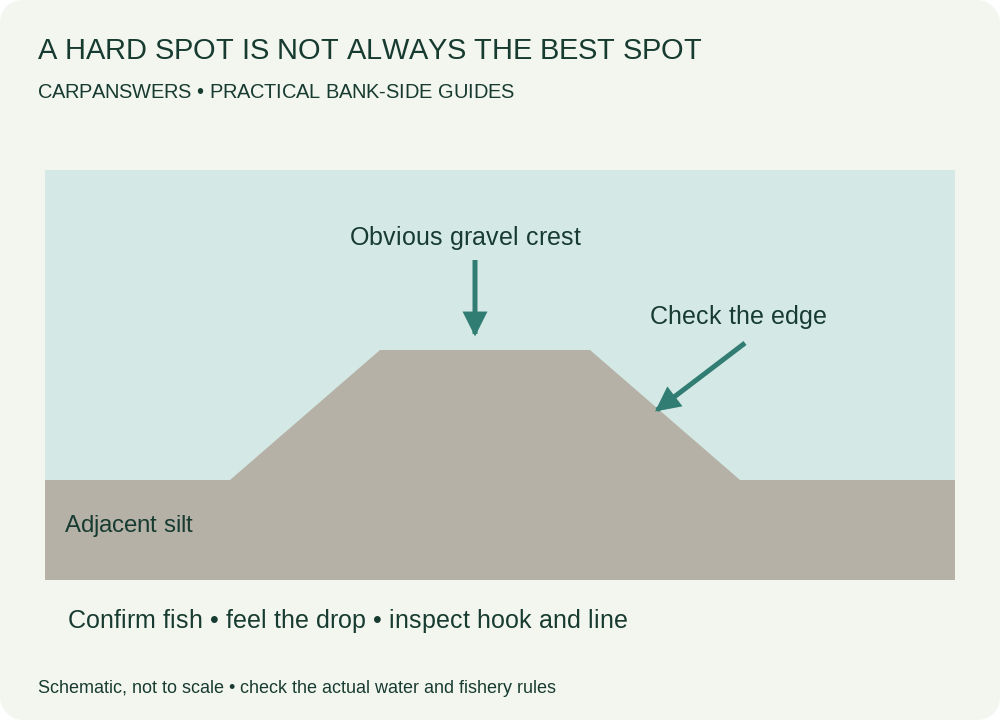
Look for signs on different visits and compare quiet routes with busy corners. Mark spots you can cast to and land a fish from in different winds. On a first trip you might learn more from one safe rod and a good walk than from setting up blind for a long session. Use the watercraft guide to decide what counts as enough evidence to make a move.
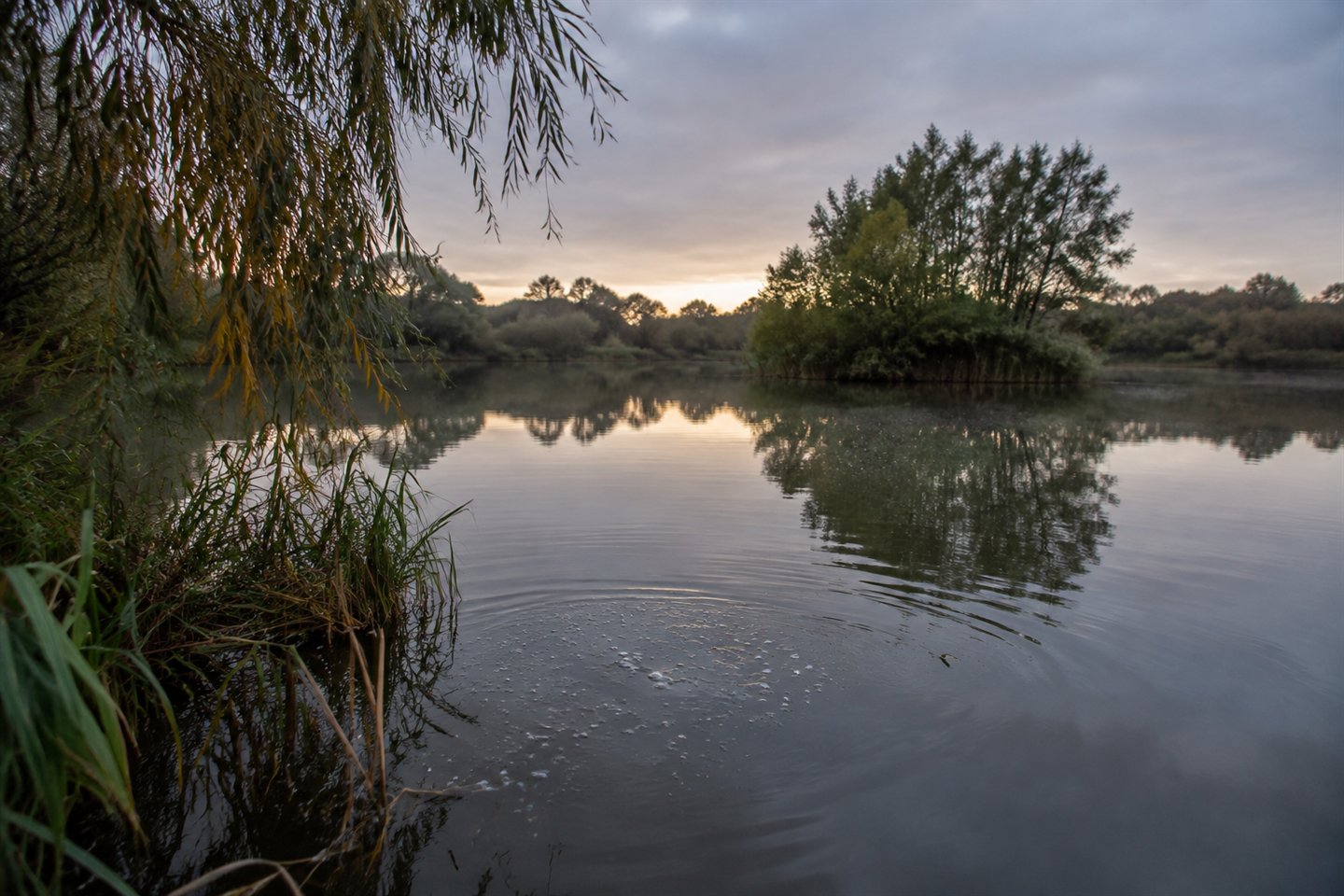
Tackle for the swim, rather than the target weight
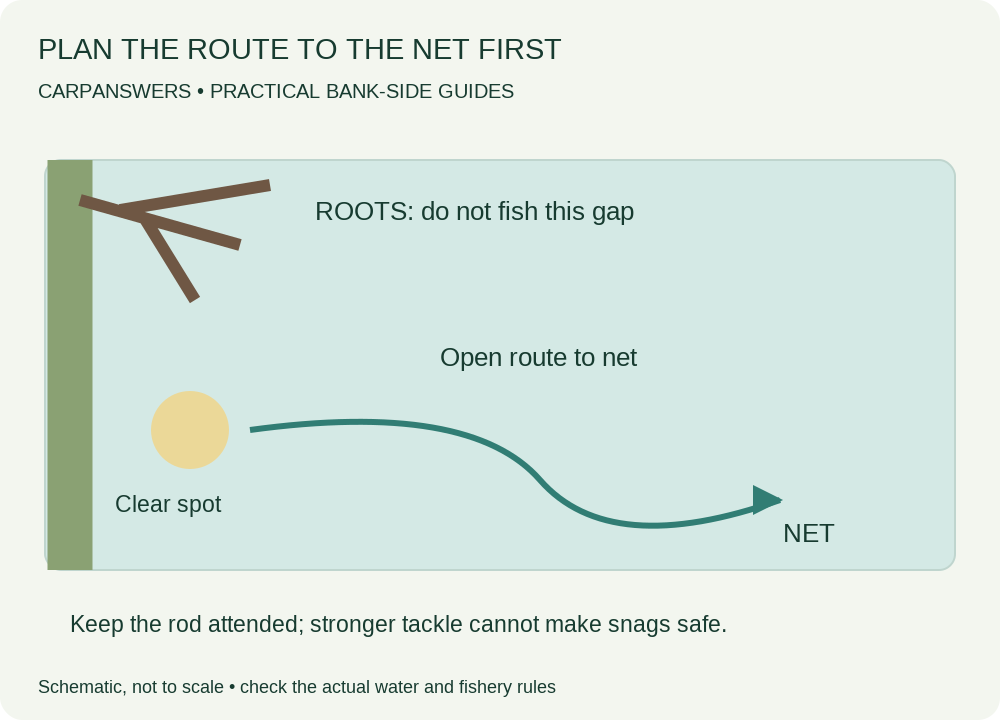
Match hook, line diameter, rod action and rig to the cover, rules and presentation. Inspect line after contact with weed, gravel or an obstruction. Make a landing plan before fishing. A bigger hook or thicker line won’t make a snag you cannot safely fish into a sensible place to put a bait. For a mono option, compare the diameter of Korda SUBline monofilament (paid link) with the line your venue allows.
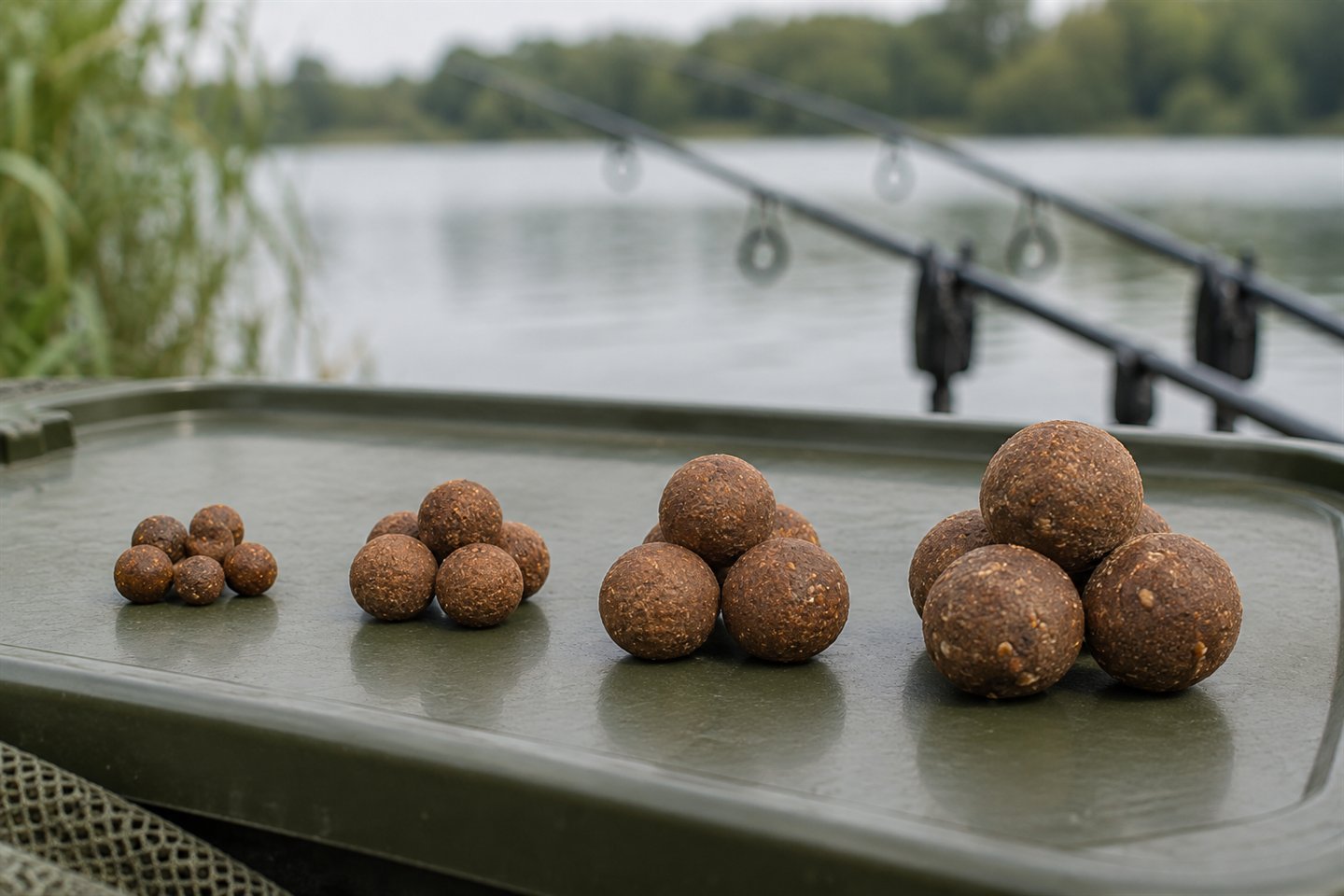
A larger or firmer hookbait can help with some nuisance fish or when small baits come back damaged; it cannot select a particular carp. Change it for that specific reason. Check the new hookbait leaves the point clear and that it balances as you expected.
Try the bigger bait on the rig you already trust
Before recasting a pair of large boilies, hold the rig beside your usual single bait. Is there space between bait and bend? Can the hook turn without the boilies wedging against the point? Change the hair or the bait if they crowd the hook. Two baits can save repeated damage from small fish. They can still catch small carp and they can cost you a good chance if the hook cannot work.
Watch what happens before adding more feed
A bigger fish is not a reason to start with a big spread. Use as much bait as you need to test the spot, watch for signs and top up only when they justify it. If you pre-bait, get permission, avoid occupied swims and write down what you put in. Without a clear idea of whether the area is being visited, adding more bait often makes it harder to learn anything.
Pre-baiting is easiest to learn on a nearby water you can visit between sessions. Ask permission, pick a reachable clean patch and keep a record of the small amount you introduce. If somebody is fishing there, leave them in peace; feeding a swim does not reserve it. Next time, look for repeat visits by carp before putting in more. Ducks, bream or other anglers could account for missing bait too.
Use a short note after each trip
Write down the swim, time, wind, range, spot, feed and what you saw. Include blanks. Over time the notes can help you notice patterns worth testing, rather than judging a tactic by one good trip. If the water rarely offers a safe shot at your objective, a different water is a useful decision.