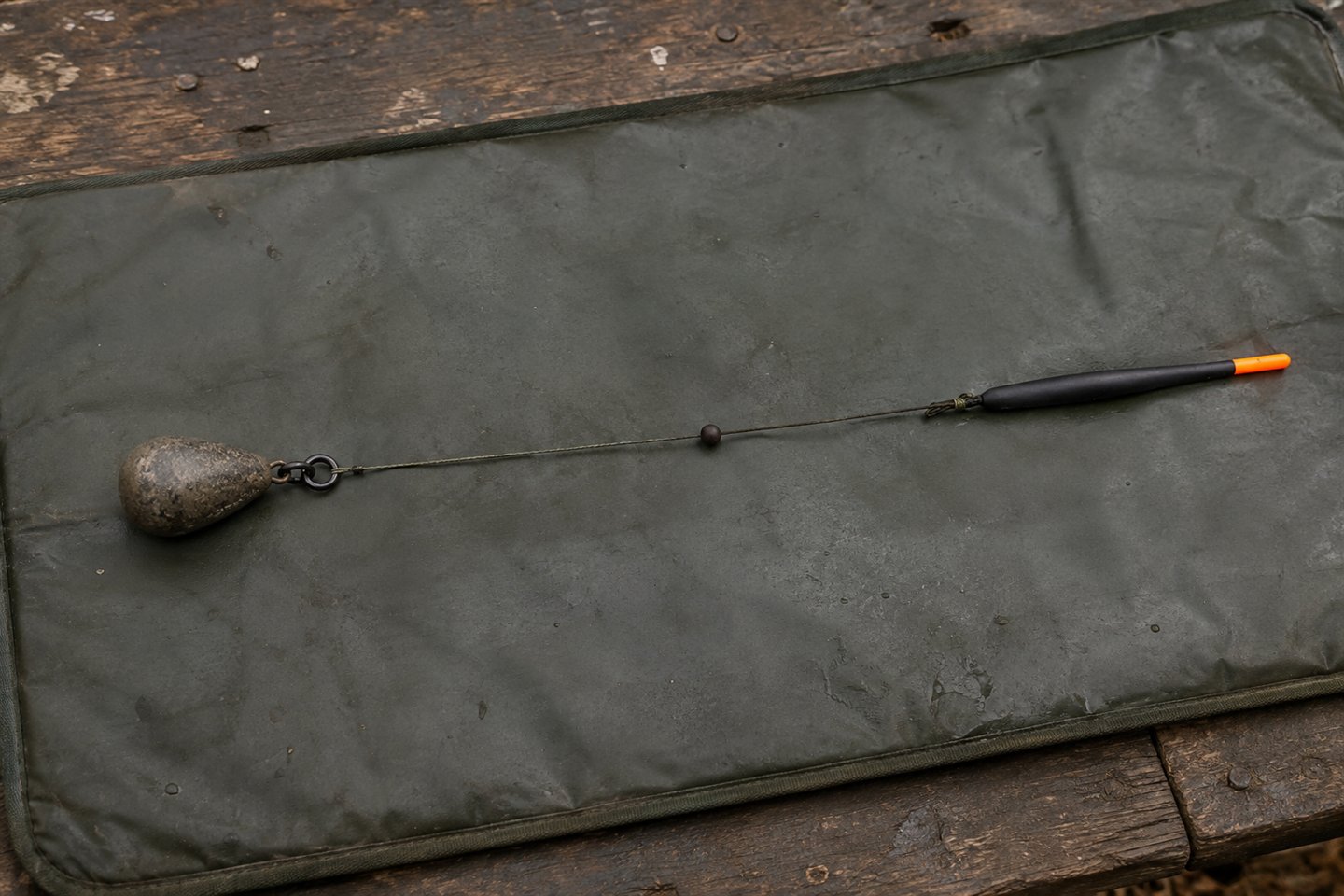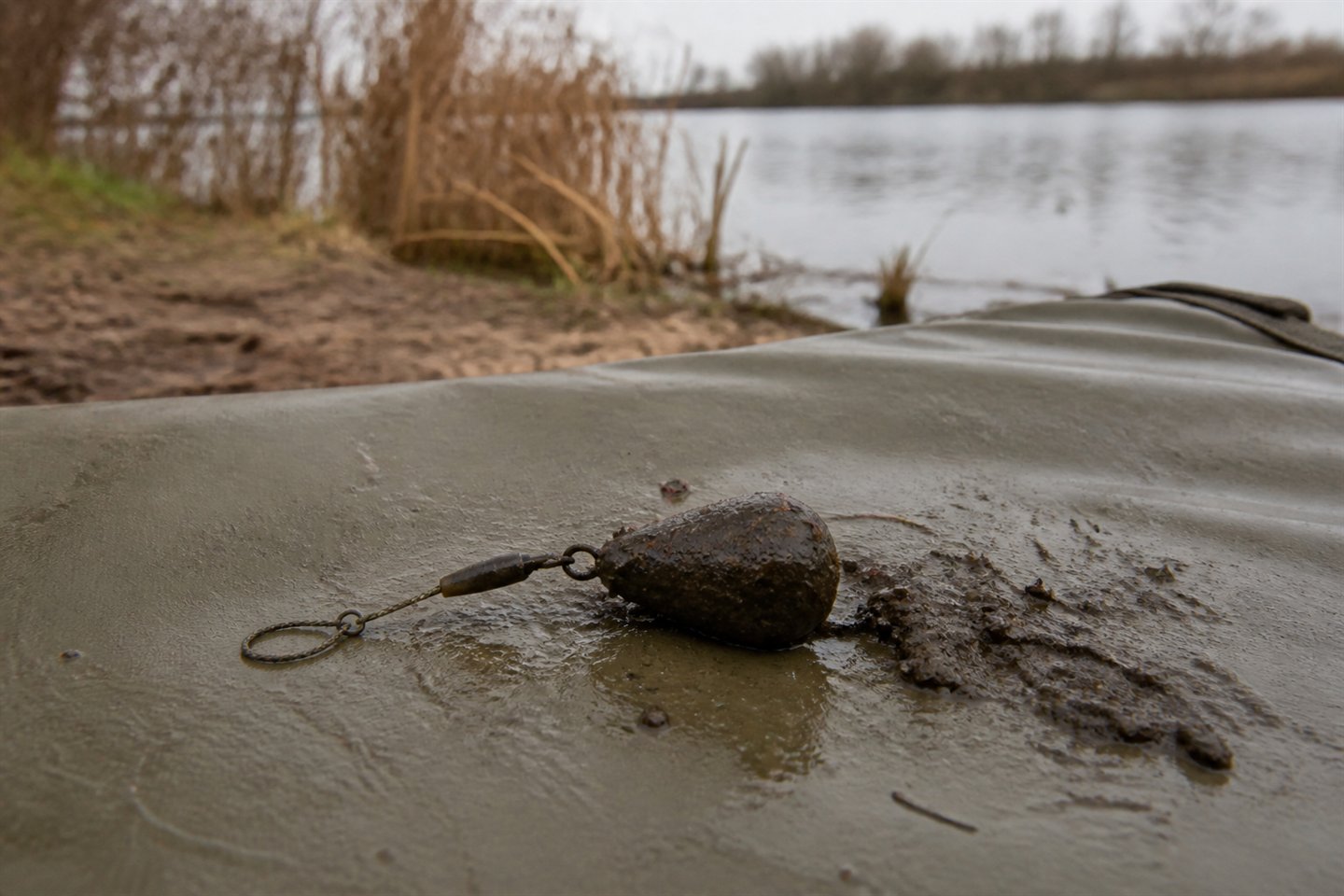
A lovely hard gravel patch isn't much use if the carp never visit it. Find fish first, then check the patch, its edges and your line route. We'll look at presenting a rig cleanly and checking what comes back on the hook.
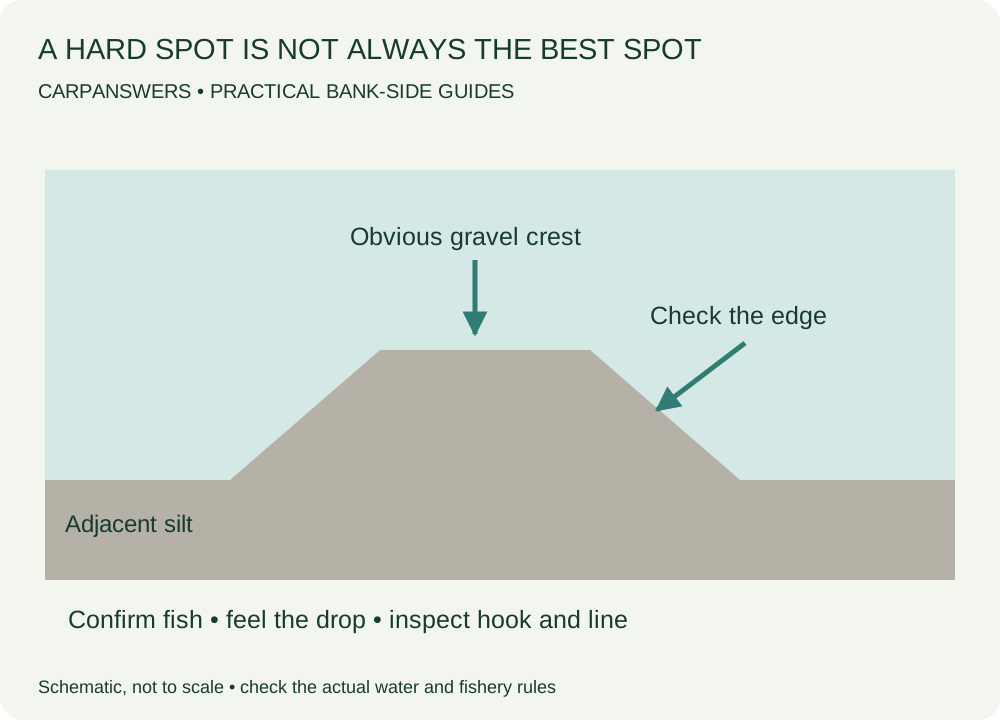
A hard patch can make presentation straightforward, but an obvious gravel bar may also receive plenty of leads and bait. Its quieter edge, or the adjoining silt, can deserve just as much attention as the polished centre.
This guide covers the lakebed and presentation. If you are choosing areas on a big, open water, use the large gravel-pit guide as well. A gravel pit is a type of venue; its bottom is not necessarily gravel everywhere.
Carp fishing on gravel: which part of the spot is useful?
Walk and watch before getting the marker rod out. Repeated shows, feeding signs or fish travelling through a particular area give you a reason to investigate there. A beautiful bar at the other end of the lake does not help if the carp are nowhere near it.
Ask the bailiff about depth changes and safe areas, but avoid treating an old hotspot as a booking for a bite. Fish may use the same feature differently as weed grows, water levels change or angling pressure increases.
Our guide to finding carp is the starting point. Once you have a promising area, make only the casts needed to understand a fishable spot. If carp are already feeding close in and the bottom is visible, you may need very little exploratory casting.
How to find gravel spots for carp fishing with a lead
A firm landing can produce a clear tap or “donk” through the line and rod. Gently drawing a feature-finding lead may then produce a rough, tapping sensation as it moves over stones. Those are clues, not a guaranteed identification.
Clay, compact sand and a hard base beneath a thin layer of sediment can also give a positive landing. At range, wind and line bow can soften or confuse the signal. Compare nearby casts using the same lead and a similar rod position rather than judging one dramatic thump.
The marker-float and feature-finding guide explains the full process. Korda's lakebed guide also distinguishes the sensations from different bottom types; feel needs interpreting alongside retrieved material and depth.
Inspect the lead when it comes back. Scratches, pale deposits, weed or soft material add information, but they may have been collected during the retrieve rather than at the landing point. Do not describe a whole patch from one dirty lead.
Should I fish the edge or centre of a gravel patch?
Once you find a firm patch, check a little shorter, longer and to either side where it is safe and considerate to do so. You are trying to find its usable size and how it relates to depth, silt and weed.
A narrow crest can be awkward if a small casting error puts the rig down the far side. A slightly wider shelf may be easier to fish accurately, even if the drop feels less impressive. Reliability matters more than winning a competition for the loudest landing.
Record the casting position, far-bank aiming mark, stick spacing and wraps in the Distance Stick / Spot Card tool. Add a note such as “firm patch ends a little left” rather than just “gravel”. Keep your private spot notes private if the venue is sensitive about shared locations.
Do not assume the shortest route back is safe. A clear gravel patch beyond a heavy weedbed can create a landing problem. Decide how you would control and net a carp before introducing bait.
Gravel or clay: does the distinction matter?
It matters when it changes presentation, abrasion or how the lead sits. Firm, smooth clay may allow a rig to lie neatly without the sharp contacts of coarse gravel. Softer clay can grip a lead, so the label alone does not tell you how the finished setup behaves.
Rather than choosing a different rig for every material name, ask whether the hooklink can settle without bridging lumps or sinking awkwardly. Can the hookbait move as intended? Is the hook point clear? Is the lead system safe if the line breaks?
If the feature runs into soft sediment, compare the silt fishing guide before extending the same short presentation across both areas. One lakebed change can justify an adjustment, but not every patch needs a new rig.
Keep the rig familiar and test the hookbait
A straightforward bottom-bait or properly balanced wafter presentation can suit a clean, firm spot. A pop-up can also work, but gravel does not demand one. Choose a rig you understand and test the complete baited assembly in water.
Use the Carp Rig Selector to compare suitable presentations, then follow the linked detailed guide or workshop. It is a guide to options, not a way to certify an unseen spot as safe.
For a familiar hair-rig approach, Korda Wide Gape X size 6 barbed hooks (paid link) are one component option when that size and pattern suit the rig. This listing is barbed, so it is not suitable for a barbless-only venue. Select the correct hook for your bait and rules rather than treating every variant as interchangeable.
Do not pull the finished rig across the bottom just to feel that satisfying gravel tap. Do your feature finding with the appropriate separate setup, then place the baited rig with a controlled cast and feel it settle.
Why should I check a carp hook after fishing on gravel?
Contact with stones can damage a hook point. Examine it closely under good light, including after a cast that appeared perfect. If it is turned over, blunted or otherwise doubtful, replace it or use a sharpening method you are competent with and that suits the hook.
Run your fingers carefully along the line and hooklink away from the hook point to check for roughness or damage. Inspect the section that crosses any bar, not just the final few inches. Replace damaged material rather than relying on the printed breaking strain.
If you repeatedly retrieve damaged tackle, reconsider the line route or spot. More abrasion resistance may be appropriate, but it is not an excuse to fish across a hazardous feature you cannot manage.
How much bait should go on a gravel patch?
Enough for the situation, not enough to cover the whole feature because you spent an hour finding it. Start with the fish, session length and recent feeding evidence. A small, accurately placed parcel may be useful on a short trip; sustained feeding fish may justify measured top-ups.
On a pressured clear patch, watch whether fish repeatedly skirt the centre. A bait near a safe edge may be worth testing, but do not claim every carp avoids obvious gravel. It is an observation to investigate, not a new universal rule.
Keep track of what missed casts have added. If several parcels land beyond the intended spot, the feed area has changed even though your chosen wraps have not. Correct accuracy before adding more.
A practical first attempt
- Locate activity and choose a safe area to inspect.
- Compare a few controlled lead drops and retrieves.
- Identify a manageable patch and check its edges and landing route.
- Record the range and aiming point.
- Test a familiar rig, cast accurately and leave it settled.
- Inspect hook, hooklink and line when retrieving.
If hitting the patch is inconsistent, shorten the range or choose a larger safe target. Work through the accurate casting guide before blaming the rig.
Gravel fishing questions
Does a hard donk always mean gravel?
No. Other firm surfaces can produce a positive stop. Compare the retrieve, adjacent casts and depth before deciding what you have found.
Should I always fish the edge of a bar?
No. Inspect both the feature and its surroundings, then use fish signs and presentation to choose. The edge is an option, not a guaranteed secret spot.
Can I ignore hook checks on fine gravel?
No. Check after every retrieve. A small damaged point can undo otherwise careful preparation.
Save what actually happened in the Session & Catch Log. A reliable note about where a rig settled and what the fish did is worth more than simply labelling the swim “gravel”.