A big gravel pit can feel daunting when you're used to smaller carp lakes. Break it into manageable areas and look for fish before searching for a spot. We'll work through location, feature finding and a baiting plan you can adjust as you learn.
Large pits can contain shallow shelves, deep open water, bars, islands, weed and quiet bays within the same view. The variety is interesting, but it can also persuade a newcomer that every feature deserves a rod. Begin with fish location and safe access. A beautifully mapped patch on the wrong side of the lake is still on the wrong side of the lake.
We'll concentrate on your first day fishing from the bank: where to look and how to narrow the search. You can use the marker-float, casting and watercraft guides for the detailed techniques. There's no need to begin with boat work or extreme-range casting; keep to the fishery rules and the fishing you can manage.
Carp fishing on gravel pits: choose the area before the spot
First choose an area of the lake: a bay, arm, bank or open-water sector. Then choose a swim within that area that offers safe access to the fish or their likely route. Finally choose the actual presentation spot within the swim. Making these decisions in that order keeps a small attractive patch from distracting you from stronger evidence elsewhere.
At the largest scale, ask where carp have been seen recently and what parts of the water are realistically available. At swim scale, consider casting angles, other anglers, wind exposure and the route to the net. At spot scale, check the bottom, line route and rig. Each stage answers a different question; none can be replaced by finding the hardest gravel with a lead.
Keep a provisional plan rather than insisting that the first choice must be correct. Large-water fishing often involves incomplete information. The useful habit is to distinguish what you know, what you suspect and what would make you change your mind. That produces a more adaptable session than a confident story about a feature nobody has actually seen fish using.
Research the boundaries before the bottom
Obtain the fishery's current map and rules before travelling. Identify the water included in the ticket, permitted banks, closed areas, parking, access routes and any limits on moving swims. A large complex may contain neighbouring lakes or conservation areas that look connected from the path but are not part of the same permission.
Ask about the stock, usual fish sizes, known snags, seasonal weed and the sort of experience expected. A pit that suits an established member with years of local knowledge may be a poor first carp venue. If the water demands boat-assisted landing, extreme casting or specialist equipment, choose a more manageable introduction rather than hoping general tackle will cover it.
Check where help can be reached and how the site describes emergency access. Save the relevant contact details and tell someone your planned area and return time. A long walk around a remote pit adds time to any problem, so the practical arrangements matter even on a calm daylight visit.
Don't treat a map photograph as a current depth chart. Aerial imagery may show old weed patterns, construction stages or a different water level. Use it to understand shape and access, then verify conditions from the bank. Never enter closed ground or use unapproved drone or boat equipment to improve a picture that is only meant to guide a first walk.
Walk with a purpose
Carry only what you need for observation while following the venue's access rules. Inspect useful viewpoints, compare sections and note safe swims before loading a barrow into one of them. On a very large pit, a complete circuit may consume much of the day, so choose a sensible route that compares genuinely different areas rather than walking for its own sake.
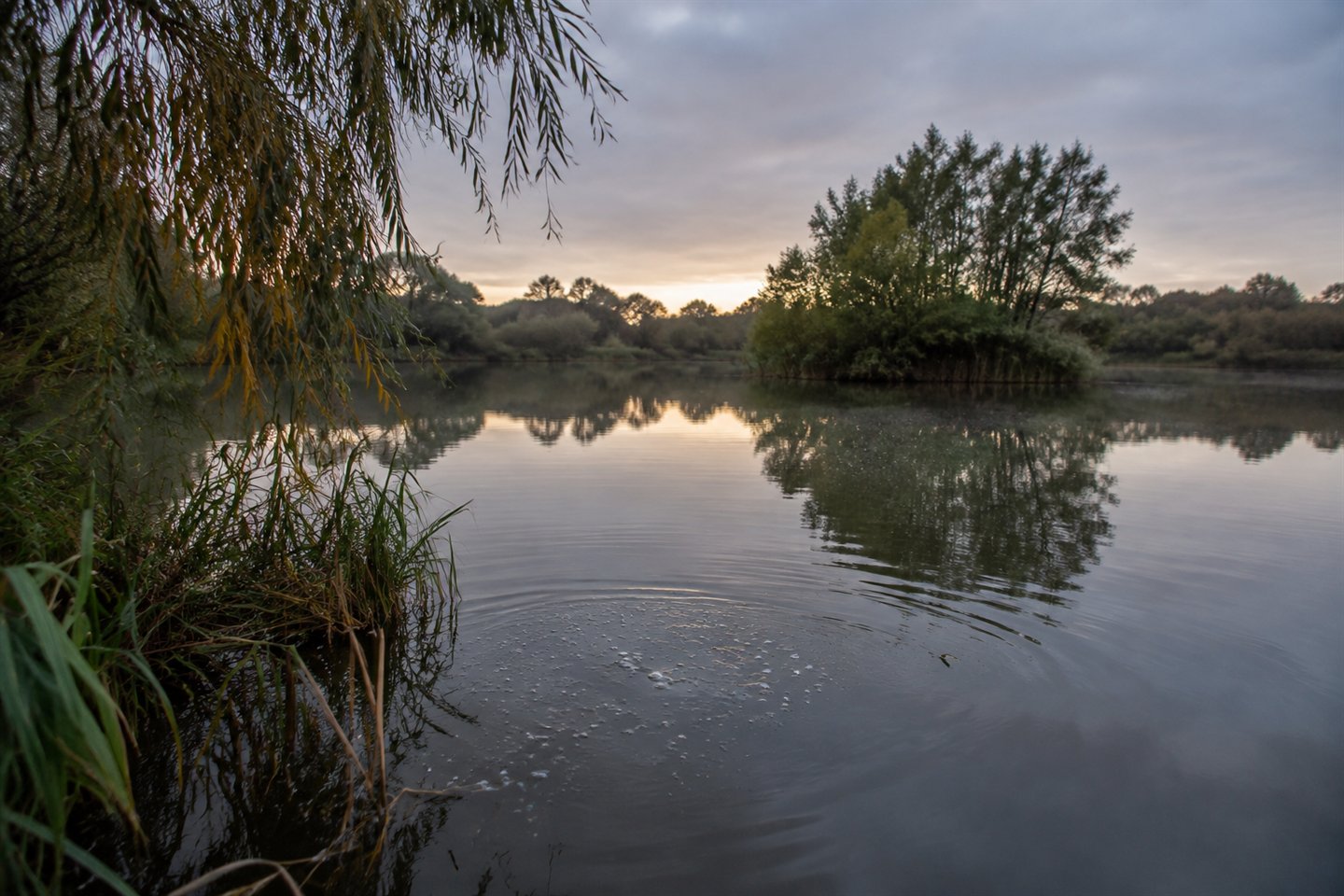
Look for repeated shows, visible carp in accessible margins, fresh disturbance and changes in activity as you move around the water. Record the direction and approximate distance of clear sightings. A fish rolling near an island is more useful information when you can identify the island and the side of it than when the note simply says fish showing out in front.
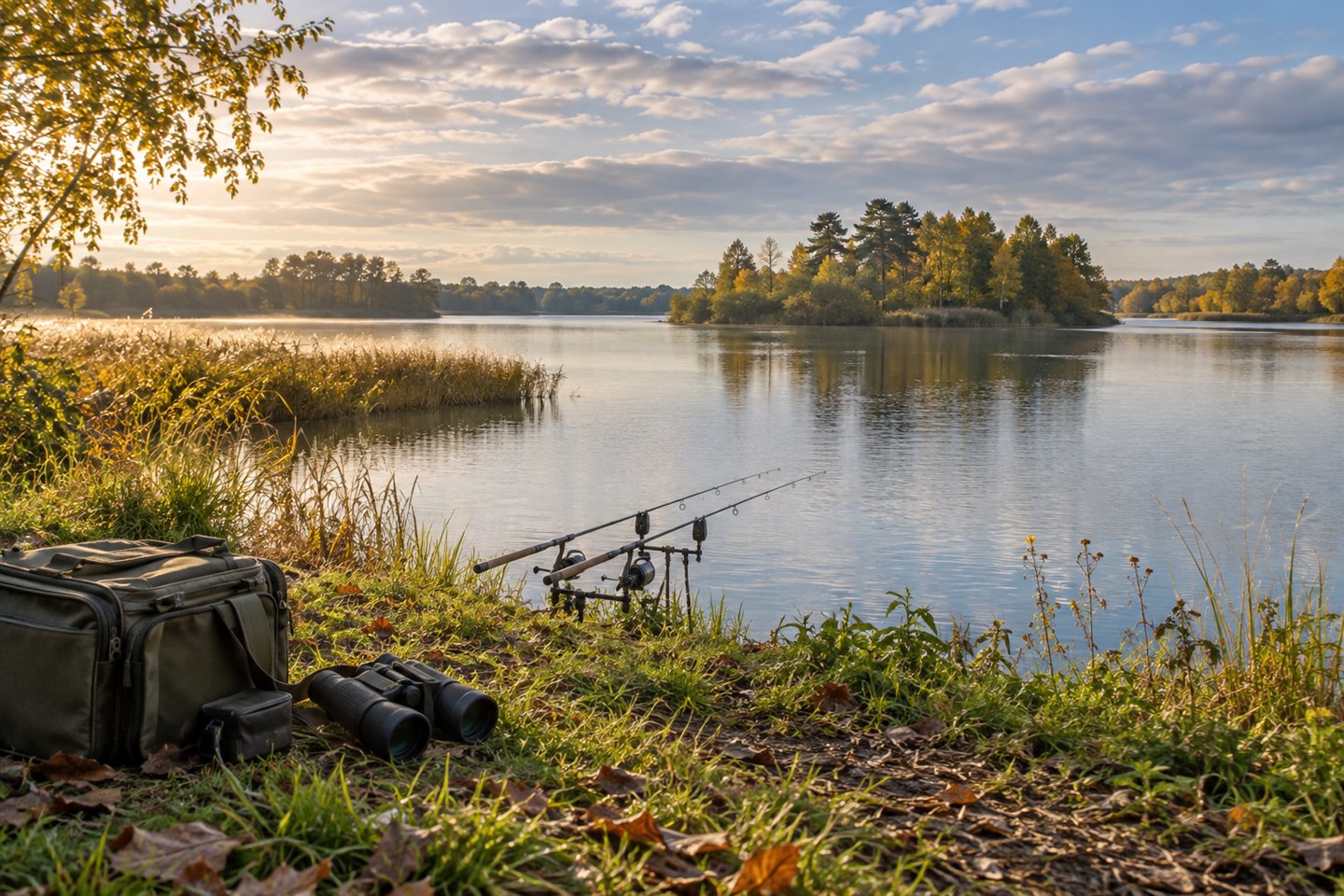
Pause long enough at each useful viewpoint to let the surface become readable. Wind, glare and background colour can make one bank appear lifeless while the same area is easier to inspect from another safe angle. Polarised glasses help with suitable marginal visibility; binoculars can help distinguish distant activity without needing to move immediately.
Don't climb trees or edge onto unstable banks to improve the view. The Royal Life Saving Society UK's water-safety advice stresses awareness of hazards around water. On former excavations, treat steep margins, unexpected depth and insecure footing conservatively rather than assuming that clear water means safe access.
How to find carp on a large gravel pit
Direct fish sightings deserve attention, especially when repeated, but consider what they show. Fish cruising through a bay may not be feeding on the bottom there. Several rolls along a reachable route can support an area choice, while a lone splash beyond the middle of a vast pit may offer little practical direction.
Combine activity with accessible structure. A bay entrance, gradual shelf, island shoulder or open lane beside weed can help explain how fish move through an area. These are possibilities to assess, not a ranked list that works on every lake. The watercraft guide shows how to weigh clues without turning them into fixed rules.
Ask about recent conditions rather than relying entirely on the current snapshot. A wind that changed an hour ago may not have produced the same situation as one that has been settled for several days. Water level, weed growth, angling pressure and local management can also alter the usefulness of a familiar bank.
Give yourself a reason to reject an area as well as a reason to choose it. If fish are too far beyond safe range, all relevant swims are occupied or the available bank is unsuitable for landing, the observation may be useful for a later trip rather than today's fishing. Not every located fish creates an opportunity you should pursue immediately.
Use the wind as context, not an instruction
On a broad pit, wind can affect surface movement, drift and how comfortable different banks are to fish. Look at where floating material collects and whether carp are actually using the affected area. Don't assume the windward end must hold fish regardless of season, recent weather or the depth and shape of the water.
Use the Wind & Swim Planner to organise the bank directions and the conditions you want to compare. It is a planning aid, not evidence that carp have moved to a particular swim. Confirm its assumptions against what you can see and the options the fishery actually permits.
Think about practical control too. A strong crosswind can make long casts and line management more difficult, while exposed waves may complicate netting. A sheltered swim is not automatically the most productive, but a swim where your presentation and fish handling remain reliable may be the better beginner choice.
If conditions are deteriorating towards unsafe gusts or thunderstorms, change the plan rather than treating difficult weather as a sign of dedication. A large expanse of water can feel very different once wind builds. Keep the route back in mind and don't let the size of the walk discourage an early, sensible departure.
How to choose a swim on a gravel pit for carp
Once a promising sector is identified, compare available swims for access to it. A nearby peg may give an awkward angle across a bar or dense weed, while one slightly farther along offers a clearer route. Look at the line's likely path from rod to rig, not only the apparent distance to the feature.
Inspect casting space, overhead hazards, bank stability and the landing position before moving the full kit. Keep the fish-care area on secure level ground where the mat or cradle can be used properly. If the peg requires wading to net a fish, it is outside this beginner bank-fishing plan.
Discuss boundaries with neighbouring anglers when lines could overlap. Long-range fishing and island corners can make ownership of the water unclear. Ask the bailiff if necessary. Casting farther into another swim doesn't become acceptable because the pit is large or fish have been seen beyond your natural boundary.
Consider whether a move would remain realistic after setting up. A compact arrangement leaves room to respond if carp begin showing in another permitted area. That doesn't mean carrying too little welfare equipment; it means avoiding unnecessary furniture and duplicated tackle that turn every new observation into a reason to regret the first swim choice.
Investigate the bottom only after choosing the area
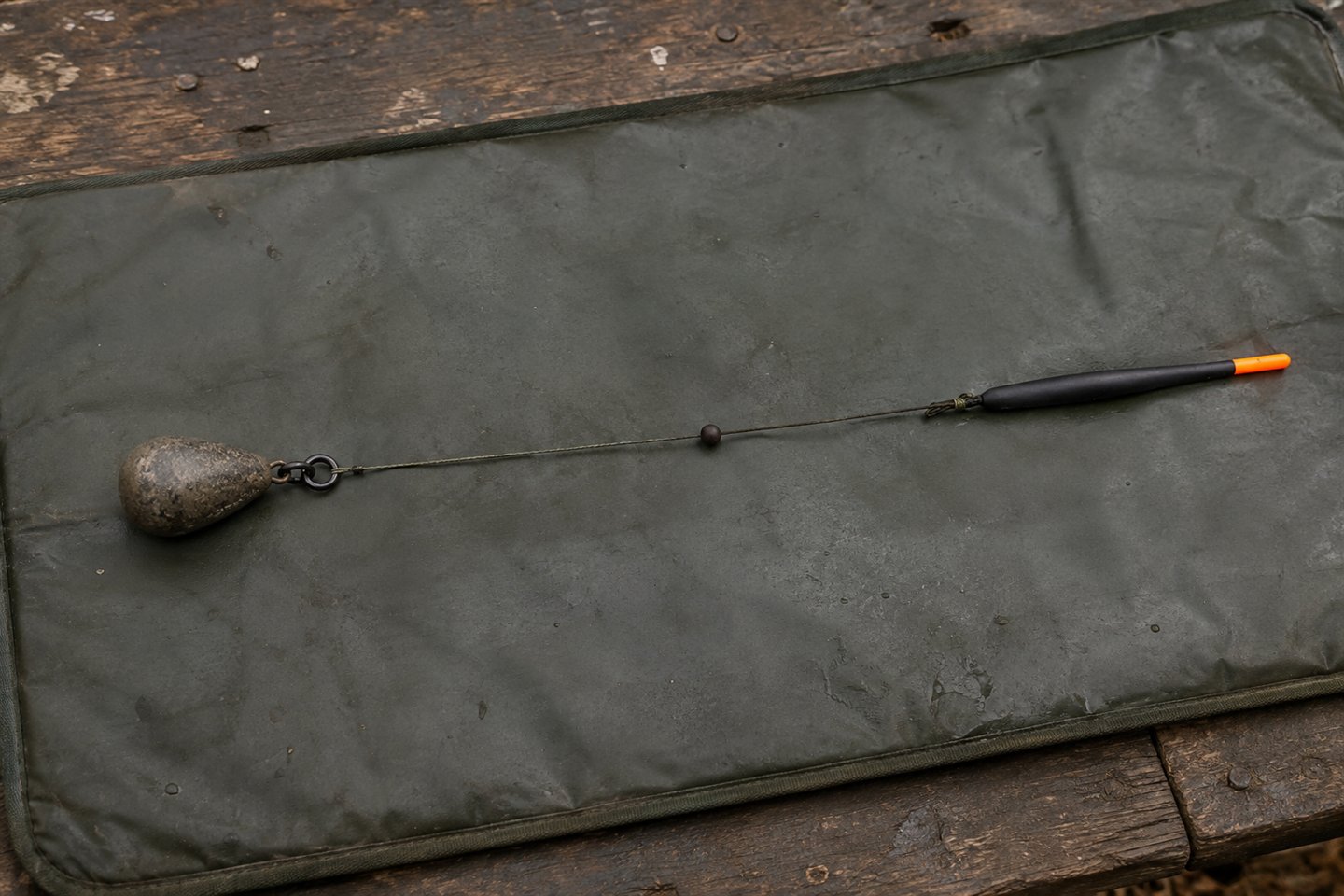
Start with a small number of controlled casts in the water you intend to fish. Feel how the lead settles and what happens when it is drawn back carefully. The purpose is to identify a usable presentation and any line-route problem, not to drag a lead across every square metre within range.
A distinct firm landing can indicate a hard area, while a softer response or weed on the retrieve offers different information. Interpretation improves with experience, so avoid claiming precise bottom types from one ambiguous cast. If you can't distinguish what is happening, choose a clearer, simpler spot or ask a competent angler to demonstrate the process.
The marker-float guide covers controlled depth measurement and feature finding. Use those techniques proportionately, keeping casts inside your water and avoiding repeated disturbance over clearly active fish. Manufacturer guidance such as Korda's finding-the-spot feature usefully separates location from the later job of establishing presentation.
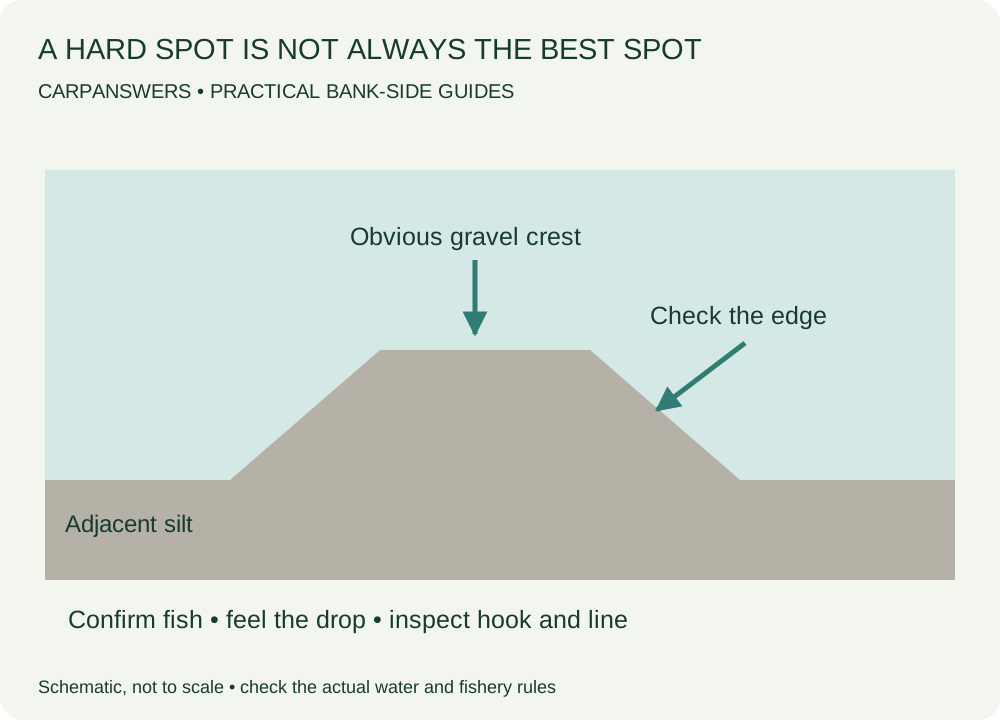
Don't assume that every gravel pit has a clean gravel bottom everywhere. Silt, weed, clay and debris can occur within the same swim, and a bright patch may be hard but unhelpful for the fish's route. The right spot is one you can fish safely in an area carp use, not simply the one that produces the sharpest feeling through the rod.
Understand bars, slopes and the line route
A raised bar can change depth and influence movement, but fishing over its far side creates a different line path from fishing its near slope. The main line may contact the crest before descending towards the rig. Consider abrasion and how the fish would be played back across that feature, rather than focusing only on the hookbait's landing point.
Steep slopes can make a rig's final position less certain. A lead may settle differently from one cast to the next, and tightening the line can move it. Choose a flatter or more understandable area if you can't establish a repeatable placement. A complicated bottom doesn't require an equally complicated rig as the first response.
Inspect the working length of main line after casts and retrieves. Abrasion, flattened sections or repeated roughness are reasons to investigate the route and change the spot if needed. Don't keep cutting away damaged line while treating the cause as an unavoidable feature of gravel-pit fishing.
The line-lay guide explains why extra slack can be unsuitable when a line crosses abrasive bars or weed. Choose tension and rod position for the actual route. Making the line less conspicuous is not worth losing useful indication or allowing it to settle into a known hazard.
Choose a first presentation with a clear purpose
A simple approved rig on a known clean area is a sensible starting point. Match the hookbait to the bottom and test the complete arrangement in the margin before casting. If the hook is tangled or the bait's balance is wrong, the pit's size doesn't make that small fault less important.
Don't feel obliged to fish every available rod. One can test the best identified area while a second covers a genuinely different safe option, provided both remain manageable. Three similar casts spread across uncertain bottom produce more lines, not necessarily more useful information. Keep the question behind each rod clear.
Begin with feed that fits the evidence. A small scattering or compact PVA presentation can provide a flexible start, while a larger established feeding area needs a stronger reason. The surface area of the lake alone is not a bait requirement. If you have not located fish, a large quantity of food doesn't solve the missing location.
Keep accurate casting central to the plan. The casting guide explains consistent placement and safe preparation. Fish within the range at which you can repeat the cast under today's wind, not your personal best distance achieved once on a still practice day.
A first day divided into useful phases
In the opening phase, confirm access and compare the most informative areas. The amount of time depends on the pit and your visit, but the aim is a defensible sector choice rather than a complete catalogue. Write down the clearest sighting and the strongest practical reason for the swim you select.
In the setup phase, organise fish care and establish one or two reliable spots. Stop exploring once you have enough information to fish the current opportunity properly. Continuing to map distant bars can become a way of avoiding the harder decision about where to put the hookbait.
During the settled phase, watch the broad area as well as the rods. Note whether activity stays close, moves along a route or appears in another accessible sector. Check indications and line behaviour, but don't repeatedly retrieve a sound presentation simply because the scale of the lake makes you impatient.
At a review point, compare the original reason for staying with the new evidence. Moving may be sensible when repeated fish activity develops elsewhere and the destination is available. Staying may be better when the present area remains convincing and only the lack of a quick bite is causing doubt. Record that distinction before making the choice.
Map only what will help the next decision
A useful first-day sketch can be very simple: the swim, a safe casting reference, measured range, an approximate depth where actually checked and the areas you should avoid. Mark uncertain observations as uncertain. A diagram filled with guessed contours can look impressive while being less useful than five accurate notes.
Keep fish activity separate from physical features. A bar is a fairly persistent observation; carp using it at a particular time is a session-specific one. Record dates, light, wind and the quality of the sighting so later visits can test whether the pattern repeats rather than treating one morning as the permanent behaviour of the lake.
Note practical limitations too: a cast that was difficult in crosswind, a netting position that needs a longer handle or a path that became slippery after rain. These observations directly improve safety and efficiency next time. A successful large-water notebook records how to fish an area responsibly, not merely where somebody once caught a large carp.
When a move is worth the effort
A good move has three parts: stronger evidence of fish, a suitable available swim and enough remaining time to use it. If one is missing, the move may be more emotional than practical. A distant splash alone should not trigger an hour of packing and pushing a barrow around the pit.
Check the destination and its rules before dismantling. Retrieve all rods, secure hooks and move essential equipment together. Don't leave one rod fishing in the original swim while carrying the net to the next one. Once moved, rebuild the fish-care area before casting, even if carp are visibly active and the temptation to rush is strong.
Sometimes the best result of a sighting elsewhere is a plan for the next visit. If the area is occupied, inaccessible or beyond today's safe limit, write it down and continue making the best of the present session. Large-water angling improves through repeated informed visits, not only through immediate action.
Equipment worth considering
A marker float and suitable lead can help investigate depth and bottom when you know how to use them safely. Distance sticks support repeatable casting, while polarised glasses and compact binoculars can improve observation from authorised positions. Choose each for a clear job in your search routine rather than buying every mapping accessory at once.
Prioritise sound main line, appropriate terminal tackle and a net and mat suitable for the pit's carp. A large-water label doesn't automatically require extreme-range rods or heavy specialist leads. Check the load your rod can cast and your own reliable range in current conditions. Practical waterproof storage for notes or a phone can be useful, but keep essential communication accessible and don't let recording a map distract from attending the rods.
Fortis Bays polarised sunglasses (paid link) can help inspect nearby shelves, while Korda SUBline monofilament (paid link) is an example to assess when your existing main line needs replacing. Look at line diameter, abrasion risks and the demands of a safe casting distance, not an assumption that every gravel pit requires the heaviest available option. These items support observation and a dependable setup; they don't reveal the distant lakebed or guarantee access to fish.
Frequently asked questions
Should I find the deepest part first?
No. Depth is one part of the picture, not an automatic location answer. Carp may use shelves, bays, open water or different layers depending on conditions. Start with current activity and safe access, then investigate enough depth and bottom to understand the presentation you intend to fish.
Are gravel bars always the best spots?
No. Bars can be useful features, but clean silt or a suitable area beside weed may be just as relevant. A bar on the wrong side of the fish offers little advantage, and an abrasive line route can make it unsuitable. Location, presentation and landing safety must work together.
How much of the lake should I map on the first day?
Only enough to support a clear, safe fishing decision. Learn one area accurately before accumulating uncertain information from the entire pit. Save the best references and observations for the next trip. A short reliable map is more valuable than a detailed-looking sketch built from guesses.
Where to start carp fishing on unfamiliar big water?
Choose an area, watch for fish and find a safe spot you can present on. Keep the tackle and bait simple enough that you can move if you need to. Each visit will fill in another part of the picture. You don't have to understand the entire pit before enjoying your first session on it.
A gravel pit can contain several bottom types. Once you have located fish, use the gravel-presentation guide for an actual hard patch rather than assuming the venue's name describes every spot.
Sources and further reading
Reviewed on 15 September 2026: Korda: finding the spot and RLSS UK: safety around water. Venue maps, access restrictions and current fishery advice remain essential to planning a visit to a particular gravel pit.