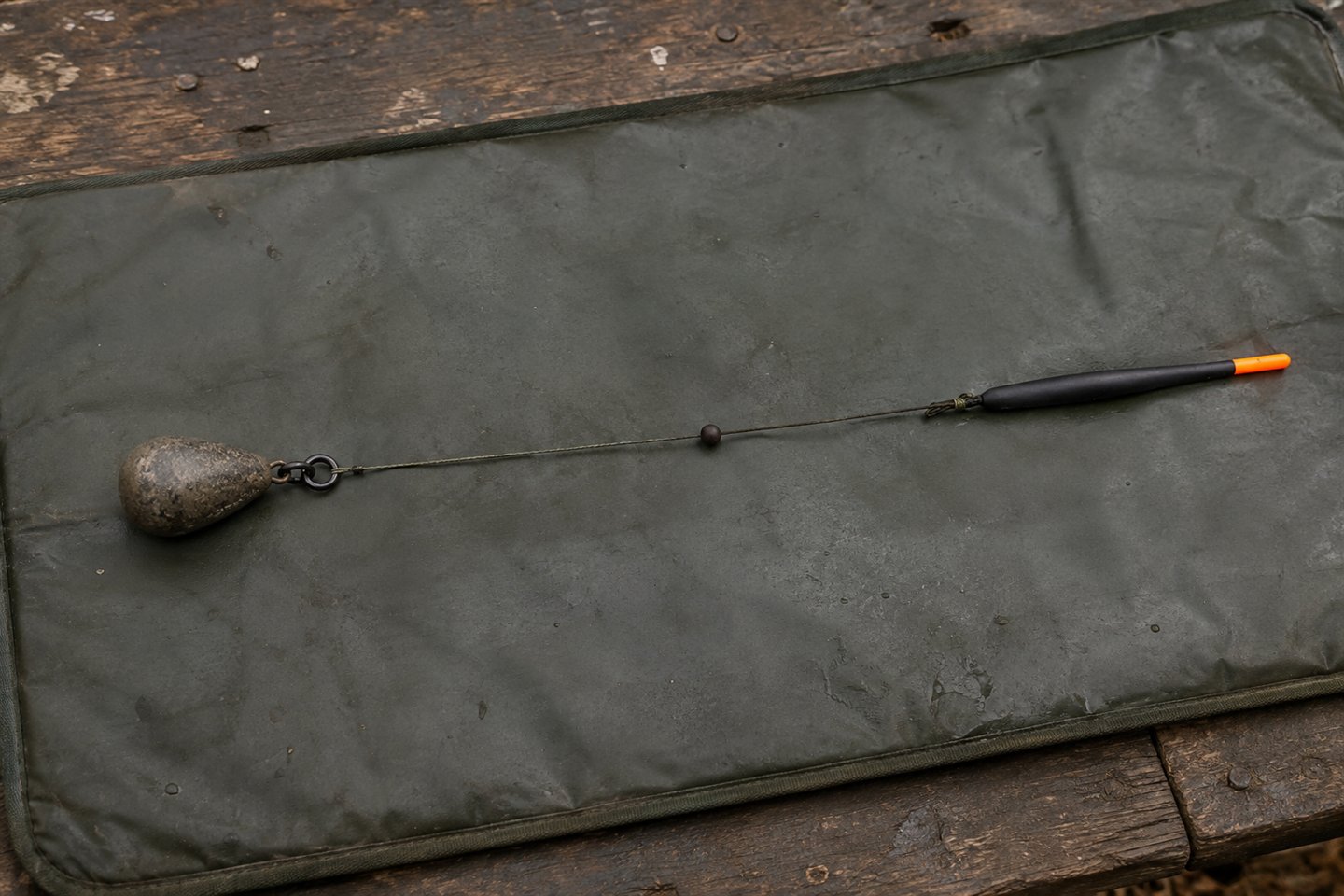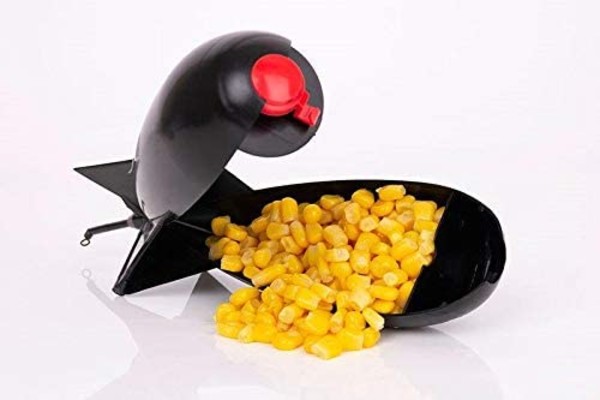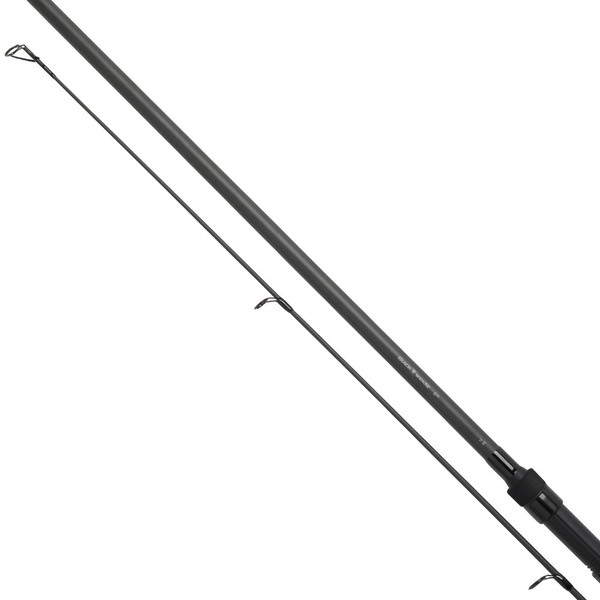
Casting a carp rod accurately starts with a comfortable distance, one aiming point and a smooth action. We'll work on repeating the cast, feathering the line and cushioning the stop. Get that right before worrying about extra yards.
Direction and distance are separate jobs. A far-bank tree, pylon or distinct break in the skyline controls the direction; the clip controls how much line leaves the spool. Your stance, lead drop, rod angle and finish need to stay consistent as well. When all those references agree, a recast in darkness or after landing a carp becomes much less of a guess.
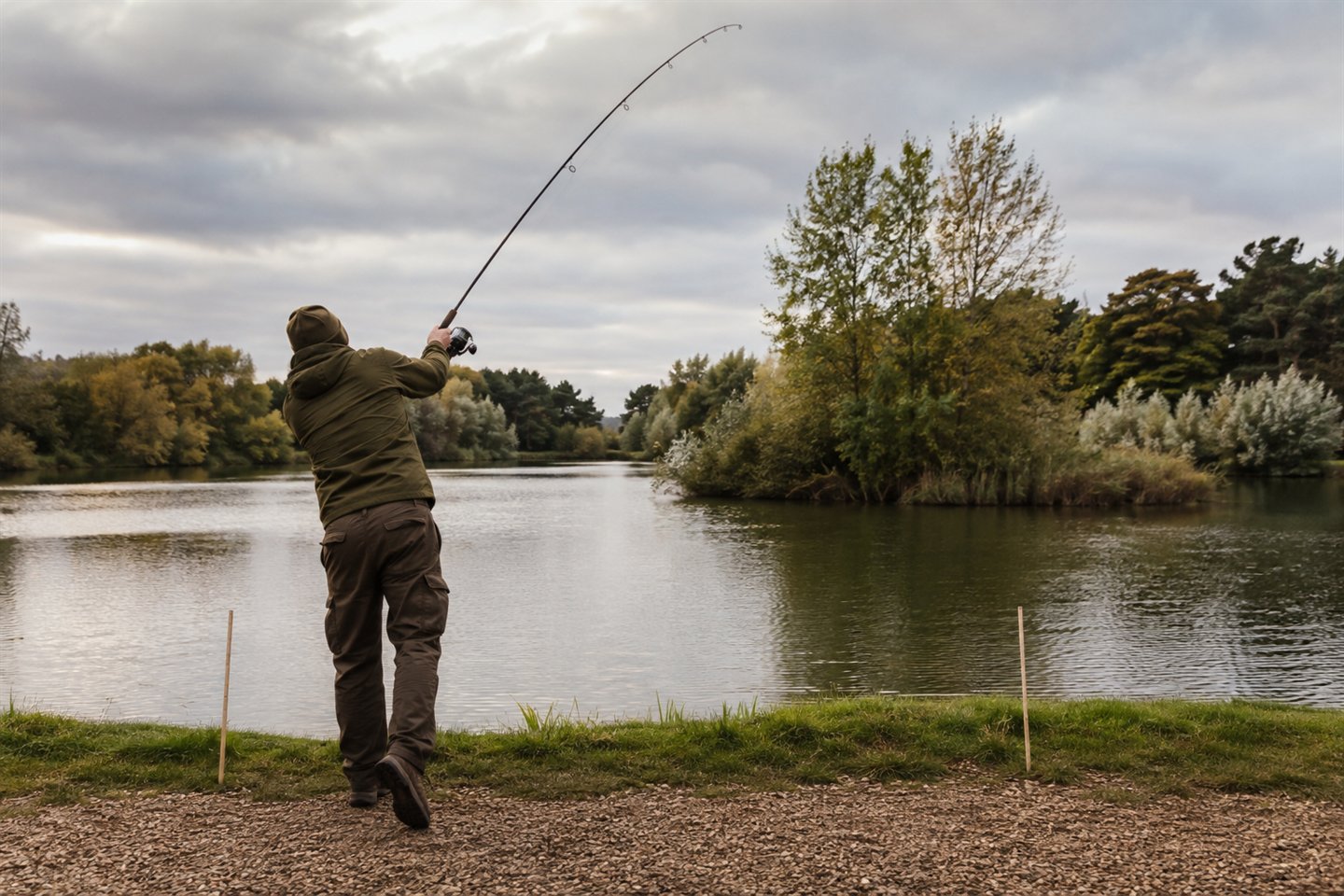
How to cast a carp rod accurately and repeat the cast
Start on clear water at a range you can reach without forcing the rod. Check the space above and behind you, pick a narrow aiming point and place the lead at the same hanging distance below the rod tip before every cast. Point your front foot and the casting path towards the target, accelerate progressively and stop the rod positively rather than snatching at it.
As the lead approaches the chosen distance, touch the line lightly against the spool rim to remove excess bow. Let the clip stop the remaining line while the rod is held high enough to cushion the stop, then move the tip forwards as the lead descends. A firm drop on clean ground gives useful feedback; a soft landing, weed or deep silt feels different. If the cast goes left or right, retrieve and cast again rather than accepting a rig that is merely the correct distance.
The line clip is a repeatability aid, not an automatic brake for every situation. Never leave a rod clipped up while fishing where a hooked carp could reach a snag before you can free the line. Once the rig is down, remove the line from the clip or mark the distance in another recoverable way whenever the swim demands it.
Safety comes before casting technique
Look up before assembling a carbon rod. Never fish or carry an erected rod beneath overhead electricity cables, and stop fishing if thunder threatens. Carbon is conductive and electricity can arc without the rod touching a cable. Carry long rods horizontally when moving around a fishery and follow every warning sign or excluded area.
Check behind for walkers, children, other anglers, trees and bivvy lines before every cast. A lead or loaded PVA bag travels with enough energy to cause serious injury. If the back cast is obstructed, shorten the cast, change position or choose another swim; don't try to thread a forceful cast through branches.
Inspect the rod rings, main line, leader where permitted, knots, swivel and lead attachment before practising. Use a casting finger stall or suitable glove when casting with braid, shock leaders or heavy loads, because line can cut a wet finger. Fishery rules on leaders and minimum line diameter take priority over a generic casting guide.
Balance the rod, reel, line and casting load
An accurate outfit is one you can control. The rod's test curve is not a universal casting-weight formula, so use the load range supplied for the exact model where the manufacturer gives one. Count the complete presentation: lead, hookbait, wet PVA bag, leader and any trapped water all add mass. Our guide to carp rod test curves explains why the figure printed on the blank is not a maximum lead rating.
A well-filled spool reduces friction, but overfilling it encourages coils to spill beneath the spool or around the clip. Lay the line evenly and stop below the spool lip by the reel maker's recommended amount. If the line bed is coned or loose, correct it before trying to diagnose your casting. The CarpAnswers reel-spooling guide covers backing, line lay and twist.
Thick, springy monofilament usually leaves the spool differently from supple line, while braid has almost no stretch and makes contact with the clip abrupt. Don't copy somebody else's casting load or shock-leader arrangement without checking that it is permitted and compatible with your rod. A slightly lighter presentation delivered cleanly is often more accurate than the heaviest load the outfit can survive.
Build a repeatable stance and grip
Stand on firm, level ground with enough room to transfer weight without slipping. For a right-handed overhead cast, many anglers place the left foot slightly forward and the right foot behind; reverse that for left-handed casting. The important point is balance. Your front side, shoulders and the path of the rod should be aligned towards the target rather than opening across it.
Hold the rod around the reel seat with the leading hand and near the butt cap with the lower hand. The lower hand is not decorative: pulling it towards the body while the upper hand pushes forwards helps accelerate the rod in a straight plane. Keep both movements smooth. A sudden punch with the top hand tends to twist the blank and send the lead away from the intended line.
Set the lead drop consistently, commonly somewhere around the lower half of the rod rather than tight to the tip. The best exact drop depends on rod length, action, lead and the space behind you. Changing it between casts changes the timing, so choose a safe, comfortable position and repeat it.
Choose an aiming point that works after dark
Pick the smallest permanent feature you can see comfortably: one side of a tall tree, a chimney, a gap in the skyline or the corner of a building. Avoid a boat, parked vehicle or patch of sunlight because it will move or disappear. At night, the silhouette of a tall feature is often more useful than a low marker hidden by the opposite bank.
Your target must also be safe. Make sure no path, platform, island visitor or neighbouring angler lies beyond the intended spot. Allow for a crosswind and for an occasional error. If the only way to reach a tiny area is to risk landing on the bank, in a tree or across another line, it is not a responsible target.
Record the marker in plain language with the distance: for example, “left edge of tall oak, 18 wraps and a quarter”. A photograph taken from the centre of the swim can help, provided the exact casting position is noted. Moving two metres along the bank changes the line to the spot even if the far marker looks similar.
Make the controlled overhead cast
Load the cast without rushing
Open the bail arm, trap the line securely with the casting finger and check once more that it is not looped around the tip. Bring the rod back in a straight, controlled movement. Pause only long enough for the lead to settle behind you; allowing it to swing in a large arc changes both timing and direction.
Begin the forward stroke progressively. Push the upper hand towards the target while pulling the butt hand down and in. The rod should bend under the load and then recover. Power applied early and smoothly is useful; a last-second jerk is not. Keep your eyes on the aiming point rather than watching the lead behind you.
Release on the target line
Release the trapped line as the rod accelerates through the forward stroke. Too early usually produces a high, short cast; too late can drive the lead low or towards the ground. Don't try to repair a poor release by grabbing at the spool immediately. Let the lead reach open water, stop it safely and practise the movement at a lower effort.
The rod should finish on the intended line. If your leading hand sweeps across your body, the lead will commonly follow. Think about sending the reel seat towards the far marker. Film a few practice casts from safely behind the caster if venue rules allow; the sideways movement that feels invisible in the hands is often obvious on video.
How to feather a carp cast
Feathering means using light contact with the spool rim or line to slow the lead and reduce the bow before it reaches the clip. As the rig enters the final part of its flight, bring a fingertip towards the spool rim and increase pressure gradually. Don't jab a finger into fast-moving braid or try to stop a heavy lead instantly.
Good feathering straightens the hooklink behind the lead and makes the final stop gentler. It also gives you a chance to stop a badly directed cast before the terminal tackle reaches a far-bank hazard, provided that can be done safely. Start practising with monofilament, a modest load and short range, wearing a finger stall where appropriate.
Timing depends on the height and speed of the cast. Feather too early and the lead falls short; leave it too late and a large bow remains when the clip is reached. Watch the lead rather than counting seconds. With practice, the touch begins when it is descending towards the target, not while it is still climbing.
Hit the line clip without bouncing the rig backwards
The clip should be reached when the lead is low enough to enter the water under control, not high above the spot with a belly of line behind it. Hold the rod high as the line tightens, then let the tip move forwards to cushion the stop. With low-stretch braid, that cushioning matters even more because the system has little elasticity.
Stopping the rod dead and keeping it behind you makes the lead rebound. So does hitting the clip violently at maximum speed. A smooth cast, progressive feathering and a forward-moving tip dissipate the load. If the clip is being struck hard enough to damage line or bend the clip, reduce the casting force and practise closer.
Inspect the clipping point regularly, especially when using thin line. Some reels have a round spring-loaded clip intended to be line-friendly; others have a sharper edge. If a clip marks, flattens or cuts the line, don't keep using that damaged section. Record the distance, replace the affected line and use an appropriate alternative marking method if necessary.
Follow the lead down and read the drop
After the line reaches the clip, point the rod towards the descending lead and keep light contact rather than pulling the rig back towards you. The aim is to follow, not to hold it suspended on a tight line. In deep water, holding too firmly can make the lead swing back significantly from where it entered.
Just before the lead reaches bottom, feel for the transmission through the blank. A crisp, positive “donk” suggests firm ground; a muted stop can indicate softer silt; a springy or staged sensation may indicate weed. Those descriptions are relative, so compare areas with the same rod, line and lead rather than treating one sensation as proof.
If the drop feels wrong, retrieve and inspect the hook and rig. Weed on the point, a tangled hooklink or a damaged PVA bag is not rescued by the fact that the cast landed near the marker. Use the marker-float guide to investigate the spot with separate feature-finding tackle before repeatedly casting a hook onto unknown ground.
Measure and record the distance with wraps
Once a cast has landed correctly, keep the line in the clip, reel in and measure it around two vertical distance sticks set a known distance apart. Twelve feet, or four yards, is common, but use the supplied cord rather than assuming every pair is identical. Keep each turn level and around the same part of both sticks. Sloping wraps and leaning sticks multiply small errors.
Count complete wraps and estimate the final fraction carefully, then repeat the count while winding the line back onto the reel. Keep gentle tension so loose coils don't spring off. Write down the wraps, aiming marker, rod position and any adjustment made for water depth. The proposed CarpAnswers wraps tool can turn that record into yards and metres, but the number of wraps is the most useful repeatable bank reference.
Measure the spod and marker rods independently. Different line stretch, rod angle and casting load can change where each lands even at the same number of wraps. The loose feed may need to enter slightly short of the hookbait at some depths, but there's no universal subtraction that works for every casting style and spot. Check the result visually in suitable conditions and make a modest, recorded adjustment.
Allow for crosswinds, depth and line stretch
A crosswind pushes the line after the lead, creating a curve that can pull the terminal tackle off line or make it reach the clip early. Aim modestly into the wind, keep the trajectory controlled and feather the bow out. If gusts make the cast unpredictable, shorten the range or move to a safer presentation rather than forcing the original plan.
Monofilament stretch softens the clip and can make a cast measured with braided marker line behave differently. Wind also acts on a thick main line more strongly. This is why the most reliable record is made with the fishing outfit itself after the spot has been found, not copied directly from a different rod.
In deep water, a lead followed down under tension travels towards the angler as it sinks. That “swing-back” becomes important at short to medium range. Don't compensate with an arbitrary formula. Observe the angle, compare the fishing and baiting setup, and verify presentation wherever clear margin conditions or underwater viewing make that possible.
Accurate casting with PVA bags and longer rigs
A solid PVA bag is compact but much heavier when filled, so check the full weight against the rod maker's guidance. Compress it consistently, remove trapped air and keep the shape aerodynamic. Bags of different size or density don't follow the same flight, even when attached to the same lead.
Long supple hooklinks need more care. A small, fishery-approved PVA mesh stick or dissolving tape can keep the hooklink controlled, but every presentation must still be tested. Feathering helps separate the hookbait from the lead; it cannot guarantee that an untidy rig has not tangled.
Never practise power casting with a hook swinging freely. Use a suitable casting lead and a controlled practice area, or secure the hook safely within a correctly made PVA arrangement. The solid PVA bag guide explains how the package changes the way a rod loads.
Diagnose misses one cause at a time
Repeated misses to one side usually point to alignment, rod path or release timing. Check where the leading hand finishes and whether the shoulders rotate across the target. Alternating left and right often comes from varying the lead swing or trying to add power late in the stroke. Reduce effort until the cast becomes repeatable.
Casts that reach the correct line but land short may be released too high, feathered too early or stopped by a large bow in the line. A lead that bounces backwards has probably met the clip too hard or too high. Change one element and make several casts before judging it; altering stance, lead, drop and release together hides the cause.
If distance declines during a session, inspect the spool and rings. Wet loose coils, weed around the tip, a wind knot or line caught under the spool can create sudden friction. Stop at the first unusual sound. Forcing the next cast risks a crack-off and leaves tackle in the lake.
A simple accuracy practice session
Practise only where the fishery permits repeated casting and where no other angler is affected. Choose a broad, open target at modest range and make ten casts with the same safe lead. Record only whether each cast is left, right, short or on target. The pattern is more informative than the best individual cast.
When eight or nine casts are landing within a useful area, add the clip and practise cushioning it. Then change to a second direction while retaining the same range. Finally, measure the distance, remove the clip, wrap back up and see whether you can reproduce the cast. That sequence teaches both delivery and recovery.
Professional casting tuition is worthwhile before attempting extreme range. A coach can see release timing and body alignment while also checking whether the tackle suits the intended load. Extra distance should be the result of cleaner technique, not an increasingly violent cast.
Recasting accurately at night
Do all feature finding and measuring in daylight. Record a skyline marker that remains visible, clear the casting area and place essential tackle where it cannot be tripped over. A dim headtorch can help with the reel and line, but staring into a bright beam destroys distance vision; switch it down before aiming.
Use the same marked standing position, lead drop, wraps and rod finish. Make a smooth cast below your maximum range. Listen for the lead entering the water, feel it down and retrieve immediately if anything is uncertain. Darkness is not the time to accept a poor cast or explore an unmeasured target near an island.
Keep a short practice record you can use again
For each practice target, note the range, aiming mark, casting position, lead or complete load, wind and the pattern of misses. Use the Distance Stick / Spot Card tool to preserve the spacing and wraps, not just an approximate distance remembered later.
Set a practical target width suited to the actual fishable patch. A cast landing just outside it is a miss even if it looks impressive from the bank. Reduce the range until you can place the rig reliably, then build back gradually.
After a change, compare several controlled casts using the same setup. Changing lead, line, stance and force together makes it difficult to know what helped. If the load is unsuitable, correct that first with the rod guide and Tackle Setup Builder rather than trying to practise around an unsafe mismatch.
Once delivery is consistent, connect it to the feature-finding guide and accurate baiting guide. The useful result is a rig and feed on a known, safe spot—not a personal-best cast beyond the area you meant to fish.
Frequently asked questions
Should I keep the line in the clip while carp fishing?
The clip is useful for casting, but whether the line can remain clipped while the rig is fishing depends on the swim. Near weed, snags or other hazards, free the line as soon as the rig has settled so a taking carp can use a correctly set clutch. Record the wraps so the distance can be restored.
Why does my lead spring back when I hit the clip?
It is usually reaching the clip too fast, too high or with too much bow. Feather progressively, cast with less force and allow the raised rod tip to move towards the target as the line tightens. Braid makes a harsh stop more pronounced because it stretches very little.
Do I aim the rod at the far-bank marker?
Use the marker to align the whole casting path. Your front side, hands and rod should travel towards it, and the rod should finish on that line. The exact release angle controls trajectory, so simply pointing the stationary rod at the tree is not enough.
How far should I clip the spod rod behind or in front of the fishing rods?
There's no fixed answer. Water depth, trajectory, line type, rod angle and how each lead is followed down affect the final position. Begin with carefully measured comparable distances, observe where the bait lands and make a small recorded adjustment rather than relying on a universal number.
Final thoughts
Accurate carp casting is a repeatable process: choose a stable direction marker, cast within the outfit's safe load, feather the line, cushion the clip and feel the lead settle. Measure the successful cast and record both wraps and direction. When a cast misses, retrieve and correct it.
Get comfortable with a smooth, accurate cast before adding distance. Keep the casting area clear, check your line and use suitable protection. A few extra yards can wait. Putting the rig back neatly on the spot is useful on every session, and it's a skill worth practising whenever you have a safe opportunity.