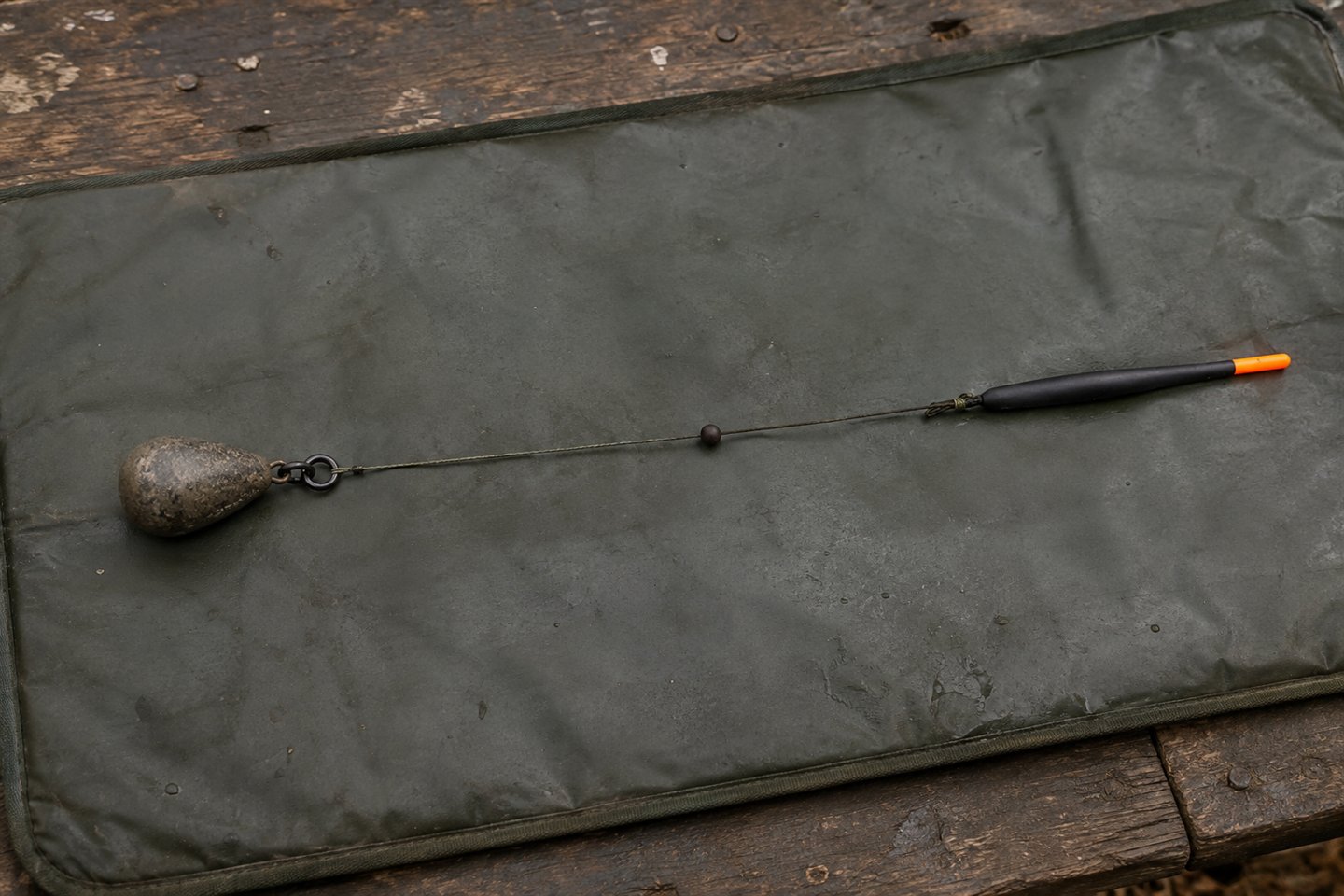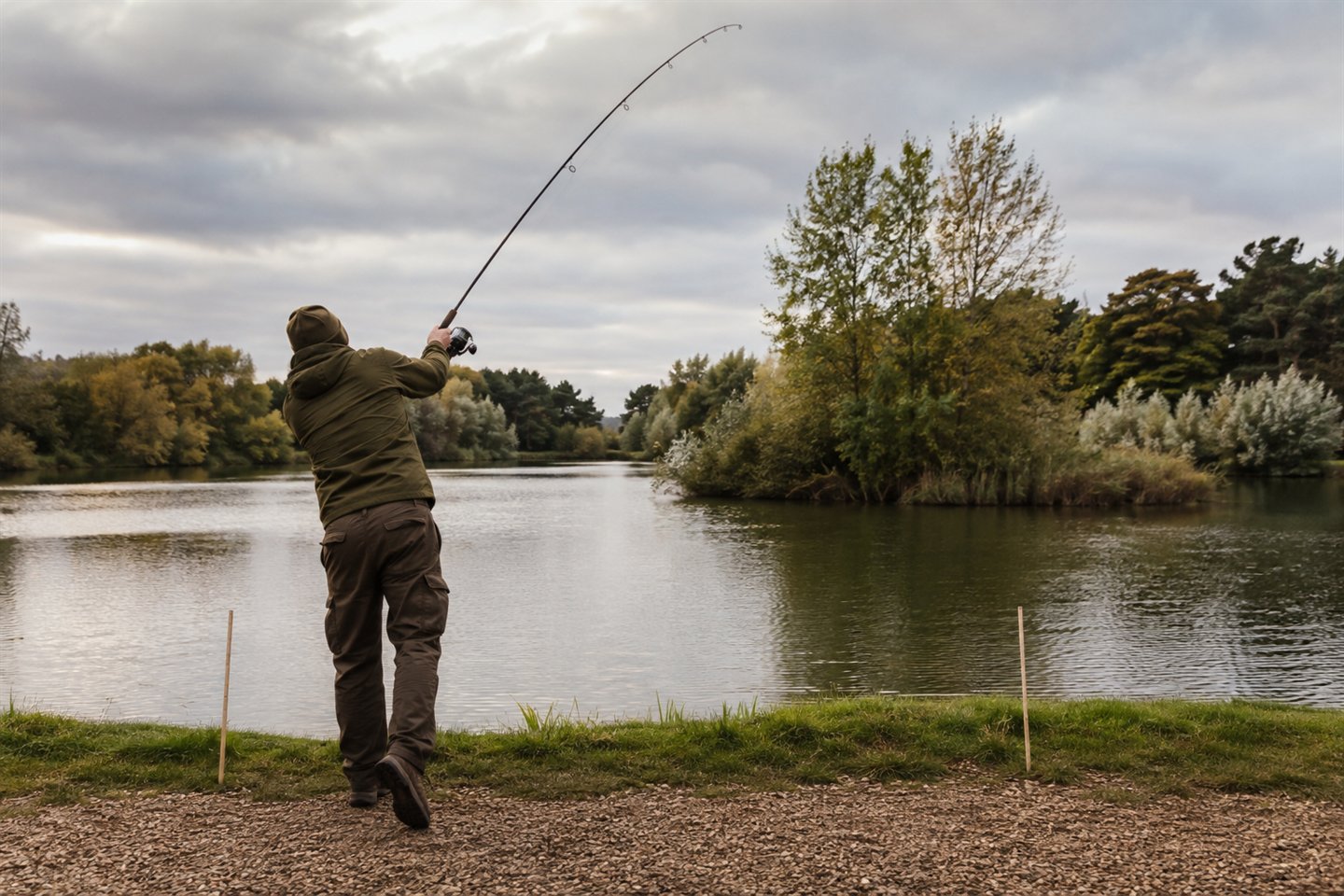
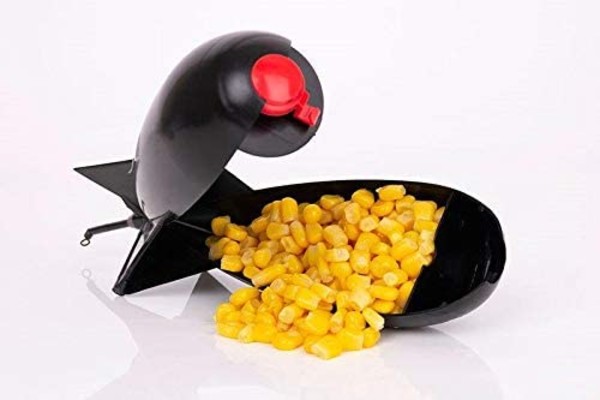
Want to spod more accurately? Start at a comfortable range, keep the load consistent and pick one clear aiming point. You don't need to cast to the horizon; you need your feed and rig to end up in the same place.
The basic method is to find a safe fishing spot first, measure it in wraps, transfer that distance to the spod rod and choose one fixed feature on the far bank as your direction marker. Cast smoothly, lift the rod as the braid reaches the line clip and let the rod tip cushion the final part of the flight. Then count every measured load so you know roughly how much bait you have introduced.
You don't need to cast at maximum range or buy the largest baiting device to make this work. A small Spomb or spod that you can land within a few feet of the same place is usually more useful than a large one landing over a wide area. Accuracy gives you confidence that the hook bait is sitting near the free food, and it also stops you spreading more bait than the fish can comfortably find.
How to spod accurately without spreading the bait too far
There are two parts to accurate spodding: distance and direction. Clipping the braid at a measured range controls how far the device travels, while a clear far-bank marker controls the direction. If either one changes, the baited area becomes wider. Foot position, casting height and the amount of bait in the device also affect where it lands, which is why a repeatable routine matters so much.
It is also worth being realistic about the target. A baiting device opens at the surface, after which particles, pellets and boilie crumb fall through the water. Crosswind, undertow, depth and the weight of each bait item can spread the mix before it reaches the lakebed. The aim is therefore a controlled feeding area around a well-presented rig, not an imaginary dinner plate on the bottom.
Choose tackle that can handle a loaded spod
A dedicated spod rod is designed for repeated casts with a heavy payload. Check the rod manufacturer's casting guidance against the complete loaded weight, because a device that feels light when empty can become surprisingly heavy when packed with wet particles. A standard carp rod should only be used if its maker rates it for that load; guessing risks damaging the rod and sending a baiting device somewhere dangerous.
A suitable spod reel doesn't need to be complicated, but fast line recovery makes a long baiting session far less tiring. A dependable line clip, sensible line lay and a handle you can grip comfortably are more important than cosmetic features. Our guides to spod and marker rods and spod and marker reels explain what to look for when putting a setup together.
Floating braid is popular on spod reels because its small diameter casts well, its lack of stretch makes the clip distance consistent and it can be lifted clear of the water during retrieval. That same lack of stretch makes poor technique less forgiving. Check the fishery rules before using braid or a shock leader, follow the tackle manufacturer's knot guidance and never assume that a leader allowed on one lake will be accepted on another.
A finger stall or proper casting glove is essential for powerful casting with thin braid. The line can cut an unprotected finger as the spool releases at speed. Inspect the braid, leader, knots, swivel and attachment before every baiting spell, particularly after a crack-off, contact with weed or repeated impacts against the clip.
Find the spot before you mix the bait
Accurate baiting begins with accurate feature finding. Use a marker float or a bare lead to identify an area where the rig can be presented safely, and make sure the lake's rules allow the method you intend to use. Our detailed guide on how to use a marker float covers plumbing the depth and reading the lakebed without treating every tap through the rod as absolute proof.
Once you have found a clean or suitably firm area, make another controlled cast to confirm it. A single cast can mislead you if the lead has landed on a small patch of weed or debris. Feel the lead down, draw it gently across the bottom and compare the sensation with the surrounding casts. The aim is a spot you can find again, not simply the first place where the lead appears to stop.
Before winding in, select a far-bank marker that remains easy to see in changing light. The left edge of a tall tree, a chimney or the corner of a building is more useful than a vague instruction such as “towards the bushes”. Avoid choosing a movable object, a gap that disappears in darkness or a branch that blends into the skyline when cloud arrives.
Stand in the exact part of the swim from which you'll cast the fishing rods. Moving a metre along the bank changes the line to the feature, even when the far-bank marker looks similar. Make a quick note in your phone or fishing diary with the swim, wraps, marker, depth and a brief description of the bottom. That note becomes very useful when you return weeks later.
Measure the fishing distance in wraps
Distance sticks turn a successful cast into a measurement you can repeat. Place the sticks in straight, firm ground with an accurately measured gap between them. Twelve feet is a common spacing because one complete wrap around both sticks represents four yards, but the number only works if your sticks really are that distance apart. Consistency is more important than copying somebody else's setup.
Put the lead beside the first stick, then walk the line around both sticks under light, even tension. Count each full wrap aloud or use a clicker, and record any final half or quarter wrap. Keep the rod and reel in the same position throughout. If the clutch slips or the line hangs loosely between the sticks, your measurement will not represent the cast accurately.
When the correct distance is reached, place the line in the fishing reel's clip. Some anglers also mark the line with a suitable line marker as a backup, especially when they need to release the clip before playing a fish. The written wrap count remains the safest record because marker lines can fade, move or become difficult to find at night.
Transfer the distance to the spod rod
Wrap the spod rod to the same recorded distance as the fishing rods and place its braid in the clip. Keep similar tension on the line while measuring. A tightly stretched braid measurement and a loose monofilament measurement will not be perfectly comparable, so use a calm, repeatable method rather than pulling either line as hard as possible.
If the spod reel has more than one clip, record which one holds each spot. It is very easy to remember that one clip is for the gravel area and forget which clip that was after a busy afternoon. A note such as “18.5 wraps, left of oak, silver clip” takes seconds and prevents a baiting cast landing on the wrong line.
Leave enough room behind you to make the cast safely and check overhead as well as across the water. Long carbon rods and overhead power lines are a lethal combination. The complete casting arc and likely line of a crack-off must be clear of anglers, walkers, wildlife, boats and property before a loaded device leaves the ground.
Build a repeatable casting position
Return to the same mark in the swim for every cast. Place your feet in a comfortable position, align your shoulders towards the far-bank marker and start with the device hanging the same distance from the rod tip. These details may feel fussy, but changing them alters the rod's loading and release angle. A small paving joint or mark in the bank can help you reset consistently.
A smooth cast is easier to repeat than a violent one. Accelerate the rod progressively and allow the blank to do the work. If you're straining for every extra yard, move the target closer or choose a smaller device. There's no advantage in reaching a distant spot if half the bait lands away from the rigs or the tackle is being pushed beyond its safe limit.
Keep your eyes on the fixed marker rather than watching the rod tip during the power stroke. Release at the same point and let the device climb on a controlled flight. A very high arc gives the wind more time to move it, while a low flat cast may hit the clip abruptly or cause the device to dive. The most accurate trajectory is the one you can reproduce in the conditions.
Fill every Spomb consistently
Uneven loads change both casting weight and flight. If one Spomb is half full and the next is tightly packed, they may react differently even though the braid is clipped at the same distance. Use roughly the same scoop or fill level for every cast, close the device without forcing bait around the release button and wipe away anything that stops the shell meeting properly.
Wet particles should be drained enough that liquid doesn't pour through the device during the cast. Dry crumb can blow out if the shell is not closed, while long pieces of chopped boilie may bridge the opening mechanism. Prepare a mix that loads cleanly and check the hinge and release after any failed opening.
Consistency also makes your bait quantity meaningful. Six similar medium loads tells you far more than “a few spods” of different sizes. Record the device, mix and number of casts, especially if you plan to compare sessions. Our big carp spod mix guide gives you a starting point for building a practical mix.
How to hit the line clip without cracking off
The final part of the cast is where accuracy and safety meet. As the device approaches the clip, raise the rod towards a near-vertical position and allow the tip to bend as the braid tightens. That movement cushions the impact and helps the device slow down. Pointing a straight rod directly at the flight removes the cushioning effect and puts a sharp load through the clip, braid, leader and knot.
With practice, use a finger on the spool rim or braid to feather the flight shortly before it reaches the clip. The aim is gentle control, not grabbing the line suddenly. Feathering straightens the line, helps the device land nose first and reduces the violent rebound that can occur when an unchecked cast hits the clip.
Listen and feel for the difference between a controlled clip hit and a harsh stop. If the tackle jolts in your hands, the device recoils or the leader repeatedly fails, stop and correct the method. Check the loaded weight, knots, braid and rod rating before casting again. Replacing a broken device without fixing the cause simply repeats the risk.
Let the baiting device open before retrieving
Most impact-opening devices release when the nose hits the surface, but give the device a moment to open before winding. Watch for the body changing position and the bait falling away. If it stays closed, a gentle pull may release it, depending on the model. Don't jerk it repeatedly through a baited area or modify the mechanism in a way the manufacturer doesn't recommend.
Retrieve with the rod tip positioned so the empty device skips across the surface rather than diving. Wind smoothly and maintain enough line tension to prevent loose loops forming on the spool. A fast-retrieve reel saves effort, but frantic winding can create poor line lay around the roller or beneath the next layers of braid.
Every few casts, look at the spool and run a careful visual check over the leader and knot. A hidden loose loop can lock on the next cast and crack off the Spomb. Bait residue can also prevent the release closing properly, so clean the nose and hinge before the problem appears.
Should I clip my spod shorter than my carp rods?
Starting at the same measured surface distance is sensible, but it doesn't guarantee that the free bait and hook bait finish on the same point of the lakebed. The Spomb releases at the surface. A fishing lead then sinks, and on a tight line it can swing back towards the bank. Water depth, line bow, lead shape, monofilament stretch and the angle of the cast all affect the final position.
An Angling Times underwater test cast at 50 yards into 11 feet of water found the bait settling about three feet beyond the bottom rig when both casts used the same surface clip. Try the adjustment at your own range and depth, then check where the bait lands. A different depth, range, line or casting style could produce another result entirely.
Avoid relying on a formula that subtracts a fixed amount for every foot of depth. Use equal wraps as the starting point, understand how your own rig settles and verify it where possible. A clear shallow margin can help you see sink-back safely, while a marker float gives useful depth context at range. If presentation is uncertain, a slightly wider baited area is more honest than pretending you can calculate the exact centimetre.
How to spod accurately in a crosswind
A crosswind pushes both the baiting device and a bow of braid sideways. Choose the clearest fixed aim point available and make a modest allowance before casting rather than trying to wrench the rod sideways at the last second. A smaller aerodynamic device often holds its line better than a large, lightly filled one.
In a headwind, reduce the load or device size and use a smooth, slightly lower flight that still gives the nose time to turn towards the water. A tailwind can add unexpected distance, so be prepared for the braid to reach the clip sooner and raise the rod early enough to cushion it. Conditions can change within a baiting spell, particularly as gusts arrive.
Accuracy has a sensible limit. If you can't keep the device within the intended area, shorten the range, wait for a steadier period or select another safe spot. Choosing a closer area that you can fish and feed properly is better carp fishing than scattering bait at a range chosen for pride.
Match bait quantity to the situation
Accurate spodding doesn't mean heavy baiting. It simply gives you control over where and how much you introduce. On a new water, during cold conditions or when you're unsure how many carp are present, begin with a modest amount. You can add a few measured loads after signs of feeding or a quick bite, whereas excess bait cannot be removed.
On a productive water with a group of fish feeding confidently, a larger initial bed may be appropriate. Consider the stock, season, nuisance species, duration of the session and recent form rather than following somebody else's cast count. Ten loads of hemp and small pellets behave very differently from ten loads dominated by whole boilies.
Top-ups should be just as deliberate as the initial baiting. Note what happened after the first introduction and whether the swim became quieter or more active. A single accurate load after a capture may be enough to replace disturbed bait. Automatically spodding every hour can drive fish away or leave a large amount of food untouched.
Common accurate-spodding problems
How to stop a Spomb landing off target
Reset your feet and shoulders, check the crosswind and make sure the load sits evenly. Watch whether the casting release changes as you tire. Most side-to-side spread comes from direction, timing or wind rather than the line clip. Reduce the range and rebuild a smooth action before adding more power.
The baited area is becoming too wide
Use a smaller device, shorten the range and return to the same stance and marker. Make a few controlled practice casts with an empty or lightly loaded device if the venue allows it. Accuracy normally improves by removing variables, not by trying harder with the same inconsistent action.
Practise the process, not maximum distance
Measure the practice range in wraps so progress is objective. A tight group at 15 wraps is more valuable than one exceptional cast at 25 wraps followed by several wayward attempts. The same principle applies on a fishing session: repeatable placement catches more carp than a single long cast that cannot be reproduced with bait or a rig.
Record the baiting load as well as the wraps
Save the casting position, aiming mark, stick spacing, wraps and device size in the Distance Stick / Spot Card tool. Add the mix and a repeatable fill level. Ten casts with a small device are not equivalent to ten with a much larger one.
For a useful quantity check, weigh a representative loaded device and subtract its empty weight away from the water. Treat that as an estimate for similar loads, not a fixed manufacturer capacity. If the mix changes from dry pellets to wet particles, measure again rather than carrying the old figure forward.
Use that estimate with the Bait Quantity Calculator to divide the plan into an opening feed and later top-ups. Count miscasts too: their bait is still in the lake even when it missed your intended patch.
If accuracy deteriorates as the wind rises, stop and reassess the range instead of accelerating the rhythm. Return to the casting guide for controlled clip contact, and the marker guide if you are no longer confident where the rig settles relative to the feed.
Frequently asked questions about accurate spodding
Can I spod with a normal carp rod?
Only use a normal carp rod if the manufacturer rates that exact model for the total loaded weight and you remain within that guidance. Repeated heavy casting puts much more stress through the blank than an ordinary lead. A dedicated spod rod is the safer and more practical choice for regular baiting.
Do I need a braided spod line?
Braid is common because it casts efficiently, floats and has very little stretch, but it is not a reason to ignore venue rules or safe tackle. Use the permitted line and leader arrangement, check knots frequently and always protect the casting finger. Ask the fishery if its published rules are unclear.
Final thoughts on how to spod accurately
Accurate spodding for carp fishing is a chain of simple habits. Find a spot that can be fished safely, record the wraps and far-bank marker, transfer the distance, load the same device consistently and cast from the same position. Raise the rod to cushion the clip, check the equipment regularly and count every load.
Once the cast feels familiar, you can spend more time thinking about the bait and watching how the fish respond. Keep to a distance you can repeat comfortably, and top up for a reason. Getting the bait onto your chosen area matters much more than making the longest cast on the lake.
Sources and further reading
For further technical guidance, see Korda's guide to spodding tackle and technique and its explanation of using distance sticks for carp fishing. The Angling Times accurate-spodding feature includes the referenced underwater distance test, while Fox's Spomb information provides current product and safety guidance.