For a labelled anatomy reference and the current Korda-led component checklist, see the illustrated solid PVA bag guide in our beginner overview. Compare the exact rig before changing materials or connections; named rigs can have more than one version.
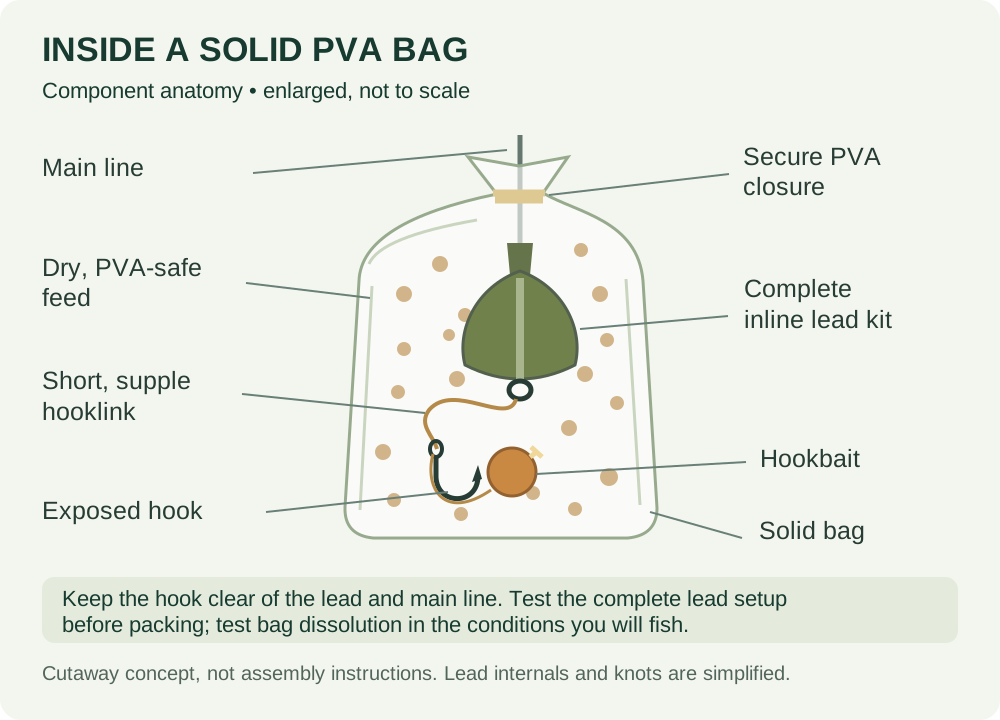
To make a solid PVA bag, pack a tested short rig and complete compatible lead setup inside dry PVA film with a small amount of dry feed, close it securely, remove loose corners and check that the whole parcel releases properly in water. The useful part is not simply making a tidy bag. It is knowing where the hook, bait and line are before casting and what must happen after the film dissolves.
This illustrated solid PVA bag tutorial expands our original guide while keeping the practical experience behind it. Work through one practice bag at home, make a second for a water test, then repeat the same packing method on the bank. You do not need an elaborate rig or a bucket of different additives to get started.
What a solid PVA bag does—and what it cannot guarantee
The film temporarily keeps the terminal tackle and loose feed together. Once submerged, it breaks down, allowing the bait and rig to separate. This makes a small, concentrated presentation possible without trying to cast several loose ingredients independently. It can also protect a carefully packed hook during the cast.
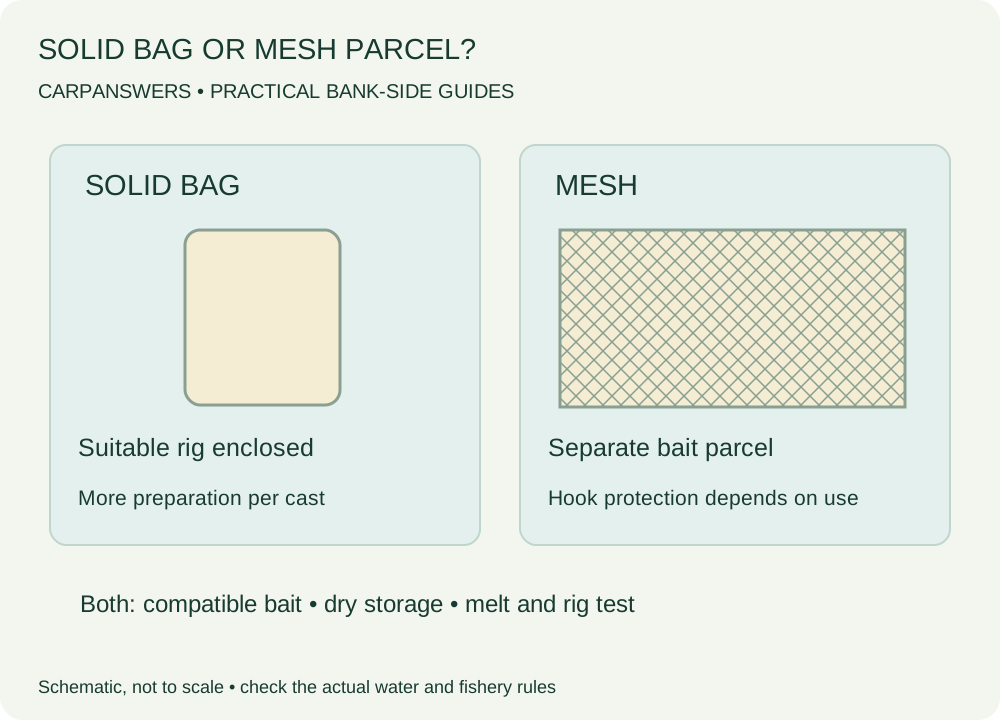
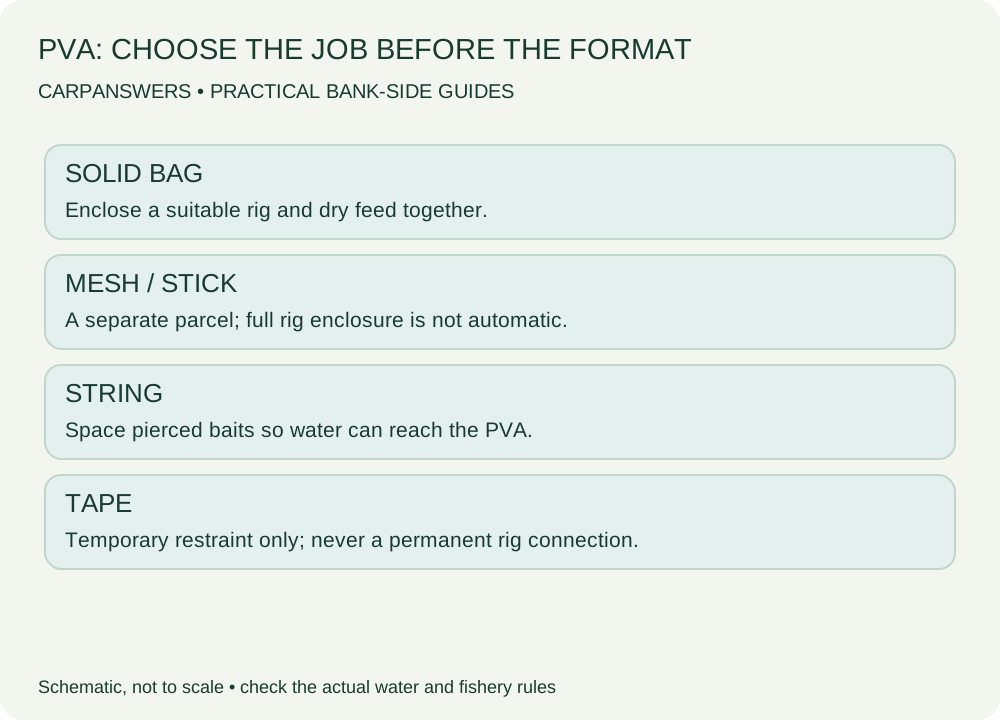
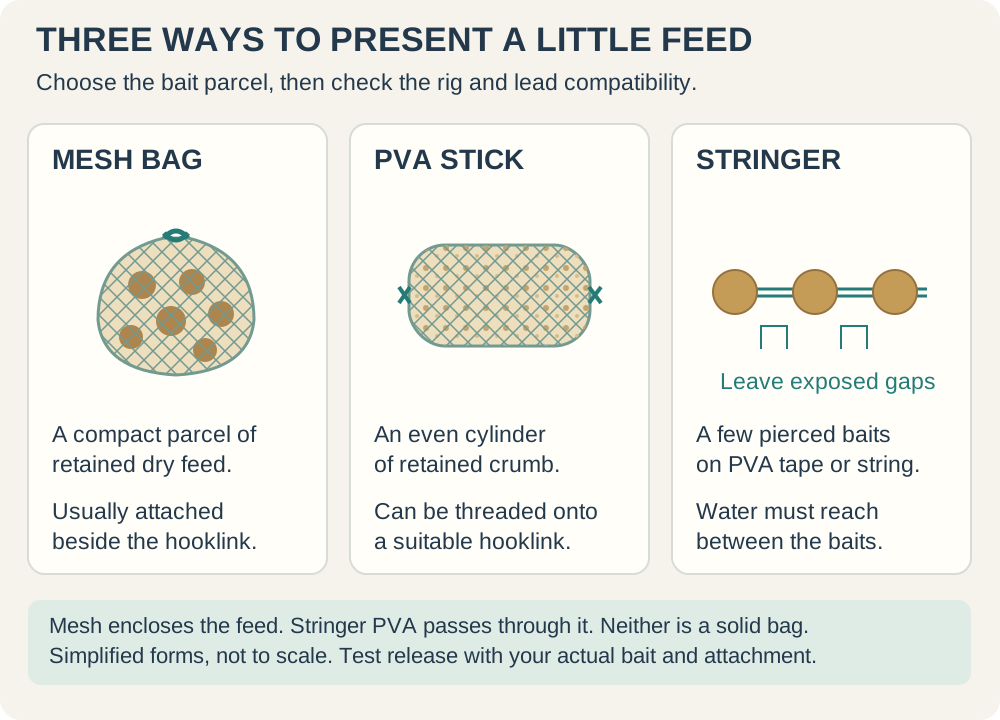
That is different from a mesh bag or stick, which normally travels beside or along the hooklink while the lead remains outside. The two methods need different packing and attachment decisions. A lead system approved for solid bags is not automatically suitable for a mesh parcel hooked onto the rig.
A solid bag does not guarantee an untangled rig, a clear hook point or safe presentation over every lakebed. It can split, roll, bury in soft debris or land somewhere unsuitable. Nor does it make heavy weed or a snag safe to fish. Choose an accessible spot from which a hooked carp can be landed reliably.
What we have kept from the original guide
The following observations are the author's original experience, rather than new testing claims:
“When carp fishing with solid PVA bags, I like to cast to showing fish. I have found using this approach, you can get bites very quickly and often within minutes of casting.”
“Practice really does make perfect when filling a solid PVA bag. You can tie these at home before your session if you have multiple carp rigs ready tied. I would advise you try this approach as it makes life so much easier once you are on the bank during your session.”
The original preference for a short, supple braided hooklink, small pellets and crushed boilie remains a sensible starting point. Its bright, carefully balanced hookbait option is retained too, but it is a choice to test rather than a claim that bright pop-ups always outperform other baits. Likewise, casting to a showing fish still requires a safe, suitable area beneath it.

Solid PVA bag components: a complete starting rig
Required for the bag and rig
- Korda Solidz PVA bags (paid link), choosing a size and melt formulation for your payload, water temperature and depth. The supplied loader helps hold the mouth open.
- Korda Kwik-Melt PVA tape (paid link) for this tied-neck version.
- Small dry carp pellets (paid link) and, if wanted, dry crumb made from suitable 15mm Mainline Banoffee boilies (paid link). Both must be allowed at your venue.
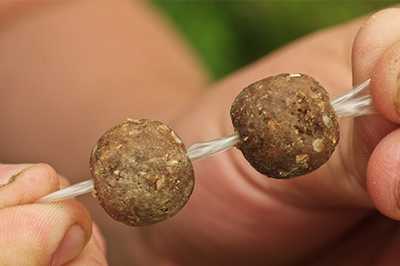
- Korda Super Natural supple braid (paid link), a suitable Korda Wide Gape hook (paid link), a 12mm Mainline Banoffee wafter (paid link) and Korda bait stops (paid link) for the simple hair-rig example.
- A complete Korda Inline Safety Kit (paid link), including its matching lead, insert, integral ring swivel and tail rubber, used exactly as instructed. The linked kit is one weight option, not a universal casting recommendation.
- Suitable carp main line (paid link) and the permitted main-line arrangement required for that complete system.
Tools and optional items
Korda RazorBlades scissors (paid link), a fine baiting needle (paid link), Pulla tools (paid link) for controlled knot testing, a dry bait tub, a dry hand towel, a water container and a way to weigh the finished payload. A pop-up (paid link) with correctly positioned balancing putty (paid link) is an alternative hookbait arrangement, not an extra requirement. Liquid attractor is optional; leave it out of your first practice bag.
Check the size, barb option and kit contents before ordering. You do not need another swivel, insert or ordinary inline lead to supplement a complete matching safety kit.
Korda's Inline Safety Kit instructions explicitly permit solid PVA bags but warn against Funnel Web bags because impact can eject the lead. Match the numbered lead and insert. Do not substitute a different tail-rubber fitting rule from a lead clip; these are different mechanisms.
Prepare the lead system and hookbait before opening a bag
Assemble and test the whole lead arrangement first, using the inline lead setup tutorial alongside the exact maker's instructions. Packing hides components, so the time to discover an obstructed release path or damaged knot is before the tackle disappears into pellets.
This rig deliberately uses one complete inline system. If your existing tackle uses a clip, read the separate lead-clip tutorial before changing anything. A rubber that holds one system correctly may obstruct another. Never build a hybrid by combining whichever individual parts happen to fit inside the bag.
For the simple version, follow the knotless-knot hair-rig tutorial with suitable supple braid. The original article used roughly three to four inches of hooklink; regard that as the author's starting preference, subject to venue rules and a successful presentation test. Do not shorten a rig merely to force it into an undersized bag.
Mount the bait, secure the stop and test its balance in water. The hook and intended anchor point must settle as the chosen rig requires, with the bait clear of the point and gape. A wafter label does not guarantee the same result with every hook size. A pop-up that lifts the whole hooklink needs a properly designed, counterbalanced arrangement instead.
Dry the tested rig thoroughly before packing. Damp braid, a soaked hookbait or a wet lead can damage the film from inside even when your hands feel dry. Use a separate practice rig if you want to test and pack immediately without waiting for everything to dry.
Choose a simple solid-bag mix
Start with small dry pellets and dry boilie crumb that fit around the lead. You are looking for a mix that fills gaps without containing sharp, bulky pieces that stretch the film. Break up any hard lumps before the rig goes near them. Check that the feed remains suitable for the fishery's bait rules and season.
There is no essential mix ratio. For a repeatable learning exercise, use one small scoop as your measure and record how many scoops fill your chosen bag comfortably. That tells you more about the amount you are introducing than describing every parcel as “just a mouthful”. Different bags can hold very different quantities.
Water-based liquids, wet groundbait and surface moisture attack PVA. A product being called an oil, glug or food does not prove compatibility. If you later add liquid, use one specifically described by its maker as PVA friendly and test the exact mixture and waiting period. Compatibility in the dry does not prove that heavily coated PVA will release promptly underwater.
How to fill a solid PVA bag: four visible stages
This hook-first sequence places the hook section on a protective feed bed before the lead is lowered into the parcel. Dynamite Baits demonstrates this packing approach. Other demonstrated methods start with the lead; follow one complete sequence and check its release rather than mixing isolated steps.
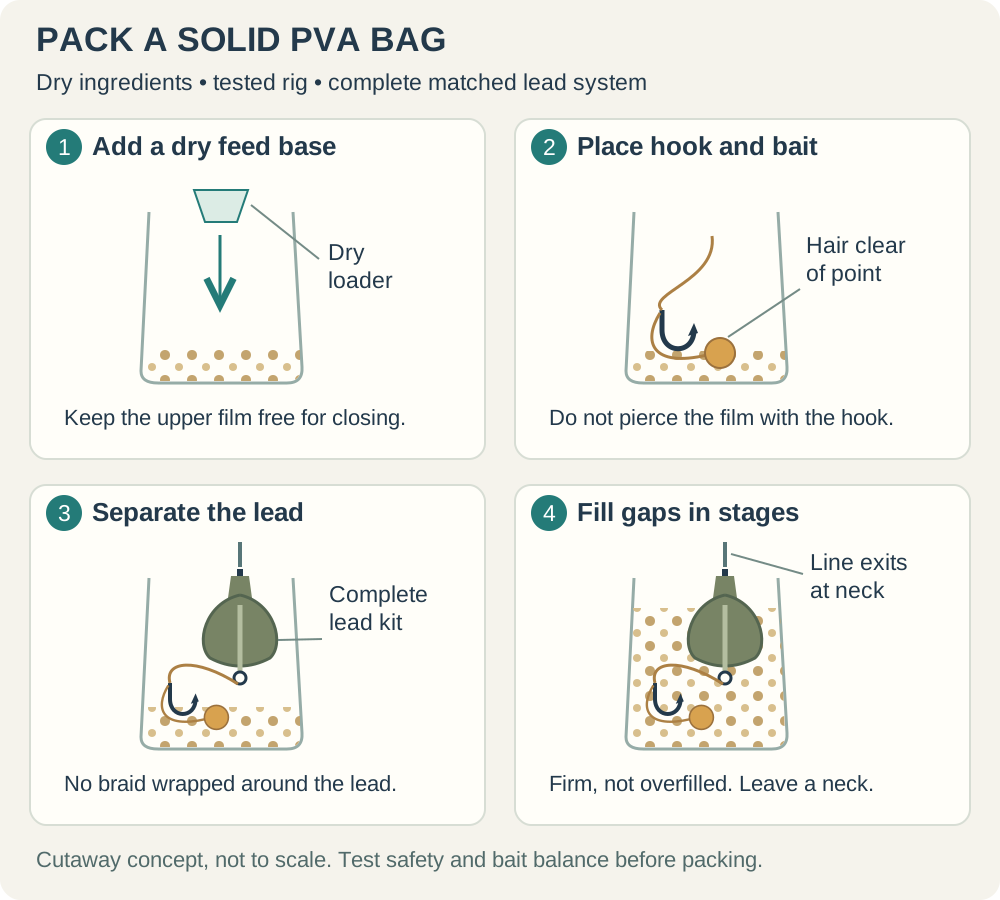
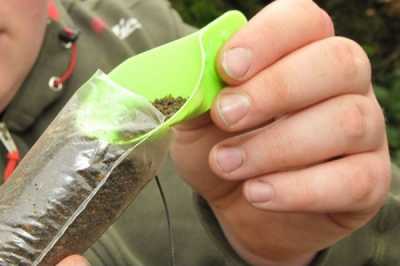
- Open and support the bag. Dry your hands, fit the loader and add a shallow bed of dry feed. Keep plenty of film free at the top for closing.
- Place the hook and hookbait. Set them onto that base so they remain close but the bait does not mask the point. Keep the hair in its intended position. Never stab the point through the film to hold it.
- Cover gently and position the lead. Add feed around the hook section, then lower the complete lead assembly into its planned position, separated from the hook. Lay the supple hooklink into the remaining space without wrapping it around the lead or main line.
- Fill the gaps progressively. Add feed in small amounts, tapping the bag lightly to settle it. Check the line exits at the neck and that nothing sharp is pressing against the film. Leave enough neck to twist and tie securely.
The practical checkpoint after stage two is knowing where the hook is. If it disappears before you have arranged the hair and bait, stop and start again. Packing blind around a loose point makes it easier to puncture the bag, hook the braid or trap the hair underneath the lead.
After stage three, inspect the line route before adding the final feed. It should not loop around the hook section or wind repeatedly around the lead. The bag holds an already-correct setup together; it is not a way of making a tangled setup harmless until the water sorts it out.
Compact the feed firmly enough to remove obvious voids without crushing bait against the hook or forcing a lead edge through the film. If the only way to close the bag is to stretch it severely, remove some feed or use a suitable larger bag. A smaller finished payload is often the easier learning option.
Close, shape and vent the finished bag
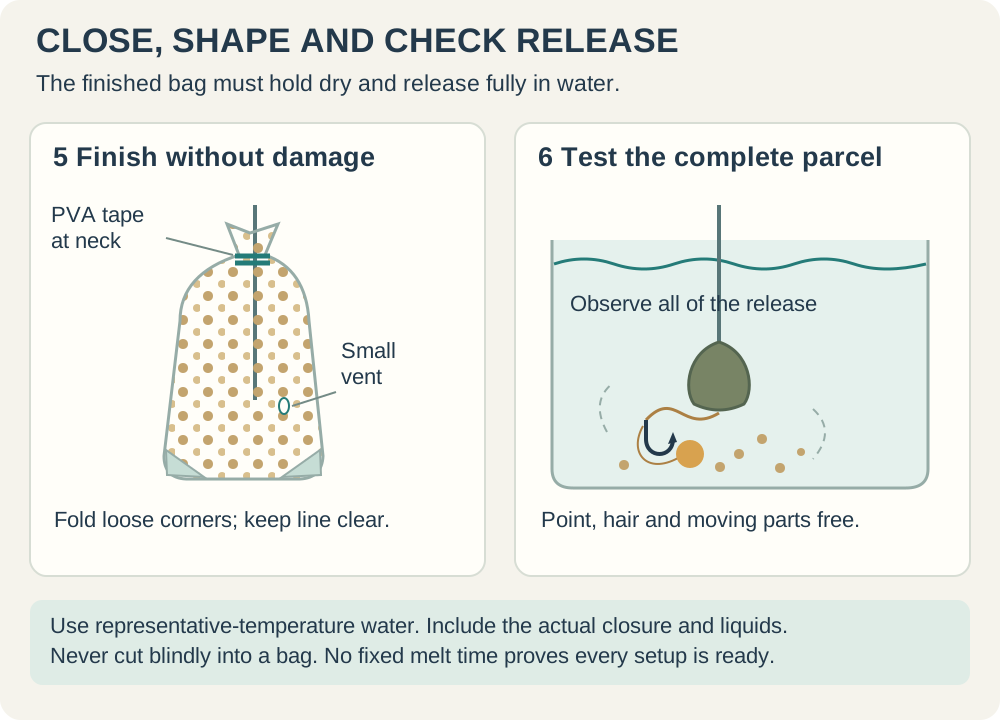
Remove the loader, gather the loose film and twist the neck while supporting the filled bag. Secure that neck with the PVA tape following the tape's instructions. The closure must hold the bait in place without tying ordinary non-dissolving material around a release mechanism. Trim surplus film cautiously, keeping the line visible and clear.
Fold loose bottom corners back against the bag to neaten its outline. If the particular bag uses dampened corners to stick them down, apply a minimal amount of clean water only to those contact areas and hold them in place. Do not wet the whole bag or use bait-contaminated hands against your mouth.
Provide the small vent openings specified for your bag method so trapped air can escape. Locate the hook, hooklink and main line first, and make shallow, controlled openings in spare film rather than pushing a sharp tool blindly through the parcel. A large slash can turn a good bag into a weak one.
Korda's solid-bag guidance covers compact packing, a tape-secured neck and venting. Different flat-bed and conventional packing styles exist: learn one complete method before mixing their sequences. The aim here is a firm parcel with no loose flap, visible leak or hidden damaged line.
Test the bag, not just a loose piece of PVA
Use a clear container with water close to the expected fishing temperature. Lower a representative finished bag in and watch it without stirring. Note when the film first opens, when the feed spreads and when the hook, hair and complete lead arrangement are free. Those are different observations.
A scrap of film melting quickly does not prove that the twisted neck, tape knot and folded corners will do the same. Include the actual mix, any liquid, the same compression and the same closure. Inspect for material caught around the point, a hair held against the hook or a loop of braid around the lead.
Then gently move the line to see whether the released rig behaves normally. Do not mistake a rig held up by the container wall for a balanced presentation. A water test is a useful screening check, not a simulation of every casting impact, depth and lakebed you may encounter.
There is no universal “wait thirty seconds” rule. Temperature, formulation, thickness and packing change release. A slower-melt bag may be appropriate for warm or deep water, but it still needs testing. Recheck after changing bag type, bait, liquid or storage time, and never fish a parcel that remains bound together unexpectedly.
Total payload and the first cast
The lead weight is only part of the casting load. Weigh the finished bag, including its feed and terminal tackle, rather than selecting a rod from the lead label alone. For example, adding 30 g of feed to a 70 g lead produces approximately 100 g before other components; this is arithmetic, not a recommended casting weight.
Use tackle suitable for that total and obtain the rod maker's guidance if its appropriate casting range is unclear. A test curve is not a precise payload allowance. Check the main line, knots and any permitted leader arrangement for the loaded cast, and never assume a bag's small appearance means light tackle is adequate.
Begin with a controlled short cast into a safe clear area, away from people, wildlife and overhead hazards. Watch for bait spraying out, abnormal flight or an unexpected change in weight. Retrieve after a doubtful cast instead of leaving a possibly broken or misplaced rig fishing.
Count each recast as another bait delivery. Five practice casts onto one spot introduce five bags of feed even if none remains on the hook. Keep spare mix contained and take unused bait home; repeatedly moving a rig around the swim can create more baited spots than you intended.
Solid PVA bag troubleshooting
| What you see | What to check next |
|---|---|
| Film softens before casting | Dry hands, tackle and work surface; remove damp bait or untested liquid. Replace damaged film. |
| Bag bulges or splits | Reduce feed, remove sharp fragments and check the hook and lead are not pressing against the wall. |
| Bag floats or rolls during the test | Check trapped air, venting, buoyant contents and packing. Do not simply add a heavier lead beyond safe payload. |
| Hook is tangled after release | Recheck the hair, packing order and hooklink route; avoid wrapping braid around the lead. |
| Closure remains around the rig | Reduce unnecessary PVA bulk, check the formulation and liquid, and repeat the complete release test. |
| Lead releases unexpectedly | Stop and check exact system assembly and compatibility. Never glue, pin or over-tighten a safety mechanism to cure it. |
Change one thing at a time. If you alter bait, bag size, closure and lead weight together, it becomes difficult to learn why the second attempt behaved differently. Keep the successful practice bag as your reference bag, including its filled weight, rather than trying to improve every ingredient at once.
Preparing bags in advance and choosing between PVA methods
Pre-tied bags are useful only while they stay dry and sound. Store them in a sealed rigid container so hooks cannot puncture neighbouring bags. Label different lead weights and hook options. Recheck stored film, closure and connections before use; do not rely on the fact that a bag looked tight when first made.
Prepare spare complete assemblies only when you understand their permitted main-line connection and can inspect them properly. Convenient loop-on leaders are not compulsory, and some venues prohibit them. A fresh bag tied around a simple approved setup is better than a fast-change arrangement whose safety you cannot explain.
If you only want a few whole boilies alongside a longer rig, a short PVA stringer may be more convenient. If you want a narrow crumb parcel along a suitable supple hooklink, consider a mesh stick. Neither is a direct substitute for this complete packed solid bag.
Frequently asked questions
What is the best rig for solid PVA bags?
A simple, short supple hair rig is a useful starting point because it packs without forcing a stiff boom into a curve. It still needs the correct hook, tested bait balance and a safe compatible lead arrangement. Complicated hook mechanics are not required to learn the packing method.
Can I use a pop-up instead of a wafter?
Yes, with a properly designed and balanced presentation. The original author preferred bright balanced pop-ups. Check the real hookbait, hook and counterweight together rather than assuming a floating bait will sit neatly above the feed by itself.
Can a solid bag be cast into any weed?
No. Film protects the contents temporarily; it cannot make deep weed, snags or an unsafe landing route acceptable. Select an appropriate spot and reconsider the method if the complete presentation cannot settle and be fished safely.
Must I add liquid to a solid PVA bag?
No. A dry mix is the simplest baseline. Add only a tested, explicitly PVA-compatible product if it has a purpose, and repeat the release test. More liquid is not automatically more useful attraction.
For your final check, confirm five things: a correct complete lead system, a free hook and hair, sound dry film, a proven release test and a payload your tackle can cast safely. Then use the illustrated carp rigs guide to compare presentations without confusing the bag with the rig inside it.
For a smaller separate feed parcel, compare solid bags with mesh. The PVA formats guide explains the other options without changing the construction and safety checks in this tutorial.