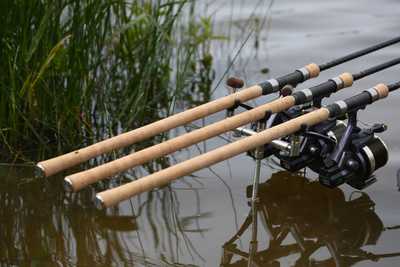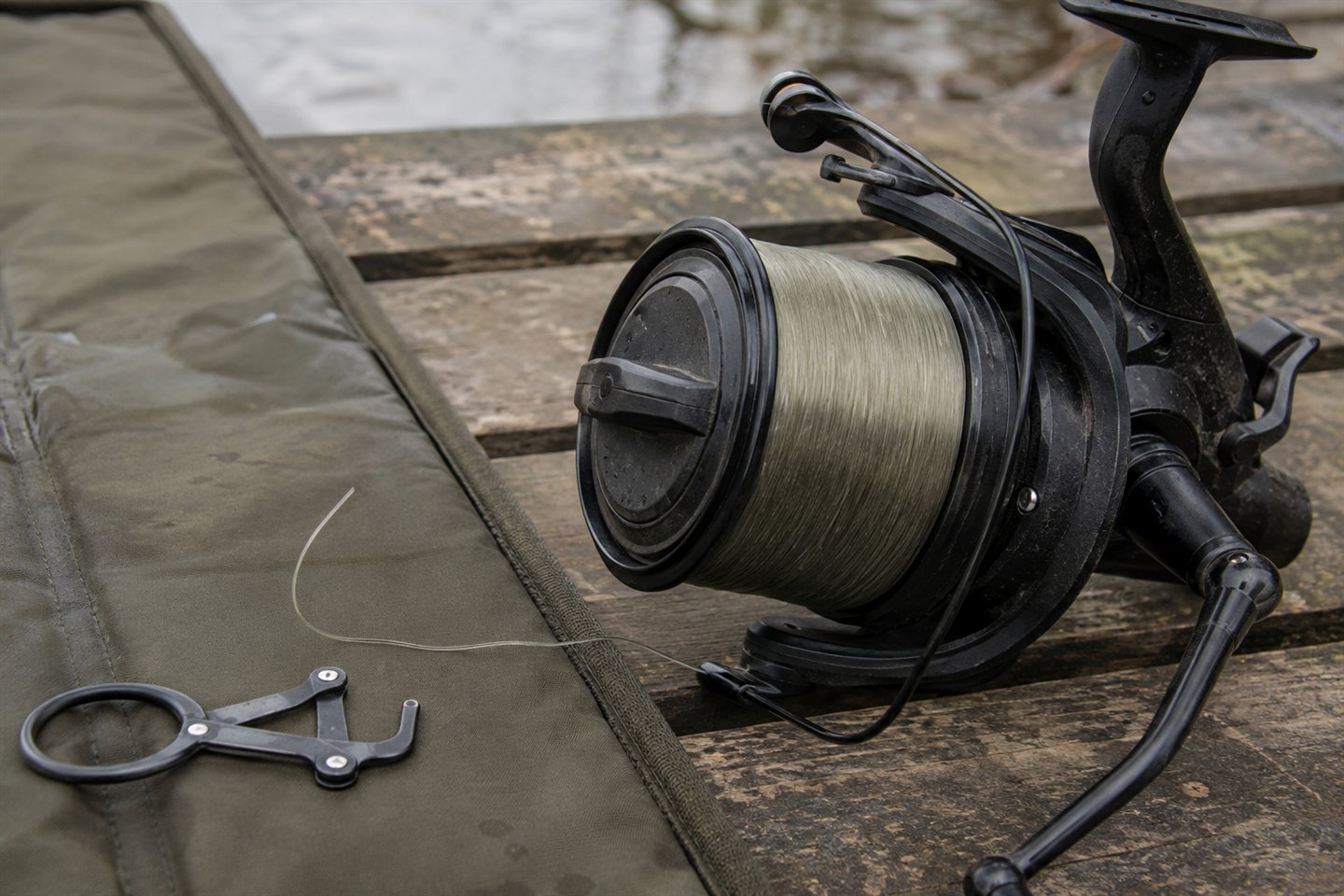
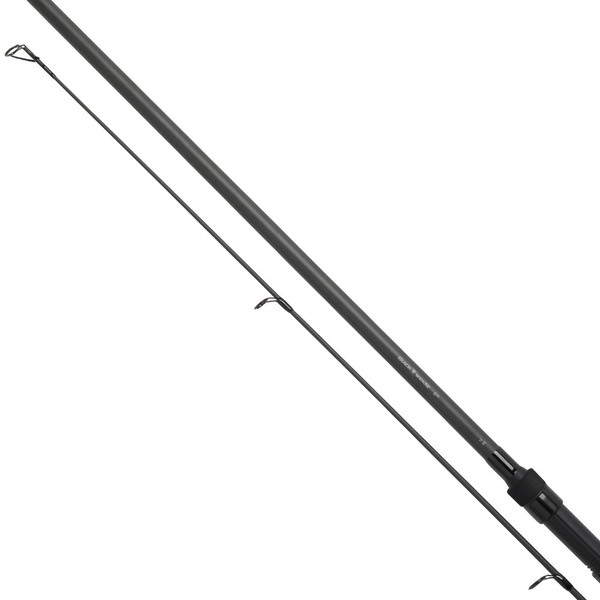
Carp rod test curves can make buying a rod sound more complicated than it needs to be. The figure describes the static load that bends the tip through 90 degrees relative to the butt—not the size of carp you can catch. Here's how to compare power, action and length.
For most UK carp fishing, a 3lb to 3.5lb test curve is the useful all-round area. A softer 2.75lb to 3lb rod can be more enjoyable on small waters and at short range, while 3.5lb to 3.75lb rods make more sense when casting larger leads, PVA bags or fishing at range. Dedicated spod and marker rods usually sit around 4.5lb to 5.5lb because their job is to cast loaded baiting tools, not to play carp.
Carp rod test curves: what do the numbers actually mean?
| Test curve | Typical use | Main trade-off |
|---|---|---|
| 2.75lb-3lb | Small and medium waters, stalking, surface work and lighter leads | Less authority with very heavy presentations or repeated long casts |
| 3lb-3.5lb | The common all-round range for everyday UK carp fishing | A 3.5lb rod normally feels firmer under the tip than a softer 3lb model |
| 3.75lb-4lb | Specialist distance work, heavier bags and demanding conditions | Can feel unnecessarily stiff at close range |
| 4.5lb-5.5lb | Usually spod and marker rods | Designed around casting tools rather than playing fish |
These are practical starting points, not fixed rules. Blank design, action, length, materials and the manufacturer's intended use all matter. Two rods marked 3.5lb can feel completely different in the hand.
What does a 3lb test curve carp rod mean?
Imagine a rod held horizontally with line running through the rings and a steadily increasing load attached. When the tip has bent until it points down at a right angle to the butt, the load required is its test curve. A 3lb test-curve rod therefore takes roughly 3lb of static load to reach that position under the test.
That laboratory-style measurement is useful for comparing power within a range, but fishing is dynamic. A cast accelerates a lead, a carp changes direction, line stretches and the whole blank recovers. That's why a test curve should not be converted directly into a maximum lead size using a simple formula.
It also doesn't mean the rod is intended only for 3lb fish, or that it will safely lift 3lb vertically. Carp rods are designed to absorb force through a bent blank while the reel clutch and line share the load. Don't use one to lift a carp up a bank or swing a fish into a net.
Test curve and rod action are not the same thing
Test curve describes how much force is required to produce a specified bend. Action describes where and how the blank bends and recovers. Keeping those two ideas separate makes rod descriptions much easier to understand.
Through and progressive actions
A through-action rod bends well down into the blank as the pressure builds. A progressive rod may start in the tip and then bring the middle and butt sections into play. Both descriptions usually point towards a forgiving feel when a carp lunges close to the net, because a longer section of blank is sharing the load. That doesn't make these rods incapable of casting. It means the delivery and recovery tend to feel less abrupt than a very fast blank.
This kind of action is often pleasant on small and medium waters, with modest leads and plenty of close-range fish playing. It can also give a new caster time to feel the rod loading. The trade-off is that a soft blank may recover less crisply when pushed with a heavy bag or a forceful distance cast.
Fast and tip actions
A fast or tip-action rod bends most readily in its upper section while the lower blank keeps more reserve. With the right lead and technique, that firm lower section can recover quickly and help produce a clean, accurate cast. Under the tip it may feel more direct, so clutch setting and smooth pressure become especially important.
Fast doesn't mean automatically farther, and it certainly doesn't mean better. A rod that is too quick or stiff for the caster can be difficult to compress and less accurate than a more progressive model. Treat the description as a clue to feel, then cast or flex the actual rod where a retailer permits it.
Semi-fast and compound actions
Many modern all-round carp rods sit between those two ends. They use a responsive tip for indication and casting, then bring more of the blank into play as pressure increases. Manufacturers may call this semi-fast, progressive-fast or compound action. The words are not standardised, so compare the bend and intended casting load rather than assuming two similarly described rods will feel alike.
A well-designed 3.5lb progressive rod may feel friendlier than a fast 3.25lb rod, even though the number is higher. Handle length, guide pattern, blank diameter and recovery speed also influence casting and fish playing, so compare complete rods rather than shopping by test curve alone.
What test curve carp rod should a beginner use?
Small waters and close-range fishing
For short casts with modest leads, a 2.75lb or 3lb rod is often enough. The softer blank can cushion lunges close to the net and makes smaller carp enjoyable to play. Short 9ft or 10ft rods can also be easier around trees, tight swims and canals, although their compact length doesn't automatically make them weak.
Think about the worst safe situation on the venue, not only its average casting distance. If there is weed or a margin obstacle, you still need enough control, suitable line and a swim you can fish responsibly. Extra rod power doesn't make an unfishable snag safe.
An all-round setup
A 12ft rod around 3lb to 3.5lb covers a wide range of day-ticket and club waters. Choose nearer 3lb if most casts are comfortable, leads are modest and playing feel matters most. Move towards 3.25lb or 3.5lb when you regularly cast farther, use small PVA bags or need a little more reserve power.
For a first set of rods, versatility is usually more valuable than buying the highest number available. Our current carp rod guide compares complete rod specifications rather than judging them on test curve alone.
Distance, heavier leads and PVA bags
A 3.5lb to 3.75lb rod can help when the full presentation is heavier or distance is genuinely required. The important phrase is full presentation: a lead, hookbait, rig, leader and packed PVA bag can weigh much more together than the lead on its own.
Check the maker's casting range or maximum load for the exact model. Current ranges show why there's no reliable universal rule: rods carrying the same nominal test curve can have different stated casting limits. Start comfortably below the limit, use a smooth technique and obtain casting tuition before chasing maximum distance.
Spod and marker work
Repeatedly casting a loaded Spomb or spod puts a different demand on a blank. A dedicated 4.5lb to 5.5lb spod rod is built for that task, while marker rods are designed to cast and transmit information from a marker setup. Some models combine both jobs, but neither should be chosen as a normal fish-playing rod merely because it looks powerful.
Remember that bait and retained water contribute to a loaded spod's total weight. Match the device to the rod's stated load and see our spod and marker rod guide for suitable options.
Why the old lead-weight formula is unreliable
You may see advice that adds a fixed number of ounces to a rod's test curve to calculate its ideal lead. It is an easy rule to remember, but it ignores action, blank construction, casting style and the maker's own limits. It also encourages anglers to think only about the lead when a solid bag or baiting tool can add substantial weight.
The safer method starts with the specification for the exact rod, including its length and test curve, because another model in the same family may have a different casting recommendation. Consider the whole presentation rather than the lead alone. A damp solid bag, hookbait and lead can be much heavier than the nominal lead stamped on the packet.
Begin with a comfortable load and a controlled overhead cast, then judge how smoothly the blank loads and recovers. There should be no need for a sudden punch or an uncontrolled crack-off. Inspect the main line, any permitted leader, the knot and every guide regularly, especially after a heavy cast or contact with weed and debris. The manufacturer's stated maximum is a ceiling, not a target to reach on every cast.
How to choose carp rod length and action
A balanced setup is easier to cast and control. Twelve-foot rods remain a versatile choice, while 13ft rods can help an experienced caster create a longer arc where the swim provides space. Short rods are convenient in confined swims and can be excellent for close work. None of those lengths guarantees a particular distance.
Pair the rod with a reel whose weight and spool suit its job. A huge big-pit reel may make a short rod feel butt-heavy, while a very small spool can limit an otherwise capable distance setup. Line diameter, stretch, leader rules and knot strength matter more to safety than the label on the reel.
Before buying three matching rods, handle one with the reel you intend to use if possible. Check the reach to the reel seat, handle length, overall balance and whether the action suits your casting. Those practical details often matter more than moving from 3.25lb to 3.5lb.
How to choose a carp rod test curve without guessing
Start with the farthest distance you genuinely need to fish, not the far bank you might one day try to reach. Add the normal full casting weight, including the hookbait and any PVA, then think about how often that load will be cast. An occasional small bag is different from repeatedly launching a heavy bag through a crosswind.
Next, look at the water in front of you. Tight tree-lined swims and short rods favour control and compact movements. Open water may let a longer, firmer blank work properly. Weed and safe fish control can justify some reserve power, but a higher test curve doesn't turn a dangerous snag into a responsible target.
Decide which part of fishing matters most to you. If most bites come close in and you enjoy a forgiving playing action, the softer option in a range may be right. If you regularly fish at moderate distance with bags and larger leads, the middle or firmer option may be easier. Check every fishery rule for lead size, leaders and minimum main line before making that choice.
Finally, read the maker's casting recommendation for the exact model and try it with your intended reel. If you're unsure, a progressive 3lb to 3.5lb all-round rod from a reputable range is a more sensible starting point than an extreme-distance blank. Technique and accurate placement will normally put more carp on the bank than buying the stiffest rod.
What a test curve cannot tell you in a tackle shop
The number printed above the handle cannot tell you whether the grip fits your reach, whether the butt cap catches on your clothing or whether the reel seat sits comfortably between your hands. It doesn't describe the quality of the guides, the rod's recovery after a cast or the way it behaves as the pressure moves into the butt. Those differences are why buying from a specification alone can disappoint.
If a shop can fit your reel to a display rod, hold the outfit in the same position you use for casting. Check whether the spool sits comfortably below the first guide and whether the handle length lets you pull with both hands without stretching. A rod that balances naturally is easier to aim and more pleasant to hold while playing a fish, even if another model has a more impressive test-curve figure.
Flexing a rod gently will not reproduce a cast, but it can reveal where the bend begins and how rapidly the lower blank becomes firm. Compare rods side by side with the same nominal test curve. You may find that one has a soft, communicative tip and another feels much more abrupt. Neither is automatically wrong; they are designed for different loads and casting styles.
Also consider the set rather than one rod in isolation. Three long distance rods and large reels are awkward to carry if most of your fishing involves short walks and intimate waters. A shorter or more progressive setup that reaches every useful spot may be the better tool, while a dedicated spod rod can deal with the heavy baiting work separately.
Playing carp on different test curves
Once a carp is hooked, the rod, main line and clutch work as one system. A softer tip can absorb quick changes of direction, while a firmer butt provides reserve when steady side strain is needed. Keep the rod bent, avoid sudden pumping and let a correctly set clutch release line before the weakest safe part of the setup is overloaded.
Close to the net, even a powerful distance rod should be used smoothly. Lower the rod if the fish surges beneath the tip and give line when necessary instead of trying to stop it with a locked clutch. Conversely, don't assume a softer rod means the fish can be allowed to reach weed or a snag. Safe swim choice and early, steady control matter more than the label on the blank.
Safe use on the bank
Check every swim for overhead power cables, people, trees and other obstructions before assembling or casting. Carbon rods conduct electricity: never fish or carry an assembled rod near overhead cables, and stop if lightning threatens. Keep spectators behind you and use a finger stall or suitable casting glove when forcefully casting braid or a shock leader.
Follow the venue's rules for leaders, minimum line diameter and lead systems. Examine ring liners for cracks, check knots and line for damage, and pull-test connections safely. A powerful rod can generate high loads quickly, so a smooth cast and sound tackle matter.
Compare 10ft, 12ft and 13ft rods by the job
| Length | Where it can make sense | Check before choosing |
|---|---|---|
| 10ft | Close work, compact carrying and restricted swims | Enough reach and control for the bank, netting and required range |
| 12ft | A versatile starting point for many bank-fishing situations | Handle fit, full casting load and action with your reel |
| 13ft | Open swims and anglers able to use a longer casting arc | Space, technique, transport and whether the extra length is comfortable |
Two rods of the same length and test curve can feel quite different. Use the action and handle fit to narrow the choice, then check the exact model's recommended casting load. Korda's length and test-curve explanation is useful background, not independent evidence that its rods outperform another brand.
Bring a realistic load to the decision
Write down what you normally cast: lead, rig, hookbait and any PVA contents. Do not compare rods using a bare lead if most of your sessions involve bags. A loaded baiting device is another job again; use the spod-rod guide rather than assuming a high-test-curve fishing rod is automatically suitable.
For example, if all your useful spots are comfortably within reach of your present rod, the problem may be repeatability rather than power. Record them with the Distance Stick tool and practise the cast before buying a longer rod for distance you do not need.
Budget for the whole outfit
Use the Tackle Setup Builder to consider the rod alongside reel, line and essential fish-care equipment. Leave room for a balanced reel choice and suitable main line rather than spending everything on the blank.
If you are assembling your first setup, return to the beginner's guide for the complete picture. Once the practical requirements are clear, the rod buying guide helps compare options without treating the highest test curve as the automatic winner.
Frequently asked questions
Is a 3.5lb test curve too stiff for general carp fishing?
Not necessarily. It is a common modern all-round choice where bags, moderate range or weed are involved, but the action determines much of the feel. For close-range fishing on a clear small water, a progressive 3lb rod may be more enjoyable.
Can a 3lb rod land a 30lb carp?
Test curve doesn't correspond to carp weight. A sound 3lb carp rod, correctly balanced tackle, an adjusted clutch and responsible angling can handle large carp. Venue hazards and control requirements are more relevant than the fish's headline weight.
Does a higher test curve cast farther?
Only if the complete rod suits the load and the caster can compress it efficiently. A rod that is too stiff for your technique may cast less accurately or even less far. Blank recovery, action, guides, line and casting technique all contribute.
Can you spod with a normal carp rod?
Only when the maker permits the complete loaded weight, and even then a small device and gentle cast may be the limit. Repeated heavy baiting is a job for a dedicated spod rod. Never assume a 3.5lb fishing rod can safely cast a fully loaded large Spomb.