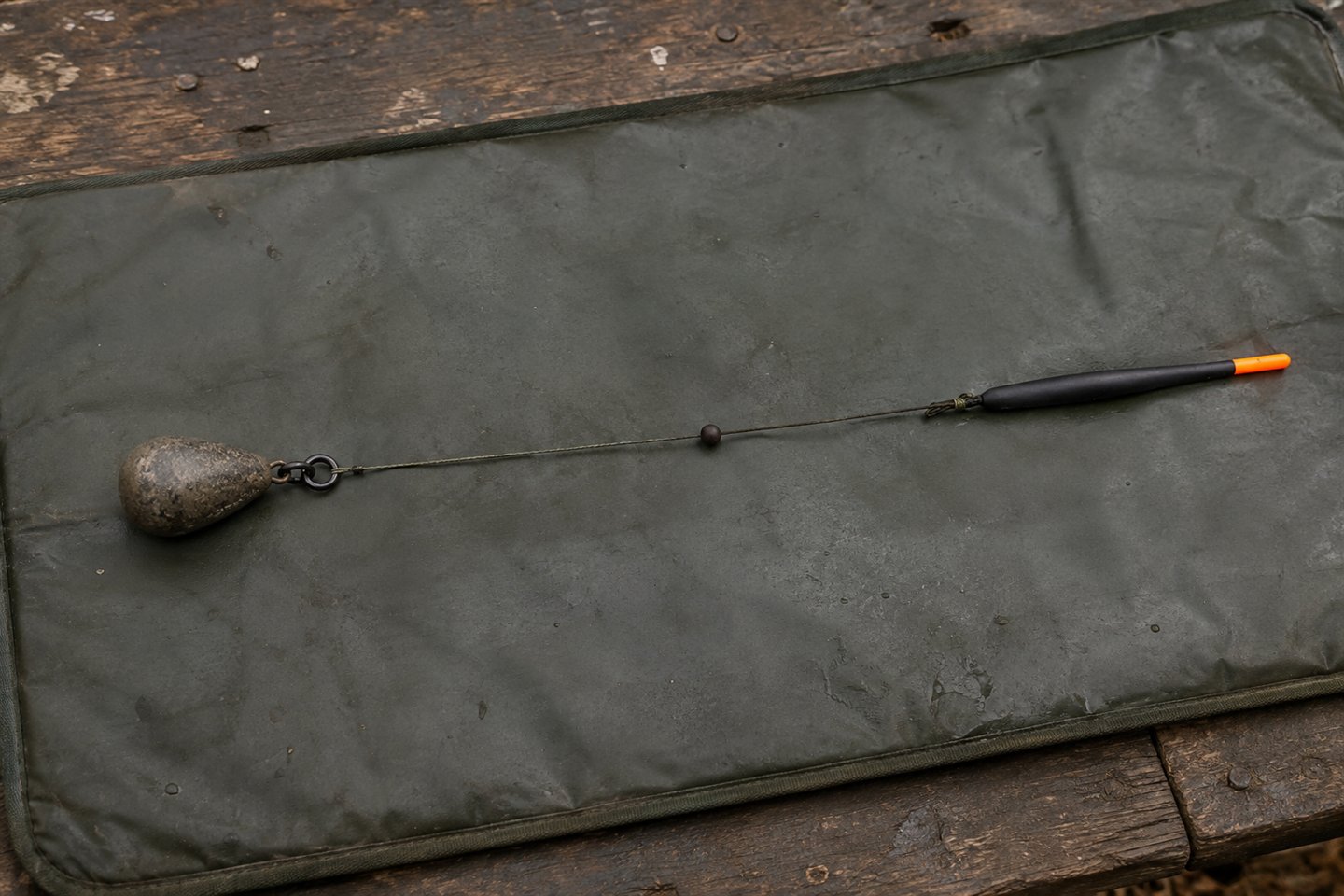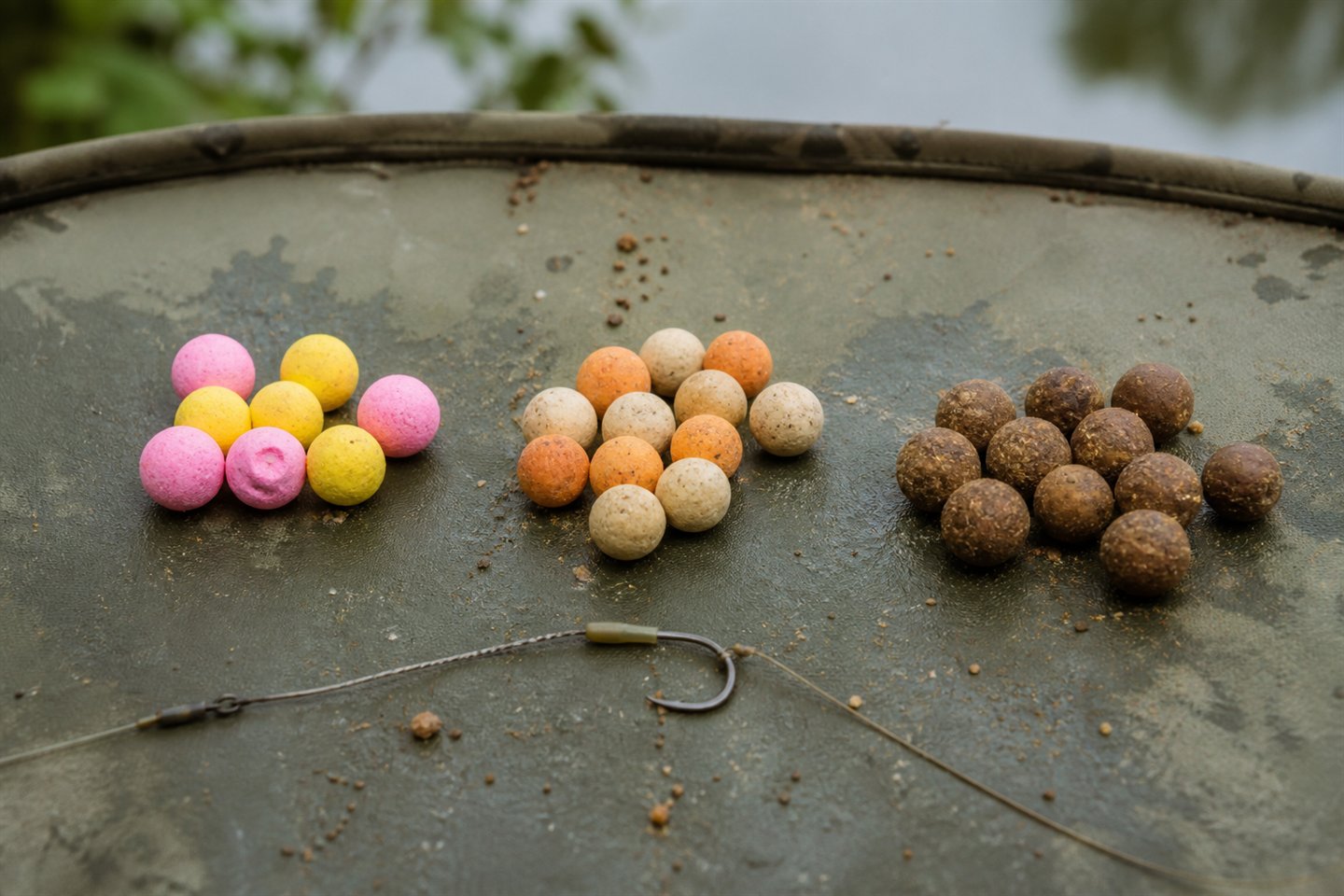
Silt can hold plenty of natural food, but you still need your hookbait to settle properly. For carp fishing in silt, start by checking the bottom and what comes back on the rig. Then you can adjust the lead and hooklink for the spot you've found.
“Clean silt” doesn't mean a polished hard patch. It usually describes sediment that carp visit or feed over, where the top layer is comparatively fresh and free from thick leaves, sticks or decaying weed. A firm drop is not automatically better than a soft one. The real question is whether your hook, bait and lead system can settle in a position that remains effective and safe.
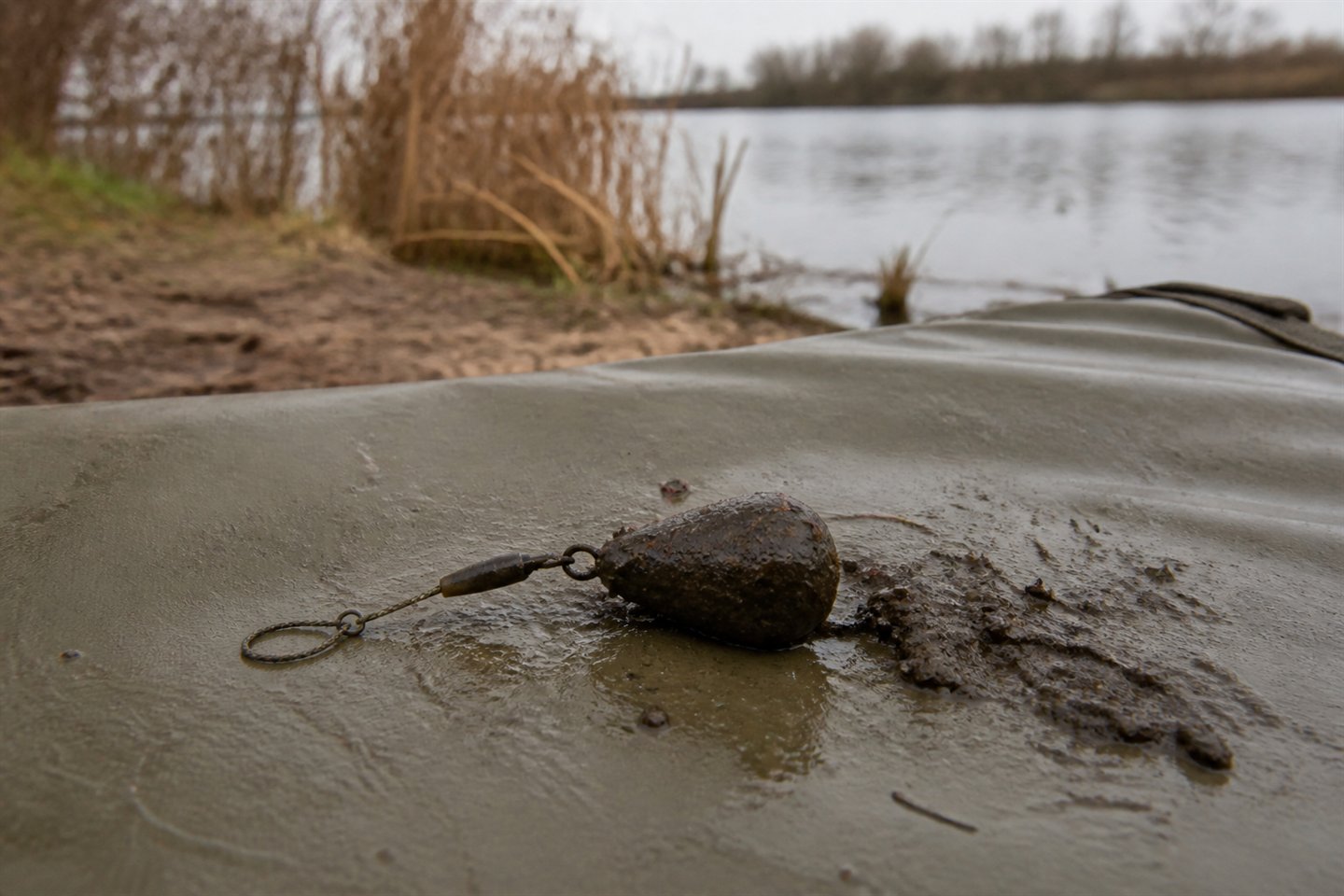
Carp fishing in silt: how should your rig settle?
Locate carp first, then explore the area with separate feature-finding tackle. Cast the same lead from the same position, hold the rod consistently and compare the drop and pull-back rather than judging one cast in isolation. Map the boundary between very soft sediment, firmer silt, weed and gravel, because a transition is often easier to present on than the deepest part of a silty basin.
Once you understand the spot, choose a presentation deliberately. A longer coated-braid or supple hooklink, a balanced bottom bait or low pop-up, and a light pear-shaped lead can all help, but none is a universal solution. A helicopter arrangement may let the hooklink settle higher up the leader in soft ground, while a lead clip or inline system can work on firmer silt when assembled correctly. Follow the instructions for the whole setup and the fishery's rules.
Make one cast with the hookbait, feel the lead down and leave it alone if the drop is right. Repeated casting can churn the lakebed, blunt the hook and disturb feeding fish. If the retrieved rig smells strongly of rotten eggs, carries black sludge or has debris over the point, change the exact spot or presentation rather than assuming it is fishing.
What lakebed silt actually is
Silt is fine material that settles on the bottom. It can contain mineral particles, decomposing leaves, dying weed and organic matter, with consistency ranging from a thin soft film over clay to a deep layer that swallows a lead. Two areas that both feel soft through a rod can behave very differently beneath a rig.
Fresh, aerated sediment may be brown or olive and support abundant natural food. Older anaerobic deposits can be dark, sticky and strongly sulphurous. Smell and residue on a clean feature-finding lead provide useful clues, but avoid treating colour alone as a verdict. The amount of leaf litter, twigs and weed matters as much as the sediment itself.
Carp disturb soft bottoms while feeding. Bubbling, coloured water and polished routes through weed can show recent activity, although gas can also rise naturally from sediment. Combine surface signs with repeated, careful casts. A single patch of bubbles is evidence to investigate, not proof that carp are feeding there now.
Why carp feed over silt
Soft lakebeds can hold bloodworm, snails, larvae and other invertebrates. Carp accustomed to finding natural food there may bury their mouths into the upper layer and feed confidently. That behaviour is one reason an obvious gravel patch is not always the best place to put a hookbait, particularly when it receives most of the angling pressure.
Silt also collects introduced bait. Particles and broken boilies can settle into the upper layer, encouraging carp to search rather than pick items from a hard surface. This can create sustained feeding, but it also makes excessive bait difficult to recover. Start conservatively and respond to signs, season and stock rather than covering an uncertain area with several kilograms.
Some silt is unsuitable. Deep decaying leaves can mask a hook, old organic deposits may be unattractive, and submerged branches turn an apparently soft spot into a snag. Productive silt is defined by fish activity and presentable tackle, not by softness alone.
How to find clean silt for carp fishing
Use repeatable feature-finding tackle
A braided main line transmits changes more clearly than stretchy monofilament, but only use a leader arrangement permitted by the venue and assembled safely. Choose a plain feature-finding lead whose shape gives consistent feedback. Record the lead weight, because replacing it with a much heavier one changes the sensation and penetration.
Cast to a fixed far-bank marker and reach the clip under control. Hold the rod at the same angle as the lead descends. A clean, positive stop often indicates firmer material, while a cushioned stop suggests softness. Very deep silt can feel as though the lead never quite stops sharply. Wind, bow in the line and weed can soften the signal, which is why comparison casts matter.
Pull the lead slowly, not violently
Lower the rod, take up slack and draw the lead a short distance with steady pressure. A lead moving through smooth silt may feel heavy at first and then travel evenly. Gravel can judder, clay may feel smooth and firm, and weed tends to load and release with a springy resistance. These are relative sensations; the same bottom feels different at 40 yards and 120 yards.
Don't repeatedly rake the whole area. Short pulls reveal changes while limiting disturbance. If the lead locks solid, avoid a violent heave that could break tackle. Change the angle gently, recover it under control and investigate a safer line.
How to tell if my carp lead is buried in silt
Use a clean lead for each comparison. Brown or grey residue with an earthy smell may suggest relatively fresh sediment. Thick black material and a powerful sulphurous smell point towards decaying anaerobic matter. Fine leaf fragments, twigs and dead weed reveal a debris problem that the drop alone may not show.
The lead samples only the narrow line it travelled through and can collect material after leaving the intended patch. Repeat from the same marker and distance, then cast slightly left, right, shorter and longer. A group of consistent casts gives a map; one dirty retrieve gives a clue.
Map the silt rather than searching only for gravel
Many useful spots are changes: the firmer lip of a silt channel, a clear area beside weed, or soft sediment immediately off a gravel bar. Measure the distance with wraps and record the aiming point. The guide to using a marker float explains how to combine depth information with the feel from a lead.
A float may not rise easily when the lead is deeply embedded, and pulling hard to free it can drag the entire setup away from the place being measured. Use a sensible lead, allow for the depth and work patiently. If the arrangement repeatedly jams, don't keep casting it into the same area.
Near the bank, lower several lead and rig combinations onto visible soft ground. Watch how much each penetrates and how the hooklink falls around it. Margin observation cannot reproduce a long cast or an unseen lakebed exactly, but it teaches the relationship between lead shape, weight, line tension and hooklink material.
Choose the lead weight and shape for silt
A lighter lead generally penetrates less than a heavier one of the same shape, but it must still cast safely and provide the hooking arrangement you intend. Broad pear or flat shapes tend to spread their load more than narrow distance leads. At range, however, a streamlined lead may be necessary for accurate delivery. Balance presentation against casting rather than choosing from one property.
Don't assume that any lead entering silt ruins the rig. A lead can bury while the hooklink settles above or behind it, especially with an arrangement designed for soft bottoms. The danger comes when a short stiff hooklink is pulled down unnaturally, the bait disappears into debris or the lead system cannot behave safely after a break.
Dropping the lead on every take can help in heavy weed or a serious snag situation, but unnecessary lead loss puts metal into the lake. Decide with the fishery and the actual hazard. Whatever system is used, assemble compatible components exactly as intended and test how they release; a loose collection of parts is not automatically fish-safe.
Hooklink length and material
A slightly longer hooklink gives the lead room to penetrate while the hookbait settles on the upper layer. Roughly 20 to 30cm may be a sensible experimental range for many soft areas, but depth of silt, lead arrangement and material determine the answer. Very deep sediment can require a longer or different presentation; firm silt may fish well with the same length used on clean clay.
Supple braid follows uneven ground but can tangle. Coated braid combines a more controlled main section with movement near the hook. Stiff monofilament or fluorocarbon can kick the bait away, yet a short stiff boom may sit awkwardly if the lead buries at an angle. Look at the whole rig instead of selecting material from the word “silt”.
Use an anti-tangle sleeve, PVA mesh or another established control method where appropriate. Feather the cast so the hooklink extends and follow the lead down without pulling it towards you. The accurate casting guide covers that final part of the cast.
Bottom baits, wafters and pop-ups over silt
Bottom baits on firm clean silt
A normal bottom bait can be an excellent choice where the upper layer is clean and carp are feeding naturally. It behaves like the free boilies around it and doesn't wave above the bottom. Use a hair long enough to keep the hook gape clear and inspect the point after every retrieve.
On deeper soft sediment, a dense hookbait may disappear beneath the surface, particularly if it lands close to the lead. A longer supple section or small PVA parcel can slow and support the hookbait. Don't make a bottom bait buoyant by guesswork and assume it remains a bottom-bait presentation.
Wafters for a slow, light settlement
A wafter uses the weight of the hook and rig to sink. This can help the presentation settle softly and enter a carp's mouth with less resistance. Buoyancy varies with hook size, bait size, water absorption and temperature, so test the exact bait on the exact rig in lake water.
A wafter that lifts the hook or hangs above the intended position is behaving as a pop-up. Trim it carefully or choose a less buoyant bait. The goal is not the slowest possible sink; it is a predictable position with the hook ready to take hold.
Pop-ups above light debris
A pop-up can hold the hook above fine silt and low debris. Low presentations such as a correctly balanced spinner rig keep the bait near the deck, while a chod or hinged presentation can sit higher. Match the rig to the material and never choose a complicated setup simply because the word silt appears on the packet.
Test that the counterweight sinks the bait reliably after it has absorbed water. Check where the hook will sit if the boom or leader lies at an angle. The Ronnie rig guide and chod-rig article explain two very different pop-up options.
Lead clips, helicopter rigs and inline leads
A correctly assembled helicopter arrangement is widely used over soft bottoms because the lead can penetrate while the hooklink swivel rests farther up the leader or main line. The top bead must be positioned and able to release exactly as the manufacturer specifies. A bead jammed against an oversized knot can tether a fish after a break.
A lead clip can work well on firmer clean silt and gives controlled lead release where the whole setup is built correctly. The swivel must seat as designed and the tail rubber must not be forced on so tightly that the system cannot function. Inline leads are compact and useful for bags, but any leader knot or component must not block the lead from separating when separation is required.
No brand name makes an arrangement safe by itself. Follow the current diagram for the exact matched components, apply the fishery's rules and consider what remains attached if the main line breaks above every knot. If you can't explain the route by which a carp becomes free of the lead or hooklink, ask the tackle shop or fishery before casting.
Present a rig over silt without tangling
Mount the intended hookbait and lower the complete rig onto similar soft ground in the margin. Let it fall rather than arranging it by hand. Watch whether the lead pulls the hooklink down, whether the bait remains visible and whether the hook point collects debris.
For the actual cast, use a stable marker and smooth flight. Feather the line during descent to extend the hooklink, then follow the lead down under light control. Feel for the expected soft stop. A cast that lands with no recognisable feedback may be tangled, in deep weed or beyond the mapped area; retrieve and investigate.
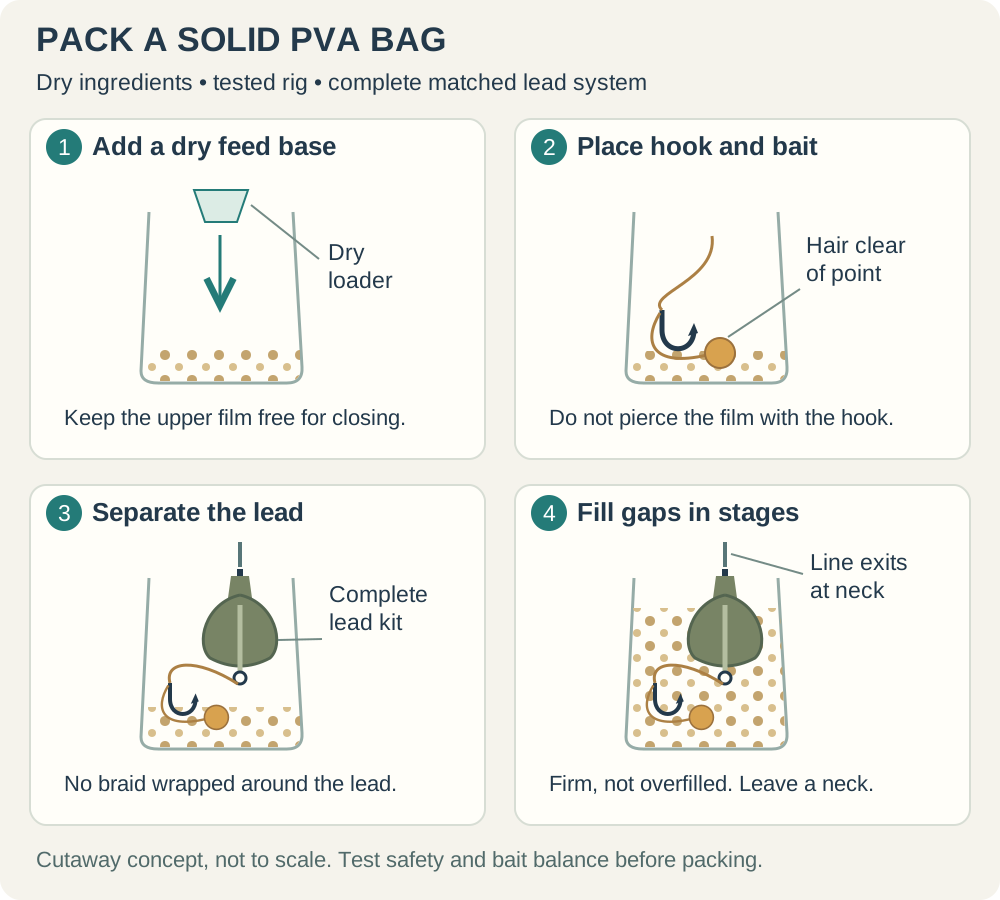
Small PVA sticks can prevent a supple hooklink wrapping around the lead and may protect the point through light debris. Solid bags create their own compact presentation and can work on silt if the total weight and settling behaviour are suitable. Our solid PVA bag guide covers construction and safe casting loads.
Baiting over silt
Loose boilies, crumb and particles can all work, but their behaviour differs. Dense whole boilies penetrate farther than fine crumb, while small particles settle into the upper layer and encourage grubbing. If the silt is clean and carp feed in it, some settlement is natural; the hookbait still needs to remain accessible and behave consistently.
Begin with an amount that matches stock, water temperature and observed feeding. A few accurately placed baits can test a new spot. If carp are clearly feeding and conditions support it, increase gradually. The bait-quantity guide gives adaptable starting points rather than a false universal rig.
Aim the spod and fishing rod with the same recorded references, but consider depth and swing-back. Loose bait falls vertically and spreads while a lead followed down on tension moves towards the angler. Watch where possible and adjust in small measured steps instead of automatically clipping one rod a fixed number of feet shorter.
How conditions change a silty spot
Weed growth and decay can transform the same area through the year. A clean feeding patch in late spring may be surrounded by growth in summer and covered by dying strands in autumn. Recheck it at the start of each session rather than relying on a wrap recorded months earlier.
Strong wind and undertow can move fine debris, while falling leaves add a new upper layer. Heavy carp activity can also polish or deepen routes through weed. The spot's coordinates may remain the same while its presentation requirements change.
Cold water doesn't make silt irrelevant. Natural food and residual warmth may still attract carp, but metabolism and feeding duration generally reduce, so bait conservatively. Observe fish rather than applying a seasonal slogan to every lake.
Common mistakes when fishing in silt
The first mistake is searching only for a hard “donk”. Gravel is easy to recognise, which is why it receives pressure. If carp are bubbling over a soft area, investigate whether that area can be fished instead of dragging a lead until a hard patch appears.
The second is using a very heavy lead to find the bottom and then assuming the fishing lead behaves identically. Keep the comparison meaningful. A narrow 4oz lead can bury much farther than a broad 2.5oz lead, and the same hooklink may settle differently behind each.
Shortening the hooklink to improve hooking without considering lead penetration is another error. If the lead buries and pulls the hookbait down, an aggressive rig on the bank becomes a poor presentation in the lake. Test the whole setup on soft ground.
Bright pop-ups are not compulsory. They can be effective, but pressured carp may prefer a match-the-hatch bottom bait or wafter. Conversely, a bottom bait chosen for subtlety is no advantage if it disappears into leaves. Pick the bait for the bottom and feeding situation, not because it worked on the previous trip.
Finally, don't keep a rod out when the hook returns masked or the line repeatedly catches branches. Silt itself is not a snag, but what lies within it can be. Move to a safer area if you can't land most fish hooked there.
Make the next silt check a fair comparison
If a lead comes back black and smelly, do not immediately label the entire swim rotten. It may have collected material on the way in. Compare a nearby cast with the same lead and retrieve, then look for a consistent difference that could support a better presentation.
Record the casting position, aiming mark, wraps and whether the lead landed firmly or settled softly in the Distance Stick / Spot Card tool. The marker-float guide explains the depth check. Keep the note descriptive: “soft stop, leaf fragments on retrieve” is more honest and useful than guessing the exact depth of silt.
Use the Carp Rig Selector after establishing the spot. Then water-test the complete hookbait and rig; the hookbait comparison explains why a wafter needs checking with its actual hook.
A solid bag can enclose a suitable presentation, while PVA mesh adds a smaller parcel with different protection. Neither proves the hook is accessible after landing in deep sediment. If repeated checks leave you uncertain, choose a firmer, safe area rather than extending the hooklink indefinitely and hoping.
Frequently asked questions
Is silt a bad lakebed for carp fishing?
No. Clean silt can contain natural food and carp may feed over it confidently. It becomes difficult when it is excessively deep, anaerobic or full of debris. Investigate the character of the area and adapt the rig rather than rejecting every soft drop.
How can I tell whether silt is clean?
Compare repeated drops and short pulls, then examine a clean feature-finding lead. Relatively fresh sediment often retrieves without thick black deposits, strong sulphurous smell or heavy leaves. Surface feeding signs and clean hook returns add evidence, but no single clue is conclusive.
What hooklink length should I use in silt?
There's no fixed length. Around 20 to 30cm can be a sensible starting experiment on moderately soft ground, with more length or a different arrangement for deeper sediment. Lead weight, material stiffness, debris and how the rig is delivered all affect the result.
Should I always use a chod rig in silt?
No. A chod rig is one pop-up presentation for soft ground and debris, but it must be tied and assembled correctly. Bottom baits, wafters, spinner rigs and longer supple rigs can all be better where the silt is clean. Choose according to what the feature-finding casts reveal.
Does the lead need to come off when fishing in silt?
Not automatically. Lead loss may help in heavy weed or serious snags, but depositing leads unnecessarily has an environmental cost. Use a recognised fish-safe arrangement suited to the actual hazard, follow fishery rules and test compatible components as their maker instructs.
Final thoughts
Successful carp fishing in silt begins with accepting that soft ground can be a feeding area rather than an obstacle. Find carp, map the sediment, inspect what the lead retrieves and choose a clean, presentable part of it. Then balance lead, hooklink and hookbait so the complete rig settles naturally.
Feel the lead down and look at the rig when it comes back. Is the hook clear? Does it carry debris or foul-smelling silt? Use those clues to change the spot or presentation. A bottom bait, wafter or pop-up can each have a place; choose for the ground you've found, not just the rig you tied last night.