How much bait should you use for carp fishing? Start small enough to leave yourself options, then watch how the fish respond. You can add another handful or Spomb when they're feeding; getting uneaten bait back out is rather harder!
On a cold short session, that may mean a single hookbait or one small PVA bag per rod with no loose feed. On a warm, well-stocked water where carp are visibly competing, a larger opening feed may be appropriate. Fish location, water temperature, stock, session length and the food value of the mix matter more than a universal kilogram figure.
How much bait for carp fishing should you start with?
| Situation | Practical starting point | What would justify more? |
|---|---|---|
| Cold water, unknown swim, short session | Single hookbait or one small PVA bag per rod; no loose feed initially | A bite, repeated liners or clearly feeding carp |
| Established winter spot | A published angler example uses 2-4 small Spombs as a one-bite approach | Quick action or confident feeding signs |
| Low-stock or difficult venue | One published comparison uses 5-6 Spombs rather than high-stock quantities | Carp remaining in the area and feeding |
| Warm, high-stock water with fish present | The same comparison uses 12-15 Spombs as an opening application | Several quick bites or visible competition |
| After a quick bite | Top up modestly instead of automatically repeating the original feed | Another fast bite may support another small top-up |
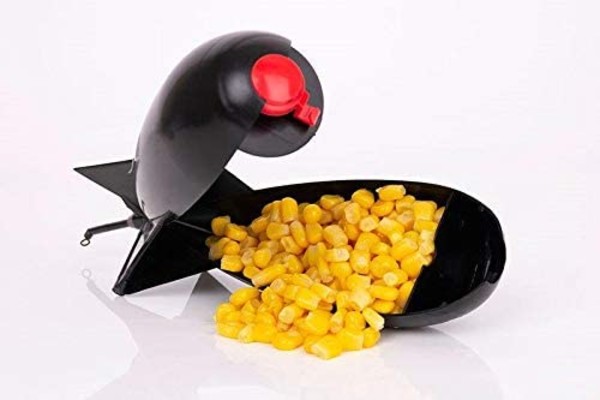
Those Spomb counts are examples, not prescriptions. A small Spomb of crumb and micro pellets is not equivalent to a large one packed with whole boilies. Device sizes, fill levels and bait density differ, so record what you actually introduced by weight, volume or consistent scoops if you want useful notes.
Find the carp before feeding them
Location comes first. Watch for shows, bubbling, coloured water, fizzing, movement through reeds and changes caused by wind or sunlight. A perfectly measured bucket of bait in an empty part of the lake is still in the wrong place.
If you have not found convincing signs, keep the opening feed small and use mobile tactics where the fishery allows it. A single bright hookbait, small mesh bag or compact solid bag can test a swim without committing a bed of food. Our solid PVA bag guide explains how to keep that presentation controlled.
Don't treat line bites alone as proof that carp are feeding hard. A fish can brush the line while travelling, and nuisance species can disturb the spot. Look for several pieces of evidence before increasing the amount.
Eight questions that decide the quantity
1. Are carp actually present?
This is the biggest factor. If carp are showing over the area or several anglers are receiving action, there is a reason to introduce food. If the water looks lifeless, feeding heavily reduces your ability to move and respond.
2. What is the water temperature doing?
Carp are ectothermic, so temperature affects metabolism and feeding, but there's no switch that turns appetite on at one exact number. In cold or rapidly cooling water, begin cautiously. Stable or warming conditions may support more feeding, while hot weather can bring oxygen problems rather than an automatic opportunity to use more bait.
3. Is it a high-stock or low-stock venue?
A busy day-ticket lake holding many actively feeding carp can clear bait quickly. A low-stock pit may contain large carp but far fewer mouths. Fish size alone is therefore a poor guide: ten small carp can consume and disturb more bait than one much larger fish.
4. Have bites started?
A fast bite is the clearest feedback available. After landing and safely returning the carp, replace only what is likely to have been eaten or scattered. Small repeatable top-ups maintain attraction without burying the hookbait.
If the spot stops producing, don't automatically add more. Check whether carp have moved, the weather has changed or angling pressure has increased.
How much bait should I use for a short carp session?
A few hours gives carp little time to find and eat a large feed. Short sessions favour rapid-attraction presentations and minimal commitment. An overnight or multi-day session gives you time to build a spot, but only if fish activity supports it.
Pre-baiting is a separate tactic and must be permitted by the fishery. See our pre-baiting guide before feeding a venue between sessions.
6. What is in the mix?
A kilo of whole boilies is a concentrated food source. A kilo of wet particles contains water, while a cloudy mix of crumb and liquid creates attraction with less substantial food. Compare nutritional load and bait size as well as weight.
Whole boilies are selective, easy to count and easy to spread, but every bait is a substantial mouthful. Crumb and groundbait create many small food signals and encourage investigation without necessarily giving each carp a large item. Pellets differ in size, oil content and breakdown time, especially as the water cools. Particles can keep fish browsing for a long time, but they must be safely prepared and allowed by the venue.
This is why two buckets that weigh the same can feed very differently. A fine, wet mix may create attraction over a broad patch while offering little concentrated food. The same weight in large boilies is easier for carp to find individually and represents a much more obvious meal. Judge the mix by what the fish can actually eat, not the reading on the scales alone.
7. Are nuisance species present?
Bream, tench, roach, crayfish and birds can consume or move bait. That doesn't always mean adding more is the answer. Larger or harder baits, a different presentation, tighter feeding, a change of spot or a less attractive mix to the nuisance species may be better.
8. What do the rules say?
Fishery limits override any online guide. Some venues restrict nuts, particles, floating bait, loose feed or the total amount used. Ask the bailiff if the rule is unclear and never assume a bait is acceptable because a shop sells it.
Three simple baiting plans
How much bait should I feed carp in winter?
Locate fish or choose a winter area that has already produced. Cast a single balanced hookbait with a small mesh bag, or use one compact solid PVA bag. Give it enough time to work while continuing to watch the lake. In cold water the first cast is a test of location as much as bait, so avoid introducing a bed of food before the swim has earned your confidence.
Recast with another small parcel only when the rig needs moving or fresh signs justify it. If the area remains lifeless, a move is more useful than feeding it heavily. The aim is one bite without asking a slow-moving carp to clear a large quantity first.
Plan B: a warm day-ticket session with visible carp
First decide whether the carp are feeding or merely cruising through the area. If they are dropping, bubbling or returning to the same patch, introduce a moderate amount that you can repeat accurately. Keep the baited area manageable and consider placing one hookbait on its edge rather than automatically putting every rod on a single tight spot.
Quick bites justify modest top-ups because fish have demonstrated that they are present and food is being disturbed. Add a fraction of the opening amount, then watch the response. If the activity fades, pause and reassess the location before reaching for the spod again. A well-stocked venue can justify more bait, but only while fish presence, conditions and rules support it.
Plan C: an unfamiliar low-stock pit
Spend longer observing and less time baiting. Put single hookbaits or small parcels on two different likely routes and record every show, liner and patch of bird activity. Sparse stocks mean a quiet area may genuinely contain no carp, so a large feed can remove the freedom to respond when one eventually shows elsewhere.
Add a modest scattering only after a spot earns confidence through repeated signs or previous captures. Keep spare rigs and the rest of the tackle organised for a move. On this kind of water, being able to follow the fish is often worth more than owning the most elaborate bait mix.
How bait spread changes the amount
The same quantity can create two very different feeding situations. A tight pile gives carp a concentrated target and can produce competition on a busy venue, but it can also make the hookbait sit among many safe alternatives. A broad scattering encourages fish to move between items and can suit boilies, although accurate presentation across the whole area becomes more important.
Small particles and crumb naturally create a dense patch. Larger boilies can be spread with a throwing stick or catapult where the range and rules allow. Neither pattern is always better. The useful choice depends on whether you want fish to browse slowly, compete over a small spot or encounter an isolated hookbait on the edge.
Depth and undertow also change what reaches the bottom. Light particles, groundbait and liquids can drift as they fall, while a heavy mix may land more tightly. Watch the wind, cast from the same position and use the same clipped distance if accuracy matters. A neat spod pattern at the surface is not automatically a neat patch several metres below.
When bites come from the edge of a baited area, resist the urge to expand it immediately. That edge may be where cautious carp feel safest. Recast to the productive line and top up in a way that preserves it rather than covering every square metre with more food.
Let the next action decide the next feed
Baiting becomes easier when every introduction has a reason. An opening feed asks whether carp are present and willing to eat. A top-up after a quick bite replaces some of what was consumed or scattered. A pause after activity stops gives you time to decide whether the fish have moved, become cautious or simply finished feeding.
Look at the character of the bite as well as the count. Several confident takes close together suggest competition; isolated bites many hours apart do not. Repeated liners followed by silence may mean carp crossed the area without settling. Fizzing that continues after a lost fish can support a small top-up, whereas shows at the opposite end of the lake point towards moving.
Keep the increments consistent enough to learn from them. If an opening feed was six small Spombs, a top-up of one or two is easier to assess than an unmeasured bucketful. Note the device size and mixture because “six Spombs” means little if one session used fine crumb and another used tightly packed boilies.
This doesn't turn fishing into a formula. It simply prevents boredom from making the baiting decision. When the evidence is weak, wait, watch or move. When the response is strong, feed just enough to keep the opportunity alive without assuming it will continue all day.
When should I add more bait to a carp swim?
Top up when evidence suggests carp have eaten or dispersed the bait: a quick bite, repeated confident takes, sustained bubbling over the spot or several fish competing. Use small repeatable amounts so you can judge the response.
Pause when carp are showing elsewhere, the temperature has dropped sharply, the only activity is from nuisance species, or bites have slowed after a heavy introduction. Adding bait simply because an hour has passed is feeding by the clock rather than reading the water.
Keep a simple log: date, water and weather trend, swim, bait mix, opening amount, time of each top-up and bites. It will teach you far more about one venue than a universal online number.
Can you put in too much bait?
Yes. Too much food can give carp many safe options while reducing the chance that they pick up your hookbait. It can also commit you to a spot after the fish move and leave unwanted bait decomposing. However, no bite doesn't prove overfeeding; poor location, presentation, pressure and changing conditions can produce the same result.
The useful response is not to invent a precise limit. Start lower, change one variable at a time and let the fish's response guide the next introduction.
Bait safety and fish welfare
Use commercially prepared particles or follow complete, reputable preparation instructions. Raw or underprepared nuts and particles should not be introduced. Beginners are better avoiding raw nuts altogether, and every fishery's restrictions must be followed. Keep PVA mixes dry and use only liquids explicitly labelled as PVA-friendly.
In hot weather, watch for gasping, tightly grouped or lethargic fish and follow the fishery manager's instructions. Warm water holds less oxygen, and capture adds stress. Stop fishing if carp cannot recover normally or the venue suspends angling; tell the fishery and report suspected pollution or fish in distress through the proper Environment Agency route.
Never dump leftover bait into the lake when packing away. Take it home, dispose of it responsibly and recover all bags, line and litter.
Frequently asked questions
How many boilies should you use around one hookbait?
There's no fixed number. A small scattering of five to twenty can test a short-session spot, while more may suit active carp on a stocked water. Boilie size, venue stock and whether fish are present matter more than the count.
Is one PVA bag enough?
It can be. A compact bag presents the hookbait with a controlled mouthful and is especially useful in cold water or when casting to a showing fish. Add loose feed only if the response supports it.
Should you bait before casting?
Only after locating a suitable area. In uncertain conditions, cast a small presentation first. Where carp are clearly feeding and accurate baiting will not push them away, a modest opening feed can be sensible.
Should you feed again after every carp?
A quick bite often justifies a small top-up, but not necessarily the full opening amount. Consider how long the fish was played, whether the shoal remained and how much bait was likely consumed.
What should you do with unused bait?
Take it away. Don't tip it into the margins or leave it for wildlife. Store it safely if appropriate or dispose of it at home.
For more ideas, see our carp bait tips and spod mix guide.
Choose how to deliver the amount you planned
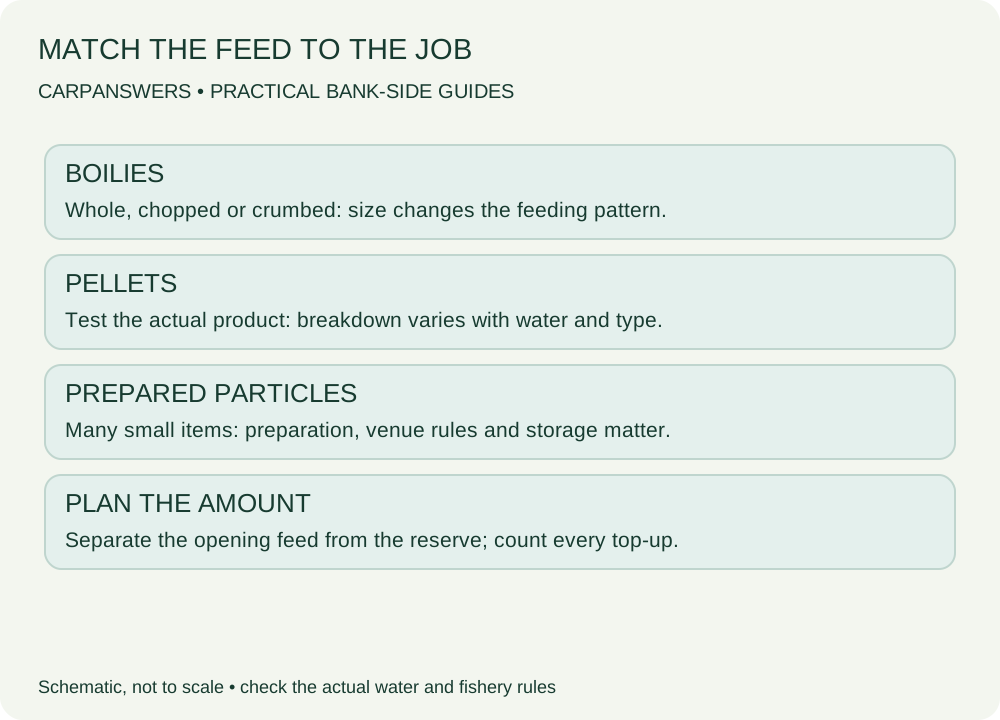
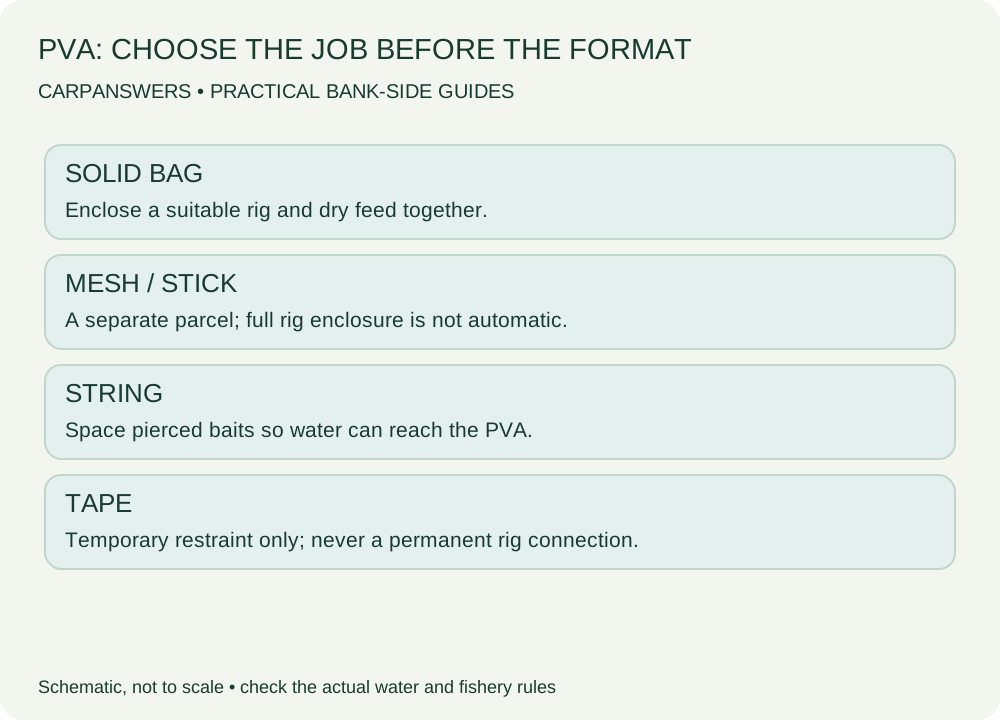
Use boilies, pellets and particles to choose the feed, and particle preparation before handling dry ingredients. The PVA formats guide helps with small parcels; its solid-bag versus mesh comparison narrows the choice without repeating the tying tutorials.
For repeated baiting at range, follow accurate Spombing and record the loads as well as the casts. A sensible allowance only stays sensible if you count what you actually put in.