
Before opening another tub, check where the fish are and what your rig looks like after a retrieve. If the hook is masked or the fish are forty yards away, a different flavour will not answer the problem. When the spot and presentation look right, try one bait change and give it a fair go.
What your retrieve tells you
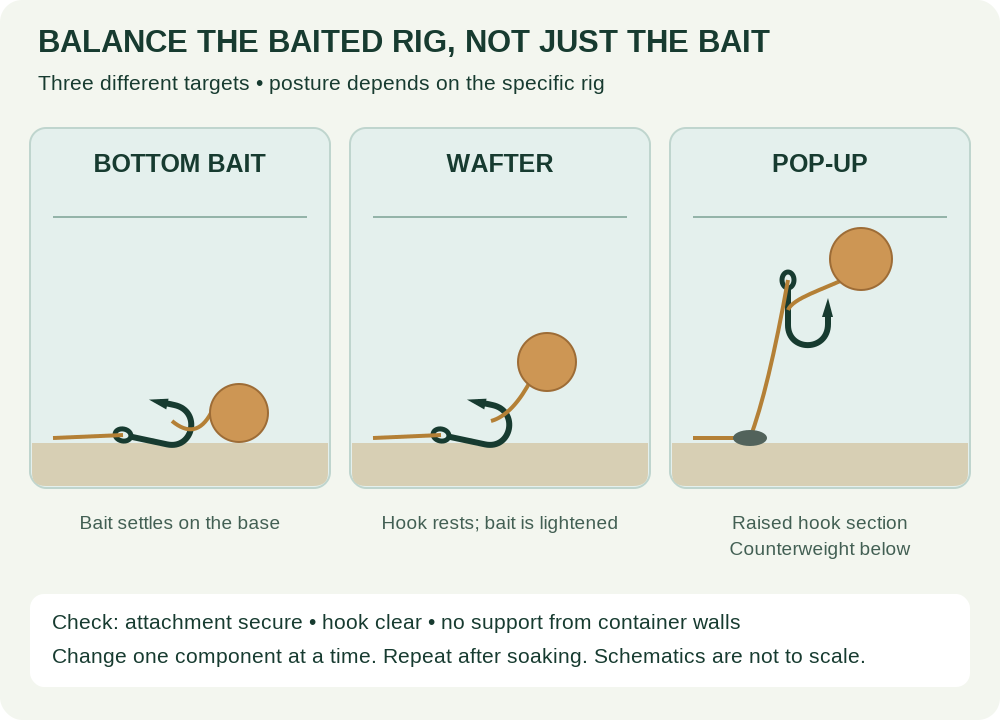
If the hook comes back dirty or the hair wrapped around the hook, fix that before changing flavour. Check the hook point in good light. Lower the rig into a clear container of water with the same hook, stops and counterweight. Make sure the point stays clear and the bait sits where you expected. A bait that looks buoyant by itself can behave quite differently with the hook attached.
Change size if the fish give you a reason
When you find small nibbles or damaged baits on every retrieve, compare a firmer or larger hookbait of the same type. It may stay intact longer; it won’t guarantee a larger carp. If fish are browsing over small chops or crumb, a smaller matching bait may be easier to present in that patch. Check the hook gap and hair when you switch. See the boilie size guide for size and hook pairing.
A whole boilie, half a boilie or a topper?
Take one boilie from the loose feed and cut it in half. You can thread a half onto the hair and put a few matching chops around it. That gives you a useful size comparison without opening a new flavour. If two halves or a pair of baits fill the bend of the hook, change the hair length or use a smaller bait. The hook point and gape must still be clear once the stop is in.
Match the feed or try a contrast
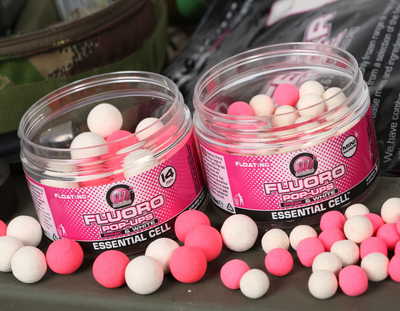
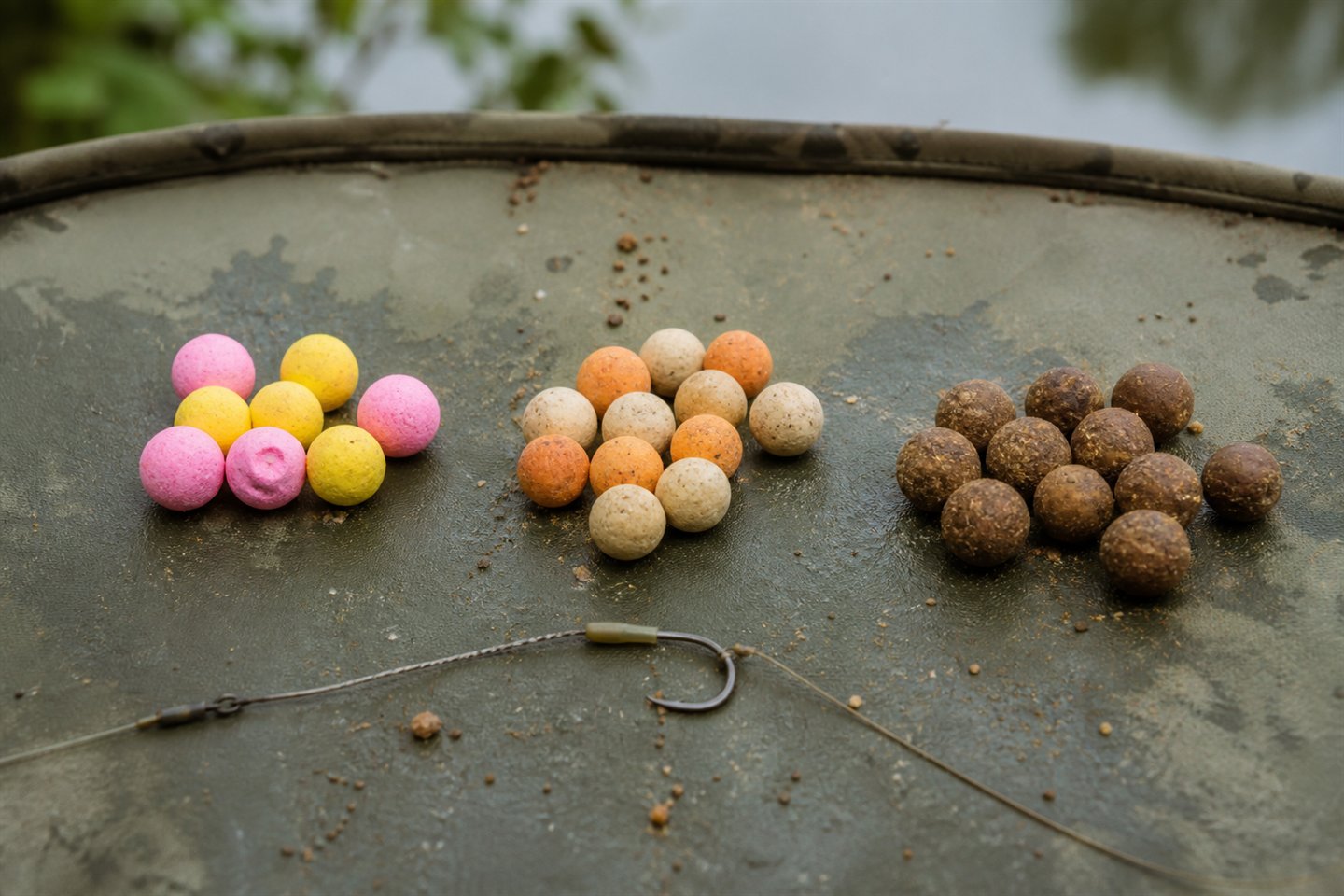
Use a hookbait similar to the loose feed as a starting point. On a reasonably clean spot, a contrasting bait is worth trying if you want a fish to find that one mouthful quickly. See it in the margin first. A washed-out bait and a bright one can both work; keep the distance and presentation the same if you want to learn from a comparison. Artificial corn and foam are options only where allowed, and can change how the hook sits.
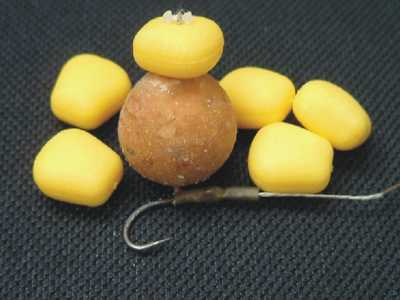
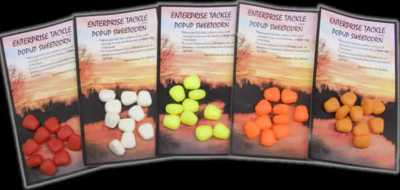
A grain of buoyant imitation corn can add a small fleck of colour to a sinking boilie, provided the fishery allows plastic. Check the combination in water: the topper might just lighten the bait, or it might lift the hook right off the bottom. If colour was the only thing you meant to change, the second result gives you a different experiment.
Small feed gives you another decision
A little dry feed in a solid PVA bag keeps a suitable rig and food together during the cast. If you prefer a loose spread, start with a few chops or boilies rather than emptying the mix into the swim. If you add a liquid to PVA, use one labelled for that purpose and test the finished bag with the water you will fish. A bag that passes a quick test indoors can take longer to empty in colder water. The Korda Solidz medium PVA bag system (paid link) is one option if you want to try that approach with a small parcel.
Try a liquid on a handful first
Put a few boilie chops in a separate pot and follow the liquid maker’s instructions. Leave the rest dry. Try the treated bait on the needle and compare it with the untreated handful after a soak. A soft bait that splits on the cast is little use however good the pot smells. If you add any liquid to a PVA mix, test the actual filled parcel in lake water before sending it out.
Keep track of one change
Write the time, spot and adjustment on your phone or in a notebook. “Same cast, switched to a firmer bait after two damaged ones” will be more useful next week than a list of which colours you packed. If shows move to the far end, take the opportunity to reassess the swim.