
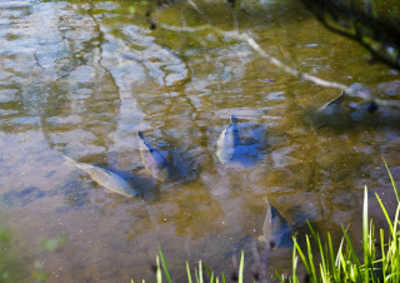
Pre-baiting means introducing a little feed before you fish. It is worth trying only if you have permission, a spot you can fish well and time to check what happens. Before adding any bait, ask what will make you come back and top it up.
Ask first, then choose one spot
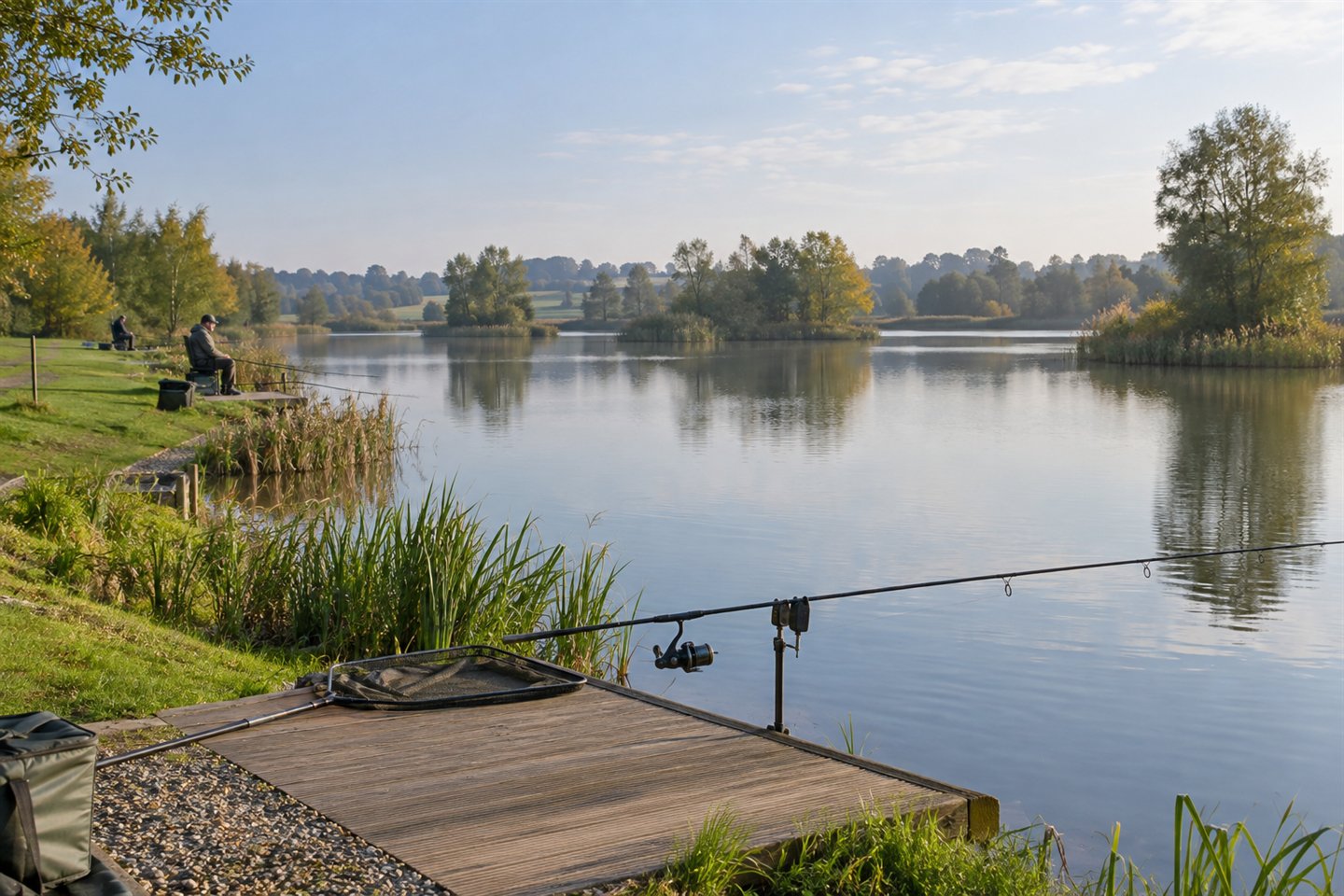
Check whether the fishery allows feeding without fishing, what access you have and which bait or delivery methods it allows. Don’t feed an occupied swim or assume you can reserve one. For a first try, pick one known spot you can see or revisit easily. Check the line and landing route as well as the bottom. A quiet margin over clean ground is worth considering only while you can fish and land there safely.
Walk one alternative swim on the same visit. A clean strip beside light weed can give you a second option if the margin is taken, provided you can see a clear route to play and net a fish. Pick a far-bank marker you will recognise from the water’s edge. An alternative is worth knowing about even if you never put bait there.
Start with a small amount you can remember
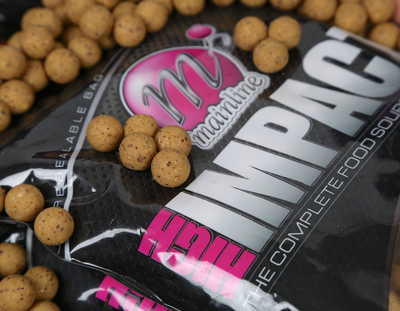
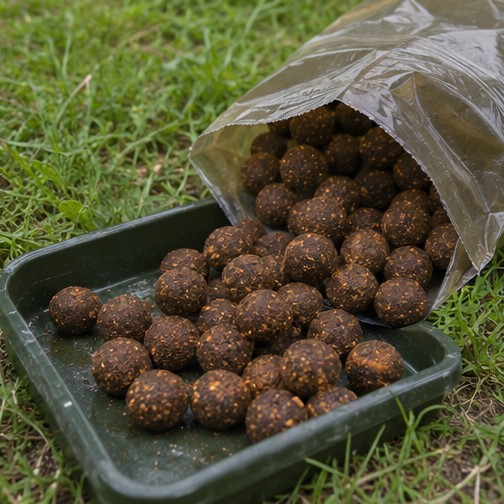
Use a few permitted whole or chopped boilies, or some properly prepared particles. Put it in the same place each time for a useful comparison. Record the day, amount and signs you saw. If somebody else fishes the spot, talk to them before feeding anywhere nearby. Another angler’s ticket is as valid as yours. A prepared hemp and particle mix (paid link) is one option where the venue allows it. Follow the pack’s storage instructions once opened.
Look for a response before topping up
Watch whether carp visit, how they move and whether feed is visibly being taken. Bait disappearing is one clue; birds, other fish and flow can move it. If you can’t account for the feed, do not automatically put more in. There is no set number of visits. A quiet check with no extra feed can teach you as much as another handful.
The author used three or four visits before fishing, with a day between visits, when access allowed. Try using the first to locate fish, the second to see whether they come back at a similar hour, and the third to check the spot before committing to a session. In your notes, put the time and bank marker beside the bait, amount and what actually happened. An untouched handful on the third visit is a good reason to put the bait tub away.
Fish the evidence you have on the day
See if the spot is open and the route is still safe. Check that you can present the bait and that your hook comes back clean. A simple rig and a little matching loose feed may be plenty. If the fish are elsewhere or the swim is occupied, fish somewhere else. Pre-baiting gives you information and a possible starting point; it doesn’t make a fish certain.
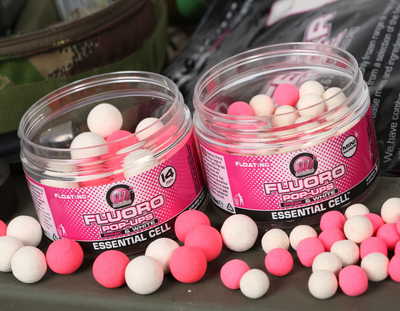
When carp are already feeding, a single hookbait from the boilies you introduced lets you make a quiet start. If you can present it cleanly, try the edge of the fed patch so you can place the rig without casting through the middle of the fish. A small solid PVA bag, such as Korda Solidz in small (paid link), is another way to take in a mouthful of dry feed with that first cast. Count it as part of the feed you have put in.