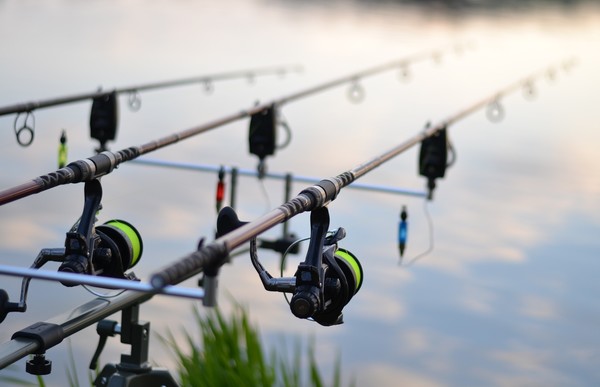
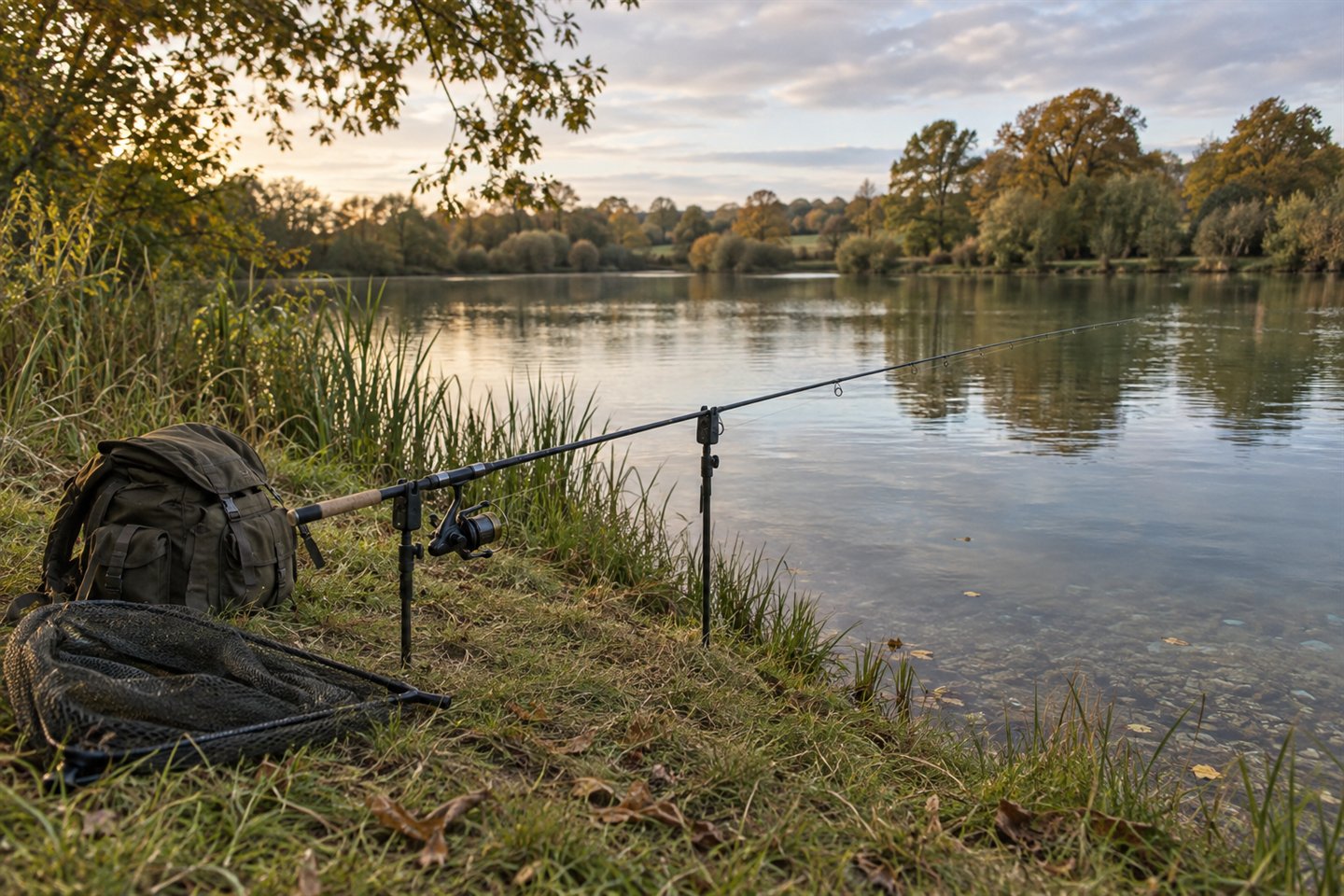
Only got a couple of hours for carp fishing? Travel light and look for fish before settling in. You haven't got all weekend to wait for them to find a big bed of bait.
The advantage of a short carp session is flexibility. You can fit an evening around a promising opportunity, and a light kit makes moving much easier. Put that time into finding a chance rather than waiting in a swim you chose in a hurry.
Whether it's an afternoon or a few hours after work, we'll help you choose a spot, get fishing and decide when to move. If it's your first carp trip, read the first-session walkthrough alongside this guide.
Short session carp fishing: what should you do first?
Choose a water that fits the time available, find a safe swim with evidence of carp, and fish one or two simple presentations with modest feed. Arrive with sound tackle and spare rigs prepared. Keep watching after the first cast, and review the choice of area before you start changing hookbaits, flavours and rig components.
Efficiency means removing avoidable work, not rushing every job. Checking a knot, opening the net and wetting the mat are part of fishing time. Skipping those steps doesn't create a better short session; it merely leaves problems waiting for the first bite. Aim for a calm sequence that you can repeat rather than an impressive-looking race from car park to first cast.
Don't judge the method by a single blank. A two-hour trip samples a small part of a fishery's day. Record what the fish did, where you could present safely and how much useful fishing time the visit actually provided. Several short visits can reveal a pattern that is invisible during one long session spent in the same swim.
Choose a venue that fits the clock
Calculate the whole outing, including travel, parking, walking, checking in and packing away. A lake forty minutes from home might leave very little fishing inside a three-hour window. A familiar local water with straightforward access can offer more genuine opportunity even if its largest carp are smaller than those at the distant venue.
Ask about admission times, gate closures and the shortest ticket available before leaving. Some fisheries allocate swims, restrict moving or require a booking that starts at a fixed time. Those arrangements are not necessarily unsuitable, but they change the plan. There is little value in choosing a mobile approach at a venue where the booked peg must be used throughout.
Match the stock and difficulty to your aim. For learning accurate casting and bite response, a reasonably stocked open lake makes sense. A low-stock gravel pit can still reward short visits, but you may spend most of them looking rather than catching. Be honest about whether today's objective is a realistic chance of a carp or information for a longer project.
Permission and time on the bank are separate questions. In England and Wales, check the appropriate rod licence, local byelaws and the fishery's own permission before the session. Scotland and Northern Ireland have different arrangements. The official freshwater rules explain why national, regional and water-specific requirements must all be considered; a short visit is not an exemption.
Prepare for decisions, not every possible method
Inspect the main line, reel operation and rod guides at home, where damaged components can be replaced without spending the session searching through luggage. Prepare a small number of rigs for the methods you understand and the venue allows. Label hook sizes or hooklink lengths if the differences are not obvious, and keep sharp points safely covered during transport.
Pack around the order of use. The net, mat, bucket and banksticks should be accessible without emptying the tackle bag. Keep the permitted hookbaits together, with one straightforward alternative available if the first presentation is unsuitable. A spare lead and a couple of sound rigs are useful insurance; six unrelated rig systems usually create more decisions than they solve.
Separate the equipment that makes you mobile from equipment you merely like having nearby. You may not need a bivvy, large chair or cooking set for a dry two-hour visit, but you still need suitable clothing, water, a charged phone and complete fish-care equipment. Don't remove welfare or personal-safety items to make an overloaded bag feel lighter.
Use the Session Planner to set a clear departure time, a main method and a fallback before travelling. Treat any planning aid as a way of organising your thinking, not as proof that carp will feed at a predicted minute. Leave enough margin to reel in and clear the swim without racing a locked gate.
Spend the first few minutes looking
Walk quietly before bringing the full load to a peg. On a small lake, a brief circuit may be enough; on a larger water, inspect the accessible area most relevant to today's conditions. Look from safe standing positions and use polarised glasses where they help. Don't climb trees, lean over unstable banks or cross a closed section to gain a better view.
Useful signs include a clearly identified carp rolling, a dark shape changing direction below the surface, fresh clouds of disturbed sediment and repeated activity along the same margin. None should be interpreted in isolation. Bubbles may come from the bottom rather than fish, and a single splash may be another species. Try to combine two observations before making a strong assumption.
Ask other anglers politely what they have actually seen, rather than only whether they have caught. A report of fish moving through a corner during the previous half hour can be more relevant than a photograph from last weekend. Respect their water and privacy, and don't linger behind an occupied swim expecting access to somebody else's opportunity.
If there are no obvious fish, choose a defensible starting area rather than waiting indefinitely for a perfect sign. Consider safe margins, changes in depth, shelter, light, recent wind and the pressure from other anglers together. The watercraft guide to finding carp explains these clues in more depth. Use what you've seen today to choose a spot, and keep watching in case the fish move.
Make one good cast before adding another rod
Set up the landing and unhooking area first, then choose a spot within comfortable casting range. A clean, repeatable cast is more useful than pushing a rig to the edge of your ability. Check the space behind you and avoid casting across paths or other lines. On a busy lake, establish your permitted water with neighbouring anglers before committing.
Use enough investigation to understand the presentation, but avoid repeatedly dragging a lead through an area where carp are already feeding. A controlled cast and the way the lead settles may give useful information. If you can't tell whether the rig is buried in weed or hanging across a feature, choose a clearer spot rather than pretending uncertainty is stealth.
Put the first rod in place and make sure its indication and clutch are properly set before considering another. A second rod can cover a different safe option, but it should answer a useful question, such as whether fish are using a nearby patrol route. Two nearly identical casts into uncertain water don't automatically double the quality of the session.
Keep all baited rods attended and under sufficient control. This is an explicit requirement in the official tackle rules for England and Wales. Reel in before walking off to inspect another bank or doing anything that prevents an immediate response. A receiver doesn't turn a distant observation walk into controlled fishing.
How much bait for a short carp fishing trip?
A single hookbait, a small scattering or a compact PVA presentation gives you an uncomplicated starting point. The amount should reflect fish activity, stocking, water temperature and any feed already entering the swim. Short-session fishing doesn't require the smallest possible quantity in every situation, but large initial commitments are difficult to undo when the fish turn out to be elsewhere.
A little feed can help define the area around the rig without making the hookbait one of hundreds of identical items. Spread or concentrate it according to the presentation and the behaviour you can see. Avoid feeding just because a certain amount was packed. Unused bait can go home; the lake doesn't need the remainder as a pack-up ritual.
Solid PVA bags are one option when the venue permits them and the chosen rig, lead and contents are compatible. The solid PVA bag guide covers preparation and presentation. Make any bags you can safely prepare in advance, store them dry and test unfamiliar contents before the trip. Don't discover at the water that a wet ingredient dissolves the bag prematurely.
After a bite, decide whether a small top-up is useful instead of automatically replacing an imagined mouthful-for-mouthful amount. If fish remain active on the spot, a modest addition may sustain the opportunity. If the capture caused disturbance and activity has moved, immediately adding more bait can make the decision to relocate unnecessarily difficult.
How to plan a two hour carp fishing session
Treat the following as an example, not a stopwatch rule. With two hours at the venue, the first fifteen minutes might cover checking in and looking, followed by fifteen minutes to organise fish care and make the first controlled cast. That leaves most of the visit for fishing, with a proper allowance at the end to retrieve tackle and leave tidily.
During the first fishing period, settle down enough to see what is happening. Repeatedly lifting a rod to check a perfectly plausible presentation can prevent the swim from settling. At the same time, investigate a genuine problem promptly: weed collected on the line, a suspiciously poor cast or a rig that has obviously moved are reasons to act, not to preserve an arbitrary waiting interval.
Around the middle of the visit, ask whether the original choice still makes sense. Are fish showing within your water? Has another safe area become clearly better? Can you move and still have meaningful fishing time? With only two hours, one well-supported move is usually more sensible than several speculative relocations that leave you continually packing and unpacking.
Keep the finish under control. Stop introducing feed as the end approaches unless there is a clear immediate reason, and avoid making a fresh complicated cast when you should be preparing to leave. Reel in before putting the net or mat away. A carp hooked near departure deserves the same unhurried handling as one caught at the start, so leave practical room for that possibility.
How a four-hour trip changes the plan
Four hours gives more scope to observe a change in light or activity and still respond. You can spend a little longer comparing areas, or wait through a quiet spell when there is convincing evidence that fish remain nearby. The extra time doesn't automatically justify another two rods, a larger baiting campaign or moving all the equipment from a weekend session into the swim.
Divide the trip into broad phases: choose an area, establish a reliable presentation, review the evidence, then concentrate on the strongest opportunity. A move after ninety minutes might leave enough time to settle elsewhere. A move with fifteen minutes remaining is unlikely to help unless fish are immediately accessible and the complete fish-care routine can remain ready.
If the session spans late afternoon into dusk, prepare for changing visibility before it happens. Choose your return route, keep a working torch accessible and stop if conditions exceed your planned safe limit. Finishing slightly early is a better decision than discovering that the path, steps or gate cannot be negotiated safely with a loaded barrow in darkness.
When should I move swims on a short carp session?
Move because another area presents a stronger, fishable opportunity, not simply because the current spot has been quiet for twenty minutes. Repeated carp sightings in reachable open water are useful evidence. A distant isolated splash behind an occupied swim is not. Compare what you would gain with the time, disturbance and uncertainty involved in starting again.
Before packing, check that the alternative swim is available and that moving is permitted. Inspect the landing area and route from the new rod position. Keep rigs safely secured and retrieve every line before relocating. Never walk around the lake trailing a baited rig or leave one rod fishing while the rest of your equipment disappears towards another peg.
Sometimes the right adjustment is smaller than a move. Changing the rod's position within the permitted swim may improve line angle; fishing a little shorter may avoid a difficult bottom; removing an unnecessary second line may simplify the area. Give these practical improvements consideration before deciding that the only answer is another bank.
Weather and light without fixed rules
A convenient after-work visit may coincide with a useful period of changing light, but evenings are not universally best. Some waters offer visible morning activity; others are dominated by access times, boat traffic or feeding routines. Let your own notes and current observations refine the schedule rather than treating an internet bite-time chart as a timetable the fish must follow.
Wind can affect surface drift, temperature patterns and where floating material collects, but its usefulness depends on the lake and recent conditions. A cold exposed bank may be uncomfortable without being productive. Start by asking whether the conditions allow you to watch, cast, land fish and leave safely, then use fish activity to decide which available area deserves attention.
Change or cancel the session when lightning, dangerous gusts, flooding, extreme heat or an unsafe route makes it unreasonable. A short fishing window can create pressure to squeeze in a visit at any cost. It should have the opposite effect: because you can return for another short trip, there is little reason to force a poor personal-safety decision today.
Turn repeat visits into a useful local pattern
On a water you can visit regularly, compare like with like before changing the whole approach. If one trip begins at lunchtime and the next at sunset, a different result doesn't demonstrate that the new hookbait caused it. Keep the basic method familiar for a few visits and note which areas actually hold visible fish during your available window.
A brief observation visit without tackle can be valuable when permission and access allow it. Look from the public or authorised path, stay clear of fishing anglers and record where carp are seen rather than disturbing them with trial casts. This is particularly useful if the lake is near your normal route, because it separates learning the water from the pressure to get a rod out immediately.
Don't turn that observation routine into unauthorised prebaiting. Feeding outside a booked session, occupying unallocated swims or visiting after closing can breach venue rules even when the amount of bait seems trivial. Ask first. You can build useful knowledge simply by watching and keeping a consistent record of time, light, access and clearly identified fish.
Review the practical side too. If a bag takes ten minutes to reorganise on every visit, change its layout. If the walk leaves you too tired to move, reassess the load or choose a closer swim without compromising welfare equipment. The improvements that make a short trip repeatable are often these small reductions in friction, not a new specialist rod. A routine that fits your life is more likely to produce the regular observations from which good local decisions develop.
Equipment worth considering
Polarised sunglasses are useful for inspecting reachable margins and reducing surface glare, provided the lenses offer suitable eye protection and fit securely. A compact tackle box helps separate spare rigs, hooks and small tools, while a dependable headtorch earns its place whenever the return journey could approach dusk. Choose practical operation and comfortable carrying over matching colours.
For a PVA approach, a small mesh system or correctly sized solid bags can keep preparation consistent, but only buy the type your chosen method needs. Check that the lead, hooklink and bait fit the complete presentation. An appropriate landing net and padded unhooking mat remain non-negotiable even when travelling light. Compare pack dimensions and usable working size: something that folds neatly but cannot safely accommodate the venue's carp is not an efficient purchase.
For a light mobile approach, Fortis Bays polarised sunglasses (paid link) are an optional aid when glare hides the margin, while Korda Original Funnel Web PVA mesh (paid link) can hold a small, accurately placed parcel of compatible dry feed where permitted. Neither replaces looking for fish. Test mesh dissolution in the actual water temperature, keep it dry in transit and use the equipment you already own if it performs those jobs reliably.
Frequently asked questions
Can you catch carp in two hours?
Yes, but the time limit doesn't create a guarantee. A familiar, suitable venue and a reliable presentation near active fish improve the quality of the opportunity. Two hours spent learning where fish travel is also useful. Keep expectations proportionate and compare several visits before drawing conclusions about a particular method.
Should I recast every thirty minutes?
No fixed interval suits every water. Recast when the presentation needs attention, a bite requires resetting or evidence supports a different spot. A sound rig in a promising area may be best left undisturbed. If you're unsure about its condition, resolve that uncertainty rather than repeatedly checking it without changing anything useful.
Is one rod enough for short-session carp fishing?
One rod is entirely workable and makes mobility, indication and fish handling simpler. Add a second only if you can manage it safely and it covers a meaningful option. The number permitted by a licence or ticket is a maximum to comply with, not a target that every short trip must meet.
What should I write down after a blank?
Record arrival and departure times, the actual fishing period, safe swims inspected, reliable fish sightings, chosen spots and the state of the rig on retrieval. Note why you stayed or moved. These observations are more useful than declaring a bait unsuccessful after one brief exposure on a day when no carp were located.
Make the next short trip easier
Get the tackle ready at home, choose a lake that leaves you enough fishing time and have a look around before settling down. Then give a well-placed bait a chance. You don't need to squeeze every method into one evening. A simple routine makes it easier to enjoy short trips and fit in another one soon.
Sources and further reading
Rules checked on 15 September 2026: GOV.UK freshwater fishing rules and tackle and rod-control requirements. For a filmed example of the broader method, see Korda's Short Session Masterclass. Venue rules and the conditions on the day take precedence over a general tactical plan.