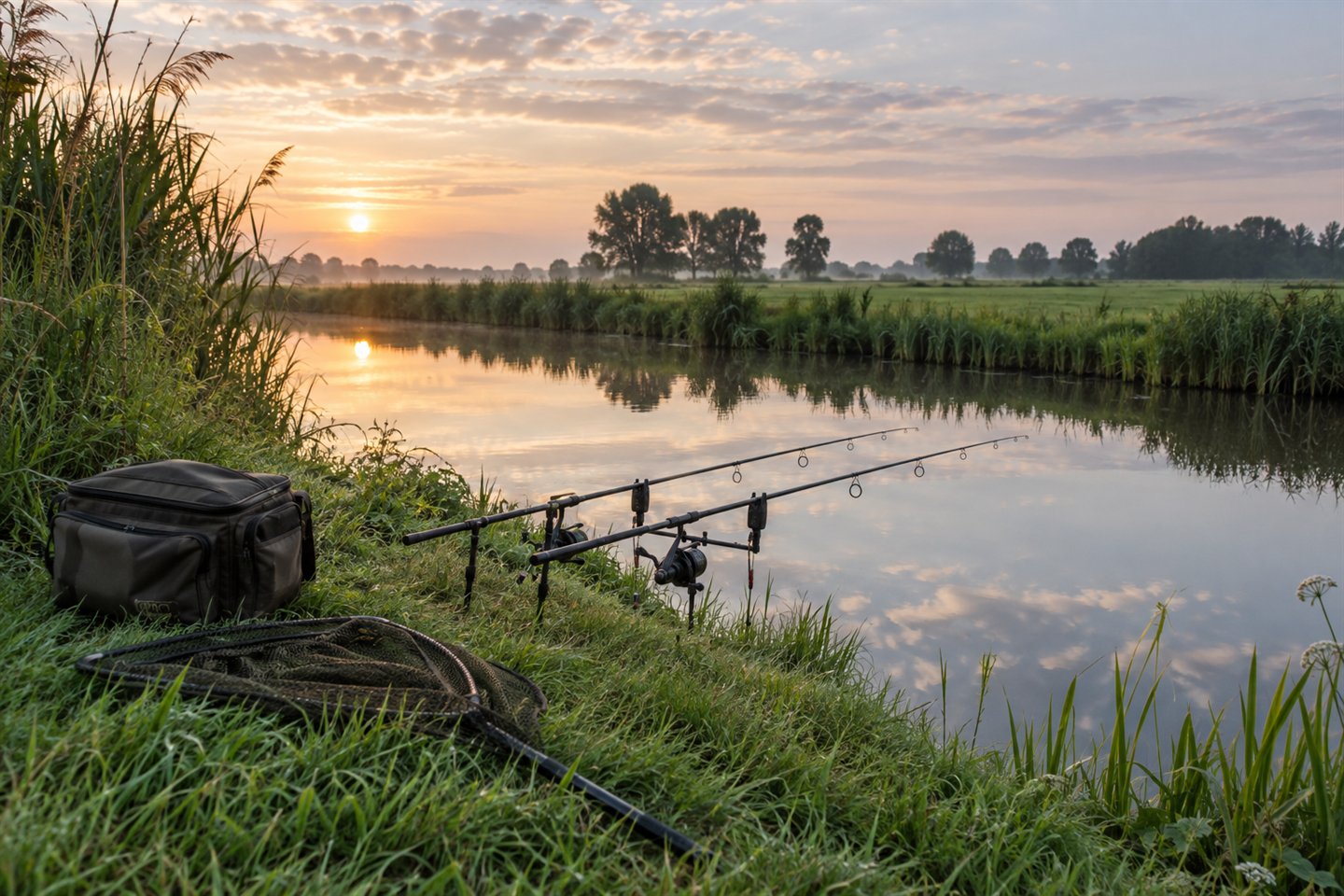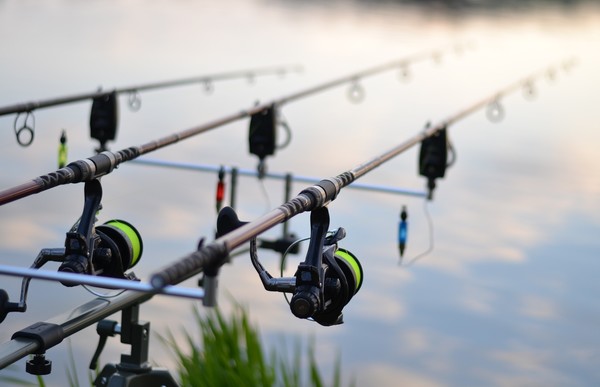
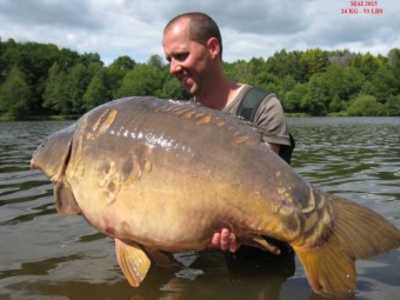
Your first carp fishing session doesn't need a mountain of tackle. A few daylight hours on a beginner-friendly lake, a simple permitted rig and modest bait make a good start. We'll take you through the day, from choosing a swim to returning your catch safely.
The best result is not necessarily the largest carp. If you find fish, cast safely, respond to a bite and return a carp in strong condition, the session has done its job. This plan takes you through the day in the order things need to happen.
How to plan your first carp fishing session
Choose an easy, well-managed venue and read its current rules before buying bait or tying rigs. Arrange the correct rod licence and the fishery's own permission, then pack one or two balanced rods, simple terminal tackle and the complete fish-care kit. Suitable clothing, drinking water, food, a charged phone and a small first-aid kit matter just as much as another box of tackle.
On the day, check the weather, tell somebody where you're going and walk the lake quietly before unloading everything. Build the landing net and wet unhooking area before the first cast. Use a presentation you understand, begin with a small amount of bait and stay close enough to every rod to respond immediately.
If a carp is hooked, move calmly from rod to net to mat. Keep the fish supported, minimise time out of the water and treat a photograph as optional. At the end, reel in before dismantling any fish-care equipment, collect every line offcut and take unused bait home. That sequence is the backbone of a safe first carp fishing session.
How to choose a carp lake for a beginner
Look for a managed day-ticket or club water with a reasonable stock of smaller carp, safe level swims, clear rules and help available. A venue with regular catches gives you more opportunity to learn than a vast low-stock pit. Ask whether beginners are welcome, what tackle is compulsory and whether a booking is required.
Read the fishery's latest rules directly rather than relying on an old social post. Common requirements cover minimum main-line diameter, banned leaders, permitted hooks, landing-net size, unhooking mats or cradles, retaining slings, bait restrictions and the maximum number of rods. The venue rule always overrides a general article.
For a first trip, avoid a swim that requires extreme casting, wading, boat use or fishing tight to dangerous snags. There will be time to learn specialist tactics after the basic routine is comfortable.
2. Sort the licence and permission
In England and Wales, anyone aged 13 or over generally needs the appropriate rod fishing licence for freshwater fishing. A junior licence for ages 13 to 16 is free, but it still needs to be obtained. A rod licence does not give permission to fish a particular lake: you also need the owner's permission, club membership or day ticket.
Scotland and Northern Ireland use different systems, so check the rules for the country where you'll fish. Closed seasons and local byelaws can also apply. Use the current GOV.UK rod licence service and the fishery's own information before travelling.
Starting with one or two rods is a learning recommendation, not a statement of the legal maximum. It gives you time to react and makes it easier to keep every baited rod under proper control.
What do I need for my first carp fishing session?
| Job | What to take | Why it matters |
|---|---|---|
| Fishing | One or two carp rods, matching reels and venue-approved main line | A balanced setup is safer and easier to learn |
| Indication | Secure rests or pod, alarms and bobbins where appropriate | Keeps rods stable and helps you recognise movement |
| Terminal tackle | Simple approved rigs, leads, spare hooks, swivels, scissors and pull tools | Allows damaged parts to be replaced and knots checked |
| Landing | Fishery-sized landing net | Supports safe control at the bank |
| Unhooking | Wet mat or cradle, bucket, forceps, sling and approved carp-care product if required | Everything is ready before a carp leaves the water |
| Personal safety | Suitable footwear and layers, waterproofs, drinking water, food, sun protection, first aid and charged phone | Keeps you comfortable enough to make calm decisions |
| Housekeeping | Rubbish bag and spare line container | Ensures every offcut and item leaves with you |
A chair, shelter and cooking kit are optional on a short session. Fish-care equipment is not. Check the CarpAnswers essentials list before leaving, but keep the first trip light enough that moving swims remains realistic.
4. Prepare before leaving home
Check the forecast for heat, strong wind and lightning, then tell somebody the venue, the likely area of the lake and the time you expect to return. Charge your phone and save the fishery's number. If reception is poor, agree in advance when somebody should expect to hear from you.
Inspect every rod ring for a cracked liner and run the main line through a damp cloth to feel for damage. Check the net, mat, sling and seams, then tie or inspect the rigs in good light and pull-test each knot with safe tools. Put permitted bait into sealed containers so it cannot spill through the car or attract wildlife.
Clean and completely dry nets, slings, mats and footwear before moving between waters. Pack in the order you'll need things: rainwear and documents accessible, fish-care kit easy to reach, and loose hooks secured. Good preparation makes the bank routine calmer when the weather changes or a bite comes early.
If thunder is forecast during the session, change the plan. Carbon rods conduct electricity. If thunder becomes audible, stop fishing, put the rods down away from people and seek suitable enclosed shelter; don't remain under a tree or continue holding a rod.
5. Walk the lake before unloading
Check in with the owner or bailiff, show any required documents and ask what has been caught recently. Advice is useful, but still spend ten or fifteen quiet minutes looking. Watch for carp rolling, bubbling, coloured water, reeds moving, cruising fish and sheltered or windward areas that suit the day's conditions.
Choose a level swim with a clear landing area and comfortable casting range. Look above and behind for power cables, branches, paths and other anglers. Avoid steep, undercut or slippery banks. Never set up beneath overhead electricity cables, and don't choose a snaggy corner that cannot be fished safely with your experience and tackle.
Identify where the water deepens at the edge and where a fish can be netted. Keep boxes and loose line away from the path between rods, net and mat so a night-time obstacle doesn't exist even on a daylight session.
6. Build the fish-care area first
Before a hookbait enters the water, assemble the landing net and leave it where it can be reached without stepping over rods or boxes. Put the mat or cradle on level ground away from stones, steep edges and direct sun. Fill a bucket with lake water so the mat, sling and your hands can be wetted before contact with a fish.
Place forceps and any fishery-approved care product beside the mat. Set the scales and sling if you genuinely intend to weigh a fish, then zero them before casting. A phone can be positioned for one quick photograph, but the picture is optional and should never keep a carp out of the water while settings are changed.
Don't stack tackle on the mat or leave the net folded in a bag. A bite can come immediately after the first cast.
7. Use a simple, safe rig
A basic hair rig tied with a knotless knot and a fishery-approved lead arrangement is enough. Ready-tied rigs from a reputable maker can help, but still inspect the hooklink, knot and hook. The complete lead setup must be able to deal safely with a breakage rather than leaving a carp towing the lead.
Follow minimum line and hook rules, avoid prohibited leaders, and never copy a complicated online arrangement without understanding each component. The beginner carp-rig guide explains straightforward options.
Mount the hookbait, test its balance and presentation in the margin, then pull-test the rig with proper tools. Check that the hook is sharp and undamaged. Replace it rather than trying to make a doubtful rig last the day.
8. Keep the first cast comfortable
Choose a clear target within easy range. Check behind, make a controlled overhead cast and feather the lead shortly before it lands. Don't chase distance. Accuracy and a tangle-free presentation are more useful than landing somewhere near the far bank.
Begin with a single hookbait, a small PVA parcel or a modest scattering. On a stocked water with active fish, a little more may be appropriate, but the first session is easier when you can respond rather than committing a large bed of bait. Our guide to how much carp bait to use provides condition-led starting points.
Place the rod securely, set the clutch or free-spool system for the swim and attach the indicator. Test the alarm and learn how the clutch changes before a fish is hooked.
9. Stay with the rods and watch the water
Baited rods must remain attended and under proper control. Keep close enough to respond immediately, especially near weed or snags. Reel in before leaving the swim, helping elsewhere or doing anything that prevents you reaching a rod.
Watch for changing fish activity rather than staring only at the alarms. If carp repeatedly show elsewhere and a move is safe, one or two rods make relocation simple. Note casts, signs and bites so the next session begins with useful information.
A single bleep may be wind, undertow or a line bite. A steady tightening line, dropping indicator or sustained movement deserves a calm response. Learn the alarm and indicator together rather than striking wildly at every sound.
10. What to do when you get a bite
Move to the rod promptly but don't run through loose tackle. Pick it up, disengage the free-spool lever if one is fitted and wind only until you have controlled contact. Keep the line clear of the other rod and let the blank begin to bend. A violent strike is unnecessary when the line is already tight.
Maintain steady pressure and use the clutch. If the carp takes line, let it do so under control rather than locking the spool and forcing the rod backwards. Change the angle with measured side strain to guide it away from weed, the other line and safe-but-inconvenient features. Avoid giving sudden slack, yet don't haul simply because the fish is close.
As the carp tires, put the net fully in the water with the arms spread and the mesh sunk. Draw the fish over the centre instead of chasing it with the rim. Wait until the head, body and tail are above the mesh before lifting the arms. Keep the net in the water while you set the rod down and confirm that the unhooking area is ready.
If a fish reaches an unsafe snag, seek experienced help. Don't pull from several directions, climb a dangerous bank or enter deep or unknown water. No carp is worth a person getting into difficulty, and choosing a safer swim at the start is always better than trying to solve an impossible angle during the fight.
11. Unhook, photograph and release safely
Once netted, let the carp settle in the water while you confirm the mat is wet and tools are ready. Secure the rod, detach the rig or lead if that makes transfer safer, and gather the mesh around the fish. Support its full weight in a suitable sling or bundled net mesh; never carry it by the net handle.
Place the carp low on the wet mat or in the cradle. Wet your hands, keep the fish's body fully supported and remove the hook carefully with forceps. Check the mouth and body, applying only a fishery-approved care product where permitted and necessary.
Keep air exposure as short as possible. If taking a photograph, kneel over the mat, support the fish under the pectoral area and towards the tail, and keep it low. Never stand while holding a carp. If the phone is not ready or the fish is active, skip the photograph.
Return the carp in the sling or secure net, support it upright in the water and face it into clean water where possible. Let it regain balance and strength. Release only when it can hold itself upright and swim away strongly. Ask the fishery for help if recovery is slow.
12. Pack away in the safe order
Reel in every rod before dismantling the landing net, mat or cradle. Check the swim for line offcuts, hooks, bait, packaging and food. Take unused bait home rather than tipping it into the margins.
Clean, disinfect where appropriate, and completely dry nets, slings, mats, boots and waders before visiting another venue. The Check, Clean, Dry approach helps reduce the spread of invasive species and disease.
Common first-session mistakes
Bringing too many rods creates more lines to watch and more tackle to move. One rod is enough to learn the sequence and two are manageable when the swim is open. The aim is to respond well to every indication, not to occupy every legal rod position simply because the licence permits it.
Choosing the first empty swim is another common shortcut. Walk, look and consider safety before setting up. An empty peg may be convenient but devoid of fish, or it may have a steep edge and awkward landing area. Ten quiet minutes of observation can prevent several hours in the wrong place.
Don't cast before the net, mat and forceps are ready, and don't copy a complicated rig that you can't explain. A simple approved arrangement, tested in the margin and tied well, is a better first-session tool. The same restraint applies to bait: begin modestly and increase only when fish activity gives you a reason.
Distance is seductive because the far bank looks like a clear target. Fish accurately within comfortable range instead. A controlled cast to a known spot, with the rig settling properly, is worth more than an extra twenty yards and an uncertain landing. If the useful water is beyond your safe ability, choose a different swim.
Finally, don't make the photograph the centre of the routine. Prepare it before fishing or skip it. Keep the carp low over a wet mat, return it promptly and reel in every rod before packing the net or cradle. A tidy release and a clean swim are better records of a first trip than a hurried picture.
What counts as a successful first session?
Don't write off a blank as a wasted day. Finding where carp showed, practising a cast or getting comfortable with your tackle all give you something to take into the next trip. If you do catch, enjoy it, keep handling brief and return the fish safely. There will be plenty of time to plan the next session afterwards.
Build one skill at a time: location and safe handling first, accurate baiting next, then more advanced rigs or longer sessions. The complete CarpAnswers beginner guide can help with the next stage.