Getting your net and unhooking tools ready before the first bite makes coarse fish care much easier. We'll work through playing, netting, unhooking and returning your catch, with advice for small silverfish and the stronger fish you might meet.
Coarse fishing covers small roach and gudgeon, deep-bodied bream, spiny perch and powerful tench, chub, barbel and carp. They cannot all be handled identically. The sensible standard is to prepare for the largest realistic catch at the venue, then use the least handling that safely frees each fish.
The advice below follows Angling Trust and Environment Agency fish-care principles for canals, rivers and stillwaters. Check your fishery's requirements too. If you're new to unhooking, learning with a qualified coach before fishing alone is a worthwhile start; it's much easier when someone can show you at the water.
Coarse fish care: what should be ready before you fish?
Use tackle strong enough for the likely fish and snags. Have a suitable soft, knotless landing net ready, wet hands and all contact surfaces, support the fish low over the net or mat, remove the hook with an appropriate disgorger or forceps, and return the fish without unnecessary weighing or photographs.
For larger fish, prepare a wet padded mat or cradle and keep the landing net in the water while other equipment is made ready. If the fish fought hard, let it recover in the net. In a river, authoritative guidance advises resting it facing upstream so water flows naturally through the mouth and across the gills.
The coarse tackle checklist covers the whole outfit. Hook and line choice also affect welfare, so use the coarse hook guide and line and hooklength guide together.
Fish care begins with the venue rules
Read the current fishery rules before packing. Many waters specify barbless hooks, minimum line, landing-net dimensions, unhooking mats, keepnets, retaining slings or species-specific tackle. Those rules reflect the stock and banks at that venue and can be stricter than national byelaws.
National and regional law still applies. In England, landing nets must not have knotted or metallic mesh, and statutory specifications govern keepnets and keepsacks. A rod licence doesn't replace owner permission, and regulations differ in Wales, Scotland and Northern Ireland. Check the authority for the country and local area being fished.
Don't target a species until you can land and unhook it. Pike, for example, need specialist predator tools and training beyond a general coarse kit. Barbel on strong rivers require suitable tackle and careful recovery. Selecting an easier mixed fishery or coached session is responsible progression.
Balanced tackle shortens the fight
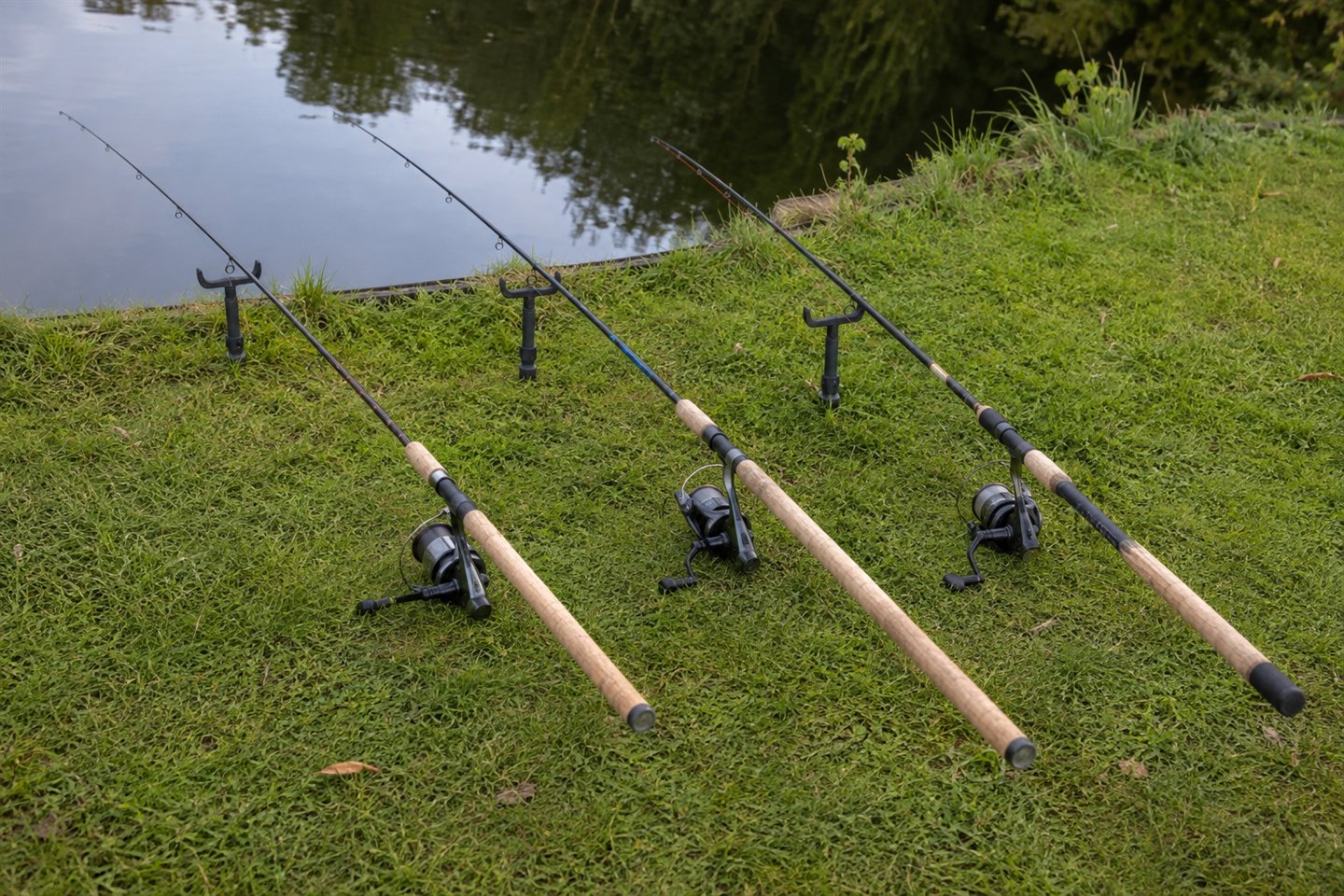
Rod, reel or pole elastic, main line, hooklength and hook should work as a system. Tackle that is too light can prolong the fight, break in weed or leave a hook attached. Tackle that is excessively powerful can cause hook pulls, mouth damage and uncontrolled lifting.
Ask the fishery about normal fish, not only its record. An open canal swim containing small silverfish may allow fine balanced tackle; a commercial pool with frequent carp needs stronger line, hooks and elastic even when the target is roach. Avoid fishing directly beside an obstacle the outfit cannot control fish away from.
Set the reel drag before fishing and test knots with a steady protected pull. Inspect line after snags and sizeable fish. A damaged terminal setup should be retied immediately, because saving one hooklength is never worth a tethered fish.
Prepare the peg before casting
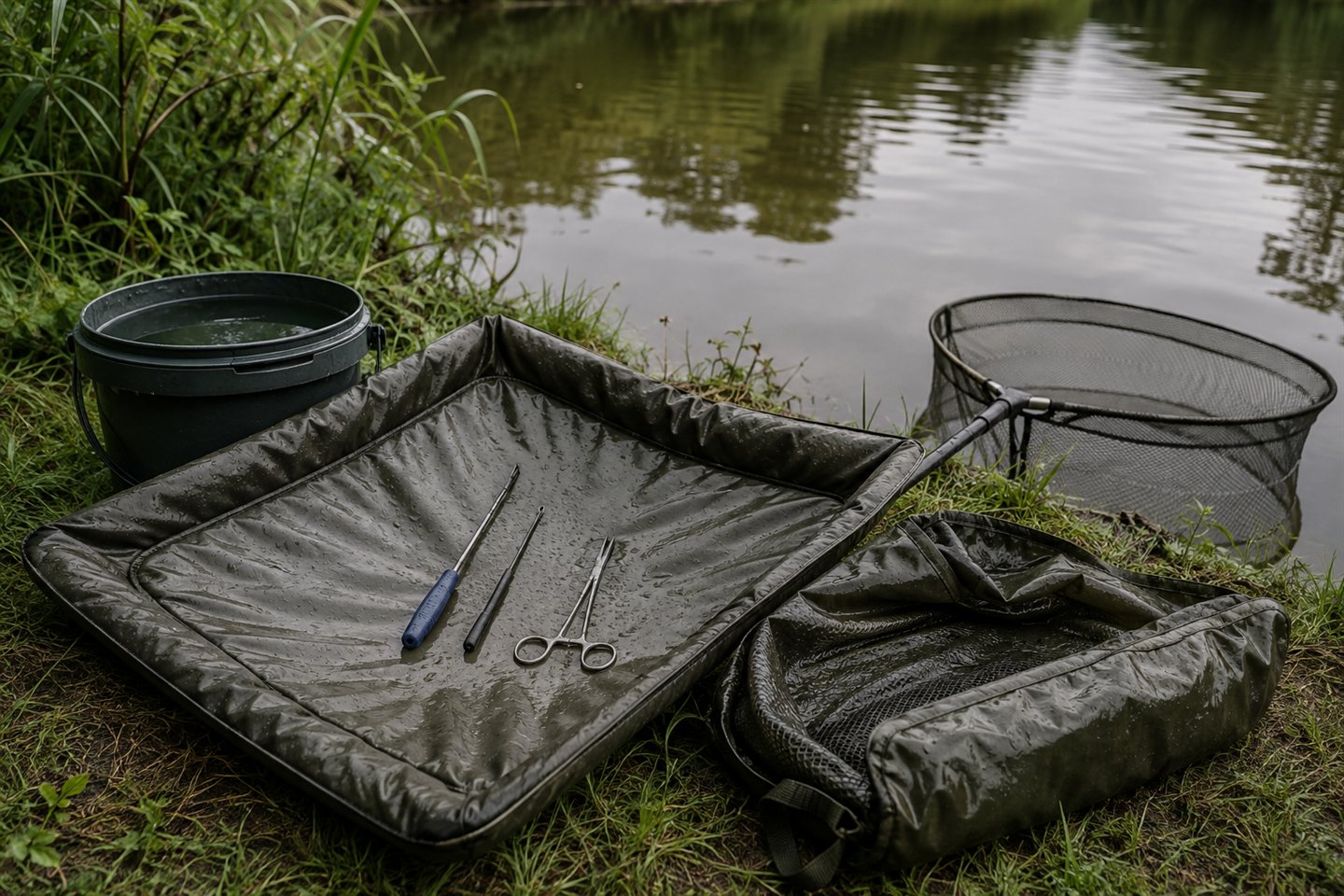
Assemble the landing-net frame and handle and place it where either hand can reach it. Open and wet the mat if larger fish may be caught. Put disgorgers, forceps and line cutters beside the unhooking area rather than buried beneath bait boxes.
Clear hooks, tools and grit from the handling area. Keep buckets, seat legs and banksticks away from the netting route. On steep or raised banks, make sure the handle reaches the water without leaning dangerously; choose another peg if it does not.
Prepare a camera, weighing sling and scales before lifting a large fish from the water, or decide that no photograph is needed. The best spontaneous catch picture is not worth extending air exposure while someone searches for a phone.
Choose a suitable landing net
The net must comfortably contain the largest likely fish without folding fins or trapping the body tightly. Soft knotless mesh reduces abrasion. England’s byelaws prohibit knotted and metallic landing-net mesh, and venues may set a minimum frame size.
A small pan net may suit tiny canal fish but is not a safe general net on a lake with bream, tench or carp. A huge deep specimen net can make quick handling of small fish awkward. Choose from realistic catches and carry the larger safe option when in doubt.
A knotless coarse landing-net and handle search (paid link) can help compare frame, mesh and reach. Confirm the exact product meets current law and venue rules; search results are not a verified product shortlist.
Play the fish under control
After the bite, keep the rod at an effective angle and apply steady pressure. Let the drag or pole elastic cushion sudden movement. Don't wind against a slipping clutch or pull the rod behind an extreme high angle, which reduces control and risks breakage.
Guide the fish away from roots, reeds, platforms and other anglers as early as balanced tackle permits. If it moves towards a hazard, side strain can change direction more effectively than simply lifting. Never grab line or elastic with a bare hand under tension.
Allow the fish to tire enough to enter the net without repeated lunges, but don't deliberately exhaust it. Draw it over the submerged mesh head first when possible, then lift the frame through the water. Don't chase or jab with the net.
Lift and carry the net correctly
Once the fish is in, release tension and ensure the hook is not caught outside the mesh. Draw the frame close to the bank. Don't hoist a heavy fish through the air using a fully extended handle, which can fail at the joint and drop the catch.
Support the frame or gather the mesh around the fish as the net design and venue guidance allow, keeping fins flat and clear. Move only the short prepared distance to a wet mat. For a small fish, unhooking within the net at water level may avoid carrying altogether.
Never drag a net and fish across gravel, boards or concrete. If the bank prevents a safe lift, use a suitable deeper net or drop-net arrangement approved for that venue, obtain help or choose a different peg.
Wet hands and wet surfaces
Fish have a protective mucus layer over skin and scales. Current Angling Trust guidance advises wet hands to reduce its removal. Immerse hands in clean venue water immediately before contact and re-wet them if handling takes longer than expected.
Don't use a dry towel, glove or clothing to grip a slippery fish. Grip comes from correct support and calm positioning, not squeezing. Wet the landing net, mat, sling and any measuring surface before the fish touches them.
Keep the fish away from hot, dry or abrasive ground. In bright weather, shade the unhooking area. Test a mat with the back of the hand; if it has become hot, cool it with water and minimise time out of the lake.
Support the whole fish
Keep a fish horizontal and low. Support a larger fish beneath the pectoral area and belly or tail wrist as species shape allows, without pressing the abdomen. Never lift it by the gill covers, eyes, tail alone or line.
Small silverfish can be controlled gently in a wet hand with the body supported, but don't clamp them. Bream have large scales and a deep body, so a wet net or mat is safer than holding them upright. Perch have a spiny dorsal fin; smooth it back carefully from front to rear while avoiding the gill plates.
If a fish thrashes, lower it immediately onto the wet mat or into the net and cover its eyes lightly with wet mesh if appropriate. Don't attempt to hold it higher or squeeze harder. Regain calm control before continuing.
How to unhook a small coarse fish safely
First locate the hook. When it is clearly in the lip, hold the hook shank or bend safely and reverse it along the path it entered. Don't pull upwards against the point. Keep the fish supported throughout.
Barbless hooks generally reverse with less manipulation, but the venue decides which pattern is permitted. A crushed barb may not meet a manufactured-barbless rule. Regardless of hook type, never tear it free to save time.
Small hooks are difficult to grip with fingers. Use a correctly sized disgorger even when the hook appears shallow if that gives cleaner control. Remove bait first when it hides the point.
How to use a disgorger for coarse fishing
A disgorger slides down a controlled line until its slot or head rests against the hook bend. A gentle push moves the hook away from tissue so it can reverse. The tool must suit the hook size; a large head can injure a small mouth, while a tiny tool may not control a stronger hook.
Learn the movement with a coach and an unbaited practice setup before relying on it. Keep two sizes within reach and carry a spare. Don't force the tool when the hook cannot be seen or the line route is uncertain.
A SS Instrumentx curved fishing forceps (paid link) shows common lengths and packs. Choose smooth, corrosion-free tools you can operate, then practise; owning them without the skill is incomplete preparation.
Use forceps for larger hooks
Forceps can provide controlled reach and grip on larger hooks. Locking jaws should close accurately and release easily. Position them on the hook, not on delicate mouth tissue or line, and apply only the movement needed to reverse the point.
Long forceps are important for some species and methods, but extra length reduces feel. Pike unhooking requires specialist training, long tools and cutters and should not be attempted from this general guide alone.
Rinse and dry forceps after fishing and replace badly corroded or misaligned tools. A seized lock wastes critical time. Store points and jaws closed away from hooklengths.
What to do with a deep hook
A deep hook is a welfare decision, not a challenge to retrieve tackle at any cost. Keep the fish wet and supported, use a disgorger only when the line path and hook can be controlled, and stop if repeated attempts risk tearing tissue or extending air exposure.
Current guidance can advise cutting the line close when removal would cause greater injury, but the correct response depends on species, hook type and position. Follow the fishery’s procedure or qualified species guidance and seek an experienced angler immediately. Don't pull blindly or insert fingers near gills.
Prevent deep hooking by watching the float or tip, staying with the rod and responding promptly to clear bites. England’s rules prohibit leaving a baited rod unattended. Smaller or barbless hooks may help in some situations, but presentation and bite recognition matter too.
Use an unhooking mat for larger fish
A mat or cradle should be large enough to keep the fish away from hard ground, padded without engulfing it and free of standing dirt. Wet it before use and place it on level ground clear of rods and banksticks. High-sided designs can contain sudden movement but still require constant hands-on supervision.
A Angling Pursuits padded unhooking mat (paid link) can help compare dimensions and transport. Check the venue’s minimum and ensure the product is realistic for bream, tench, chub, barbel or carp expected at the water.
The carp care guide covers larger-specimen preparation in more depth. Its low handling, wet-surface and recovery principles are useful when carp are incidental catches, but this article remains focused on mixed coarse fish.
Weighing is optional
Most beginner catches don't need weighing. Admire and return a healthy fish promptly. If a meaningful specimen is weighed, use a wet sling designed for fish, zero it before lifting and keep the fish low over the mat.
Never weigh a fish by the hook, gills or a lip-gripping device. Support the sling at every stage and subtract its wet weight correctly. Complete one measurement rather than repeating it to chase a preferred figure.
Photographs should be ready
Set the camera before bringing a large fish onto the mat. Kneel low, hold the fish horizontally over the wet surface and take only a few frames. Avoid standing, extending arms over hard ground or passing the fish between people.
If the fish is lively, the weather is hot or the photographer is not ready, return it without a picture. Current Angling Trust summer guidance explicitly prioritises minimum air exposure and advises avoiding photographs when they delay return.
Return and recovery
Carry a larger fish back in the wet sling or enclosed mat if the product and venue allow, supporting it throughout. Don't walk with it unsupported in a landing net or throw a small fish from height. Lower the fish into sufficient water close to the bank.
Hold it upright facing gentle clean flow. In rivers, face the fish upstream. Don't move it forcefully backwards and forwards, which can push water through the gills in an unnatural direction. Allow it to maintain balance and leave under its own power.
A fish that rolls, cannot hold position or repeatedly returns to the surface needs more supported recovery and the fishery’s help. Keep it in water and contact the owner. Don't release it simply because the next cast is ready.
Warm water, low oxygen and spawning
Warm weather can reduce dissolved oxygen and increase recovery difficulty. Follow any temporary fishery closure or keepnet ban. Reduce handling, skip weighing and photographs and be willing to stop fishing when conditions or the owner indicate welfare risk.
If fish are gasping at the surface, don't cast among them. Contact the fishery owner or club and, in England, report distressed or dead fish to the Environment Agency incident hotline. Gasping may signal a serious water-quality or oxygen problem requiring management.
Leave spawning fish undisturbed. They can be concentrated in shallow margins, physically vulnerable and focused on reproduction. Move away or stop rather than casting into the activity. The Angling Trust advises notifying the fishery when unsure.
Keepnets and temporary retention
A pleasure angler normally gains nothing by keeping fish in a net. Prompt release removes risks from crowding, low oxygen and mesh contact. Use a keepnet only where legal, permitted and necessary, such as a properly managed match.
England’s byelaws specify keepnet dimensions and construction and prohibit leaving fish retained after fishing. Venues and competitions can impose shorter time limits, weight limits, species exclusions or multiple-net rules. Check all requirements before carrying one.
Position an allowed keepnet fully extended in adequate water, secure it and avoid shallow hot margins or heavy boat wash. If fish show distress, contact the organiser and return them under the approved procedure.
Biosecurity and equipment cleaning
Nets, mats, slings, boots and buckets can carry water, silt and organisms between fisheries. Follow each venue’s drying, dipping or disinfection process. Arrive with clean, dry equipment and never transfer fish, weed or water.
Drying thoroughly is a valuable general step but doesn't override a formal biosecurity rule. Don't share a wet net between waters during the same day unless the approved procedure has been completed.
Species-specific cautions
Small roach and dace dry quickly and need minimal handling. Bream lose scales easily and should remain supported. The silver fishing guide covers typical catches but doesn't reduce the need for a landing net.
Perch can flare dorsal spines and have sharp gill-cover edges. Fold the dorsal fin gently and use a disgorger while supporting the body. The perch guide gives further method context.
Tench are powerful and often associated with weed. Use balanced tackle and a large wet mat where necessary. Barbel need especially careful river recovery; seek dedicated guidance before targeting them. Pike require a separate specialist unhooking kit and instruction.
Common fish-care mistakes
The most common error is preparing after the bite: assembling a net, finding a disgorger or clearing a mat while the fish waits. Complete the care station first. A second mistake is handling every fish for a picture instead of choosing prompt release.
Another error is using fine tackle as a measure of skill. If normal fish repeatedly take too long to land or reach snags, strengthen the balanced system. Welfare comes before sporting difficulty.
Finally, don't copy a handling pose without understanding the species. Keep fish low, horizontal and supported; avoid gills and eyes; and ask for help early rather than after several failed attempts.
Frequently asked questions
Can small coarse fish be unhooked in the landing net?
Yes, when the wet soft net supports them and the hook can be removed promptly. This can minimise handling. Larger fish should go onto a wet padded mat or cradle if they must leave the water.
Do I need an unhooking mat for small coarse fish?
They need one wherever larger fish may be caught or the venue requires it. Plan for the largest realistic catch, not only the intended target. A small-fish canal session may allow in-net unhooking, subject to rules.
How long should a fish recover?
There's no fixed time. Support it in clean water until it holds balance and swims away strongly. Hard fights, warm water and river conditions can lengthen recovery. Seek fishery help if it doesn't improve.
Should a deeply hooked fish be pulled free quickly?
No. Keep it wet, use the proper tool only when the hook is controllable and stop attempts that risk tearing. Follow current fishery or authoritative species guidance; cutting line close may be safer in some cases.
Final thoughts
Coarse fish care for beginners is a sequence: prepare, use balanced tackle, net calmly, keep everything wet, unhook with the right tool and return without delay. Every unnecessary lift, photograph or search for equipment adds avoidable risk.
Practise the routine with a coach and learn what changes for different species. Keep the fish wet and supported, remove the hook calmly and return it promptly in good condition. The more organised you're before casting, the less there is to worry about when a fish is actually in the net.
Sources and further reading
Angling Trust: freshwater best-practice guidance; Angling Trust: distressed and spawning fish guidance; Canal & River Trust: unhooking and returning fish; Environment Agency: national rod-fishing byelaws for England; and Natural Resources Wales: angling byelaws. Check current local rules before every trip.