Carp fishing in Oxfordshire ranges from big gravel pits to more contained waters. We'll compare Linear Fisheries, Orchid Lakes and Clattercote Reservoir, with the practical questions to ask before choosing somewhere for your next session.
Linear Fisheries, Orchid Lakes and Clattercote Reservoir make useful comparisons because they are not three versions of the same trip. Linear offers a broad choice of named waters, Orchid combines specimen fishing with smaller booked experiences, and Clattercote brings a reservoir and platform-style layout into the picture.
The comparison uses official information checked on 15 September 2026, rather than personal venue reviews. Use it to make a shortlist, then confirm the current access and rules with the fishery before setting off.
| Venue | Access to check | Beginner fit |
|---|---|---|
| Linear Fisheries | Booking varies by lake; check current notices. | Seek advice on a manageable water for your method. |
| Orchid Lakes | Specimen, private and accommodation options differ. | Main Orchid is not an automatic first-session choice; Old Nursery is Coming Soon. |
| Clattercote Reservoir | Day permits on the bank; confirm night arrangements. | Mixed fishing, but reservoir exposure and jetty access need consideration. |
Carp fishing in Oxfordshire: gravel pit or smaller water?
Start with the amount of water you can realistically assess during the visit. A large lake can offer many options, but finding fish and understanding the bottom may take time. A smaller water can reduce that search area without removing the need for watercraft or accurate presentation.
Think about the skills you want to develop. If you're comfortable with basic carp fishing and want to learn feature finding, a suitable gravel pit may be appealing. If you're still practising bite response and landing, a manageable open swim on a more contained water may leave more attention for those essentials.
Don't confuse prestigious with appropriate. A lake's reputation may reflect exceptional fish and years of dedicated angling, neither of which guarantees a rewarding first afternoon. The water-access comparison helps separate the attraction of a venue from the practical commitment involved.
Linear Fisheries: choose a named lake, not simply the complex
Linear Fisheries is an established Oxfordshire carp complex. Its website identifies bookings for Manor Farm, Hunts Corner and the Tar Farm lakes through GoCatch. That makes it important to establish the current process for your intended water rather than assuming every Linear lake operates in the same way.
The day-ticket overview lists well-known waters including Brasenose, Oxlease, St Johns and Hardwick/Smiths, alongside smaller ponds. It also describes toilets, a shower block, a drinking-water point and an on-site shop. Check their location against the particular lake you choose.
For a beginner, the value of this choice is the ability to ask a specific question: which currently available water and swim match my casting range, experience and session length? That conversation is much more useful than arriving with a fixed plan based on the complex's largest recorded fish.
Some older overview wording may not describe the latest booking arrangement as clearly as the current home page. Follow the live lake and booking instructions and resolve discrepancies with the fishery. Don't use an old statement about paying on the bank as permission to occupy a currently bookable swim.
A first Linear trip should leave room for learning
Choose an arrival time that permits an unhurried look around the available water. If a swim is booked, inspect its boundaries, landing position and accessible features before deciding where each rod should go. A reservation simplifies access but doesn't decide the location of the fish for you.
Resist copying the longest casts around you. Experienced regulars may be fishing known spots with suitable tackle and accurate distance control. A shorter presentation you can repeat and retrieve cleanly is more useful than a distant rig whose position and condition remain uncertain.
Take enough bait to support the approach you understand, not enough to imitate a long-session campaign. If you need to buy supplies at the shop, check opening hours and availability before depending on it. A large complex doesn't remove the need to arrive with the basic equipment and permitted hookbaits ready.
Use the first trip to answer a small number of questions about the chosen lake. Can you identify a clean, safe area? Can you reproduce the cast? Do fish visit the water within your swim? Those observations make a second visit more valuable than continually changing lakes without learning any of them.
Orchid Lakes: specimen water and smaller booked experiences
Orchid Lakes presents several distinct waters on its current site: the main Orchid Lake, Club Lake, Willow Pool and the Old Nursery. The first is the flagship specimen option; Club Lake is described as private booking, while Willow Pool is a smaller water with accommodation.
At the time of checking, Willow Pool was described as one acre, offering a more contained setting than a large open pit. That may suit a planned stay where accommodation and a defined fishing area matter. It is not automatically a cheap day-ticket alternative, so compare the complete booking rather than only the water size.
The Old Nursery is described as an option for traditional methods and developing skills, but the current booking section labels it Coming Soon. Don't travel expecting ordinary access until the fishery confirms that it has opened and explains the arrangements. An attractive description is not the same as a bookable session.
For the main Orchid Lake, ask about the experience expected and the practical demands of the swim before booking. A quieter or more private setting can improve comfort, but it doesn't make specimen carp easy to catch. Choose it because the complete experience fits, not because a lodge or smart swim replaces watercraft.
Gravel pit or smaller lake for carp fishing in Oxfordshire?
A small lake can be particularly attractive to two anglers who want a settled trip together. It can reduce uncertainty about access and make it easier to coordinate food, rest and equipment. Before paying, establish the actual fishing rights attached to the booking and which areas each person may use.
Ask whether the accommodation price includes fishing, how many rods and anglers are permitted, and whether non-fishing guests can stay. Confirm arrival and departure times for both accommodation and fishing. Those details prevent an apparently straightforward weekend from turning into a series of assumptions.
Don't equate exclusive use with complete freedom. Rules on bait, shelters, noise, rods and fish care still apply, and a small water can be particularly sensitive to excessive feed or disturbance. Agree a modest initial approach with your companion instead of each introducing a separate large baiting campaign.
If the cost only works by filling every available guest place, compare the comfort and fishable water each person would actually receive. The most enjoyable first trip may involve fewer anglers, a shorter stay or a different venue. Space on a booking form is not necessarily the same as an uncluttered fishing experience.
Clattercote: a reservoir alternative near Banbury
Clattercote Reservoir, near Claydon north of Banbury, is a Canal & River Trust fishery in Oxfordshire. Its twenty-one-acre water is served by a wooden walkway and jetty-style pegs, with additional positions on the dam. It is a reservoir, not another Oxfordshire gravel pit.
The Trust describes match, pleasure and specimen carp fishing, with day permits available from the bailiff and night fishing offered. A portable toilet is listed. That gives a useful middle option for an angler who wants carp fishing on a substantial water without assuming a private-lake holiday package.
The walkway layout deserves consideration before loading a heavy barrow. Ask about current access, water level and the distance to suitable available pegs. On arrival, keep the route clear for others and organise tackle so it cannot roll or be knocked into the water.
Clattercote's published rules require appropriate landing equipment and dry nets, slings and mats before fishing. Read the official fishery rules and check with the bailiff for updates rather than transferring the rules from another reservoir.
What gravel-pit features mean in practice
On a gravel pit, changes between gravel, silt and weed can create different presentation problems. A hard feeling through the rod may indicate a firmer area, but it doesn't prove that the entire hooklink lies cleanly or that carp are currently visiting it. Use each piece of information cautiously.
A feature only helps if you can fish and land safely around it. The far side of a bar, a weed edge or a steep change in depth may look attractive on a map while creating an awkward line angle. Choose a position you understand rather than treating every underwater irregularity as an automatic hotspot.
The large gravel-pit guide explains how to break unfamiliar water into manageable areas. For a first Oxfordshire visit, the important habit is to investigate enough to make a sensible presentation without spending the whole session repeatedly casting a marker over feeding fish.
Presentation should follow the bottom, not a fashionable rig
Start with a familiar, permitted arrangement that can work on the area you have actually found. A rig suited to a firm patch may need reconsidering if the cast lands in deep weed or soft debris. Changing the hookbait colour will not fix a presentation that is physically unsuitable.
Inspect the rig when retrieving. Weed around the hook, a wrapped hooklink or debris masking the point gives you information about what needs attention. Don't repeatedly cast the same problem back out while waiting for the lake's reputation to produce a bite.
If you can't establish a workable spot, shorten the range or choose another permitted area. There's no requirement to fish the most complicated feature in the swim. An open, repeatable presentation can give a beginner a clearer learning experience and a safer route to the net.
Distance is a decision, not an achievement
Ask how far you can cast accurately in the actual wind while retaining control of the lead and line. Your best practice cast on an empty field is not the same as fishing between neighbouring anglers. Leave a sensible margin around boundaries, trees and inaccessible banks.
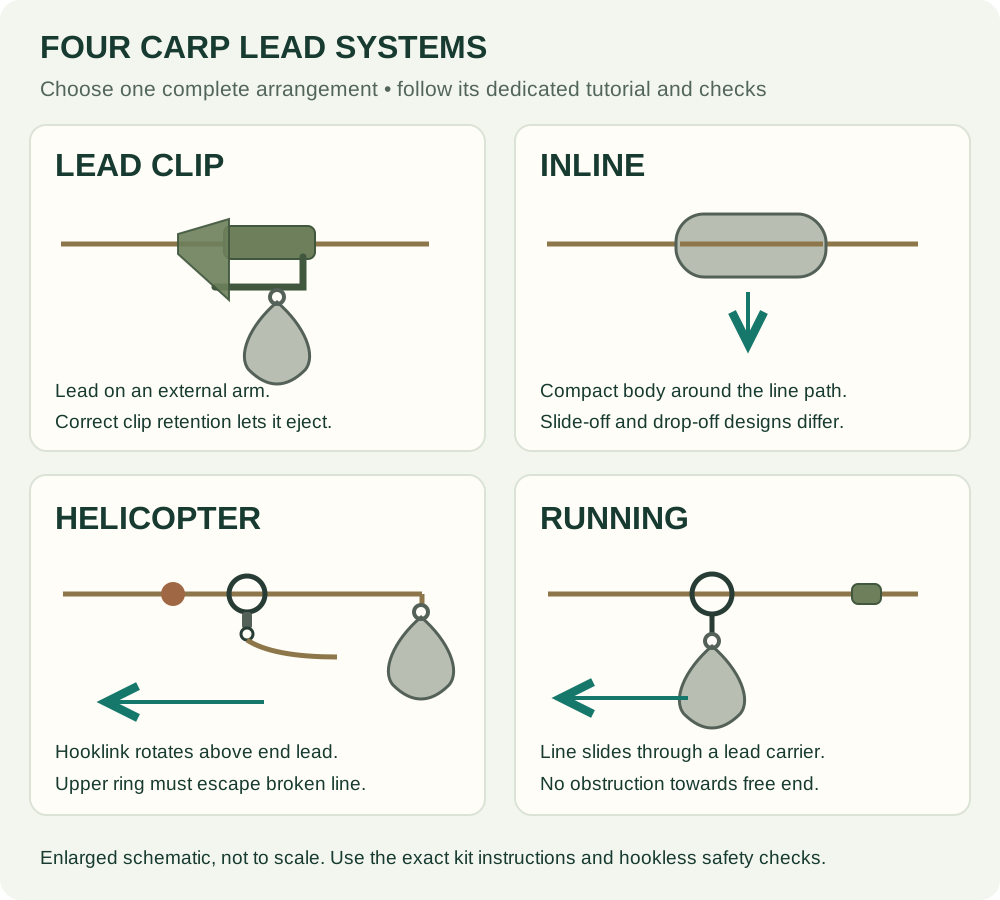
Choose a lead weight within the rod's capability and the venue rules, remembering that bait bags add to the casting load. If a heavier setup is needed than you can safely manage, the answer may be to fish closer or choose another water. Don't try to solve a skill gap by forcing the cast.
The lead-weight guide explains the trade-offs. Once a suitable distance is established, consistency matters more than adding another few yards. Make the same clean cast and give the presentation time to work when the location remains plausible.
Keep weed and snags out of a first-trip gamble
Before fishing near an obstacle, think through the entire capture. Can you respond immediately? Can the fish be guided into open water? Is there a safe landing area? If the plan depends on luck or entering the water unexpectedly, choose a different spot.
Don't use heavier line as permission to fish anywhere. Stronger tackle can be appropriate, but it doesn't remove branches, weed or poor access. On unfamiliar water, seek the bailiff's advice and avoid features that exceed your current experience.
If a fish or rig becomes snagged, don't wrap line around your hands or pull recklessly towards people. Keep others clear and ask for assistance. The lost-fish troubleshooting guide helps distinguish preventable setup problems from the temptation to blame one rig component for every failure.
Choose the Oxfordshire journey that preserves fishing time
Clattercote near Banbury and the waters around Oxford are not one interchangeable destination. Pick the venue against where you're travelling from and the time available. A shorter northern approach may be practical for one angler, while another can reach an Oxford-area complex more comfortably.
Follow the fishery's entrance directions rather than a company registered-office address. Large operators can list several addresses online, and a map result may not identify the correct gate for your booked lake. Save the directions and contact number before leaving home.
Allow time for the last local roads and for carrying equipment to the swim. If you can only fit a short evening into the day, a familiar local lake may be the better option. A first visit to a complex deserves enough daylight to understand the layout without rushing.
A sensible first-day plan on unfamiliar water
Start by confirming the available lake and any changes to rules or conditions. Walk the accessible area without dragging every item of luggage along, then choose a swim where the fishing and landing are manageable. Put the fish-care equipment in place before preparing the first baited rod.
Pick one primary spot and a clear reason for fishing it. That reason might be repeated carp sightings, an accessible patrol route or a clean area within your range. It should be more specific than a feeling that big fish must live somewhere near the far bank.
Keep a simple alternative in reserve. If the main presentation proves tangled or buried, improve it or fish a clearer area. If fish consistently show elsewhere within your permitted water, consider a controlled change. Don't confuse being adaptable with replacing the whole method every half hour.
At the end, record the cast, bottom feedback, activity and practical access. A map marked with a few reliable observations is worth more than one filled with guessed bars and imagined hot spots. Use the Session Planner to carry the useful details into the next visit.
Budget differently for a day ticket and a booked stay
For a day visit, compare fishing, travel, bait and any essential equipment you lack. For a stay, add accommodation, food, guest arrangements and the full number of nights. Don't compare a private lake-and-lodging price with only the basic day ticket elsewhere.
Check what the booking includes and what happens if conditions force a closure. A lake that protects fish during spawning or poor water conditions may need to change access at short notice. Understand the terms before paying, and keep a non-fishing alternative for a longer break.
Spend first on the elements that let you fish safely and learn comfortably. Instruction, suitable fish-care equipment or a reliable way to transport the kit may do more for a beginner than specialist distance tackle. Buy the latter when the chosen water and your developing skills give it a clear purpose.
Read an Oxfordshire lake description critically
Start with features that affect your actual session: open access or booking, the size of the water, the permitted fishing area and the facilities available. Then separate those from attractive but less decisive details such as a famous capture. A photograph can show that an impressive fish existed at a particular moment without telling you how a beginner should approach an ordinary visit.
Pay attention to the date of a brochure and the current status of a booking page. At a complex with several waters, information can be updated at different times. Linear's specific booking notices and Orchid's Coming Soon label are examples of details that should change the plan, even when a broader overview sounds more permissive.
Don't build a precise stock-density calculation from mixed-age figures. Fish grow, are moved, die or are added under management, and an old estimate is not a live census. Ask the operator about the present character of the fishing instead: whether your experience is suitable, what casting range is typically manageable and what obstacles need attention.
A useful venue description helps you choose what to ask next. If it leaves an essential unclear, such as which cabin carries fishing rights or whether a named lake is open, don't fill the gap with the most convenient assumption. Resolve that detail before booking and keep the answer with the trip notes.
Use a platform swim differently from a grass bank
At a walkway or jetty-style venue such as Clattercote, organise the swim around a clear route to the netting position. Secure containers, avoid trailing line and keep the shared route usable. Check that rod supports are appropriate to the surface and permitted by the fishery; don't force banksticks into structures or make improvised holes.
Think about fish handling before the first cast. There must be enough stable space for the required padded equipment, tools and a controlled return to the water. If your load leaves no room to work safely, reduce it or ask for another suitable position. A platform can be convenient, but its useful space should be assessed rather than assumed from a photograph.
The UK carp venue guides provide other regional comparisons when you're ready to travel farther. Use what the Oxfordshire trip teaches you about water size and access to choose the next venue, rather than starting the research from scratch.
Equipment worth considering
A stable landing net and generous padded unhooking equipment matter on both gravel pits and smaller waters. Check net reach against a platform or raised bank, and keep equipment dry and clean between venues. Secure tackle boxes and bait tubs where they cannot fall from a jetty.
For feature-finding work, use suitable equipment that you understand and that the venue permits. A dependable line, a few familiar leads and accurate distance control are more useful than an elaborate marker setup used without confidence. Polarised glasses can help inspect safe margins without encouraging risky climbing or wading.
Fortis Bays polarised sunglasses (paid link) can support near-bank observation on an Oxfordshire pit or smaller lake when visibility allows. Korda SUBline monofilament (paid link) is a mainline option to consider only if your current spool is unsuitable for the confirmed venue and safe fishing distance. Choose by diameter, condition and the complete setup, not by assuming that all gravel pits demand long-range casting. Neither product identifies distant underwater features. Ask about bank access and fish-care requirements separately, and keep existing sound tackle when it already meets those demands.
Frequently asked questions
Do I need long-range tackle for Oxfordshire carp fishing?
No. The right range depends on the chosen lake and swim. Many useful opportunities can be closer, while some waters demand skills a beginner has not yet developed. Choose somewhere you can cast accurately and land safely instead of assuming that all Oxfordshire carp require extreme distance.
Can I turn up at any Linear lake?
Don't assume that. Current information identifies bookable waters including Manor Farm, Hunts Corner and Tar Farm. Other arrangements differ, and availability can change. Check the specific lake's current instructions and ask the fishery if an older overview appears inconsistent with the live booking process.
Is Orchid's Old Nursery open for day tickets?
At our September 2026 check, the current site described it but marked the booking option Coming Soon. Confirm opening and access directly before travelling. It should not be treated as an available beginner fallback until the fishery says that ordinary visits can be booked.
How to compare Linear Fisheries Orchid Lakes and Clattercote
Oxfordshire offers more than one route into carp fishing. Compare Linear's named waters, Orchid's distinct booking options and Clattercote's reservoir layout, then choose the experience you can manage. Check the appropriate rod licence, current venue rules and availability before every visit. Sources were checked on 15 September 2026.