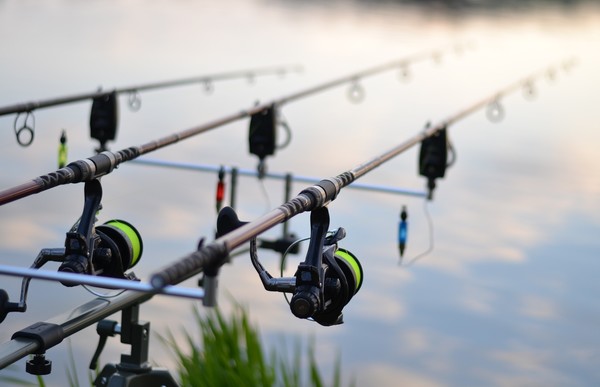
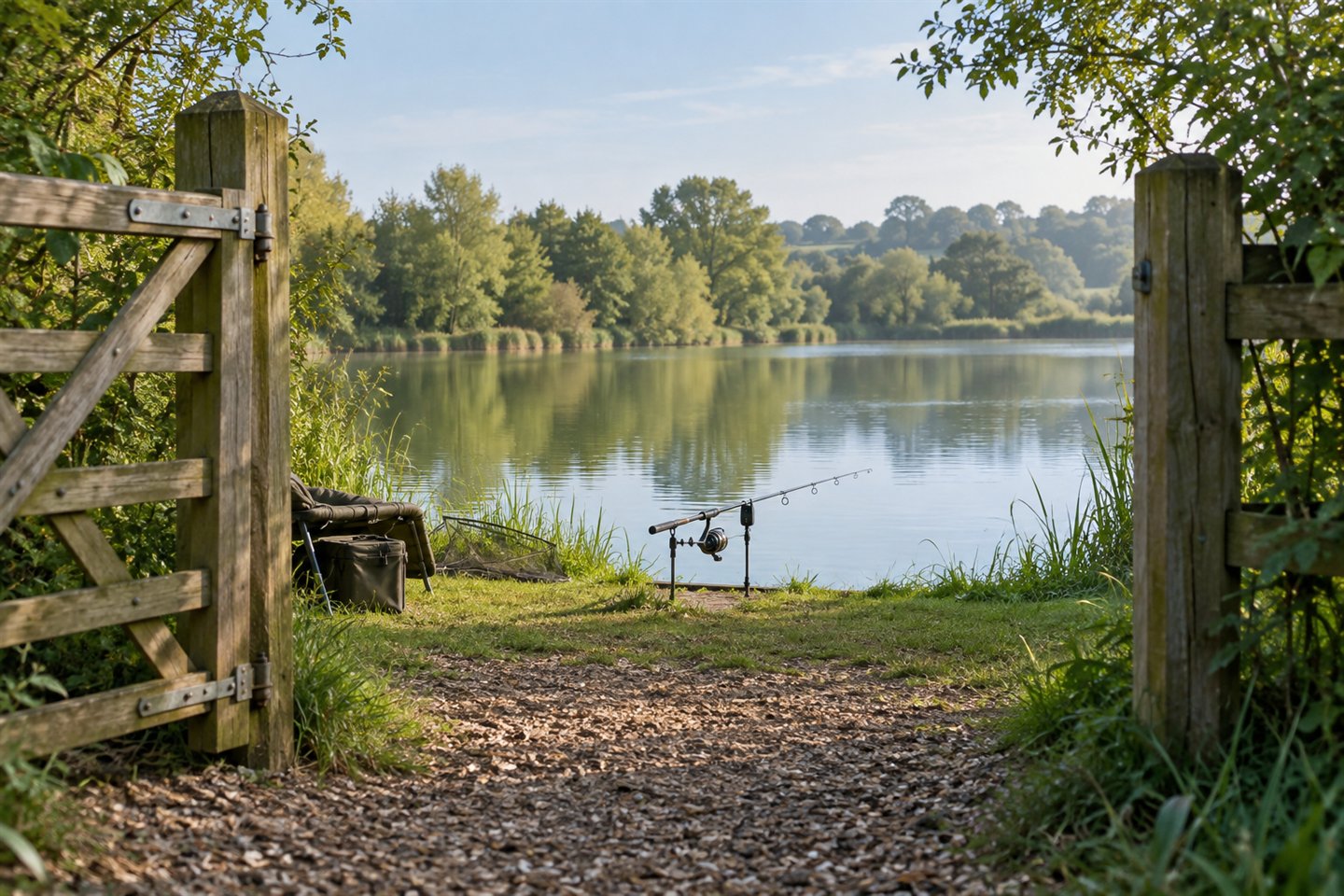
Day ticket, club or syndicate: which suits your carp fishing? Think about how often you go, the waters you enjoy and the time you can give them. We'll compare costs, access and expectations so you can choose for your fishing, not just the label.
For a beginner, the best water is usually somewhere you can visit regularly, fish safely and understand a little better each time. You need enough access to practise, a level of difficulty that suits your patience and clear information about what the ticket includes. Famous fish and impressive photographs are secondary to those practical foundations.
This guide compares the three arrangements without assuming that progression means moving from one to another. Plenty of experienced anglers enjoy day tickets; plenty of newcomers join clubs. Your decision can change as your available time changes, and using more than one arrangement is entirely reasonable if each serves a clear purpose.
Day ticket, club or syndicate carp fishing: what fits your week?
Write down when you can realistically fish. An occasional Sunday morning, two evenings a week and a monthly overnight session create very different requirements. Include work, family commitments and travel rather than planning around an ideal future in which every spare weekend is available. A ticket that works for your ordinary week is more valuable than one that fits a rare holiday.
Next decide what you want from those visits. You might want to learn landing and unhooking smaller carp, practise accurate casting, enjoy quiet surroundings or begin a longer project on a challenging lake. These are legitimate aims, but they don't all point towards the same venue. Name the priority before comparing membership prices.
The first carp-session guide helps define a manageable starting point. If you can comfortably prepare a safe swim and fish a reliable presentation, then a more demanding water may be appealing. If those steps still feel unfamiliar, choose somewhere that leaves room to learn them without complicated access or severe snag hazards.
What a day ticket actually buys
A day ticket normally buys a specified period of fishing rather than ongoing membership. That period might be daylight hours, a fixed block or another arrangement described by the venue. Establish the start and finish times, whether booking is compulsory and whether you book a particular swim or simply admission. The words day ticket are not a complete booking specification.
The main advantage is flexibility. You can try different waters without committing to a whole season, or fish occasionally without paying for access you rarely use. This is useful while learning which lake size, atmosphere and journey suit you. It also makes a straightforward way to compare two possible local venues through actual visits.
The trade-off is that repeated visits can accumulate cost, and access may be limited at the times you want. Popular dates may require early booking, while first-come arrangements carry uncertainty. Ask what happens when the fishery is full and whether a purchased ticket guarantees usable fishing space. Never assume payment entitles you to cast wherever you choose.
Day-ticket fishing is not one difficulty level. A well-stocked mixed lake and a low-stock specimen pit may use the same payment model. Read the busy day-ticket lake guide for tactics once you have chosen a suitable water. Choose the access that suits your time and the water you want to learn.
What club membership can offer
An angling club commonly provides access to one or more waters for a membership period, subject to its rules. Some clubs offer several fishing styles, which can be useful when you want carp fishing without abandoning other coarse species. Others concentrate on a narrower set of venues. Ask for the current water list and identify which entries genuinely suit your interests.
Regular access can make local learning easier. You can return for short sessions, recognise changes in the margins and build a picture of how the lake behaves. That familiarity may be more valuable than constantly seeking a supposedly better venue. A club can also provide contacts, introductory events or work parties, although the support available varies considerably.
Don't assume membership includes every water or every session type. There may be separate night tickets, premium venues, bookings, guest restrictions or waiting lists. A club booklet might cover miles of river but only one small carp lake. Compare the parts you'll actually use, not the total number of waters printed in the membership information.
Ask how changes are communicated. You should know where to find match bookings, temporary closures, spawning restrictions and revised access arrangements. An excellent club can still be unsuitable if its only carp water is regularly unavailable during your free time. Check the actual calendar before deciding that an annual fee automatically means unrestricted access.
What a carp syndicate can offer
A syndicate generally involves a limited group with access under a specific membership arrangement. The exact model varies: there may be an owner-run operation, a group lease or another structure. Limited membership can support continuity and a shared interest in the water, but the term alone establishes neither legal rights nor service standards. Read the agreement and ask who manages the fishery.
The attraction is often the opportunity to get to know one lake and its fish over time. That suits anglers who enjoy a longer campaign and don't need regular bites to remain interested. It may also offer a quieter atmosphere or particular access arrangements, but verify those details. A smaller membership can still concentrate heavily on Friday and Saturday nights.
Ask about waiting-list procedures, joining fees, renewal dates and any expected contribution to maintenance. Find out whether membership can be refused renewal, how complaints are handled and what happens if the water becomes unavailable. These are ordinary practical questions when committing money, not signs that you're approaching the club or owner suspiciously.
Avoid buying into an imagined social rank. A syndicate may be perfect for your next season, or an expensive mismatch for the time you have. You don't need a membership card to validate your fishing. A local day-ticket lake where you fish thoughtfully can offer more enjoyment than a prestigious water you seldom reach.
Separate permission from a rod licence
In England and Wales, the appropriate rod licence and permission to fish the water are separate requirements. A club card or syndicate membership should not be treated as a substitute for the licence. Use the official licensing service to check the requirement that applies to you and the number of rods planned.
Scotland and Northern Ireland have different arrangements, so don't turn an England-and-Wales explanation into a universal UK rule. The official Scotland and Northern Ireland guidance is a starting point. Wherever you fish, establish the exact water permission and follow its conditions as well as applicable law.
Ask whether the ticket includes the bank you intend to use, and whether there are separate restrictions on parking, shelters or companions. A right to fish doesn't necessarily settle those questions. Keeping them separate makes enquiries clearer and prevents an apparently complete booking from containing an awkward gap on arrival.
Compare realistic cost per visit
Use actual likely visits rather than the number needed to make membership look cheap. As an illustrative calculation, a £120 annual membership used twelve times costs £10 per visit before any extra charges. Used four times, it costs £30 per visit. These are arithmetic examples, not current price claims for a named club.
If your alternative day ticket is an illustrative £15, eight visits total £120. That establishes a simple break-even point only if both options provide comparable fishing and there are no joining fees or supplements. Add night charges, booking fees and travel before deciding. A cheaper ticket can still produce a more expensive outing when the journey is substantially longer.
The first-year carp-fishing budget separates equipment from recurring costs. For this decision, keep the equipment you already own out of the comparison unless a venue genuinely requires an additional suitable item. Otherwise it is easy to blame the membership fee for spending caused by an unrelated desire to upgrade tackle.
Test the journey at the time you'll travel
A lake described as local may involve a slow route at your usual departure time. Check the complete trip: traffic or public transport, parking, the walk to the bank and any check-in procedure. A nearby venue with a long carry can consume more of an evening than a slightly farther one with simple access.
Consider the return as carefully as the arrival. Gate-closing times, reduced evening transport and a muddy uphill carry can change what feels manageable. If the plan relies on leaving exactly on time, allow room for a fish hooked near departure. The ticket should fit a safe, unhurried session rather than force a race at the end.
The two-to-four-hour session guide is particularly relevant when regular short visits are your main opportunity. You may discover that a modest local membership produces more useful fishing than an attractive distant venue, simply because there is enough time left to look, settle and learn.
Assess fishery difficulty without chasing headline weights
Ask about water size, stocking character, typical fishing range, weed and snags. The largest carp is only one piece of information and says little about how a beginner will experience an ordinary session. A venue with smaller fish can demand careful angling, while a lake containing large carp may have accessible, open-water opportunities.
Listen for descriptions of normal fishing rather than exceptional catches. How often do members generally visit before understanding the lake? Are fish regularly visible from safe banks? Can newcomers fish at comfortable range? Nobody can responsibly guarantee your results, but clear answers help distinguish a manageable learning water from a long-term specialist project.
If a large pit appeals, read the large gravel-pit guide before committing. Its scale may be exactly what you want, but recognising the location work involved is important. Buying more powerful rods doesn't remove the need to find fish or create extra time for that search.
Visit before committing when possible
Ask permission for a look around and follow the access instructions provided. Walk the authorised route, examine a few available swims and consider how you would land a fish there. Notice the bank surface, room behind the casting position and whether essential facilities are accessible from the areas you could realistically fish.
Speak politely to staff or members without interrupting a capture or pressing for private spots. Questions about access, atmosphere and ordinary practical arrangements are usually more useful than asking for somebody's most successful rig. You're testing whether the venue suits your routine, not trying to obtain a year's watercraft in one conversation.
Visit at a representative time if possible. A quiet weekday morning may not reveal weekend pressure, just as a busy open day may not represent normal use. One visit cannot prove everything, but it can uncover an obvious mismatch. If visits are not possible, ask for current, specific information rather than filling gaps with assumptions.
What should I check before joining a carp syndicate?
Check hook patterns, leaders, minimum line requirements, bait restrictions and fish-care equipment before paying. A venue that requires a different rig is not necessarily unreasonable, but you need to be willing and able to fish its permitted systems properly. A rulebook is part of the product you're choosing, not an obstacle to examine afterwards.
The fishery-rules guide explains common wording and the questions to ask when terms are unclear. Obtain clarification from the fishery rather than relying on another lake's practice. For example, a leader restriction and a ban on all braided material may have different scope and should not be interpreted interchangeably.
Pay attention to moving swims, prebaiting and time away from rods. These can strongly affect the style of fishing you enjoy. If your preferred approach depends on something the venue forbids, choose a different water or a different approach. Joining first and hoping established rules will not apply is a poor foundation for membership.
Facilities and welcome matter
Toilets, drinking water, safe parking and a manageable path can make the difference between a repeatable outing and one that feels difficult every time. Ask about opening hours and actual distances, not merely whether a facility exists somewhere on site. A beginner with a short session cannot spend much of it solving basic logistics.
If access needs matter, describe them specifically. A generally accessible label doesn't tell you about steps, slopes, surfaces or the space beside a particular swim. Ask for the route and dimensions that affect your visit. The best venue is the one that meets your needs in practice, not the one with the most reassuring general description.
Consider the atmosphere too. Clear, courteous communication is useful evidence of how questions may be handled later. You need not become close friends with every member, but feeling comfortable asking about a rule or requesting practical help makes learning easier. A welcoming environment is a legitimate selection criterion.
Day ticket or carp syndicate for my first season?
An angler who is unsure how often fishing will fit into family life might start with a few suitable day-ticket visits. That avoids making an annual commitment before the routine is established. After several outings, the angler has evidence about travel, enjoyment and actual frequency rather than a guess based on enthusiasm at the tackle shop.
Someone who can fish short local evenings every week may find a club especially useful if its access hours fit. Repeated visits can develop familiarity without booking a full day each time. The important condition is that the chosen water and membership tier genuinely allow those sessions, not simply that the club owns a nearby lake.
An angler who already enjoys patient, low-catch fishing might reasonably choose a carefully researched syndicate as a first membership. There's no mandatory ladder to climb. The decision works when expectations, ability and time match the water; it fails when the membership is expected to compensate for uncertainty about what the angler actually wants.
Look beyond the first payment
Before joining, establish the membership dates and whether a late-season application buys a full year or only the remainder of the current period. Ask how renewal works and when any decision must be made. A low introductory amount may still be poor value if most of your available fishing dates fall outside the access it actually purchases.
For a waiting list, find out whether the application fee is refundable and whether a place has been offered or merely requested. Keep the written terms and payment confirmation. Being invited to express interest is not the same as having permission to arrive with tackle, and a verbal estimate of waiting time is not a guaranteed start date.
If work-party attendance or other participation is expected, ask what the commitment involves and whether alternatives exist for people unable to perform particular tasks. A shared contribution can be rewarding, but it should fit your circumstances. Clarifying expectations early avoids disappointment for both the member and the people looking after the water.
Finally, review the decision after a few months without treating it as a test of loyalty. Count actual visits, note which access arrangements helped and identify any recurring obstacles. If you rarely use the ticket, the useful question is why. A change in work hours, family needs or fishing interests may justify a different arrangement next season without making the original choice a mistake.
Equipment worth considering
Choose equipment after understanding the water. A suitable landing net, padded mat, sound main line and practical unhooking tools support any access model. Compare usable size and condition rather than matching brands. If a venue supplies compulsory fish-care equipment, confirm what is provided and what you still need before buying duplicates.
A comfortable, manageable bag and dependable weather protection often improve regular visits more than another specialist rig system. For short trips, pack only the methods you expect to use, with sensible spares. Membership doesn't oblige you to acquire a full overnight setup; add that equipment only when your actual sessions require it.
Before comparing membership costs, check whether your existing fish-care equipment meets each water's specification. The NGT 42-inch landing net with 2m handle (paid link) and NGT Jumbo Folding Carp Cradle (paid link) are examples whose dimensions can be compared with those rules. They are not a universal outfit for every club or syndicate. A venue may supply its own equipment, require a larger net or have banks unsuitable for a particular handle. Establish those requirements first, and keep serviceable equipment rather than assuming a different ticket means buying everything again.
Frequently asked questions
Is an angling club better value than day tickets for carp?
No. It depends on the full fee, supplements and how often you actually attend. Divide the realistic annual total by likely visits, then compare comparable day-ticket sessions and travel. A club can still offer good value through familiarity or facilities, but those benefits should be considered openly rather than hidden inside optimistic arithmetic.
Does a syndicate guarantee an empty swim?
Not unless its specific arrangement guarantees the access you need. Limited membership and limited bank pressure are different things, particularly when many members share the same days off. Ask about booking, occupancy and peak times. Don't infer a promise from photographs showing an otherwise empty lake.
Should beginners avoid difficult waters entirely?
No, provided they understand the demands and can fish safely. Some beginners enjoy a patient challenge. However, learning basic casting and fish handling is easier where those tasks are manageable and support is available. Choose difficulty deliberately instead of discovering after payment that the water requires skills you have not yet developed.
Can I combine a club card with occasional day tickets?
Yes. A local club can provide regular fishing while occasional day tickets offer a different setting or a trip with friends. Keep the combined spending realistic and follow each venue's rules separately. The aim is a useful pattern of fishing, not loyalty to one payment model for its own sake.
Make the next season fit your life
Choose somewhere you can reach regularly and enjoy fishing with the time you have. Compare the access and total cost, not just the ticket name or biggest catch photograph. A day ticket, club or syndicate can each be right. The useful one is the one that gets you out fishing at a pace you can afford.
Permission references were checked on 15 September 2026 using the official pages linked above. Ticket comparisons and numerical examples are editorial planning tools, not current quotations or guarantees about individual fisheries. Confirm the latest terms directly with the organisation that controls the water before joining or booking.