Carp fishing can cost a lot, but it doesn't have to start that way. Separate the tackle you need from the extras, then allow for tickets, bait and travel. Here's how to plan a useful budget without spending everything before your first cast.
You don't need to copy a three-rod overnight outfit to begin. A manageable daytime venue, one appropriate rod and a straightforward method can provide a sound introduction. Spend on the jobs the equipment must perform, then add specialist items when your sessions give you a specific reason to need them.
This guide uses illustrative amounts to explain the arithmetic, not live shop prices or a claim that every beginner can start for the same sum. Replace each allowance with a current quote for equipment and access that suit your water. The goal is a budget you can afford comfortably, with enough left to enjoy going fishing.
Carp fishing cost: what should a first-year budget include?
Starting costs are purchases that equip you for the first session: rod, reel, line, terminal tackle and complete landing and unhooking equipment. You may already own suitable clothing, luggage or a chair. Count what genuinely needs buying rather than including a new fishing-branded version of every ordinary outdoor item in the house.
Running costs are the expenses that return as you fish. Venue tickets, membership, transport, bait and worn consumables belong here. Some months will be more expensive than others, but an annual estimate helps you see whether the intended frequency is realistic. A single affordable trip doesn't automatically establish an affordable weekly routine.
Keep upgrades in a third category. A second rod, larger shelter or more elaborate indication system may eventually be useful, but none should quietly become part of the minimum starting figure. The beginner's carp guide explains the basic fishing approach; use your chosen approach to decide which purchases belong in the first category.
Choose the water before choosing the shopping basket
A small, open lake fished at modest range can need a different outfit from a weedy gravel pit. Ask the venue about fish size, typical range, main-line requirements and required net or mat dimensions. Those answers make the equipment budget meaningful. Buying an inexpensive bundle first can be costly if several included items are unsuitable for the actual fishery.
Choose somewhere that matches your present ability as well as your money. If fishing safely requires distance skills or specialised tackle you don't yet have, consider a more manageable venue. A beginner should not feel obliged to solve a difficult water by continually increasing the equipment allowance before learning the basics.
Compare access models with the day-ticket, club and syndicate guide. For budgeting, the important questions are how often you'll attend and what the payment includes. A low annual fee is only useful when the water is available at the times you can fish.
Build one complete fishing setup
Begin with a rod and reel that work together for the intended method and range. A balanced, serviceable outfit matters more than a fashionable name or a very high test curve. If buying in person, ask to assemble the combination and check that the reel seat closes properly and the handle feels comfortable in use.
Main line is a functional part of the setup, not an afterthought. Budget for suitable fresh line and enough to fill the reel correctly, taking account of venue requirements and the manufacturer's capacity information. The main-line guide explains why the printed breaking strain alone doesn't settle the choice.
Allow for a small selection of compatible terminal components, practical unhooking tools and safe rod support. One rig system you understand is a stronger starting point than a box containing parts for six systems you can't yet assemble confidently. Buy sensible spares for the chosen method, but don't confuse owning every alternative with being prepared.
Fish-care equipment belongs in the core budget
An appropriate landing net and padded unhooking surface are part of the minimum working kit for specimen-style carp fishing. They should suit the fish you might catch, not merely the smallest carp you hope to encounter. Ask about any venue-specific requirements before deciding that a compact or cheaper item will be acceptable.
Include a means of carrying water for wetting the mat, plus suitable unhooking tools kept within reach. Scales and a dedicated weighing sling are optional if you're happy to return fish without weighing them. Omitting an unnecessary weighing routine can save money and handling time without reducing the quality of the fishing experience.
The carp-care guide shows how the equipment works as a sequence. Check that you can land, support, unhook and return a fish using what is in your actual budget. A rod bundle is not complete simply because the packaging calls it a starter kit.
An illustrative first setup at £400
Here is one planning example for a single-rod daytime approach, not a set of current retail offers. Allow £100 for the rod and reel together, £20 for suitable main line, and £45 for a modest collection of terminal tackle and unhooking tools. Those three allowances total £165 before landing equipment, support or luggage is included.
Add £45 for a suitable net and handle, £45 for an appropriate padded mat and £30 for rod support and a basic indication arrangement appropriate to the method. The running total becomes £285. Whether those allowances buy suitable equipment at your chosen venue must be checked with current specifications and prices; the arithmetic doesn't establish suitability.
Allow a further £35 for practical luggage and bait storage, £40 for clothing or comfort gaps not already covered, and £40 as an initial equipment contingency. The illustrative starting total is therefore £400. Existing usable items or an organised loan can reduce the amount; extra venue requirements, delivery charges or different equipment choices can increase it.
The contingency is not an instruction to spend the remaining £40 immediately. It is room for a missing essential, an unsuitable item that needs a different solution or an ordinary replacement. Keeping a little money uncommitted is often more useful than using the whole allowance to obtain a matching set of accessories.
What should I include in a first year carp fishing budget?
Suppose you plan twelve daytime trips. Using illustrative allowances of £15 for each ticket, £6 for travel and £5 for bait gives £26 per outing. Twelve outings therefore cost £312. Add an illustrative £40 licence allowance and £30 for replacement consumables, and the annual running-cost estimate becomes £382.
Combined with the £400 starting example, that produces an illustrative first-year total of £782. The £40 licence figure is a budgeting placeholder, not a current quoted licence price. Check the exact licence type and current fee through the official licence service; your age, entitlement, location and intended rod use affect what you need.
Now change the visit count instead of pretending the same annual total covers any frequency. At twenty-four outings, the same £26 trip allowance becomes £624. With the example £40 licence and £30 replacement allowances, running costs are £694, making the first-year total £1,094. Consumable needs might also rise, so revisit that allowance rather than assuming it remains sufficient.
| Budget category | Example allowance |
|---|---|
| Complete starting setup, including contingency | £400 |
| Twelve trips at £26 each | £312 |
| Licence placeholder and replacement consumables | £70 |
| Total annual running allowance | £382 |
| First-year total: setup plus running allowance | £782 |
Work out whether membership saves money
Compare membership with the tickets it would genuinely replace. An illustrative £120 club card versus £15 day tickets reaches the same access cost after eight visits, provided there are no extra fees and the fishing opportunities are comparable. At twelve visits, the day tickets total £180, a £60 difference in this simplified example.
Then include joining fees, premium-water supplements, night tickets and transport. A club twenty miles farther away may remove much of the apparent saving. Equally, a very local membership can make short visits practical and valuable even when the headline annual difference is modest. Compare the complete pattern of outings, not a single fee in isolation.
Avoid buying two annual memberships on the assumption that this automatically doubles opportunity. Ask which days and waters you would actually use. If one card exists mainly as a vague backup, a few occasional day tickets may serve that purpose more cheaply. The right answer depends on your local options and habits, not a universal preference for membership.
Keep bait spending connected to the session
Bait is easy to overspend on because each individual tub or bag seems affordable. Choose one permitted main approach and carry a modest alternative rather than several nearly identical flavours. You're buying a supply for a fishing plan, not collecting every item that might conceivably appeal to a carp under some future condition.
The bait-quantity guide explains why feed should reflect the water and fish activity. There's no need to empty a bag simply because it was allocated to today's budget. Suitable unused bait can remain available for another visit, subject to its storage requirements and condition.
Compare usable cost, not just price per kilogram. A large bag that cannot be stored properly or will not be used before deterioration can be poorer value than a smaller quantity. Share a purchase only when everyone understands storage and allocation. Avoid relying on improvised preparation or spoiled bait to make the arithmetic look better.
Travel can be a substantial hidden expense
For a car trip, include more than the fuel needed to reach the main road. Parking, tolls and a realistic contribution towards vehicle use may matter, especially when comparing venues. If travelling with a friend, agree how shared expenses are divided before the outing rather than assuming the driver regards every lift as free.
For buses and trains, price the complete return journey, including any final connection or taxi contingency. Check whether the equipment can travel under the operator's conditions. The car-free carp-fishing guide focuses on that practical planning. A cheap outward fare is not a complete travel budget if the return service stops before pack-up.
Time has a practical value too, even though it doesn't need a cash figure in the spreadsheet. A farther venue can reduce the number of sessions you manage, leaving an annual ticket underused. Choosing a convenient water may improve both affordability and learning because the routine is easier to repeat.
Borrowing and second-hand purchases
Borrowing a complete suitable setup for an introductory session can help you establish whether you enjoy the fishing before buying. Agree what is included, inspect its condition and ask how the owner expects it to be cleaned and returned. Borrowing doesn't remove the need to understand the equipment or follow the venue's requirements.
Second-hand rods, luggage and supports can offer value when their condition is clear. Treat unknown line, damaged hooks and worn safety-critical components differently from superficial marks on a bag. The second-hand tackle inspection guide explains the checks and why the lowest asking price is not always the lowest usable cost.
For a used item, add likely servicing, replacement parts, delivery and any immediate consumables to the price. A £50 reel needing £30 of work is an £80 decision before postage. If parts or service are uncertain, that uncertainty belongs in the comparison. A new, simpler alternative may be better value than a tired premium model.
Recognise the purchases you can postpone
A bait boat, distance outfit, large tackle station and specialist camera are not general beginner essentials. They may serve particular methods later, but buying them now can consume the money that would fund actual sessions. Make a note of the problem an item would solve and wait until that problem appears consistently in your own fishing.
You can also postpone overnight equipment if you intend to fish daytime only. A suitable waterproof layer and a practical chair are different purchases from a bedchair, sleep system and bivvy. Don't let a video of a long weekend redefine the requirements of your three-hour local visit.
There is room for enjoying equipment as part of the hobby, provided the spending is deliberate. Put optional purchases in a separate allowance rather than describing them as unavoidable costs. This makes it easier to enjoy an upgrade without allowing it to distort your estimate of what the fishing itself requires.
Plan for wear instead of waiting for failure
Check line, knots, rod guides, net mesh and rig components between trips. Replacing a worn item promptly can prevent a damaged setup from reaching the water. Set aside a modest maintenance allowance and adjust it as you learn your actual rate of use. Spending nothing on replacements is not a meaningful saving if the equipment is no longer sound.
Clean and dry equipment before storage, follow manufacturer care instructions and keep small items organised. These ordinary habits make purchases easier to use for longer. They also reduce duplicate buying: knowing where the spare components are is cheaper than replacing them because the tackle bag has become an unsearchable collection of loose packets.
Keep receipts and model details for significant purchases. Record servicing or repairs where relevant, especially for used equipment. A clear history helps when ordering the right part or deciding whether repair makes sense. It also makes a later sale more straightforward without assuming that any item retains a guaranteed percentage of its original price.
Compare baskets, not discount labels
Before placing an order, compare the full delivered cost of the same usable equipment. A discounted rod can appear attractive until the reel, required line and carriage are added. Conversely, a bundle may save money only if every major item suits your needs. Assign no value to extra accessories you would not otherwise buy or cannot safely use.
Read dimensions and compatibility carefully. Net size, rod transport length, reel capacity and the mat's padded area matter more than a photograph suggesting a complete collection. If a specification is unclear, ask the seller. Discovering after delivery that an item is too small or doesn't fit the rest of the setup can create avoidable return costs and lost fishing time.
Avoid treating a time-limited promotion as a deadline for deciding your fishing method. There will be other equipment opportunities, whereas an unsuitable purchase can consume a substantial part of a beginner's annual allowance. Save the model details, finish the venue checks and make the decision when the whole basket makes sense. A price reduction is useful only when it reduces the cost of something you genuinely need.
A monthly limit that protects fishing time
Once the annual estimate is complete, divide recurring costs into a manageable monthly amount while keeping seasonal differences in mind. The example £382 running budget averages about £31.83 a month, but tickets and licence payments may fall unevenly. Put money aside before those payments arrive instead of assuming every month will cost the average.
Keep an outings allowance separate from a tackle allowance. If a new accessory would consume the money reserved for the next three sessions, make that trade-off explicit. For many beginners, those sessions offer more learning than the accessory. The budget should help you choose, not act as a punishment for being enthusiastic about the hobby.
Review after the first four or five trips. Replace estimates with actual spending and note what went unused. Perhaps travel costs more than expected, or bait lasts longer. These observations let you improve the plan without turning every minor purchase into a complicated accounting exercise. A simple note of date, category and amount is usually enough.
Equipment worth considering
Prioritise a dependable landing net and padded mat of the required working size, plus sound line and straightforward unhooking tools. These are useful purchases because they complete a safe fishing routine. Check specifications and venue rules before price, and avoid assuming that a starter bundle's smallest included net is adequate for every carp water.
For organisation, a modest tackle box and reusable bait containers can reduce waste and repeated purchases. Choose secure closures, usable compartments and containers suited to the bait being carried. Existing suitable items are acceptable. A low-cost arrangement that remains organised and clean is more useful than elaborate luggage that leaves insufficient money for tickets.
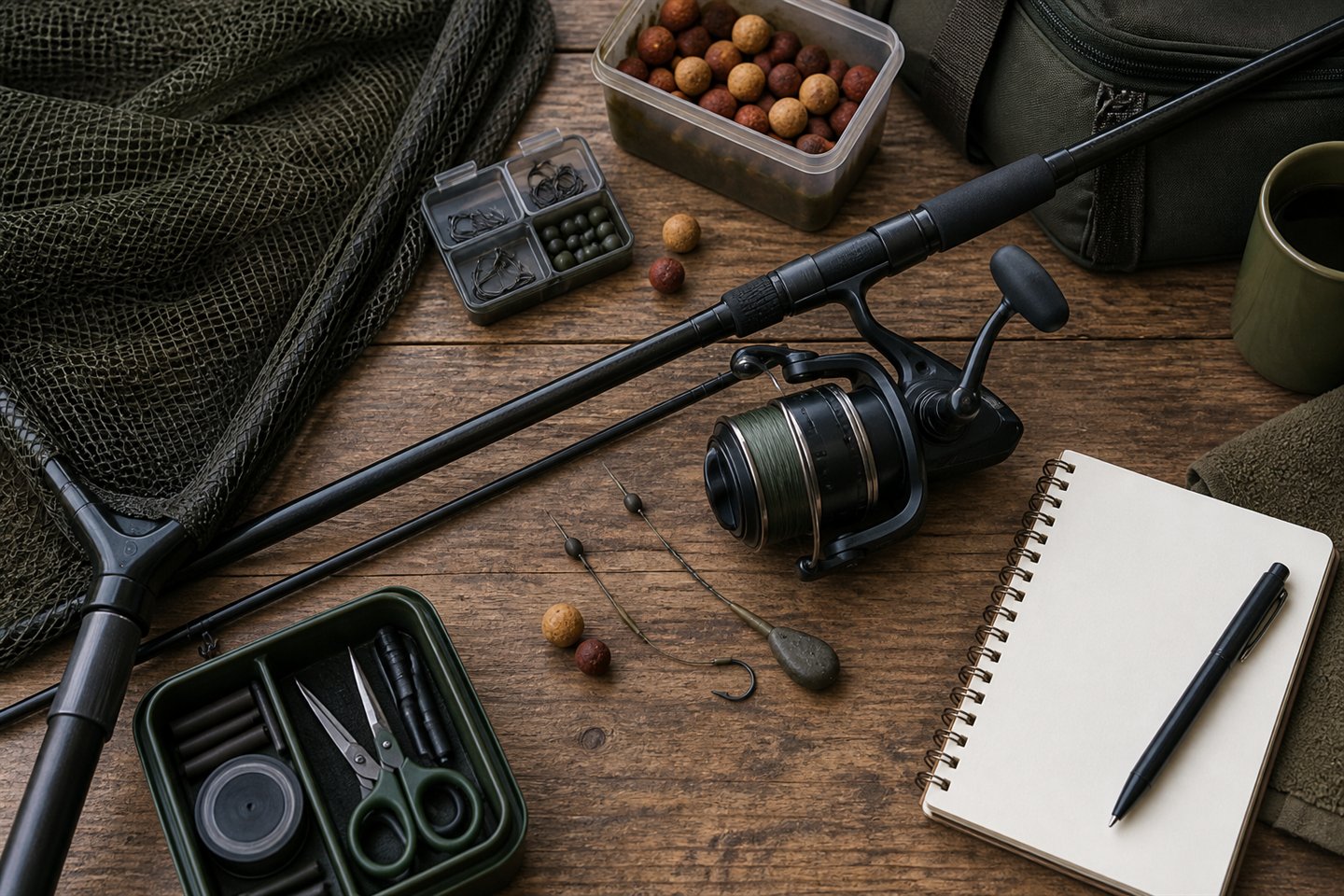
Two items to include only if genuinely missing are the NGT 42-inch landing net with 2m handle (paid link) for landing provision and Korda RazorBlades scissors (paid link) for cutting suitable line and hooklink materials. Put the current checkout cost into your own budget; the worked example above is not a quote for these products. Check net dimensions against the venue rules and borrow appropriate equipment where possible. A modest outfit with complete fish care is a better starting point than spending the reserve on accessories while leaving essential jobs uncovered.
Frequently asked questions
How much does it cost to start carp fishing?
There's no reliable universal minimum because existing equipment, borrowing options and venue requirements differ. Build a complete list for one suitable session and obtain current prices. Include fish care and permission before deciding the total. A very low headline bundle price is not useful if essential items must immediately be added or replaced.
Is cheap tackle always poor value?
No. A simple, suitable item can provide excellent value without premium features. Judge condition, compatibility, support and the job it needs to perform. Cheap equipment becomes poor value when it is unsuitable or unreliable, just as an expensive item can be poor value when its specialist features don't help your actual fishing.
Should I buy two rods at the start?
Only if the planned method and venue justify them and you can manage both confidently. One complete, reliable setup is preferable to two incomplete ones. You can learn a great deal with one rod, and postponing the second leaves money for fish care, travel and the repeated sessions that build practical confidence.
How to save money on carp tackle without skipping fish care
Fish locally, simplify the method, use suitable equipment you already own and buy sensible quantities of bait. Consider borrowing or inspected second-hand non-consumable items. Don't reduce the usable size or condition of essential landing equipment simply to reach a target figure. Change the venue or trip plan if the complete safe setup is unaffordable.
Spend for the fishing you'll actually do
Leave enough in the budget to use the tackle once you've bought it. Start with the water, cover the essential equipment and allow for bait, tickets and travel. You can add extras later. A simpler setup that lets you fish regularly is a better beginning than an impressive tackle bag you can't afford to take anywhere.
Licensing information was checked on 15 September 2026 using the official service linked above. All monetary examples in this article are illustrative allowances, not live offers, product endorsements or claims about the current cheapest route into carp fishing. Replace them with verified figures for your own circumstances.