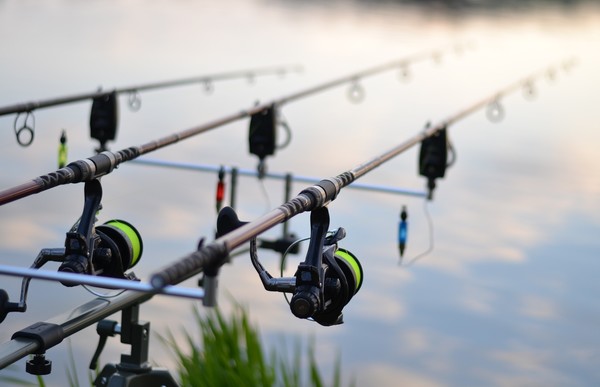
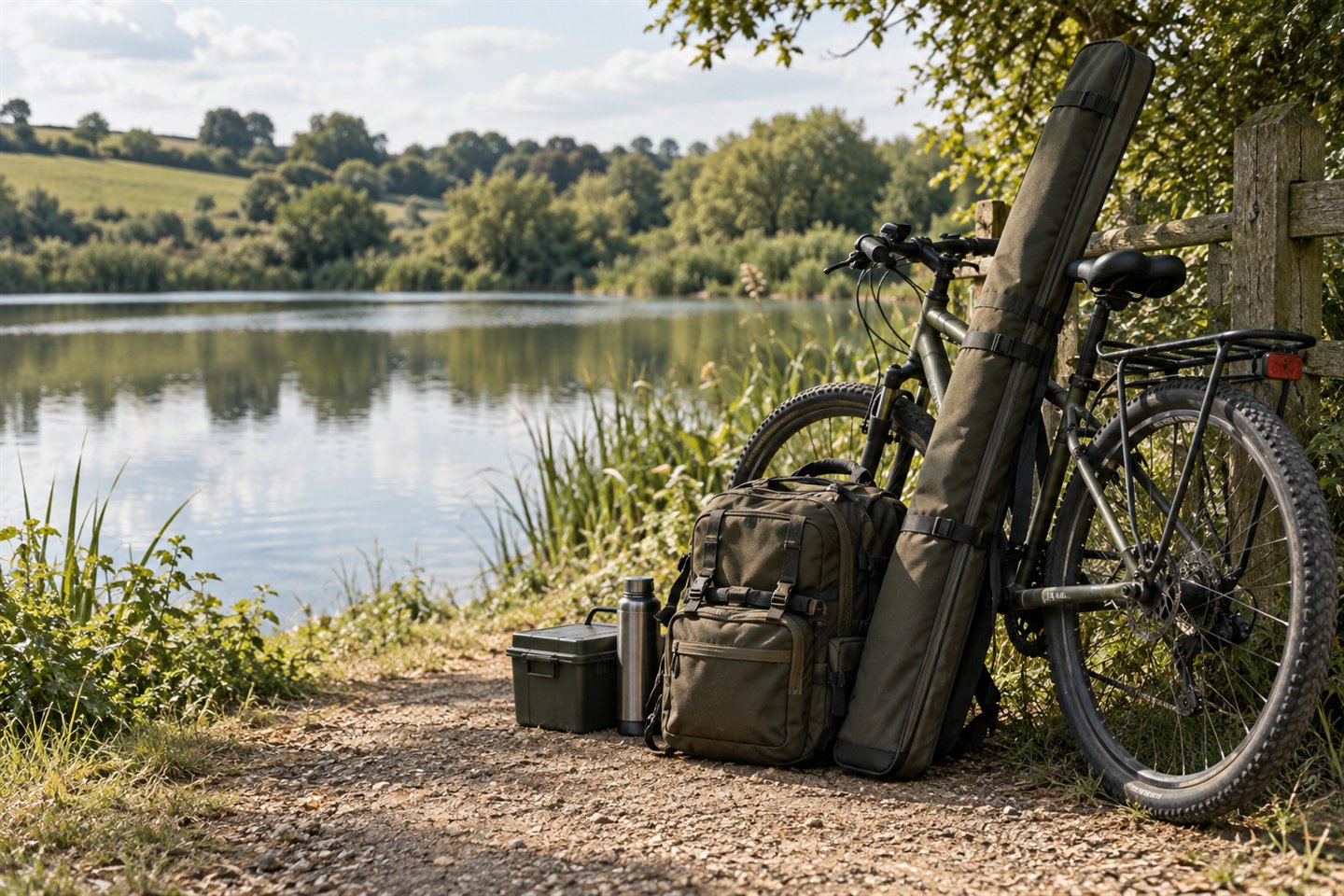
Carp fishing without a car is easier when you build the trip around what you can carry. Choose a reachable venue, check the final stretch of the journey and pack for the session you need—not every session you might imagine.
A local daytime trip is usually the simplest starting point. One suitable rod, a familiar method and modest bait can provide worthwhile fishing without recreating an overnight setup. The equipment should be lighter because unnecessary items have been removed, not because the net, mat, water or weather protection has been left behind.
This guide covers walking, public transport and practical combinations such as a train followed by a short authorised walk. It doesn't assume that every operator accepts every rod bag or that a water close to a station is easy to reach. Plan the actual route, packed dimensions and return arrangements before deciding the fishing is accessible.
Carp fishing without a car: can you manage the whole journey?
Mark the journey from your door to the specific fishery entrance, then from that entrance to a suitable swim. Include crossings, footpaths, steps, gates and any section without a pavement. A straight line on a map can conceal an awkward final mile along a fast road or an entrance that lies on the opposite side of the lake.
Confirm that the walking route is public or authorised for your visit. Don't assume a maintenance track, private drive or gap in a fence is an acceptable shortcut. Ask the venue which entrance pedestrians should use and whether its opening arrangements differ from vehicle access. The convenient route is only useful if you're permitted to take it.
Where practical, inspect the route without the full fishing load first. Notice surfaces, slopes and whether gates can be managed while carrying equipment. A short reconnaissance can reveal more than several optimistic map searches. It also lets you choose a realistic swim area rather than arriving committed to the farthest bank.
Choose a water that rewards regular local visits
Look for a manageable lake or authorised canal stretch with safe banks and fish that suit your equipment. The largest water within travelling distance is not necessarily the best opportunity. A smaller venue you can reach comfortably may allow frequent short sessions and a much clearer understanding of where carp appear.
Check the admission process before travelling. Some venues require prebooking, some allocate swims and others may be full on arrival. Ask what happens if no suitable space remains. A car-free angler benefits from a nearby, already researched alternative, but that alternative must have its own confirmed permission and practical access.
The ticket and membership comparison helps evaluate regular access. A local club may suit repeated evening visits, while occasional day tickets may suit a less predictable routine. Compare the access you can actually use, not just the cheapest annual fee.
How to go carp fishing using public transport
Use the current conditions of every operator on the route, including any replacement bus service. National Rail's luggage guidance describes general allowances and restrictions, including the need to manage large items yourself. It is not a promise that any amount of fishing equipment will fit safely on every service.
For buses, rules and available space can vary. As one example, Stagecoach's conditions allow refusal of large or unsuitable luggage and equipment that obstructs access or exits. Check your actual local operator rather than assuming a train allowance also applies to the connecting bus.
When enquiring, give the packed length, approximate weight and number of items. A question about a securely covered rod bag of a stated size is more useful than asking whether fishing tackle is allowed. Keep any response, but recognise that safe carriage and available space still matter on the day.
Plan the return before paying for the outward journey
Check the timetable for the exact date and day of the week. Evening, Sunday and holiday services may differ from the outward pattern. Include the walk from the swim, packing time and a margin for an ordinary delay. The last available service should not be the only thing preventing you from becoming stranded with equipment.
Identify a realistic earlier return and a contingency. That might be another confirmed route or an affordable taxi that can accept the packed load, arranged or verified appropriately. Don't assume a rural taxi will appear immediately or that its vehicle will take a long rod bag. Keep enough money and phone charge for the plan you have chosen.
Use the Session Planner to record a sensible stop-fishing time, not just the departure of the bus. Reeling in, handling a late fish, packing wet gear and walking out all happen before you reach the stop. A clear finish protects the session from becoming a rushed race.
Match rod transport length to the journey
Consider the rod's packed length as well as its assembled fishing length. Multi-piece or retractable designs can simplify transport, but they must still suit the method, casting load and fishery. Compactness is a practical feature, not evidence that a rod is appropriate for every carp situation. Check specifications and joint condition before buying.
A two-piece twelve-foot rod has long sections that may be awkward through bus doors, crowded platforms or narrow paths. That doesn't automatically make it impossible to carry, but it makes an operator enquiry and a realistic handling test important. Measure the loaded bag rather than relying on the rod's advertised assembled length.
The rod test-curve guide helps keep the fishing requirement in view. Don't choose a short, very powerful rod solely because it packs neatly if it makes your close-range fishing uncomfortable. Equally, don't use an inadequate compact outfit to justify targeting fish or conditions beyond its intended role.
What carp tackle can I carry without a car?
One rod and reel can be enough for a purposeful carp session. Add safe support and indication appropriate to the method, a small box of known terminal components and practical unhooking tools. Carry a modest number of spare rigs and leads rather than several unrelated systems. Familiarity reduces both weight and the time spent sorting equipment on the bank.
Include suitable main line and inspect it before leaving. The main-line guide explains selection for actual conditions. Travelling light is not a reason to reduce the line below venue requirements or choose a hazardous snaggy swim because it happens to be nearest the gate.
Lay the full kit out at home in the order it will be used. Can you reach the net and mat without emptying everything onto wet ground? Can the small tools be found immediately? Organising the load around the session often saves more effort than replacing sound equipment with expensive lightweight versions.
Keep fish-care equipment complete
Choose a net and mat with adequate working dimensions, then compare how they pack. A small transport size is useful only if the opened equipment can safely accommodate the venue's carp. The landing-net guide explains the difference between convenience and suitability. Check any mandatory fishery dimensions before committing to the trip.
Carry a means of obtaining lake water safely for wetting the mat, without leaning over an awkward edge. Keep suitable unhooking tools ready and decide whether weighing is necessary. Returning a fish without weighing it can simplify the equipment and handling routine, provided you still have everything required to support and release it safely.
The carp-care sequence should remain intact in the car-free setup. If the complete equipment cannot be carried comfortably, change the venue, method, transport arrangement or session. Leaving an essential item behind is not an acceptable solution to an overloaded bag.
Reduce bait weight through a specific plan
Choose one permitted hookbait approach and carry a sensible amount of feed for the expected session. A small supply with a clear purpose is easier to carry and easier to manage than several kilograms packed in case the fish suddenly require it. Ask the venue about restrictions and current practical advice before deciding quantities.
The single-hookbait guide offers one way to keep a short mobile approach simple where suitable. A compact PVA presentation or a little loosefeed may also fit, but use the method that matches the spot and rules. Minimal bait is not automatically best; it is a deliberate choice based on the fishing opportunity.
Consider buying permitted bait at the venue only if availability, opening hours and price have been confirmed. Don't arrive dependent on an assumed shop. For bait carried from home, use secure containers suitable for its storage needs and leave excess packaging behind where it can be disposed of properly.
Pack for other passengers as well as yourself
Cover rods and secure hooks so no point can catch a passenger, seat or bag. Keep bait containers closed and protect anything that could leak. The packed equipment should be a manageable set of luggage, not a loose collection of sharp items and trailing straps requiring constant rearrangement in the aisle.
Board and leave calmly, keeping doors, gangways and emergency access clear. Don't occupy wheelchair spaces or seats with tackle when they are needed by passengers. Choose a quieter service when practical, but don't treat an off-peak time as a guarantee of empty space. Be ready to follow staff instructions about safe storage.
Keep essential documents, tickets and phone accessible without dismantling the load. A small separate pocket can prevent a simple ticket inspection from becoming a struggle with a rod bag and bait bucket. The same organisation helps at the fishery entrance, where you may need to show permission before reaching the bank.
Test the carrying load before the fishing day
Pack exactly what you intend to take, including drinking water and food, and try a short safe walk. Pay attention to balance, pressure points and whether you can use a handrail or open a gate without setting equipment in an unsafe place. A bag that feels light when lifted indoors may become uncomfortable after twenty minutes.
Adjust the arrangement before buying more luggage. Moving dense items closer to the body, securing loose straps and removing duplicates can improve carrying considerably. Avoid loading one shoulder with every heavy item while the other hand struggles with long rods. The useful measure is controlled, comfortable movement, not the smallest number on a luggage scale.
There's no universal weight target that suits every angler and route. Choose a load appropriate to your own capacity, conditions and access needs. If the route remains difficult after simplification, shorten it or choose another venue. A fishing trip should not depend on pushing through a carrying problem that is already obvious during preparation.
Walking, cycling and small trolleys
Walking can be the simplest option when the whole route is suitable. Keep rods broken down and covered where necessary, watch overhead hazards and don't carry assembled tackle close to power lines. The Canal & River Trust's fishing safety guidance warns that rods can conduct electricity and contact is not required for an electrical arc.
Cycling needs a secure arrangement that doesn't obstruct steering, braking or other road users. Don't carry long loose rods in one hand while riding. Check the route, relevant access restrictions and safe load limits for the equipment used. If you can't secure the complete kit properly, use another method of travel rather than improvising on the road.
A compact trolley can help on a suitable continuous path, but steps, narrow gates, mud and transport luggage restrictions may remove the advantage. Test the full route and check carriage rules before buying one. A trolley should reduce a known carrying problem, not create a new collection of bulky items to negotiate through every connection.
Fish a method that remains mobile
Choose a manageable swim with a clear landing area and a presentation you can place reliably at comfortable range. The short-session approach suits many car-free visits because it prioritises observation and simple decisions. Your advantage is often the ability to return locally, not the quantity of equipment on the bank.
Watch before settling, but keep the search proportionate to the time and carrying effort available. A complete circuit of a large lake may consume the energy and time needed to fish it. Select a sensible accessible area, look for reliable signs and make an informed starting choice rather than wandering until the return journey dominates the session.
Move only when the new opportunity is worth the packing and carrying involved. Retrieve every line before relocating and keep fish-care equipment with you. A short move within a familiar area can be effective; repeatedly chasing isolated splashes with an awkward load can leave you doing more transport than fishing.
How to pack wet fishing gear for a bus or train journey
The return load differs from the outward one. Nets, mats, slings and clothing may be wet or muddy, and bait containers may have been opened repeatedly. Bring suitable transport protection so they don't leak onto other passengers or vehicle interiors. Check that the solution contains the actual equipment rather than merely covering part of it.
A wet-gear sleeve is a transport aid, not a place to leave equipment indefinitely and not a substitute for cleaning. Remove the equipment promptly at home, inspect it and follow a proper cleaning and drying routine before another water. The official Check, Clean, Dry advice explains the reason for taking this seriously.
Pack sharp items before dealing with the larger wet load, then check the swim for line and small tackle. Keep rubbish in a secure bag and take it home. A tidy return routine is particularly valuable on public transport because a forgotten open bait tub or exposed hook affects people who have nothing to do with your fishing.
Make delay and cancellation decisions early
Check travel updates before leaving home and again before the planned pack-up when practical. If disruption removes the safe return option, change the session before it becomes an urgent problem. A shorter visit or cancellation may be disappointing, but it is preferable to being stranded with heavy equipment after the venue closes.
Keep an offline copy of key directions and booking information in case mobile reception is poor. Know the named entrance and nearest useful road location, not just a pin somewhere in the lake. Share the plan with someone you trust when appropriate, especially for a first visit alone or a route you have not used before.
Don't leave packing until the last possible minute because the fishing has improved. Set the finish according to the complete journey and allow for a fish that needs careful handling near the end. Responsible time management is part of the method, particularly when somebody else's timetable controls the way home.
A worked travel window
Imagine an illustrative Saturday plan in which you reach the authorised entrance at 10:00 and want to catch a return service at 15:00. If the walk from the swim to the stop takes thirty minutes and packing normally takes twenty, fishing until 14:30 is already too late. Build the plan backwards from the stop, including a practical margin rather than treating every minute before departure as fishing time.
For this example, a planned stop around 13:45 gives time to retrieve, pack and walk without assuming each step will happen perfectly. Check whether an earlier service or another confirmed route remains available if conditions change. These times are a planning example, not a timetable or a universal buffer recommendation; your route, mobility and equipment determine the actual margin needed.
If that leaves less fishing than hoped, change the destination or travel arrangement before buying the ticket. An earlier outward journey might help, but only if the venue permits arrival and the full day's demands remain manageable. The calculation is useful precisely because it exposes an awkward trip at home, while you still have easy alternatives, instead of at the water with a wet net and a departing bus.
Equipment worth considering
Prioritise a comfortable, secure carrying system, protected rod transport and a net and mat that combine adequate working size with manageable packed dimensions. Compare the complete load rather than individual catalogue weights. A slightly heavier item that replaces two awkward bags may be easier to use than the lightest specialist alternative.
Secure bait containers, a suitable wet-gear sleeve and reliable phone charging can solve practical travel problems. Check container seals and charger compatibility before the trip. Use existing suitable equipment where possible, and avoid buying a compact version of everything before testing whether a simpler packing arrangement already works.
For carrying used landing equipment home, a SPEERO stink sleeve (paid link) is an option to measure against your folded net. An Anker 20,000mAh USB-C power bank (paid link) can support a compatible phone used for travel information and communication. Check the combined packed weight, connections and carrier's luggage rules rather than assuming both are necessary. A sleeve is temporary transport protection: unpack, clean and dry the net promptly afterwards. Save your return details in advance and keep enough reserve for a changed journey, because an accessory cannot guarantee a bus or train connection.
Frequently asked questions
Can I take carp rods on a train or bus?
Check the current conditions of the actual operator and service, giving the packed dimensions and number of items. There's no universal promise that every fishing load will be accepted. Equipment must be safely packed and stored, and available space can matter. Include any connecting or replacement bus in the enquiry.
Is a short rod essential for car-free fishing?
No, but a manageable transport length can help. Choose a rod suitable for the fishing and verify that its packed form works on the route. Multi-piece or retractable designs are options, not automatic solutions. The complete setup still needs adequate control, reliable joints and compatibility with your intended method.
Can I leave the mat behind for a quick visit?
No. A short session can still produce a carp that needs safe handling. Carry complete appropriate fish-care equipment and comply with the venue's requirements. If the load is unmanageable, change the transport or fishing plan rather than removing an essential part of the landing and unhooking sequence.
What is the easiest first car-free carp trip?
Usually a short daytime visit to a nearby, confirmed water with safe access and a straightforward return. Use one familiar setup, modest bait and a manageable swim. Once that routine works, you can decide whether longer journeys or sessions add worthwhile opportunity without making the logistics unnecessarily difficult.
Make local fishing easy to repeat
Car-free carp fishing becomes more enjoyable when the route, load and return routine are familiar. Choose the whole outing rather than the lake photograph, keep the kit complete and simplify the method. Transport and official guidance were checked on 15 September 2026; recheck your operator's current conditions and the venue's access arrangements before travel.