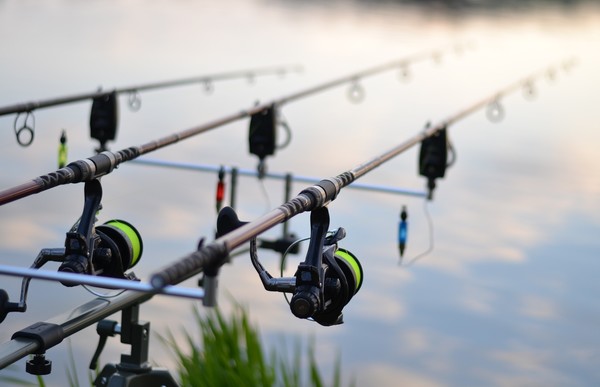
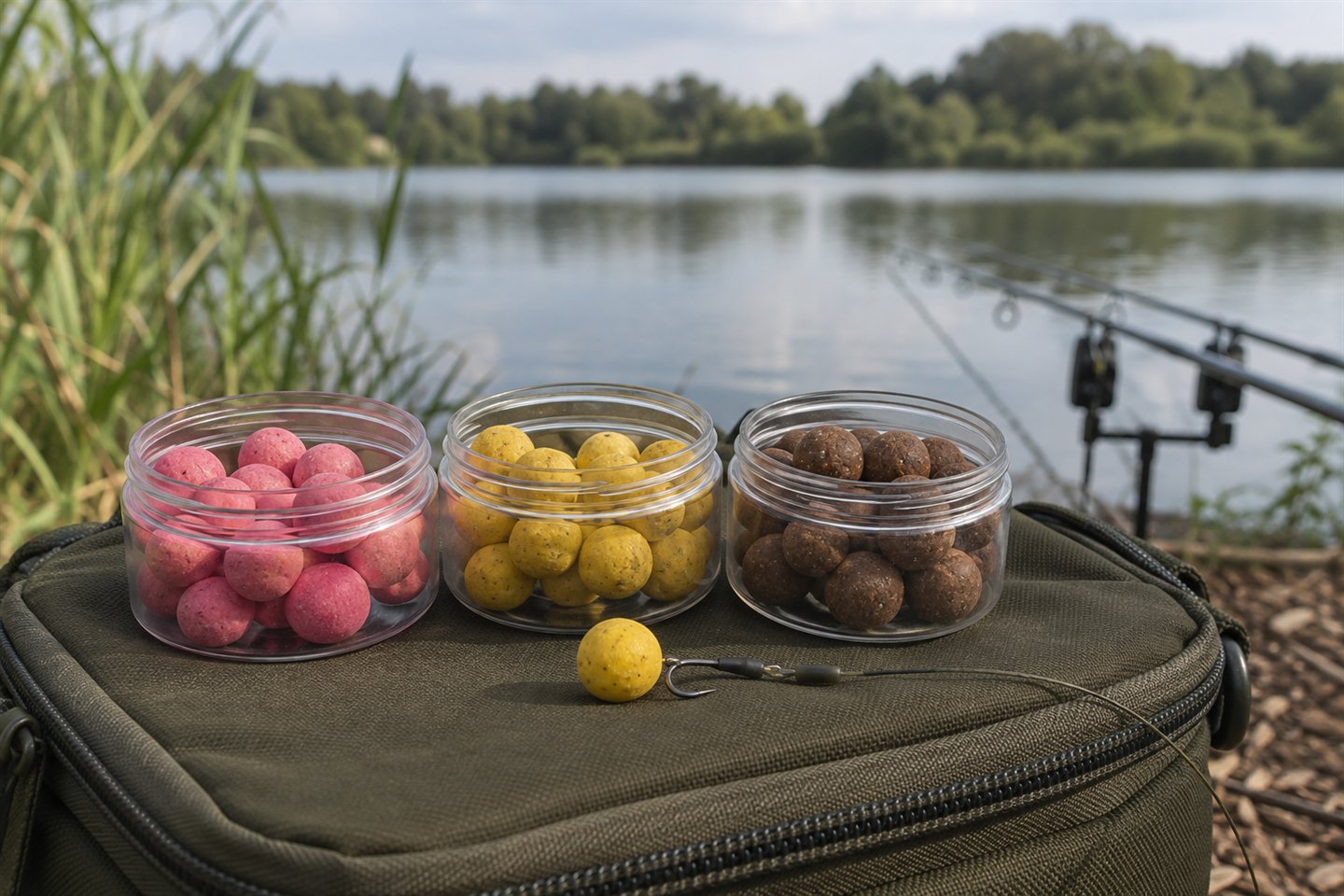
A single hookbait lets you try a spot without committing a pile of feed. That can be useful for mobile fishing or when you're unsure how much the carp want to eat. We'll look at choosing and presenting the bait, including testing a pop-up's balance.
That doesn't mean a bright pop-up thrown anywhere becomes irresistible. A single bait still needs to be where carp can find it, attached to a sound rig and presented on suitable ground. Location usually deserves more attention than colour, flavour or an extra coating from another bottle.
This guide focuses on fishing without loosefeed on UK carp waters. It explains the decisions behind the method rather than prescribing one fashionable rig. Obtain the required licence and fishery permission, read the current rules, and use tackle that can land the fish safely in the swim you have chosen.
Single hookbait carp fishing: when is it worth a try?
A single hookbait is a sensible first move when you have a clear reason to fish a place but little reason to feed it. A carp has just rolled beyond an island, a small group is visiting a sunny shelf, or a short evening session leaves little time to establish a baited area. You're trying to intercept an opportunity already present.
It can also help when bites are scarce and previous bait remains uneaten. Adding more food because nothing has happened may increase the number of alternatives to your hookbait without improving the chance that a carp visits. Starting with one bait keeps that decision reversible until you learn more about the swim.
There are equally clear reasons not to insist on it. If several carp are feeding confidently over an established area, a measured amount of suitable feed may help keep them searching. Read the guide to how much bait to use alongside this one. Single baits and baited spots are tools, not competing identities.
Understand what the method does and doesn't tell you
Without loosefeed, a capture gives useful evidence that a carp encountered and accepted the presentation at that time. It doesn't prove the colour caused the bite, that the whole shoal is feeding, or that the identical cast will work tomorrow. Treat success as a clue to repeat carefully, not a licence to make a sweeping rule.
A blank cast tells you even less. The fish may have moved, the bait may be obscured, the rig may have tangled or the carp may simply not be feeding. Check those explanations before concluding that a particular flavour has failed. Clear notes about position and presentation are more useful than changing three variables together.
The method is most informative when you can explain each cast. Write a simple reason in your mind: one bait on the clean edge of the shelf where fish have passed twice. That is a much stronger starting point than one bait at maximum range because the middle of the lake looks empty.
Find an interception point before choosing a bait
Watch quietly before unpacking. Repeated shows, a moving patch of coloured water, a visible patrol route or fish turning down towards the bottom all deserve attention. Distinguish a fish passing once from repeated activity in a compact area. A single splash may justify a cautious look; several consistent signs give a firmer basis for a cast.
Observe from a safe position with a low profile. Polarised glasses can help in clear water, but don't climb unsafe trees or lean over undercut edges to improve the view. If the best-looking fish are in a place from which they cannot be landed safely, leave them alone and look for another opportunity.
The practical watercraft guide explains how to combine visible signs with wind, shade and lake features. For single-bait fishing, narrow that wider search into one reachable piece of water. The correct area at a comfortable casting distance is preferable to a speculative cast that compromises accuracy or control.
Cast near showing fish without making the situation worse
A show gives a location, not permission to cast straight onto the fish. Consider its direction of travel and allow the lead to land far enough away to avoid an unnecessary impact directly on top of it. Where practical, present slightly beyond the activity and let the line settle without dragging the rig through the area.
Check other anglers' lines before casting towards open-water activity. A fish showing between swims may be in somebody else's agreed water, and a diagonal cast can cross lines even when the splashdown looks clear. A short conversation avoids an argument and reduces the risk of a hooked fish becoming entangled.
If the cast misses badly, decide whether correcting it's worth another disturbance. A rig on known unsuitable ground needs retrieving; a sound presentation a little off the intended mark may deserve time. Accuracy is important, but repeated splashes in pursuit of a perfect-looking cast can remove the opportunity you were trying to exploit.
Choose the presentation for the lakebed
A bottom bait suits a clean area where the hook and hooklink can settle properly. A balanced wafter can make the bait move more easily when investigated, provided its buoyancy is matched to the complete rig. A pop-up can lift the hookbait above a little light debris, but it doesn't make every weedbed or snag safe to fish.
Inspect the returned lead and hook for weed, leaves or thick sediment. A clear lead feeling is one clue, not a complete underwater survey. On unfamiliar ground, seek venue advice and use an arrangement you understand rather than assembling a specialist rig from memory at the water's edge.
The comparison of pop-ups, wafters and bottom baits gives the underlying choices. Select buoyancy to solve a presentation problem. Choosing a pop-up simply because the word single appears in a video title reverses the process and can put the bait at an unsuitable height.
Keep the rig uncomplicated and test the whole system
A familiar hair rig on a clean spot is an entirely reasonable single-bait starting point. Inspect the hook point, confirm that the bait doesn't obstruct the gape and pull-test the knots with appropriate tools. A ready-tied rig still needs checking and must suit the fishery's hook and hooklink rules.
For a pop-up, test the bait with the actual hook, swivel, putty and hooklink attached. A bait that floats confidently on its own may not support the finished arrangement for the intended fishing period. Water temperature, soaking and added liquids can change its behaviour, so repeat the test after altering the bait.
The lead system must not tether a fish after a breakage. Use compatible components and follow the maker's current instructions, then check how the lead or hooklink can release in the complete setup. The safe lead-systems guide explains why adding unfamiliar stops or tight tubing can undermine an otherwise sensible arrangement.
Bright, washed-out or matching: make colour a controlled choice
A conspicuous hookbait is easy for the angler to feel confident in, especially when fishing one bait over open ground. That confidence can be useful if it prevents constant recasting, but brightness is not a universal advantage. Water clarity, light, background and the fish's previous experience all vary between waters and sessions.
Start with a colour you already trust and a contrasting alternative in reserve. If the presentation is sound and carp continue to use the area without a bite, change only the hookbait colour on the next justified recast. Keep the location, rig and bait size unchanged where possible so the comparison means something.
Don't read a single capture as proof that yellow beats pink or that white only works in winter. Small samples cannot separate coincidence from cause. A useful personal pattern needs repeated observations on the same water, including the blank sessions that are less tempting to remember or photograph.
Size, buoyancy and flavour matter as a combination
Choose bait size alongside the hook pattern and the size of nuisance fish. A tiny bait may be picked up by other species, while a very large bait can interfere with a small hook or require more buoyancy than the rig can support. There's no benefit in making the bait eye-catching if its attachment compromises hooking.
Commercial hookbaits are convenient because size and buoyancy are reasonably repeatable, although individual baits should still be tested. If you trim a pop-up, check its balance afterwards and make sure the shortened bait remains secure on the hair or screw. Don't assume it will behave like the untrimmed bait from the same tub.
Use additional liquid sparingly and only where permitted. More scent is not automatically more attractive, and a heavy coating may affect buoyancy or mask how the bait is behaving. Keep the original packaging and instructions. The aim is a dependable bait you understand, not a mixture whose properties change every time you open it.
Winter singles and short feeding windows
In cold conditions, a single bait can be a cautious way to investigate a known holding area without introducing much food. The important word is known. A cold lake still contains carp somewhere, and searching for sheltered areas, repeat sightings or local catch patterns is more valuable than assuming winter fish will locate a strong smell from anywhere.
Keep casts deliberate and allow for limited activity. Recasting every few minutes because you feel cold can disturb a small group of fish and prevent the rig settling. Use clothing and a realistic session length to manage your comfort, then decide on fishing changes from evidence rather than impatience.
The winter bait guide covers broader cold-weather choices. A single bait is one option within that approach. If the venue is frozen, access is unsafe or fish welfare concerns have led to a closure, stop rather than treating difficult conditions as a test of determination.
Use recasting to answer a question
Before retrieving, ask what the next cast will improve. You might move to a fresh show, replace a doubtful hookbait, correct a known tangle or investigate a different depth. Those are specific reasons. Recasting merely because an arbitrary timer has expired may achieve little on a quiet, pressured water.
When you do retrieve, inspect everything. Note whether the hook point is clean, whether the bait remains secure, whether the hooklink is straight and whether the lead has collected debris. That information should influence the next presentation. A damaged bait after a short cast may indicate nuisance activity rather than carp refusing to feed.
Set a review point that suits the session rather than a universal soak time. During a two-hour visit, an early reassessment may be practical. On a longer session in a known feeding area, patience may be more appropriate. Review means look and think first; it doesn't automatically mean wind in.
One rod or several different jobs?
One rod keeps a mobile approach simple and can reduce the web of lines through a small patrol area. Where more rods are legal and permitted, give each a distinct purpose. One may cover a confirmed route while another tests a separate depth or feature, with enough separation to play a fish without crossing lines.
Avoid placing several single baits tightly together simply to increase the chance of one being noticed. Extra main lines can complicate the swim, and a hooked carp may collect the other rigs. If a tiny area is clearly the target, one well-positioned rod can be the better arrangement.
Keep every rod attended and ready for an immediate response. A lightly baited method is not an excuse to wander away looking for another swim while hooks remain in the water. Reel in before scouting beyond immediate control, and keep the net and unhooking area ready until the final rod has been retrieved.
When to introduce a little feed
Feeding becomes worth considering when the observations change. Several fish repeatedly returning to a clean spot, evidence of active bottom feeding or a successful capture followed by continued activity can justify a measured addition. Begin with an amount that is easy to explain and top up from the response rather than from habit.
Once you add loosefeed, you're no longer testing a strict single-hookbait approach. That is not a failure. The question is whether the new tactic fits what the fish are doing. Record the change so a later bite is not automatically credited to the earlier single-bait plan.
Consider the disturbance of introducing bait as well as the quantity. A few permitted boilies placed accurately may create less commotion than repeated spodding, but any feeding method needs a clear background and consideration for wildlife and neighbouring anglers. Stop feeding if birds gather or the intended area cannot be reached safely.
A worked three-hour session
Imagine arriving at a small club lake with three hours before you must leave. You spend the first part walking quietly and see two carp roll near the outer edge of a familiar shelf. The swim is vacant, the route to the net is clear and the spot can be reached with a controlled cast.
You assemble the fish-care kit, check a balanced hookbait in the margin and make one cast to the clear side of the activity. Instead of immediately feeding, you watch the shelf and the adjoining open water. The next useful information is whether the fish return, whether they show elsewhere or whether the presentation gives cause for concern.
If activity repeats nearby, leave a sound rig fishing. If the fish show consistently in a different reachable area, retrieve, inspect and move with a purpose. If nothing happens, use the final review to decide whether one changed position is sensible. Packing up without a bite can still leave a clear observation to test next time.
Test a single bait before making a comparison
Set up a simple check at home or in a safe shallow margin using the actual rig you intend to fish. Watch how the bait settles, whether the hook remains clear and whether the hooklink folds back towards the lead. If you can't see the presentation clearly, use a suitable container of water for the buoyancy check and keep loose hooks under control.
Leave a spare bait from the same tub soaking for a period comparable with the intended session, then check it again. This doesn't reproduce every lakebed condition, but it can expose a pop-up that loses buoyancy quickly or a coating that makes the balance inconsistent. Label anything you alter so you can distinguish it from the original bait later.
Make the first fishing comparison small. For example, keep the same clean spot and tested rig, then use a different colour only on the next necessary recast. Record what changed and what stayed the same. If a fish takes soon afterwards, you have a useful result to repeat, not proof that colour alone caused it.
Stop a test when presentation confidence is lost. A blunted hook, damaged line or missing bait needs correcting regardless of the comparison you hoped to make. The method is supposed to improve decisions, not encourage leaving doubtful tackle fishing to preserve an experiment.
Equipment worth considering
A small rig box that protects hook points, reliable line scissors and a baiting needle are more useful here than a bag full of specialist accessories. Carry a few tested hookbaits in secure labelled pots so colour and buoyancy remain easy to identify. Keep spare hooks and compatible lead-system parts separate from discarded tackle.
Polarised glasses can improve observation where glare allows, while a compact notebook helps record exact casts and changes. Neither is essential if you already have suitable alternatives. Spend first on sound main line, a suitable landing net and a padded unhooking surface, because fishing one bait doesn't reduce the size of the carp you may hook.
Buy only to solve a demonstrated problem. A second bait colour may make a useful comparison; six near-identical tubs rarely improve the decision. Check product specifications and venue rules before choosing terminal tackle.
Sticky Baits Signature pop-ups (paid link) are an example of buoyant hookbaits to compare for size and balance, and the Korda Fine baiting needle (paid link) can help mount suitable soft hookbaits carefully. Check the complete rig in water rather than assuming the bait's colour or label proves its buoyancy. Don't force a fine needle through a very hard bait; use an appropriate preparation method and protect your fingers.
Common mistakes to avoid
The first mistake is treating the absence of loosefeed as a substitute for watercraft. An isolated bait can be easy to move, but that mobility only helps if you pay attention to where fish are appearing. Travel light enough to act on observations instead of building a camp that anchors you to a poor choice.
The second is confusing a highly buoyant bait with a safe presentation. Weed, debris and breakage behaviour still matter. A specialist rig used without understanding can create more uncertainty than a familiar arrangement on a carefully chosen clean area.
The third is changing colour, flavour, rig and location simultaneously after every blank hour. You might eventually catch, but you'll struggle to understand why. Keep a sound baseline and change the element most clearly challenged by the evidence in front of you.
Frequently asked questions
How to fish a single pop-up without loose feed
Choose a pop-up rig suited to the lakebed and balance the actual hookbait in water before casting. Fish it on a checked spot without adding loose feed. The bait still needs to sit clear of debris; its colour and buoyancy do not make an unsuitable spot fishable.
How often should I recast a single carp hookbait?
There's no reliable universal time. Consider fish activity, confidence in the presentation, nuisance species and the time available. A fresh show elsewhere may justify moving quickly; repeated activity around a sound rig may justify patience. Inspect the bait whenever you retrieve and use what you find to guide the next cast.
Can I use a PVA bag and still call it single-bait fishing?
A PVA bag containing pellets or other food introduces feed, so it is a different presentation. It may still be an excellent choice for a compact mouthful around the hookbait. Keep the distinction clear when recording results, because a bite over a small bag doesn't test the same idea as a completely isolated bait.
Final thoughts and further reading
Find somewhere carp are likely to pass, put a tested hookbait there neatly and keep watching. That's a good start for a single-bait session. If you move or change the bait, know what you're trying to learn. The fish-care kit and safe tackle stay just as important when there's no bucket of feed beside you.
For manufacturer discussion of single pop-ups and presentation limitations, see Korda's chod-rig guide. It is an example of one specialist method, not a requirement to use that rig. Check the current instructions for any components you choose and follow the fishery's own rules.