Fishery rules are worth reading before you pack, not when the bailiff asks to check your rig. Hook patterns, bait, lead systems and rod limits can differ between neighbouring lakes. Here's how to check what applies to your carp session.
There's no single rulebook shared by every UK carp lake. Two well-run venues can take different approaches, and different lakes on one complex may have different conditions. A method being permitted somewhere else, recommended in a video or sold by a tackle company doesn't establish permission at the water you're visiting.
Let's work through the wording you'll commonly see. Your fishery's current rules and the law for its location still apply, so ask the person responsible if you're unsure about a hook, leader or bait. A quick question now can save unpacking the wrong kit later.
UK carp fishery rules: which parts affect your setup?
First establish the legal requirements for the country and water, including relevant licensing and byelaws. Next read the conditions attached to the ticket or membership. Finally check current notices and instructions for the particular lake and session. These layers can all apply together; complying with one doesn't remove the others.
In England and Wales, the official freshwater-fishing guidance links to national and local rules. Scotland and Northern Ireland have different arrangements. A UK-wide article should therefore explain the checking process without presenting every England-and-Wales requirement as a law that applies identically across all four countries.
Keep a copy of the current venue rules and the booking details somewhere accessible. Note the date and lake name, especially on multi-lake complexes. This is useful preparation, not an argument against a later safety instruction. If a published page and an on-site notice appear inconsistent, ask the fishery to clarify before casting.
How to check if my hooks are allowed at a carp lake
A barbless hook has no retaining barb projecting behind the point. A micro-barbed hook still has a barb, even though it is small. Therefore, a packet described as micro-barbed should not be assumed acceptable under a barbless-only rule. Read the actual specification and inspect the hook rather than relying on a familiar brand's packaging colour.
Some fisheries accept a properly crushed barb; others require hooks manufactured without one. Ask which applies and how compliance is assessed. Don't assume crushing automatically produces an acceptable result, and don't damage a hook in an attempt to meet an unclear rule. Carrying suitable factory-barbless hooks can make preparation simpler where they are required.
Use the hook type the fishery permits, then choose a pattern that suits your rig and bait. Hook pattern, size, presentation, playing technique and unhooking all matter. Use the hook-pattern guide to understand the wider choice, then select a permitted hook that fits the complete rig and intended bait.
Real examples show why assumptions fail
At the time of review, Linear Fisheries' main rules allow barbed or barbless hooks and flag variations for particular ponds. By contrast, Embryo's Baston day-ticket rules specify barbless hooks and describe conditions for crushed barbs. These are examples of different venue policies, not interchangeable instructions.
Both pages contain much more than a hook rule. Read the complete current version for any planned visit rather than extracting the one sentence that supports your existing tackle choice. A fishery may update a condition after this article's review, and a rule for its day-ticket water may differ from another water operated by the same organisation.
Use examples to learn the questions, not to construct a supposedly standard carp setup accepted everywhere. If you move between venues, keep rigs clearly identified and inspect the actual hook before use. Similar-looking packets and ready-tied rigs are an easy source of avoidable mistakes when preparing in a hurry.
Hook-pattern and rig bans are separate questions
A fishery may allow a general hook category while prohibiting particular shapes or named rigs. Read those restrictions separately. A barbless version of a prohibited pattern doesn't necessarily become permitted, and changing a rig's name doesn't change its construction. Ask about the actual components and arrangement rather than debating labels.
If your usual rig is not allowed, use a simpler permitted system that you understand. The simple-rig guide can help you choose a practical starting point, but it remains general guidance. Confirm any unusual component, including devices marketed as automatic or self-adjusting, with the fishery before including it.
Avoid arriving with only one highly specialised presentation and expecting an exception because changing would be inconvenient. Prepare an appropriate alternative at home and learn how it works. A small selection of known, compliant rigs is more useful than a large collection whose legality and compatibility have never been checked.
What does a carp fishery leader ban mean?
In ordinary carp-tackle language, a leader is a length of material between the main line and the terminal arrangement, although rules may define the term more specifically. Leaders can serve different purposes and use different materials. A ban on leadcore is not automatically identical to a ban on every leader, while a ban on all leaders should not be narrowed without permission.
Ask whether the rule covers fused leaders, fluorocarbon, monofilament shock leaders, tapered main line or particular lead-system components. Describe the actual setup you intend to use. A short written explanation or clear photograph of the assembled components can be more useful than asking whether a familiar product name is acceptable.
The hooklink-material guide explains another important distinction: a hooklink is not simply another name for every leader. Don't infer that a main-line braid ban also prohibits a braided hooklink unless the rules say so, but equally don't assume an exception. Clarify the scope of the wording with the venue.
Minimum line strength and diameter
Some fisheries specify breaking strain, some diameter, and some both or a particular exception. Follow the stated measure rather than substituting your preferred one. A line's printed strength and diameter describe different things, and figures are not perfectly interchangeable across products. Keep the packaging or reliable specifications available when a rule requires an identifiable minimum.
A minimum is a threshold, not proof that every setup using that line is suitable. Snags, weed, casting load and the complete tackle still need consideration. The main-line selection guide provides that broader context. Choose a safe fishing situation rather than treating a compliant label as permission to fish into an avoidable hazard.
Check separate rules for fishing rods and marker or baiting rods. A venue may permit braided line for one task but not another. Store the outfits clearly and ensure no hook is attached to equipment being used only for feature finding or bait introduction. Distinct purposes should remain distinct in the actual arrangement on the bank.
Lead systems and release requirements
Rules prohibiting permanently fixed leads concern the behaviour of the whole arrangement, not just the name of the clip or inline lead. Compatible components, correct assembly and freedom from obstructions matter. A product marketed as safe can be used unsafely when parts are forced together or extra stops prevent intended movement.
Read the safe lead-system guide and the component manufacturer's instructions, then check the venue's specific requirement. Be prepared to demonstrate how the assembled system behaves to a bailiff. If you can't explain it confidently, simplify the presentation and obtain competent help before fishing.
Don't respond to a release rule by making improvised modifications that create other problems. Nor should a release-capable system be treated as an excuse for repeatedly losing tackle. Choose a sensible spot, inspect the line and avoid unnecessary hazards. A compliant rig is one part of responsible fishing, not compensation for a poor swim choice.
What bait rules should I check before a carp trip?
A bait restriction may concern an ingredient, its preparation, the quantity introduced, the method of feeding or the time of year. Read the whole condition. A permitted hookbait doesn't necessarily imply permission to introduce kilograms of the same material, and an allowed boilie doesn't establish that every accompanying liquid or particle mix is acceptable.
Ask about particles, nuts, live baits, high-oil pellets and artificial baits if any form part of your plan. Don't assume a product becomes exempt because it is commercially packaged. The particle-bait guide discusses preparation, but a properly prepared bait can still be prohibited by the venue.
Seasonal and source requirements also matter. Baston's published day-ticket conditions, for example, distinguish bait arrangements by season and require certain supplies to be purchased on site. Confirm the current details before shopping. This example demonstrates why a general list of carp baits cannot tell you what belongs in the bucket for a particular booking.
Feeding methods can be restricted independently
A fishery may allow a bait while limiting spodding, catapulting, boats or the amount introduced. Check these as separate questions. Permission to use maggots on a hook doesn't automatically authorise spodding them, and permission to fish an area doesn't authorise sending a bait boat beyond your swim's boundary.
Read any requirement for buoyant baiting devices or recovery attachments and use compatible equipment correctly. Don't improvise an unsafe arrangement merely to satisfy a phrase in a rulebook. If the allowed feeding method is unfamiliar, practise its operation without hooks in a suitable authorised space before relying on it during the session.
The bait-quantity guide helps keep feeding proportionate within the permitted limits. A maximum allowance is not a target to reach. Start with a reason for introducing feed, observe the response and retain unused bait appropriately rather than treating the final minutes as an opportunity to empty containers.
Rod numbers and control
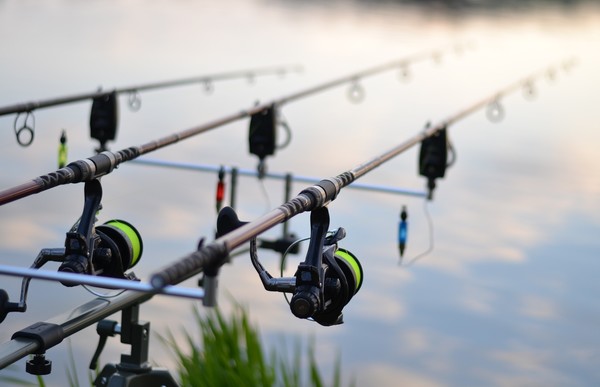
Check both the licence entitlement and the fishery's rod limit, then use no more than both allow. Fewer rods may be the sensible choice for a beginner, a short visit or a confined swim. The fact that a ticket permits three doesn't mean three can be managed equally well in every situation.
In England and Wales, official tackle rules prohibit leaving a line in the water unattended or without sufficient control and set a three-metre maximum between the outermost rod butts. Arrange the swim so you can respond promptly rather than interpreting an alarm receiver as permission to wander away.
Reel in before leaving to inspect another bank, visit facilities or undertake a task that removes proper control. If another person is involved, don't invent a casual arrangement that conflicts with their own rod limits or the venue's rules. A brief fishing pause is usually the simplest way to keep the position clear.
Fish-care requirements are part of preparation
Check net dimensions, mat or cradle requirements, permitted slings and whether the venue supplies equipment that must be used. Bring what is required and avoid bringing prohibited fish-contact equipment onto a site with a supply-only policy. These arrangements should be established before packing, especially when storage space or transport is limited.
Keep the landing and unhooking sequence ready before the first cast. If the fishery allows temporary retention, its maximum should not become a routine target. Prepare photography and weighing equipment in advance, minimise handling and return the fish promptly when it is ready and the release can be made safely.
A rule requiring a fish-care product doesn't justify indiscriminate treatment. Follow the venue's instructions and the product's directions, and report serious injury or unusual fish condition to the responsible staff. Don't turn an unhooking session into an improvised medical procedure or prolong handling to experiment with several treatments.
Clean equipment and water-specific restrictions
Inspect, clean and dry equipment between waters, following current biosecurity and venue instructions. The official Check, Clean, Dry advice for anglers explains why fish-contact equipment can move unwanted organisms. A quick splash in lake water is not a substitute for a proper routine.
If the venue operates a disinfectant station, ask how it should be used and follow the required contact procedure. Don't invent a chemical strength or assume any brief dip sterilises dirty equipment. Supplied nets and mats should still be handled and returned as instructed. Biosecurity is a process, not a slogan printed on a bucket.
Never transfer fish, water, plants or unused live material between fisheries as a helpful gesture. Stock management belongs to authorised people operating under the relevant controls. Report concerns to the fishery rather than taking matters into your own hands, even when the intention is to improve fishing or rescue an apparently unwanted fish.
Access, visitors and overnight arrangements
Read arrival, departure, parking and gate instructions alongside the fishing conditions. A ticket for a set session doesn't necessarily permit early unloading, a visiting friend or an extra shelter. Ask about companions, children and dogs before bringing them. Clear arrangements make the visit more comfortable for everyone using the water.
Night fishing and camping are not automatically the same permission. Confirm what shelter is allowed, where it can stand and whether any cooking restrictions apply. The first overnight-session guide covers the practical routine. Never use a stove, barbecue or other combustion appliance inside a bivvy or enclosed shelter.
Respect swim boundaries, closed banks and restrictions on vegetation cutting or wading. If a spot cannot be fished safely within those conditions, choose another. A photograph of a previous angler standing in the water is not evidence that you have permission or that the conditions are safe today.
Turn the rulebook into a preparation check
Before the trip, place your actual rig, line, bait and fish-care equipment beside the current rules and compare them. This is more effective than reading the document while imagining that everything in the bag is probably suitable. Remove items that could cause confusion and pack a known compliant alternative where useful.
For an unclear term, ask a specific question: identify the lake, date, product or material and intended use. Keep the answer with your booking information. A question such as whether a named leader is allowed on fishing rods is easier to answer accurately than a vague request to confirm that your setup is fine.
At arrival, check for temporary notices and ask whether anything has changed. If a bailiff requests an inspection, cooperate calmly and resolve any issue before continuing. The purpose is to get the fishing right. Arguing from an old screenshot rarely improves either the practical situation or the atmosphere on the bank.
Equipment worth considering
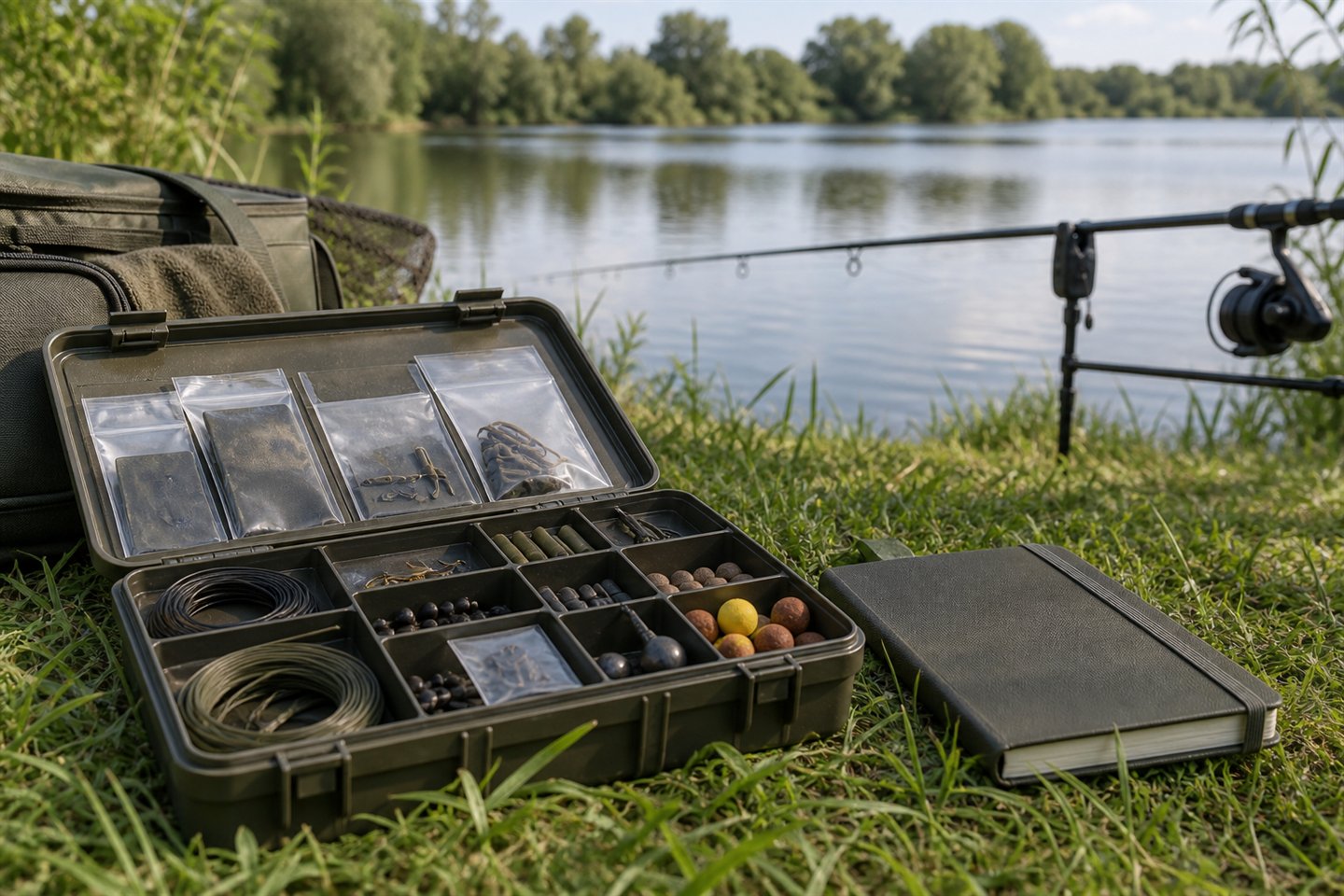
A small, clearly organised rig box helps keep permitted hook patterns and materials separate. Retain labels or specifications for line where minimum diameter or strength matters. These simple habits reduce mistakes when changing venues. There's no need for elaborate storage if your existing box makes the components and their condition easy to identify.
Prioritise suitable unhooking tools, a dependable net and the mat or cradle required by the fishery. For bait, secure containers labelled by contents make inspections and preparation straightforward. Buy additions in response to confirmed requirements, not an assumption that the most restrictive setup from another venue will automatically be correct everywhere.
Fish-care rules often specify equipment dimensions rather than a favoured brand. Compare examples such as the NGT 42-inch landing net with 2m handle (paid link) and NGT Jumbo Folding Carp Cradle (paid link) with the exact wording supplied by your fishery. Ask whether personal equipment is permitted at all before ordering. A familiar product name doesn't prove compliance, and a photograph can conceal differences in size or construction between variants. Take the fishery's answer with your booking information so that any genuine uncertainty can be resolved before setting up at the water.
Frequently asked questions
Are barbless hooks compulsory on all UK carp lakes?
No. Hook policies vary by venue and sometimes by individual lake. Check the current rule for the actual water, including whether crushed barbs are accepted. A rule from another fishery or an old article should not replace the instructions attached to your booking.
Does no braid mean I cannot use a braided hooklink?
Not necessarily, but don't guess. The restriction may concern main line, hooklinks, leaders or all braided material. Ask the fishery which parts of the setup it covers and describe your intended arrangement. Then use a compatible permitted system that you understand.
Can a fishery refuse a bait that is legal to buy?
The fact that a bait is sold doesn't establish permission to use it at a particular water. Follow the conditions of access and ask about ambiguous ingredients, preparation or feeding methods before introducing it. If the rules don't suit your preferred approach, choose a different compliant method or venue.
What if I discover a problem after casting?
Reel in and correct it before continuing. Ask staff for clarification when needed, especially if the issue affects rig safety or fish care. An honest early correction is preferable to carrying on because the setup is already in the water or because replacing it feels inconvenient.
Two examples of resolving ambiguous wording
Imagine your usual rig uses a fused leader, but the booking information says no leadcore without mentioning other leader materials. Don't infer either that every leader is prohibited or that the fused version is definitely acceptable. Send the fishery the product type and intended arrangement, ask the question directly and prepare a permitted alternative while waiting for the answer.
Now imagine a bait is listed as permitted, but a separate paragraph restricts loosefeed to material bought on site. The first statement doesn't cancel the second. Establish whether your packed bait is acceptable as a hookbait, as feed, both or neither. These distinctions can save money before the trip as well as preventing an avoidable disagreement at check-in.
The same approach works for unfamiliar terms such as safe zone, running, semi-fixed or retention. Describe what the item actually does instead of relying on a name that different anglers use differently. If the response remains unclear, choose the simplest arrangement the fishery explicitly approves rather than building a more complicated interpretation around your existing purchase.
Record the outcome for that venue, not as a universal rule to repeat elsewhere. A small note containing the lake, date and answer is enough. When you return later, check whether the rule still applies. This turns each enquiry into useful preparation while recognising that fisheries can change policies as their stock, conditions or management needs change.
Complying with a written rule doesn't guarantee that a particular swim is safe today. Flooding, damaged banks, fallen branches or unusual wildlife activity may still make the planned approach unsuitable. Use the permission as a boundary, then assess the actual conditions before fishing.
Clear rules make a calmer session
Read the current instructions, understand the actual equipment and ask precise questions before travelling. Good preparation turns a long rulebook into a manageable set of decisions about the session you intend to fish. Sources and named-venue examples were checked on 15 September 2026; recheck current conditions directly before every visit.