Your first day at a commercial coarse fishery should be enjoyable, not a test of how much tackle you own. Choose a beginner-friendly lake, one manageable method and a few permitted baits. We'll help you plan the day and get ready for your first bites.
A first day at a commercial coarse fishery doesn't require a trolley full of specialist tackle. One suitable rod or pole, a small choice of permitted bait, a landing net, an unhooking mat, a disgorger and weather-appropriate clothing are enough for a useful session. Familiar equipment and an organised peg are more valuable than several methods that have never been assembled.
We'll follow the day from booking to packing away, with mixed coarse fishing for roach, bream, tench and crucians in mind. Carp may turn up too, so check what tackle the venue expects. Read its rules on hooks, nets, bait and handling before you leave home.
Your first day at a commercial coarse fishery: where to start
Choose a venue that openly welcomes beginners and offers a smaller mixed or silverfish lake. Ask which method is suitable, what fish are present and whether staff can recommend an accessible peg. Buy the correct ticket, hold the required rod licence, read the rules and prepare the landing equipment before putting a bait in the water.
Begin close enough to feed accurately. A simple waggler, whip, pole rig or running feeder is usually easier to control than a long cast. Introduce little bait, wait for a response and change one detail at a time. A first session has succeeded when the angler can repeat the setup safely and explain why each adjustment was made, even if the catch is small.
How to choose a commercial fishery for beginners
The nearest commercial fishery is not automatically the best first venue. Look for clear visitor information, recent contact details, maintained paths and a lake described as suitable for pleasure anglers or novices. A specimen lake dominated by large fish may demand heavier tackle and more exact fish care than a beginner owns, while a mixed lake offers useful practice with manageable tackle.
Telephone or message the fishery if its website leaves important gaps. Useful questions concern opening time, booking, payment, parking, toilets, accessibility, net policy and whether a responsible adult must accompany a young angler. Ask whether tackle hire, tuition or a shop is available, but don't assume that somebody will be present simply because the water sells day tickets.
Stock descriptions need interpretation. A lake advertised as heavily stocked may still fish differently with weather, pressure and season. Ask about the common size of the intended species, not only the largest fish. That answer helps select line, hooklength and landing net without building the whole day around an exceptional specimen.
The broad coarse fishing for beginners guide explains the main methods and equipment. Use it as orientation, then let the chosen fishery narrow the setup. A local rule requiring a particular hook type or net size is more useful than an online tackle list written for a different water.
Licence, permission and close seasons
In England and Wales, anglers aged 13 or over need the appropriate rod fishing licence for freshwater fishing, including on private commercial fisheries. A junior licence is required for anglers aged 13 to 16 and is currently free, but it must still be obtained. Rules differ in Scotland and Northern Ireland, so use the authority for the country being fished.
A rod licence doesn't buy access. The fishery ticket or owner's permission is separate, and an angler needs both where the licensing system applies. Keep confirmation accessible and check how the venue verifies it. The existing rod licence guide gives a fuller starting point, while GOV.UK should be checked for the current legal wording.
Most enclosed stillwaters in England have no statutory coarse close season, but exceptions exist and a fishery can impose its own closure. The national close season from 15 March to 15 June inclusive applies to rivers, streams and drains, as well as some canals and designated stillwaters. Confirm the water type, regional byelaws and the venue calendar rather than treating “commercial” as an exemption.
Read every fishery rule before packing
Commercial fisheries often publish detailed rules because stock, banks and management priorities differ. Common subjects include barbless hooks, maximum hook size, line strength, permitted feeders, bait limits, groundbait, meat, floating bait, keepnets, net drying or dipping, unhooking mats and the treatment of particular species. Read the complete current version, not a photograph from an old social post.
If wording is unclear, ask before buying tackle. “No fixed rigs” may affect the way a feeder is attached; “fishery pellets only” means outside feed pellets should remain at home; “two nets” may apply only in organised matches. Never quietly reinterpret a rule because another angler appears to be doing something different.
Venue rules can change quickly during hot weather, fish-health incidents or maintenance. Check again on the morning of the visit and read notices at reception. A temporary keepnet ban, lake closure or restricted bait policy is part of the permission to fish and must be followed without argument.
What should I take to a commercial fishery for the first time?
For float fishing, a light float or general-purpose match rod with a modest fixed-spool reel can cover many mixed lakes. For feeder fishing, use a purpose-built feeder rod with a suitable quivertip and a reel that balances it. A short whip or starter pole can be even simpler where the target is small silverfish close to the bank.
Don't choose line by the smallest fish expected. The complete setup must cope with the largest realistic accidental capture, nearby reeds and the method being used. Main line, hooklength and hook should form a balanced system, with the hooklength normally the controlled lighter link when rules and conditions support that arrangement.
The Hunter Pro 10ft carbon rod-and-reel starter kit (paid link) is one current packaged combination. Compare rod length, casting rating, reel size, included line and whether the terminal tackle actually meets the chosen fishery's rules. A bundle is useful only when its components suit the water.
Carry spare hooks and hooklengths, a small shot dispenser where permitted, floats or feeders for the chosen method, scissors, forceps or a disgorger, a plummet for float fishing and a rod rest for feeder work. Keep them in one box with no loose hooks. A towel is useful for the angler's hands, but it must never be used to hold or wrap a fish.
Fish-care equipment comes first
A soft, knotless landing net large enough for the fish likely to be hooked is an essential, not an upgrade after a large fish appears. Inspect the mesh and frame at home. Some commercials provide nets to reduce disease transfer; where that rule applies, leave personal nets in the vehicle and use the supplied equipment exactly as instructed.
Bring a padded unhooking mat when larger bream, tench, barbel or incidental carp could be caught, even if the intended quarry is roach. A disgorger suits many small, neatly hooked fish, while forceps may be appropriate for larger hooks. Learn how each tool works before fishing and ask a competent person for help rather than prolonging an uncertain unhooking attempt.
A search for a coarse fishing landing net and unhooking mat (paid link) provides examples of sizes and formats. Check knotless mesh, frame dimensions, handle length, padding, drainage and the venue's rules. Product photographs cannot show whether an angler can position the equipment safely at a particular peg.
The dedicated tench fishing guide is useful if the mixed lake holds tench, but its tactics don't replace general care. Have the net assembled, mat wet and unhooking tools open before the rig is cast. Fish should never wait in a net while equipment is taken from packaging.
What bait should a beginner take to a commercial lake?
Maggots, casters, worms, sweetcorn, bread and pellets can all catch coarse fish, but the fishery may restrict some of them. For a first session, choose one small hookbait and one larger alternative that are both permitted. This allows a sensible change without turning every quiet spell into a bait experiment.
Feed is more important than variety. Small amounts introduced accurately let the angler see whether bites increase or fade. Loose feed suits float and pole methods; groundbait or pellets may be better delivered through a feeder. The existing guide to coarse fishing baits for beginners introduces the common options.
Keep bait cool, covered and away from wildlife. Don't throw unwanted bait into the lake at the end, and don't scatter it behind the peg. Take it home where storage directions allow or dispose of it responsibly. A clean bait box and separate rubbish bag make this routine much easier.
Pack for the person as well as the fish
Check the weather for the full session and journey. Waterproof layers, sun protection, drinking water and any personal medication matter more than another pattern of float. Commercial banks can become slippery in rain and exposed in sun, so choose footwear for the actual surface and keep a dry layer available.
A stable chair improves concentration, but it must fit within the peg without blocking paths. An umbrella can provide rain or shade when securely positioned and permitted. A search for a coarse fishing chair and umbrella (paid link) is one current option. Compare packed size and adjustment; check weight, ground stability and transport distance before ordering.
Carry a charged phone, but keep it protected from water and avoid allowing it to distract from an attended rod. Tell somebody where the session is taking place and the expected return time. If fishing with a child, maintain direct supervision and choose a peg that keeps casting, hooks and water access controllable.
Arrive with time to observe
Report to the correct place, pay or confirm the ticket and ask whether any lake or peg restrictions have changed. Don't occupy a match-reserved peg or walk through other anglers' equipment. If pegs are allocated, accept the draw or instruction and work with the water in front rather than searching for a perfect-looking swim.
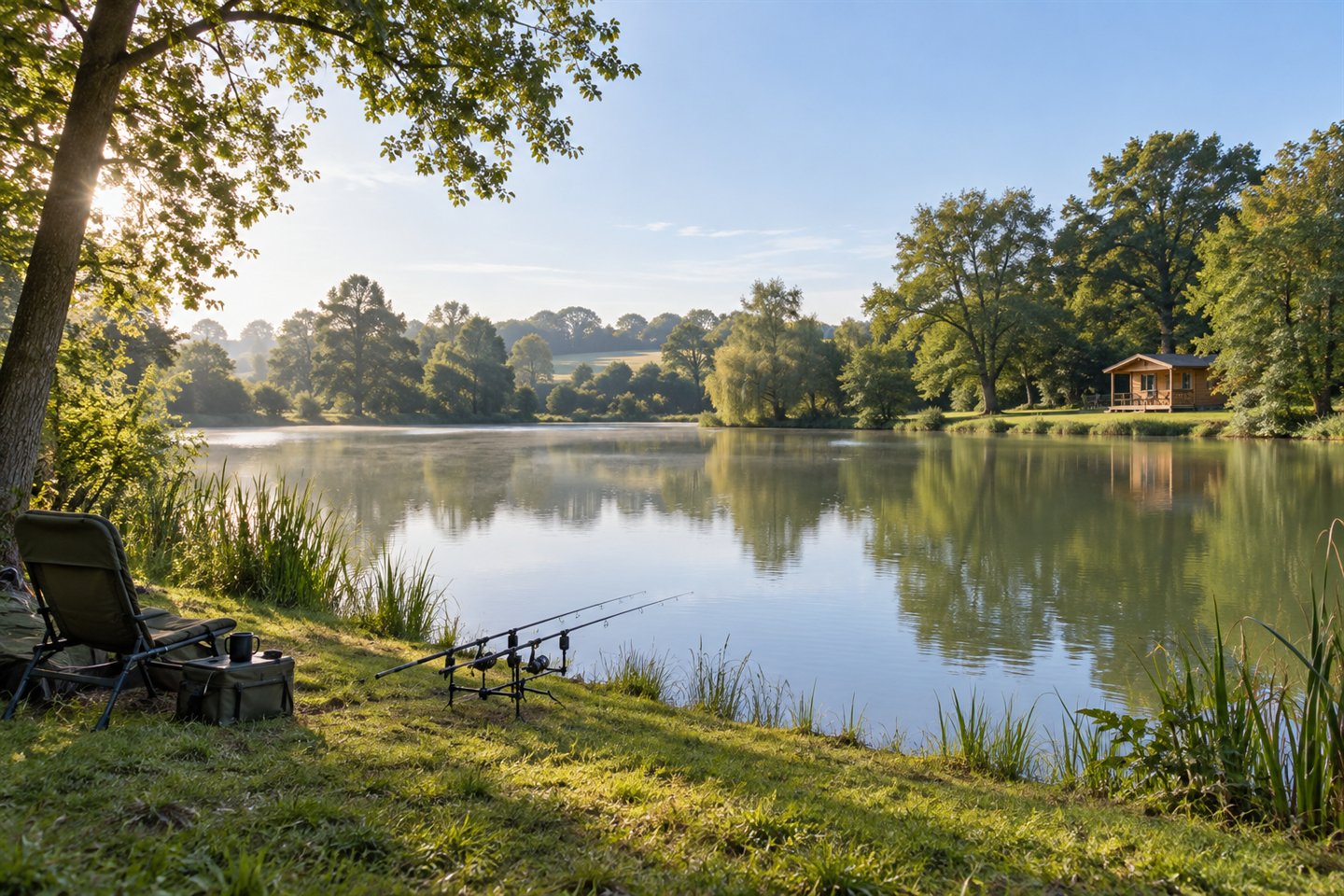
Where choice is allowed, watch before unloading. Look for small fish topping, bubbles, coloured water, reed edges and quieter water away from constant disturbance. Also inspect the peg itself: the route to the water, overhead cables, unstable boards, deep margins and room to use the landing net safely matter more than a distant fish sighting.
Carry tackle in controlled trips and keep it secure. Never leave rods, hooks or bait where the public can reach them. A tidy footprint protects other anglers.
Set up the peg in the right order
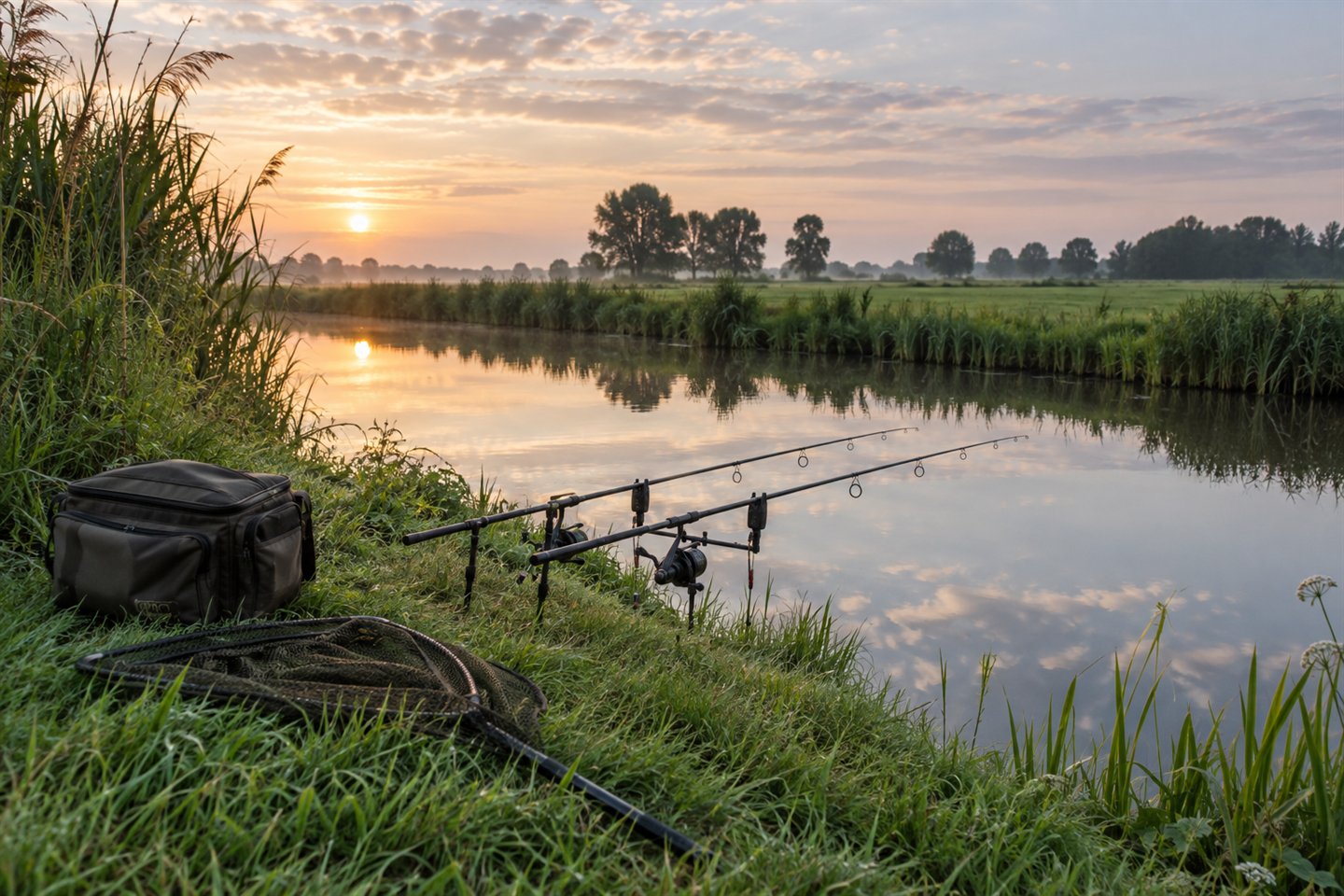
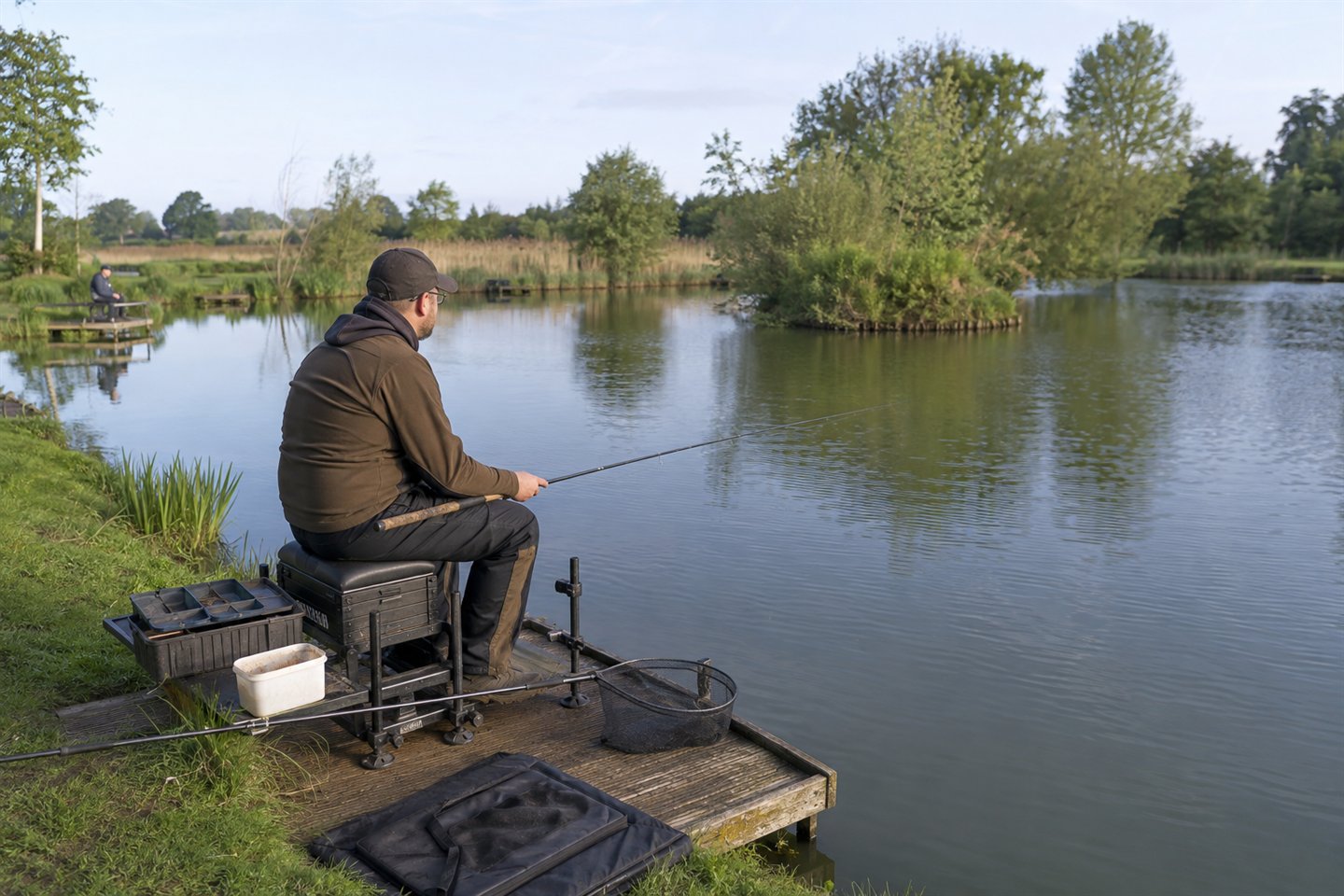
Position the landing net and wet unhooking mat first. Put the disgorger or forceps beside the mat and fill a small water container if the fishery permits one. The route from chair to water should be free of bags, feeder arms and loose line. Only then assemble the rod or pole.
Place bait on the side away from the water's edge and close every container. Secure the rod rest and test that the rod cannot be pulled in. Keep spare rigs on winders or in a box. A hook dropped on a platform is a risk to hands, wildlife and the next angler.
Plumb the depth when float or pole fishing rather than guessing. With a feeder, make a gentle exploratory cast only where rules permit and clip up only if the reel clip, casting range and line strength can be used safely. Don't cast across the neighbouring peg or towards an area from which a hooked fish cannot be landed.
Choose one method for the first hour
A short-range float setup is ideal when fish are feeding in the margins or at an easy shelf. A whip or pole gives excellent accuracy for small silverfish. A running feeder can work when fish are farther out or settled on the bottom. Select the method that can be cast, fed and landed confidently from the peg.
The broad silver fishing guide explains why consistent small-fish activity is valuable practice. Don't dismiss roach and skimmers while waiting for something larger. Every clean cast, positive bite and quick release improves the routine needed for more demanding coarse fishing.
Start at a range that can be hit repeatedly. Mark a far-bank feature and place each small feed in the same area. Accuracy concentrates fish and makes the result understandable. A handful spread across three different lines provides less information than a pinch delivered to one controlled swim.
Use the first thirty minutes as a test
Introduce a small initial feed suited to the method, lower or cast the rig gently and let it settle. Note the depth, hookbait and time. If bites begin, repeat the same cast and feeding amount before changing anything. Consistency reveals whether the swim is building.
A missed bite is not a demand for a smaller hook immediately. Check that the bait is still correctly mounted, the float is shotted sensitively or the quivertip is settled, and that the strike was controlled. Several similar missed bites justify one measured adjustment; a single event does not.
If no signs appear, inspect presentation before adding more feed. The float may be overdepth, the feeder may have landed in soft debris, or the hookbait may be masked. Re-plumb, shorten or lengthen the line being tested, or cast a little closer. Change location or depth before assuming that a more exotic bait is needed.
Feed by response
Little and often is useful only when “little” is genuinely small and “often” follows fish activity. When roach respond quickly, a few maggots every cast can hold them. When bites slow after each feed, reduce the amount or interval. When bream arrive, a steadier bottom-focused feed may be appropriate.
Don't chase a quiet swim with increasingly large quantities. Uneaten bait cannot be removed and may spoil the line for the rest of a short visit. Keep most bait in reserve until the catch rate or visible activity earns a top-up.
Record simple observations: where the rig landed, how deep it fished, what was fed and when bites came. The purpose is not to create a complicated diary at the peg. It is to avoid making the same unproductive change repeatedly.
Play and land each fish calmly
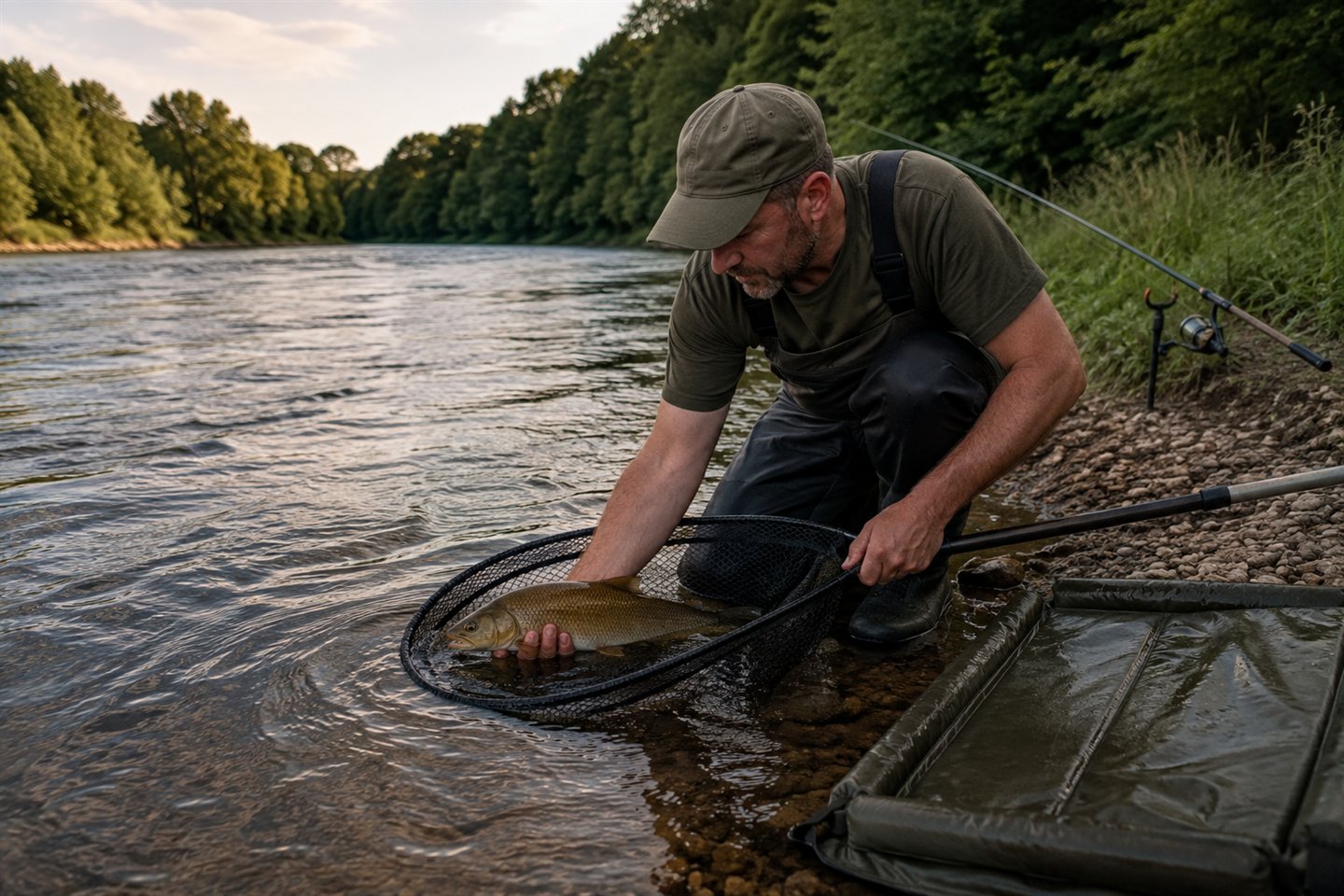
Lift into a bite with controlled pressure rather than a violent strike. Keep the rod bent and let its action absorb movement. Small fish can often be guided steadily to hand or a landing net; larger fish should be netted without dragging them through weed or lifting them on the line.
Don't reach for the net too early. Bring the fish over the submerged mesh, lift the frame and keep it supported in the water while preparing to unhook. Never lift a landing net by the end of a long handle when a heavy fish is in it; draw the net close and support the frame or mesh according to its design.
Wet hands before touching fish. Small fish can often be unhooked over the open landing net or a wet mat. Larger species should remain low over a wet padded surface. Remove the hook with the correct tool, avoid the gills and eyes, and return the fish promptly once it is balanced.
Know when to ask for help
Ask early if a hook is deep, a fish is unexpectedly large or the landing area feels unsafe. A fishery manager or experienced neighbour can assist without taking over the entire session. Explain that it is a first visit and listen to venue-specific instruction.
Don't pull blindly on a deep hook. Keep the fish wet and supported while the situation is assessed. If the hook cannot be removed quickly without damage, follow competent fish-care guidance; cutting the line close may be safer than prolonged force, but the decision depends on hook position and should not be improvised from guesswork.
Adjust for weather and fish welfare
Warm water holds less dissolved oxygen, and hard-fighting fish take longer to recover. Follow fishery notices, minimise handling and avoid keepnets unless an organised event and current rules require them. If fish appear distressed, stop fishing and tell the manager; on a river or serious wider incident, use the Environment Agency incident route.
Thunderstorms, strong wind, flooding and extreme heat can make a commercial peg unsafe. Carbon rods and poles must be kept well away from overhead power cables and should not be used during lightning. No catch target justifies remaining when the safe choice is to pack away.
Cold weather also needs restraint. Icy boards, numb hands and rapidly fading light can turn routine handling into risk. Shorten the session before concentration and dexterity fail, and leave enough daylight to clean the peg and walk back safely.
Pack away without leaving a trace
Stop fishing with enough time to dismantle calmly. Check the peg for line, hooks, shot, cable ties, bait and food packaging. Cut discarded line into short pieces and take it home. Don't push hooks into wood or leave them in a bait container that may be handled later.
Follow the fishery's net and mat procedure. Check equipment for plant fragments and mud, clean it as directed and dry it thoroughly before visiting another water. Check, Clean, Dry reduces the risk of moving disease and invasive organisms between fisheries.
Make one note after the session: what method produced bites, which depth or distance worked, and what item was genuinely missing. Buy or change tackle only in response to a clear need.
Frequently asked questions
Which lake should a beginner choose?
Choose the fishery's recommended beginner, pleasure or mixed-species lake rather than its specimen water. Ask about typical fish size, peg access and the simplest productive method. A helpful manager's current answer is more reliable than an old catch report.
Should a beginner float fish or feeder fish?
Float fishing gives visual feedback and is excellent at close range; feeder fishing can be easier when fish are settled farther out or on the bottom. Choose the method that matches the peg and can be set up safely. There's no need to use both on the first visit.
Can a keepnet be used for pleasure fishing?
Only when national byelaws, local rules and the fishery permit it. Many commercials restrict keepnets to matches or ban them in warm conditions. Returning each fish promptly is the simplest beginner routine and avoids retaining fish without a clear reason.
What if no fish are caught?
Judge the day by the quality of the process. If the rig was presented correctly, feed was controlled and every rule was followed, the session produced useful information. Ask the fishery what changed, note the answer and make one clear adjustment next time.
Final thoughts
Pick a welcoming water, sort out the licence and ticket, and take one method you can set up confidently. Have the fish-care gear ready before you cast. Fish at a comfortable distance, feed accurately and enjoy the day. A few notes about what worked will make planning the second visit much easier.
A commercial lake is managed, not guaranteed. Treat its stock, staff, anglers and bank with care. Safe repetition develops more transferable skill than an overloaded peg.
Sources and further reading
GOV.UK: when a rod fishing licence is required explains licensing and the separate need for the owner's permission.
GOV.UK: when and where freshwater fishing is permitted sets out the national coarse close season and the need to check local rules.
Angling Trust: Best Practice Guide to Freshwater Angling covers fish care, safety, legal fishing and biosecurity.