
You’re looking at Cell, Essential Cell and The Link on a shelf full of tubs and bags. Before deciding which name you like, check what the product is meant to do. A bag of free offerings, a hard hookbait and a tub of pop-ups can share a range name and behave very differently on the rig.
Cell, Essential Cell and The Link at a glance
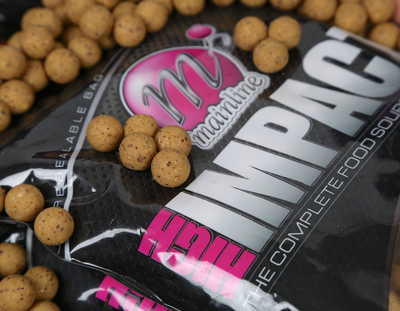
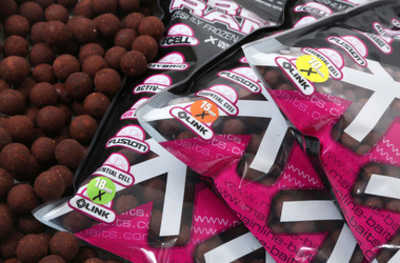
Cell is the starting point for the comparison. Open the bag and you may recognise the coconut-like scent. Mainline has described Essential Cell as yellow with a fruity scent. The Link was introduced as a darker red, fishmeal-style bait. These are ways to recognise the ranges, not universal rules about which lake or season they suit. Packaging, sizes and stock may change.
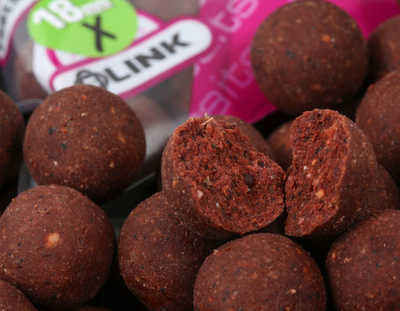
Which packet would you actually take?
- Cell. For an afternoon fishing bottom baits, start with a small bag of the ordinary sinking boilies. Keep a few aside for the hair so your hookbait matches the loose feed.
- Essential Cell. If it is the lighter colour you want to compare, use the same bait size and buoyancy you fished with Cell. A yellow pop-up on a different rig changes two things at once.
- The Link. Check the front and back of the packet carefully. You may find the range name on a tub of pop-ups as well as older bags of feed. A Link pop-up is useful on a rig designed to hold it up; it will not behave like a sinking fishmeal boilie.
Mainline’s Dedicated Freezer Boilies page lists Cell and Essential Cell in 10mm, 15mm and 18mm. The manufacturer also lists Link among its 15mm pop-ups. Check the actual format before ordering a matching bag and tub. An old catalogue photograph cannot tell you what a shop has in stock.
Read the complete label before you buy
Look for freezer, shelf life, pop-up, wafter or hard hookbait and check the storage instructions on the actual product. Freezer baits need an appropriate cold chain; shelf life is a handy option for short trips or when you do not have freezer space. Opened packs still need to be stored as directed. A matching name on a hookbait tub does not mean that bait sinks like the free feed.
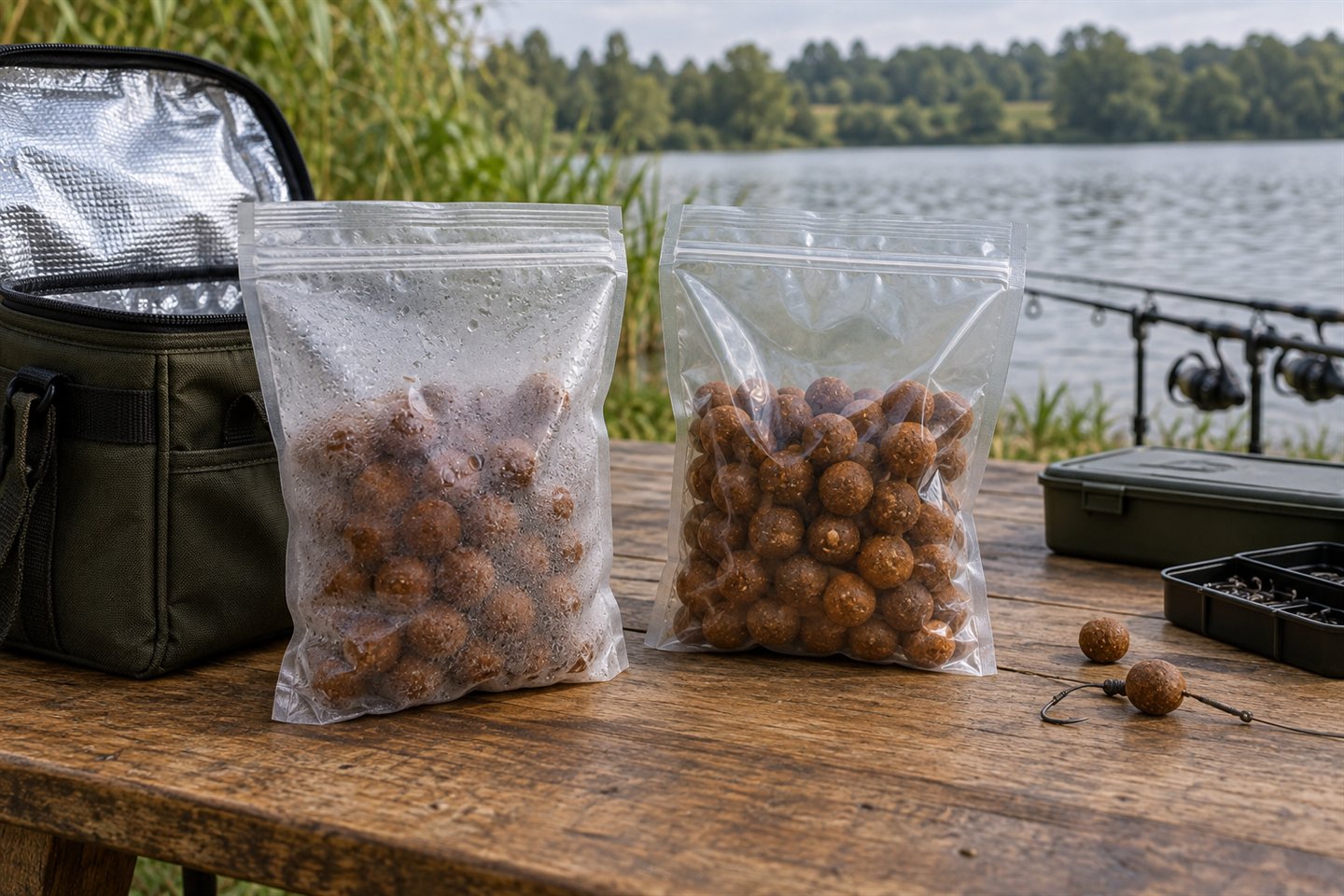
Try a small bag in the size you can fish without masking the point. If you add a tub, choose one that does a different job. A wafter is useful for a slow-settling presentation when your exact hook and bait work together. If you want the bait lifted off the bottom, use a suitable pop-up presentation and do a water test. The hookbait comparison shows how to tell the three apart.
Try one variable at a time
Compare two choices on a known spot with the same size, rig and amount of feed if you can. Record a bait that has softened or split on a retrieve; it is information about the presentation, even if you did not get a bite. A catch on one range in one trip will not tell you which bait is better overall.
For example, if the fishery feeds Cell and you already have a bag, let that be your starting point. If your 15mm boilie has been nibbled down after an hour, the next useful comparison is another 15mm bait that stays on the hair longer. A new flavour, a bigger bait and a move across the lake might get a bite, but they won’t tell you which change helped.
What about Mainline base mixes and liquids?
A base mix is for making baits, and a dip or liquid feed is a separate product. Follow the instructions on the exact pack or Mainline’s manufacturer guidance for mixing rate and storage. If you plan to use PVA, check the blend is specified for it and test your finished parcel before casting.