
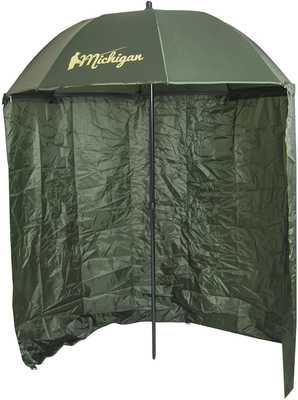
Open the umbrella in your mind before you buy it: where will the chair go, how will you reach the rod and where will the rain blow in? The size on the label may describe the arch rather than the straight width you can sit under. Check both before deciding.
Measure where you will sit
Check how the maker measures the umbrella. The fabric span over the arch can be larger than the clear distance across underneath. Compare the open width and height at the chair, including any side panels. Lay out a chair and tackle bag and leave room to move to the rod quickly. Watch that the pole does not sit where you want to play and net a fish.
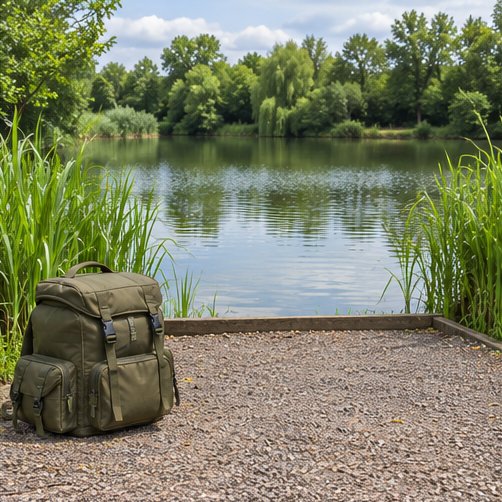
Use sides where they help, and anchor the shelter as designed
Sides may reduce wind-driven rain, but add material for the wind to catch. Use the maker’s specified anchoring and only set up where it can be fitted securely. An exposed bank and strong gusts can be enough reason to pack the umbrella away. It offers no protection from lightning. Practise setting it up dry before relying on it in a shower.
Try the tilt and side sheet together. Looking straight out from your chair, can you still see both rod tips with the windward side zipped on? Next, stand up as if a bobbin had just lifted. A side panel that shelters your shoulder but catches your landing-net handle needs a different peg position or a different layout.
A 60-inch brolly with sides
For a chair and a bag, a 60-inch NGT brolly with sides and storm poles (paid link) is the roomier of the two sizes compared here. Set your chair under the canopy and practise reaching the rod. Side panels are useful in driven rain, but they need space for their pegs and guy lines. A nominal 60-inch arch is a different measurement from the dry width you get at chair height.
If you need more cover still, the Michigan top-tilt shelter with sides (paid link) linked here is the 86-inch version. Check its open footprint against your usual peg before you give up the easier carry of a smaller brolly.
NGT 45-inch camouflage umbrella with sides
The NGT brolly is a smaller option with a zip-on side sheet and tilt function. It is worth comparing if packed size matters or you usually fish alone.
The zip-on sheet turns an open day brolly into a sheltered corner for a chair and bag. Check where the zip begins and practise fitting it at home; it is much easier to recognise a twisted panel before you are doing the job in rain. A brolly with a side sheet still has a different entrance and floor space from a deeper umbrella shelter.
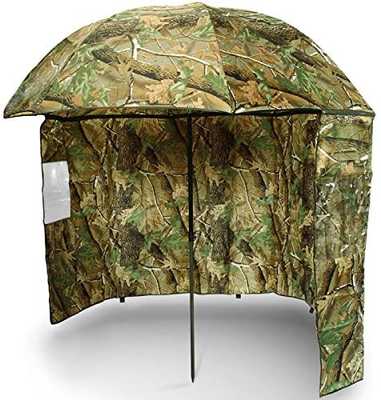
Before you buy: Check the 45-inch version and included side sheet. Secure it to suit the ground and conditions; a lightweight umbrella is not a storm-proof bivvy.
View NGT 45-inch camouflage umbrella with sides on Amazon (paid link)
Decide how much shelter you really need
Check the packed length, weight and whether required pegs or poles are supplied. A compact brolly can suit short sessions you walk to. If you mainly need room for a bedchair or expect an overnight stay, compare the brolly and bivvy options instead. The listed umbrellas are size and feature examples, rather than a wind test.