A comfortable carp bedchair makes a night on the bank much more enjoyable. Check the warmth, packed weight and fit inside your bivvy before buying. The best choice is one that suits your trips, not simply the biggest bed in the shop.
For most anglers, the decision comes down to two routes. A separate bedchair and sleeping bag gives flexibility: the bag can be changed with the season and each part can be replaced independently. An integrated sleep system keeps a fitted bag on the frame, opens quickly and is less likely to slide about, but it can be heavier, bulkier and more expensive. Neither route guarantees a good night's sleep unless the frame suits your body and the whole package suits your fishing.
We'll compare separate bedchairs and sleeping bags with all-in-one sleep systems, then check the measurements and warmth you'll need. If you can, try lying on a display model before buying. A specification sheet can tell you its size and weight, but not whether you'll find it comfortable.
Carp bedchair or sleep system: which suits your nights?
Choose the lightest setup that gives enough support and insulation for your normal sessions. A standard-width, six-leg flat bed with adjustable lumbar tension and a detachable three-season bag will cover many spring-to-autumn overnighters. Anglers who regularly fish cold nights may prefer a properly matched five-season system or a modular bag with removable layers. Mobile anglers should put packed weight and folded dimensions ahead of thick padding.
Measure the usable floor of the shelter, not the size printed on its bag. Allow room for the bed, door, rods, footwear and a clear exit. Compare the bed's open length and width, its folded depth with the bag attached, its minimum and maximum leg heights, and the manufacturer's stated load. Check the weight of the whole setup because some listings quote the frame separately from the bag.
A sensible shortlist can include a compact bedchair with a separate bag, a standard integrated system and a wider comfort-led system. Current ranges vary greatly: a compact option may be easier to carry through narrow gates, while large memory-foam systems can approach the weight of several other items of tackle combined. Buy for the venue and journey you make most often, not the occasional week abroad.
Carp bedchair or sleep system for night fishing?
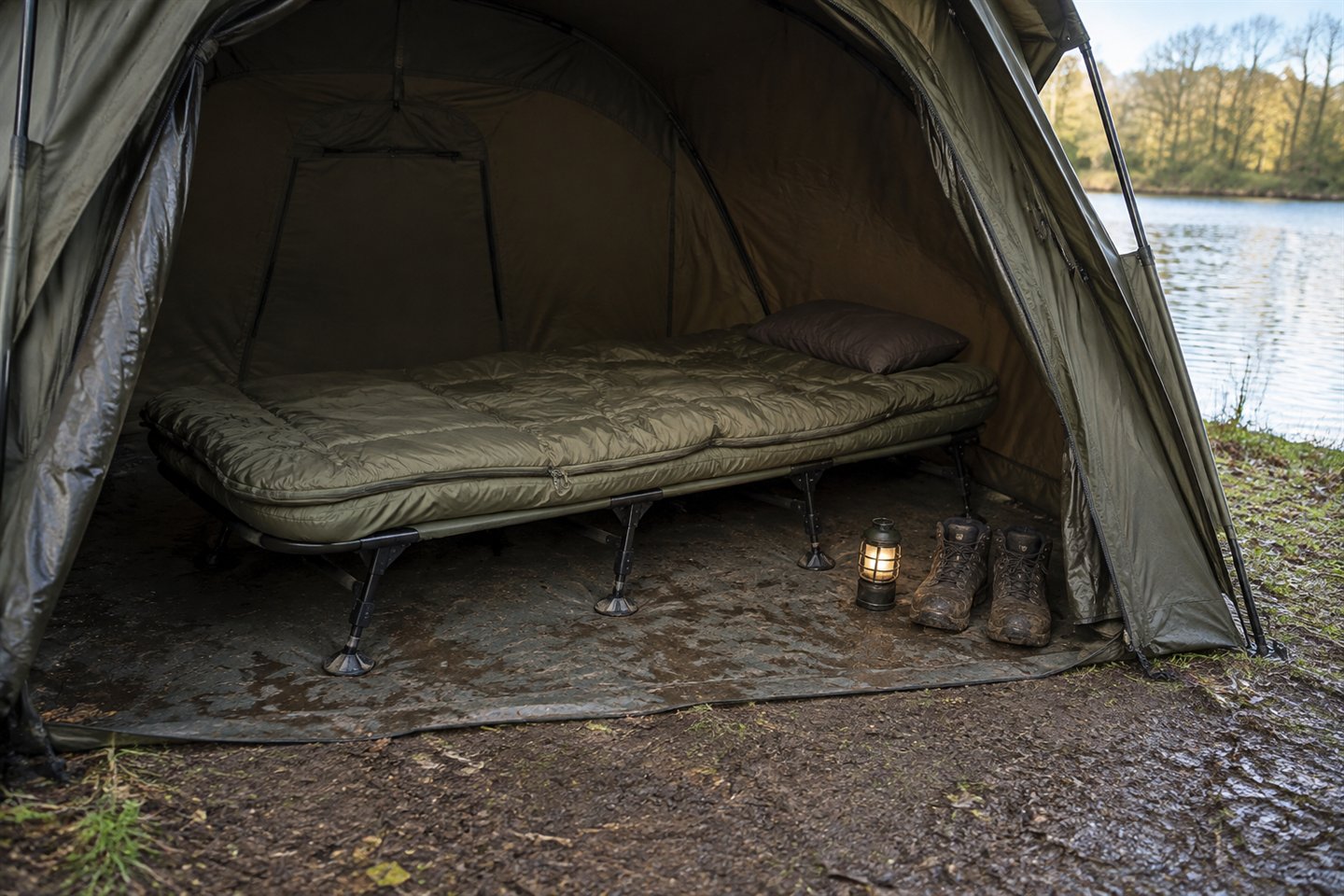
A carp bedchair is a folding raised frame with a fabric or padded mattress and adjustable legs. It can be used with almost any suitably sized fishing sleeping bag. The parts are independent, which is useful when a summer bag needs replacing with a warmer one or when the chair is also used during long day sessions.
A carp sleep system combines the bed and bag as one fitted package. The bag usually attaches with zips, toggles, sleeves or straps and is designed to fold inside the frame. That can make setup very quick: unfold the bed, extend and level the legs, then open the bag. Because the bag is held in place, it is less likely to bunch beneath the angler or slide off during a hurried exit for a bite.
The downside is the extra bulk. A fitted bag adds folded depth and weight even on a mild night, and a model-specific replacement may cost more than a universal bag. Check whether the bag can be completely removed, whether liners or covers are available, and whether zips and attachment parts can be replaced. A system with a washable removable layer is easier to keep fresh across a full season.
Begin with the sessions you really fish
Write down the pattern of a normal year before comparing products. An angler who walks a kilometre to fish six-hour nights needs a different setup from somebody who parks behind a swim for forty-eight hours. Consider the number of nights, the coldest conditions in which you'll genuinely stay, how often you move swims, the size of the car and whether the bed must share a barrow with water, bait and fish-care equipment.
For short mobile overnighters, quick deployment and low packed weight usually improve the whole session more than a very deep mattress. A compact bed can leave enough shelter space to keep boots ready and the exit clear. If comfort is poor enough to prevent rest, however, the theoretical weight saving is false economy. The aim is a setup light enough to move and supportive enough to use; the wider carp fishing essentials list can help keep the rest of the load disciplined.
Longer sessions shift the balance towards pressure relief, width and modular insulation. Several nights on an unsupportive sagging mattress can become tiring even when the first ten minutes felt soft. Additional room for changing position may matter, particularly for side sleepers, but the bed still needs to fit safely inside the shelter and across the available platform.
How to check if a bedchair fits my bivvy
Open dimensions tell only part of the story. A 215cm bed may need extra clearance around the head and foot for the frame, sleeping-bag hood and shelter fabric. Sloping bivvy walls can touch the bag even when the floor plan appears large enough. Contact transfers condensation to the bedding, so allow a small air gap wherever practical.
Width needs the same care. Standard models commonly leave more room for luggage and a clear route to the door; wide models give the sleeper more space but can dominate a one-person shelter. Oval frames can follow the curve of some bivvies and recover corner space, although compatibility should be checked from exact measurements rather than assumed from a brand name.
Folded size determines whether the system fits the car and barrow. Measure with the bag, pillow and any cover actually attached. Large hinges may be designed to enclose thick insulation, while compression straps reduce movement in transit. Before buying, mock up the folded dimensions with boxes or tape and place that volume into the vehicle beside the rest of the essential kit.
Frame shape, hinges and support
A flat frame lets the mattress provide the shape rather than forcing the body into an old-style raised head section. That suits many sleepers, but “flat” doesn't mean the surface must be soft. The centre should resist excessive sagging so hips and lower back remain supported. Some beds use elastic lacing that can be tightened; others add a firmer lumbar zone, rails or high-density foam.
Inspect how tension continues across the hinges. Gaps and hard hinge edges can create pressure points, particularly when elastic stops short of the frame joint. Modern double hinges also create space to fold a sleeping bag inside. Check that the closed frame remains reasonably parallel and that straps can compress it without crushing the filling.
Frame material affects both weight and feel. Aluminium can reduce carrying weight, while steel components are often used where stiffness and strength are required. The specification is more useful than a general material claim: compare complete weight, stated load, number of legs and how much flex the assembled bed shows when you turn or sit on the edge.
How many bedchair legs do you need?
Six legs are a practical standard arrangement, supporting the head, middle and foot. Eight-leg systems add another pair and can distribute weight or stabilise a long, wide frame, but they also add weight and more feet to level. Four-leg compact systems save bulk but depend heavily on sound design and careful placement. Leg count alone is not a quality score.
Each leg should lock positively and adjust far enough for the banks you fish. Spring-loaded push buttons make levelling quick, while rotating mud feet spread pressure on soft ground. Test every lock before climbing onto the bed and avoid extending one leg much farther than the others if the platform can be rearranged more safely.
Level the frame in both directions. A phone spirit-level app can help, but the test is whether the bed feels stable and the door route remains safe. Never balance a foot on loose buckets, tackle boxes or an unstable stack. On a timber platform, position feet fully on sound boards and follow the fishery's rules about pegs, screws and shelter placement.
Mattress firmness and lumbar support
A plush mattress can feel impressive in a shop yet allow the body to sink after several hours. A firmer surface with adjustable central tension may suit a larger angler better. Look for even support from shoulders to hips, no hard bar beneath the knees and enough edge stability to sit down while putting on boots.
Elasticated mattresses need periodic adjustment because cord can stretch. Tighten evenly rather than creating one hard strip, and replace damaged cord with the specified type. Railed or fixed-support designs may need less tuning but offer less personal adjustment. Memory foam can spread pressure well, although it adds weight and may feel different as temperature changes.
Comfort is individual and medical needs are beyond a tackle guide. Anyone with persistent back, hip or circulation problems should seek appropriate professional advice and test the bed carefully before a long session. Don't assume an expensive “lumbar” label makes one shape suitable for every body.
How warm should a carp fishing sleeping bag be?
Fishing brands often describe bags as three-, four- or five-season, but there's no simple universal carp-industry test that makes every label directly comparable. Construction, filling, draught baffles, zip design, mattress insulation, clothing, shelter ventilation and the sleeper's metabolism all change the result. Use season ratings to narrow a range, then compare actual layers and features.
A warm-weather bag should breathe, open easily and avoid trapping unnecessary heat. A colder-weather setup benefits from lofted insulation, baffles behind the zips, a shaped foot area and secure attachment that prevents cold gaps. A removable inner or top layer can turn one system into a more adaptable package than a permanently heavy bag.
Don't compress insulation more than necessary between trips. Air the bag fully after every session and store it dry and loosely where space allows. Damp filling loses performance and encourages odour or mould. Follow the maker's washing and drying instructions, because heat or aggressive detergent can damage coatings, filling and zips.
For a current starting point, compare a dedicated bag such as the Trakker Big Snooze Plus sleeping bag (paid link) with the fitted insulation supplied on complete systems. The official specification lists attachment points, fleece lining, dimensions and weight; those facts help establish compatibility but don't predict personal comfort on a specific night.
Integrated options at different priorities
A standard integrated setup can suit anglers who want one package and fast deployment. The Trakker RLX 6 Camo Bed System (paid link) is a useful example of the category: the maker describes a flat six-leg frame, adjustable lumbar support, attached three-season bag and compatibility with an additional cover. It should be compared on verified dimensions and weight, not treated as a universal recommendation.
At the larger and more support-led end, products use deeper mattresses, more legs and substantial hinges. The Fox Flatliner X sleep system (paid link) is one current search worth using for comparison. Fox publishes separate bed and all-season system information, making it possible to check whether a listing includes the fitted bag rather than relying on a retailer photograph.
The important comparison is not brand against brand but complete solution against need. Put open size, folded size, complete weight, leg range, stated load, bag configuration, removable layers, warranty and spare-part support in one table. Reject anything that fails the transport or shelter test before debating mattress fabric.
Standard, wide or compact?
A compact bed makes sense for tight shelters, small vehicles, barrows and mobile fishing. Check length carefully if you're tall, and ensure shoulder width is comfortable when the bag is zipped. Compact doesn't always mean light once a thick bag and steel frame are included, so compare actual kilograms.
Standard width is the safest default for many anglers because it balances sleeping room with usable bivvy floor. It is also more likely to accept universal sleeping bags and covers. A wide system suits anglers who change position often or find standard frames restrictive, provided transport and shelter space are genuinely available.
Don't buy extra width merely because a wider model is presented as premium. A narrow doorway beside a wide frame slows a bite response and creates a trip hazard. Set up the bed so the normal exit side faces the door, and keep that side clear of bags, power leads and cookware.
Build a modular system for changing weather
A modular sleep system starts with a supportive frame and adds only the insulation needed. In summer that may be a light bag or cover; in spring and autumn, a full bag; in colder conditions, a compatible thermal cover and dry base layer. Adding layers above is useful, but insulation beneath matters because body weight compresses sleeping-bag filling against the mattress.
Pack dry spare base layers, socks and a hat in a waterproof bag. Clothing should be loose enough not to restrict circulation. Avoid climbing into the bag in wet outerwear, which transfers moisture into the insulation. A waterproof bedchair cover can protect against drips and wind-blown spray but should not seal the sleeper into an unventilated cocoon.
A hot-water bottle designed for the purpose can add controlled warmth when used according to its instructions and checked for damage. Powered blankets require compatible power and careful cable routing. Never improvise electrical connections, place damaged cells in bedding or charge a battery under the pillow.
Safe overnight setup around the rods
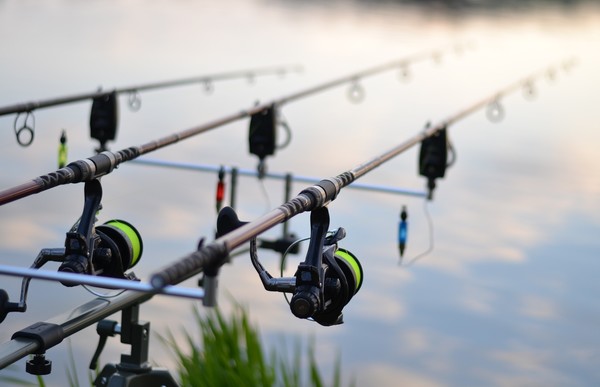
Sleeping doesn't remove the legal and welfare duty to maintain control of baited rods. In England and Wales it is illegal to leave a rod and line unattended or without sufficient control. Position alarms, receiver and footwear so a take wakes you and the rod can be reached immediately. If you can't respond promptly, reel in. Anglers planning their first night can use the first carp fishing session guide as a preparation checklist.
Keep the route from bed to rods flat, known and free from guy lines, buckets and open tackle. Put a headtorch in the same reachable place every time and use a low setting that preserves other anglers' night vision. Landing net, wet mat or cradle, sling and forceps should be ready before darkness, not buried beneath the bed.
Don't use a stove, barbecue, charcoal burner or fuel-burning heater inside a bivvy. Government fire-safety guidance says never cook inside a tent, and opening a door doesn't turn an enclosed shelter into a safe cooking space. Cook outside, away from fabric and dry vegetation, let equipment cool, and store fuel according to its instructions.
Set up the bedchair correctly
Choose firm level ground within the permitted swim and inspect it for holes, roots, sharp objects and unstable edges. Unfold the frame fully, release the legs one at a time and confirm each lock has engaged. Rotate the mud feet flat, load the bed gradually, then sit and turn to check movement before arranging the rest of the shelter.
Adjust mattress tension with the bed empty, making small even changes. Fit the bag exactly as the manufacturer intends so attachment straps don't cross moving hinges or emergency exits. Open both main zips before sleeping if a very fast exit may be needed, and learn which side releases most naturally.
Place only light essentials in under-bed storage and keep power packs dry, ventilated and protected from damage. Don't create a dense pile that presses against the mattress, blocks leg adjustment or conceals a wet item. Heavy tackle is more stable on the ground where it cannot fall from the frame.
Care, cleaning and storage
Brush off mud before folding, wipe the frame and let the mattress and bag dry completely at home. Inspect feet, leg locks, hinge covers, elastic, attachment straps and zips. Grit destroys zip sliders quickly, so clean it rather than forcing the puller. Lubricate only with a product approved by the manufacturer.
Open the system periodically during storage, especially after a damp session. Keep it away from rodents, direct heat and sharp tackle. A protective bedchair bag keeps vehicle mud contained and shields fabric, but enclosing a damp sleep system simply traps the problem. Dry first, bag second.
Spare-part support can make a quality frame economical for much longer. Before purchase, check whether feet, legs, mattress sections, hinge covers and replacement bags are available. Record the exact model code because ranges with similar names can use different dimensions and fittings.
Common buying mistakes
The first mistake is choosing from a photograph without checking whether the advertised weight includes the sleeping bag. The second is measuring the bivvy at its widest point while ignoring sloping walls and door space. The third is assuming the highest season number will be comfortable all year; an excessively warm fixed bag can be awkward through summer.
Another mistake is testing softness for one minute rather than support for a realistic period. Sit on the edge, lie in the normal position, turn and check for frame contact. Finally, budget for transport. A large system may need a bigger carry bag, more barrow room and a route without stiles, all of which affects how often it is actually used.
Frequently asked questions
Is a carp sleep system better than a separate bedchair and bag?
It is faster and tidier when the matched bag suits the weather, but it is not inherently warmer or more comfortable. Separate parts offer more flexibility and simpler replacement. Choose by fit, insulation, weight and session pattern.
Do I need a five-season sleeping bag?
Only if the construction and layers suit the cold conditions you actually fish. Season labels are not perfectly comparable between brands. Check the full specification, use dry clothing and suitable under-insulation, and never rely on a bag to make dangerous weather manageable.
Should a bedchair be completely flat?
A flat frame is a good starting point because it avoids a permanently raised head, but mattress tension and lumbar support matter just as much. Some anglers prefer a very small head lift. The setup should be stable and should not slide the sleeper towards the foot.
How much should a carp bedchair weigh?
There's no correct figure. Compare the complete weight with the distance, terrain and other tackle you carry. Saving several kilograms can transform mobile fishing, while a heavier supportive system may be reasonable when parking close to the swim.
Final thoughts
The best carp bedchair or sleep system is the one that makes ordinary sessions easier. It fits the shelter and body, reaches level on the bank, supports several hours of rest, packs into the vehicle and still lets the angler answer a bite immediately. Verified measurements eliminate poor choices more reliably than a brand badge.
Measure the space in your shelter and think about carrying the bed before buying. Try it for comfort if you can, then choose the insulation for your sessions. Keep the exit clear and all fuel-burning appliances outside. Get those basics sorted and you can settle in without your sleeping kit taking over the whole swim.
Sources and further reading
- Trakker: current integrated carp sleep-system range and feature overview
- Trakker: RLX 6 Camo Bed System specifications
- Trakker: Big Snooze Plus sleeping-bag specifications
- Fox: Flatliner X bed dimensions, construction and spare options
- GOV.UK: outdoor and tent fire-safety guidance
- GOV.UK: freshwater tackle rules and unattended-rod control