What's the best wind direction for carp fishing? First check where the wind comes from, how it crosses your lake and whether it's warming or cooling the area. Then look for fish before choosing a bank.
Then look for carp. A forecast helps you choose places to inspect; it cannot tell you that the fish have read the same arrow. Shelter, depth, islands, weed and angling pressure all complicate the neat rule of following a new wind.
Use the Wind & Swim Planner alongside this guide to turn the forecast direction into a bank-side plan. Our main weather guide covers how wind fits with the rest of the forecast.
Which way is the wind actually blowing?
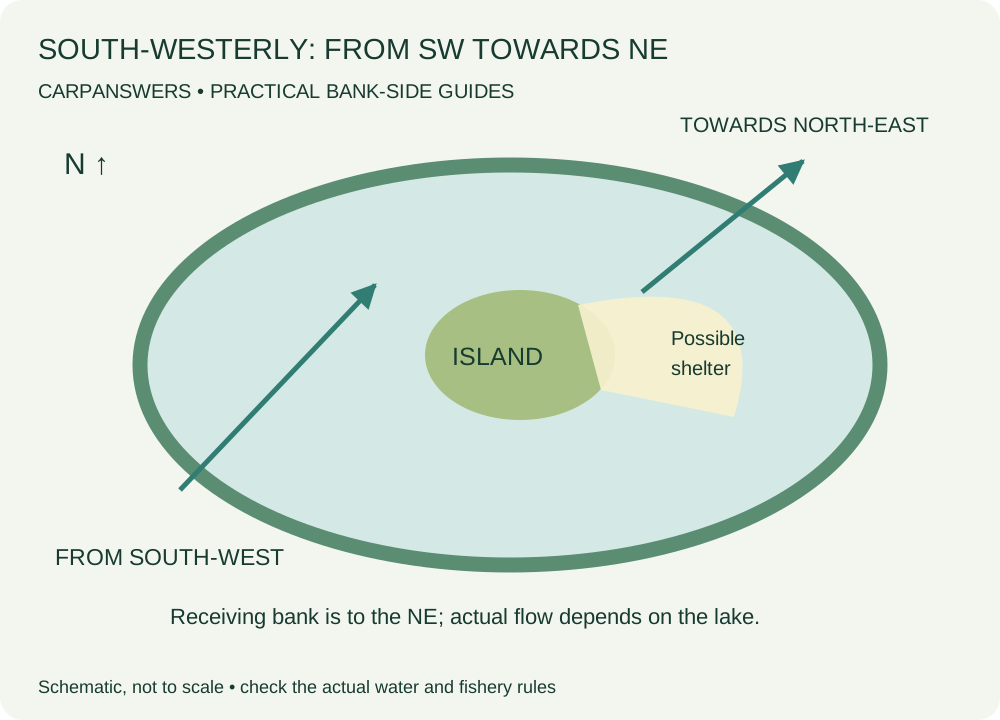
A wind is named for where it comes from. A south-westerly arrives from the south-west and travels towards the north-east. If you stand on the north-eastern bank looking across the lake towards the south-west, that wind is broadly blowing towards you.
This sounds obvious until an app uses an arrow that appears to point the other way. Some displays emphasise the source direction; others show travel. Read the label or legend rather than guessing. The Met Office forecast guide explains its wind display conventions.
Anglers also use “front of the wind”, “back of the wind” and “windward” loosely. To avoid confusion, describe the actual water: the bank receiving the surface drift, or the sheltered bank the breeze is blowing away from. That is much easier to discuss with a bailiff than arguing over a label.
Should I follow a new wind when carp fishing?
A new wind is a reason to look, not an instruction to move all your tackle. Watch the receiving bank for shows, swirls or fish moving along a shelf. Compare it with the area you were already considering.
There may be a useful opportunity when conditions change after a settled spell, but timing varies. Do not keep moving every time the direction shifts a few degrees. Ask whether the breeze is strong enough to affect the open water and whether the change has lasted long enough to be noticeable.
If fish are feeding confidently in your existing swim, a fresh arrow on the forecast is not a better piece of evidence. Stay alert, but avoid abandoning carp you have found in favour of carp you hope might follow the wind.
Which bank should I fish on a cold wind?
The direction alone does not tell you how a wind feels at your lake. Read the wider temperature trend, including overnight conditions, and compare the exposed and sheltered banks. A breeze associated with a milder spell deserves different consideration from a cold wind after a warm day.
On an early spring visit, a shallow corner may look appealing in sunshine but feel exposed to a chilly breeze. Inspect the sheltered water as well. If carp are quietly patrolling there, fish that evidence rather than forcing the theory that the receiving bank must be best.
In warm conditions, an exposed area can be worth checking, but do not treat moving water as proof of healthy oxygen levels. Follow the fishery's advice during hot weather and stop if fish are distressed. A windy day does not automatically make an affected lake safe to fish.
The water-temperature guide explains why air readings and lake temperatures should not be treated as interchangeable. Measuring a sheltered margin also does not tell you the temperature at your distant hookbait.
How does lake shape affect wind choice for carp?
Look at the length of open water the wind crosses before reaching a bank. An exposed stretch with a long run of water can look very different from a small tree-lined bay, even though both have the same compass orientation.
Islands interrupt surface drift. Trees shelter some banks, and gaps can funnel a breeze into a small area. Walk far enough to see those differences instead of judging the whole lake from the car park.
Consider a lake with an island across the centre. The forecast shows wind travelling straight towards your chosen bank, but the island shelters the water in front of it. A nearby channel may show much stronger movement. Inspect both places for carp before deciding which deserves a rod.
Do not use a diagram as a precise current map. Our illustration shows the forecast direction and possible shelter, not measured underwater flow. That distinction matters when deciding where loose feed will settle.
What about undertow?
Wind-driven surface movement can be accompanied by water moving differently below it. Anglers often call that return movement undertow. Its strength and direction depend on the water, depth and conditions; it is not a conveyor belt that always puts bait on the opposite bank.
You may notice submerged line pulling differently from floating debris, or find that light feed does not settle where the surface drift suggests. Use those observations cautiously. A single line angle is not enough to map the current across the whole lake.
If drift makes accurate baiting difficult, shorten the range, reduce the amount introduced at once or choose a presentation that reaches the bottom together. Do not compensate by throwing in more bait and hoping some arrives near the rig.
What changes when the wind has been there for days?
An established wind is not automatically “used up”. Fish may continue to visit an area, move between depths or avoid the busiest section of that bank. Check what they are doing now rather than assuming the opportunity ended on the first day.
Ask which parts of the area have actually produced fish and at what times. There is a difference between a broad claim that the lake fishes well on a westerly and a useful report that fish have been showing off a particular shelf before breakfast.
If you cannot find signs, look beyond the obvious end of the wind. Quiet margins, sheltered pockets and water behind the main feature may deserve a walk. The guide to finding carp helps turn that inspection into a location decision.
Make sure you can fish the chosen bank properly
A bank can look promising and still be the wrong place for your tackle or experience. Strong crosswinds make repeatable casting harder; waves and steep edges can make netting awkward. Decide whether you can safely control a hooked fish before you cast.
Choose a sensible range rather than aiming for your calm-weather maximum. Watch the line in flight, check where the rig lands and retrieve a poor cast instead of pretending it was close enough. Keep the landing area clear of equipment that can blow into your way.
Do not stand beneath damaged branches, cast near overhead cables or fish through lightning. Check warnings and gusts before leaving home. If you are pushed into an unsafe swim, the answer is another location or another day, not a heavier lead.
Best wind direction for carp fishing: should you follow it?
- Use the forecast to identify the source and travel direction.
- Mark the exposed receiving bank and one sheltered alternative.
- Check islands, trees, depth changes and safe access.
- Watch both areas for actual carp activity.
- Choose the place where you can present and land a fish safely.
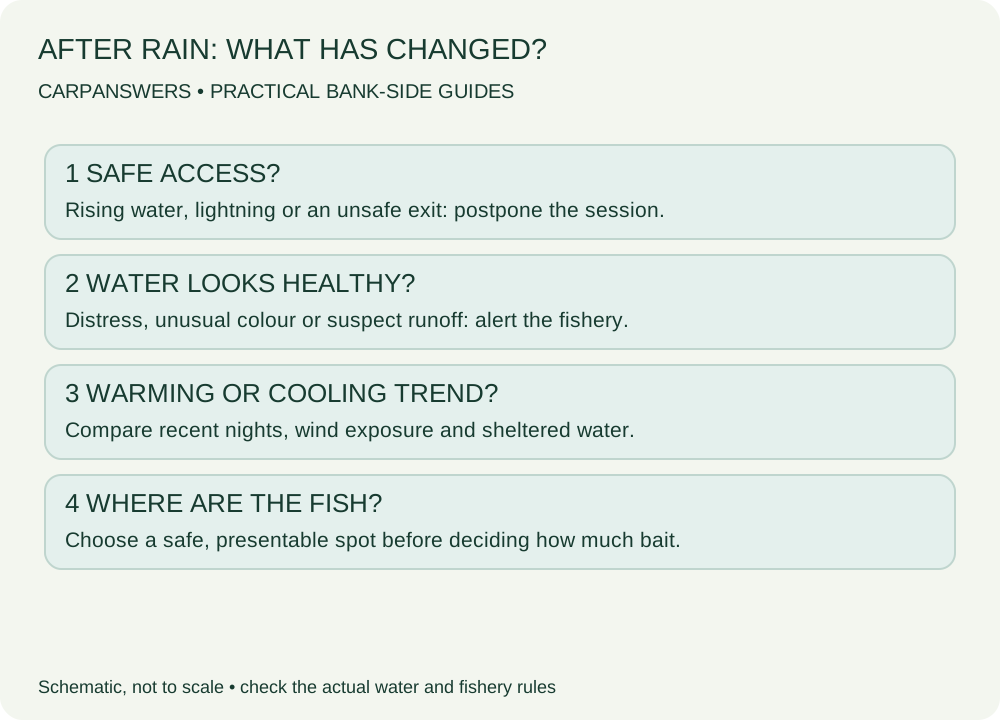
If rain is part of the change, also read carp fishing after rain before assuming an inflow is attractive. Note what you saw in the Session & Catch Log, including occasions when fish did not follow the expected wind.
Common wind questions
Is an easterly wind always bad?
No. Look at its temperature, strength and effect on your water. Carp feeding in a sheltered area are a better reason to fish than a compass direction is a reason to stay home.
Should I fish with the wind in my face?
Sometimes, but only if that bank holds fish and you can fish it safely. A cold exposed bank with no signs is not improved by following a slogan.
How quickly do carp follow a wind?
There is no fixed delay. Watch for movement rather than setting a timer. Some fish may already be using the area for reasons unrelated to the wind.
Check the fishing forecast, pick two areas to inspect and keep the kit movable. The forecast gives you a starting point; the fish get the final say.