Is that change in the forecast worth a trip to the lake? The best weather for carp fishing depends on the last few days as well as today's conditions. Here's how to read the wind, pressure and temperature without forgetting to watch the water.
If you want the short answer, look for stable or gradually warming water, a fresh but manageable wind and enough cloud to soften bright conditions. Falling or lower pressure often arrives with that kind of weather, which is why many anglers associate it with good carp fishing. Pressure itself is only one clue, though, and showing fish will always be better evidence than a number on a phone.
The shape of the lake matters as much as the regional forecast. A shallow pool can change quickly after one sunny day, while a deep gravel pit responds slowly. Trees may shelter one bank, islands can redirect the breeze and heavy weed can affect oxygen. Use the weather to form a plan, then walk the venue and let what you see decide where the rods go.
Check the CarpAnswers 16-day carp fishing weather forecast when planning a session, but remember that no online forecast can measure the exact water temperature, oxygen level, angling pressure or current behaviour of one particular lake.
What is the best weather for carp fishing on your lake?
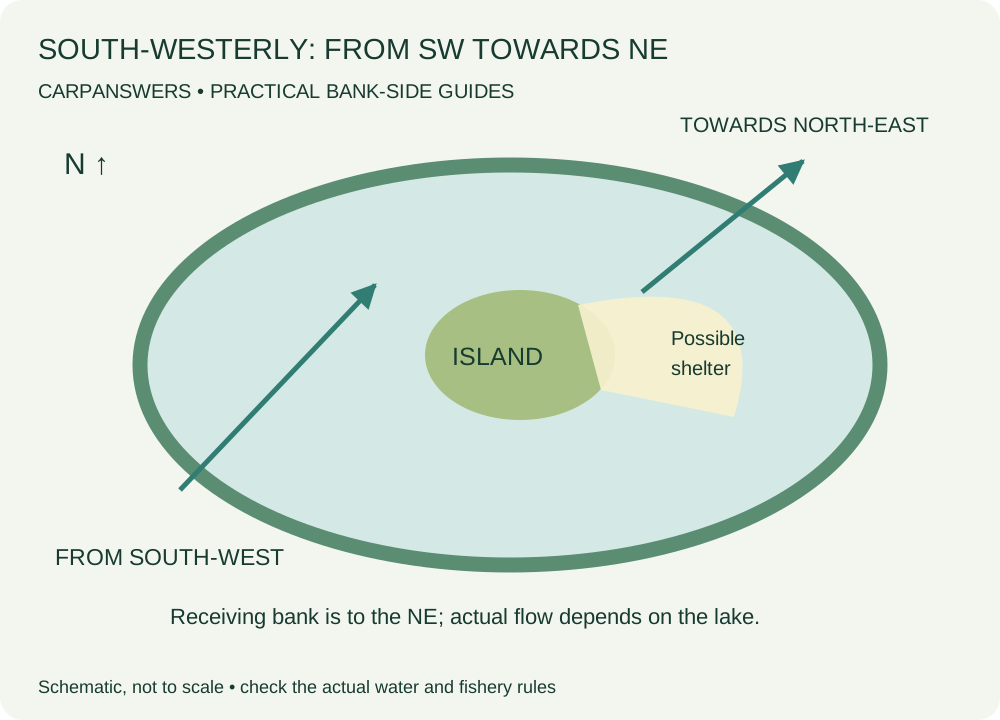
A mild south-westerly breeze, broken cloud and a steady or slowly rising water temperature would be a classic answer from many UK carp anglers. Those conditions can move surface water, reduce harsh light and encourage carp to travel confidently. They can be particularly attractive after a settled spell when the new wind is slightly warmer than the lake.
That description is a useful starting point rather than a rule. Bright high pressure can produce excellent surface or zig fishing, especially when spring sunshine warms the upper layers. Cold clear winter weather can still offer a short feeding window if the fish are located. Even heavy rain can be useful when it is mild and safe, or unhelpful when it rapidly chills a shallow water.
The “best” conditions also depend on your method. An overcast windy day may suit bottom fishing on a pressured lake, while calm sunshine can reveal carp cruising below the surface and make accurate zig placement possible. Weather changes the problem in front of you; good angling comes from changing with it.
Start with water temperature, not the midday air temperature
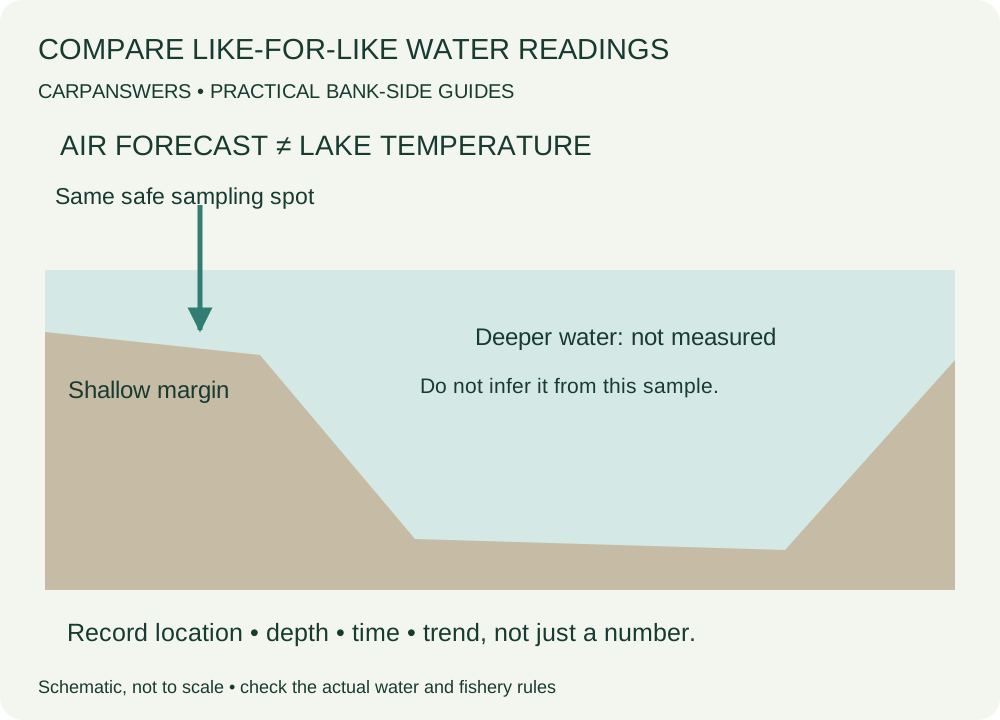
Carp live in water, so the temperature around them matters more than the highest air temperature printed for the afternoon. Water warms and cools more slowly than air, and different depths can respond at different speeds. A sunny afternoon after several cold nights may warm only the upper layer and a sheltered margin, leaving deeper water largely unchanged.
Look at the previous few days as well as the session forecast. Several mild nights and gradually warmer days can create a noticeable rise. One warm afternoon followed by a sharp overnight frost is a very different pattern. In autumn, a stable mild spell may hold feeding activity for longer; in winter, a small pocket of relatively stable water can be more important than the warmest forecast hour.
A gradual rise in water temperature often encourages movement into shallows, margins and areas receiving sun. A sudden fall may slow activity or push carp towards more stable depths. Stable temperatures can make established feeding times dependable, although location and angling pressure still matter. In very warm water, oxygen and fish welfare take priority over any expectation of increased feeding.
A controlled study of juvenile common carp found that temperature affected feeding within the tested range of 16°C to 28°C, with the highest measured feeding around 24°C in that experiment. It shows that temperature matters, but it doesn't create a target number for an English gravel pit. Laboratory fish receiving controlled feed are not the same as adult carp in a pressured, naturally changing lake.
Unless you can measure the lake safely and consistently, treat the recent weather trend as a rough guide. Compare overnight lows, daylight hours, wind and sunshine across several days. If you do use a thermometer, take readings from comparable places and times rather than comparing a sunny margin at midday with deep water at dawn.
Which wind is best for carp fishing?
A new, mild wind is often worth investigating because it pushes surface water and may move suspended food towards the bank it hits. Wind also breaks up the surface, mixes the upper water and can make carp feel less exposed in open areas. On many lakes the windward bank becomes an obvious place to look, especially when you can see coloured water, bubbles or fish activity.
“Fish into the wind” is not a command to set up before looking. The wind needs time to influence the water, and the bank it reaches still requires suitable depth, cover and lakebed. Carp may remain in a quiet holding area, avoid heavy angling pressure or follow a different food source. If fish are showing elsewhere, believe the fish.
The temperature of the wind is particularly important. A mild breeze arriving after colder weather can warm a shallow windward area. A bitter wind can chill the same water and make the sheltered bank or a deeper zone more comfortable. A direction label such as south-westerly is less useful than the air mass itself; a southerly is not automatically warm in every season.
Best air pressure for carp fishing
Air pressure is popular in carp fishing discussions because it gives a simple number to a complicated weather pattern. Lower or falling pressure is often associated with cloud, wind and unsettled conditions. Higher pressure frequently arrives with clearer skies and lighter winds. Carp may respond to the complete change, but that doesn't prove pressure alone switched them on or off.
As a rough angling convention, readings below about 1000 to 1010 hPa are often described as low, 1010 to 1020 hPa as transitional and readings above 1020 hPa as high. These are not biological thresholds. Local altitude, the direction of travel and the weather attached to the pressure system all affect what the number means on a particular day.
During falling pressure with a mild wind and increasing cloud, bottom bait or pop-up tactics may be a sensible starting point if the fish are showing near the lakebed. Under bright, calm high pressure, check the upper layers, shade and quieter areas rather than assuming the carp have stopped feeding. Zigs can be useful when fish are suspended, and safe surface tactics may work when they are visibly taking food.
Cloud, sunlight and time of day
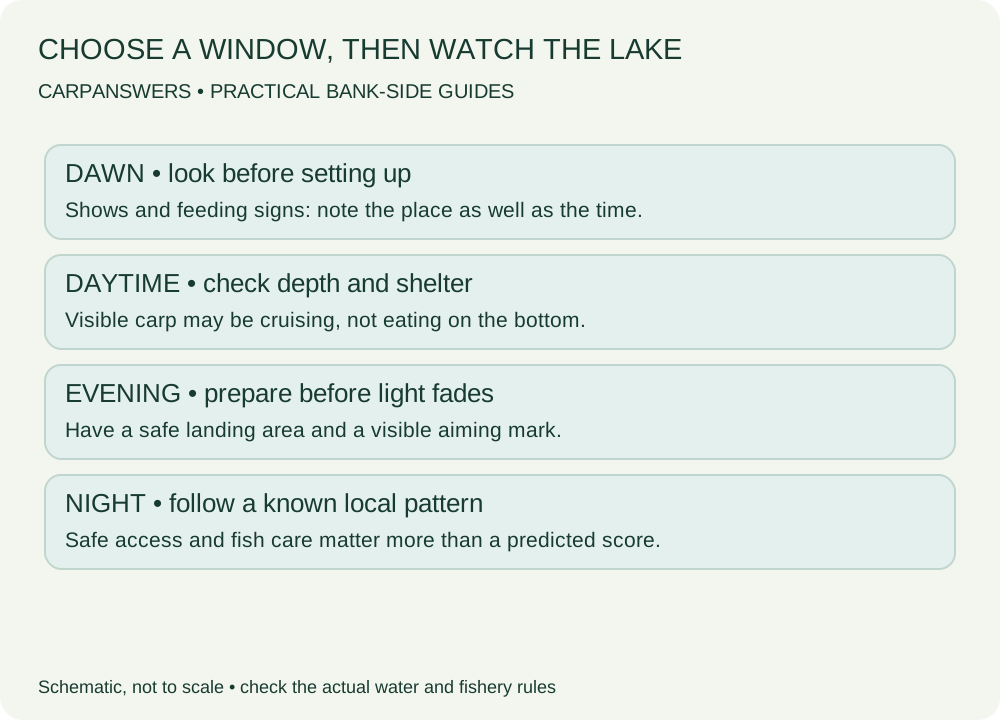
Cloud reduces strong light and can extend the softer conditions around dawn and dusk. Carp may move through shallow or open water with more confidence, particularly on clear pressured venues. A cloudy day also makes it easier for an angler to remain visually unobtrusive, although noise and line pressure still reveal a poorly chosen approach.
Bright sun is not necessarily poor carp fishing weather. In early spring it can warm a shallow bay, a reed-lined margin or the upper layers well before the rest of the lake. In summer it may encourage carp to cruise or hold at a particular depth. Polarised glasses and patient observation can turn a bright day into a valuable location exercise.
Shade becomes important when direct sun is intense. Overhanging trees, islands, deeper margins and weed can offer cover, but don't cast tight to a snag unless the tackle, line angle and fishery rules allow a hooked carp to be landed safely. Seeing fish beside cover is not permission to use a setup that cannot control them.
Is warm rain good for carp fishing?
Mild rain can be part of excellent carp fishing weather when it arrives with cloud, a fresh wind and comfortable temperatures. It disturbs the surface, changes light and may encourage fish to move. Light or moderate rain can also make the banks quieter, which sometimes matters more than the rainfall itself.
Cold rain can rapidly cool shallow water, particularly after a warm spell. Prolonged heavy rain may raise and colour a venue, change access, wash debris into the lake and make inflows more influential. Runoff can also carry silt, fertiliser or pollution. If the water changes colour unusually, fish appear distressed or there is a suspicious smell or sheen, stop fishing and inform the fishery manager.
After heavy rain, check bank stability and water level before choosing a swim. A familiar margin may be deeper, paths may be unsafe and landing areas can become slippery. Keep electrical equipment protected and don't wade into coloured water where the depth or edge cannot be judged.
Thunderstorms and carbon-rod safety
Thunder changes the decision completely. Long carbon fishing rods conduct electricity and must not be held during a thunderstorm. If thunder is audible, stop fishing, put the rods down and move to suitable enclosed shelter in line with Met Office advice. An open-fronted bivvy, an isolated tree or standing beside the water is not suitable protection.
Check lightning warnings before setting off and leave enough time to pack safely. Don't wait for the storm to sit directly above the lake or try to squeeze in one final cast. No carp is worth taking that risk, and a forecast that looks good for feeding is irrelevant when the conditions are dangerous.
Hot weather, dissolved oxygen and carp welfare
Warm water holds less dissolved oxygen, while carp, plants and microorganisms may be using more of it. A hot still night, heavy weed growth, an algal bloom or a densely stocked water can create particular pressure. Hooking, playing and handling a carp adds stress when its recovery capacity may already be reduced.
Watch the fish rather than relying on air temperature alone. Carp gasping at the surface, tightly grouped around an inlet or aerator, behaving unusually lethargically or struggling to recover after capture are warning signs. Stop fishing and contact the fishery manager. Follow temporary closures or method restrictions even if conditions seem acceptable in your own swim.
There's no honest universal temperature at which every UK stillwater must close. Depth, stocking density, weed, overnight cooling, aeration and measured oxygen all matter. The current judgement of the fishery manager and visible fish behaviour are more important than a generic threshold shared online.
Best carp fishing weather in spring
Spring fishing often improves through a sequence of gradually warmer days and mild nights. Shallow water, dark silt, reed beds and sheltered margins can respond quickly to sunshine. Look for carp visiting those areas, but introduce bait carefully because an overnight frost or cold easterly can reverse the change.
Best carp fishing weather in summer
Broken cloud, a comfortable breeze and warm but not extreme temperatures can provide productive summer conditions throughout the day. During bright calm spells, inspect the upper layers and shaded margins before assuming the fish are inactive. Zigs or surface baits may be suitable where rules, birdlife and line control allow them.
During heatwaves, dawn, dusk or cooler night periods may offer safer opportunities, but oxygen risk can persist after dark because aquatic plants stop producing oxygen without sunlight while respiration continues. Listen to fishery advice and be prepared not to fish. A closed venue or distressed carp is not a puzzle to work around.
Best carp fishing weather in autumn
Stable mild weather can extend feeding as summer ends, and a new wind may concentrate natural food. Carp can respond well before colder conditions establish themselves, but avoid assuming they must feed heavily simply because winter is approaching. Watch recent catches and fish movement, and adjust bait to the actual response.
Best carp fishing weather in winter
Location dominates winter carp fishing. A short mild spell, a gentle wind or several stable days can create a feeding window, but the fish may occupy a very small part of the lake. Deeper water is not automatically best; sheltered areas, sunlit margins and known winter holding zones all deserve attention.
How weather should change your baiting
Weather is a reason to adjust baiting, not a substitute for locating carp. During a gradual warm-up with clear signs of several fish feeding, you may build the swim with a measured amount and top up after activity. During a cold fall, an uncertain location or a short winter window, a small attractive parcel around the hook bait is usually easier to justify.
Strong undertow can move light particles or cloud ingredients away from the rig, while warm water may increase nuisance-fish activity. Think about how the mix behaves as well as how much you use. Our guide to how much bait to use for carp fishing explains how stock, season and session length fit into that decision.
Match the rig to the fish's depth
On an overcast moving day, carp may feed confidently near the bottom, making a conventional bottom bait, wafter or pop-up a logical choice on a suitable lakebed. In bright settled weather, fish sometimes spend long periods off the bottom. A zig rig can place the hook bait at their depth without waiting for them to come down.
Surface fishing can be effective when carp are visibly taking floating food, but it needs constant supervision, good line control and careful management of birds. Never leave a surface rod unattended. Follow the fishery's rules and stop if ducks, geese or gulls make the method unsafe.
The forecast cannot choose the rig by itself. Watch how the carp move, note whether they are showing over depth or feeding in a margin, and check the lakebed before committing. A correctly presented simple rig in the right layer is better than a fashionable weather-based tactic used without evidence.
How to read a carp fishing forecast properly
Begin by comparing the next two days with the previous three or four. Note whether nights are becoming milder, whether the wind is new or established and how much the daytime range changes. This gives the forecast context. A predicted 15°C means something different after a week at 5°C than it does after a week at 20°C.
When you arrive, walk before unloading. Spend time at any viewpoint and watch the water rather than only the forecast app. Showing carp, fizzing, coloured margins, moving reeds and repeated bird activity over natural food can all refine the plan. If the evidence contradicts your forecast theory, change the theory.
Keep a simple weather and catch diary
Memory tends to preserve dramatic sessions and forget the blanks, which can create very confident weather myths. Record the date, swim, air and water trend, wind, cloud, pressure, method, bait and visible fish activity. A few lines after each trip are enough to expose patterns over time.
Frequently asked questions about carp fishing weather
Do carp feed better in low pressure?
Carp often feed well in the cloud, wind and changing temperatures that accompany lower or falling pressure, but there's no universal low-pressure switch. Look at the complete weather change and the fish's location. High pressure can still produce excellent zig, surface or carefully located bottom fishing.
Should I always fish the bank the wind is blowing into?
No. Check the windward bank, particularly when the new wind is mild and signs of fish or natural food are present, but compare it with sheltered water and known holding areas. A cold wind, unsuitable depth, heavy pressure or visible carp elsewhere can make another part of the lake better.
Is rain enough reason to go carp fishing?
Rain can form part of a useful mild, cloudy and windy change, but it is not a reason on its own. Cold rain, flooding, polluted runoff and thunderstorms can make fishing poor or dangerous. Consider temperature, wind, access and safety before deciding.
What temperature is best for carp fishing?
No single field temperature guarantees feeding. A stable or gradual rise is often more informative than an exact reading, while fish location and oxygen remain essential. During hot conditions, follow the fishery's advice and stop if carp show signs of distress or fail to recover properly.
Final thoughts on the best weather for carp fishing
The best weather for carp fishing is the pattern you can interpret in relation to your lake. Start with recent water-temperature trend, then read wind, cloud, rain, pressure and oxygen together. Mild moving conditions can be promising, while bright settled weather may move the opportunity into the upper layers.
Have a look at the forecast, pack for it and use it to choose areas worth investigating. Then let the lake guide you. If carp are showing somewhere else, take notice. If the weather or fish welfare makes fishing unsafe, stop. The forecast helps you prepare; it can't replace a good look around.
Look more closely at the condition that is changing
If the forecast has raised a specific question, start with fishing after rain, understanding pressure trends or choosing a bank from the wind direction. These guides help turn the forecast into places to inspect, not guarantees of feeding fish.
Use water temperature to distinguish a short warm afternoon from a longer trend, then plan your available hours with the time-of-day guide. For a whole-season approach, compare winter, spring, summer and autumn before deciding what to carry.
Sources and further reading
Useful further reading includes Korda's guide to matching tactics to conditions, the Angling Times features on weather conditions for carp fishing and how wind affects carp fishing, and the Met Office explanations of high and low pressure and thunder and lightning safety.
For fish-care context, see the Angling Trust guidance on fishing during hot weather. The temperature discussion also draws on an Aquaculture study of temperature and feeding in juvenile common carp; its controlled results should not be treated as a guaranteed feeding temperature for wild or stocked adult carp.