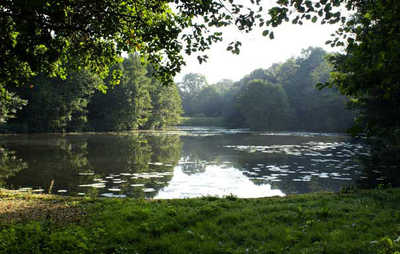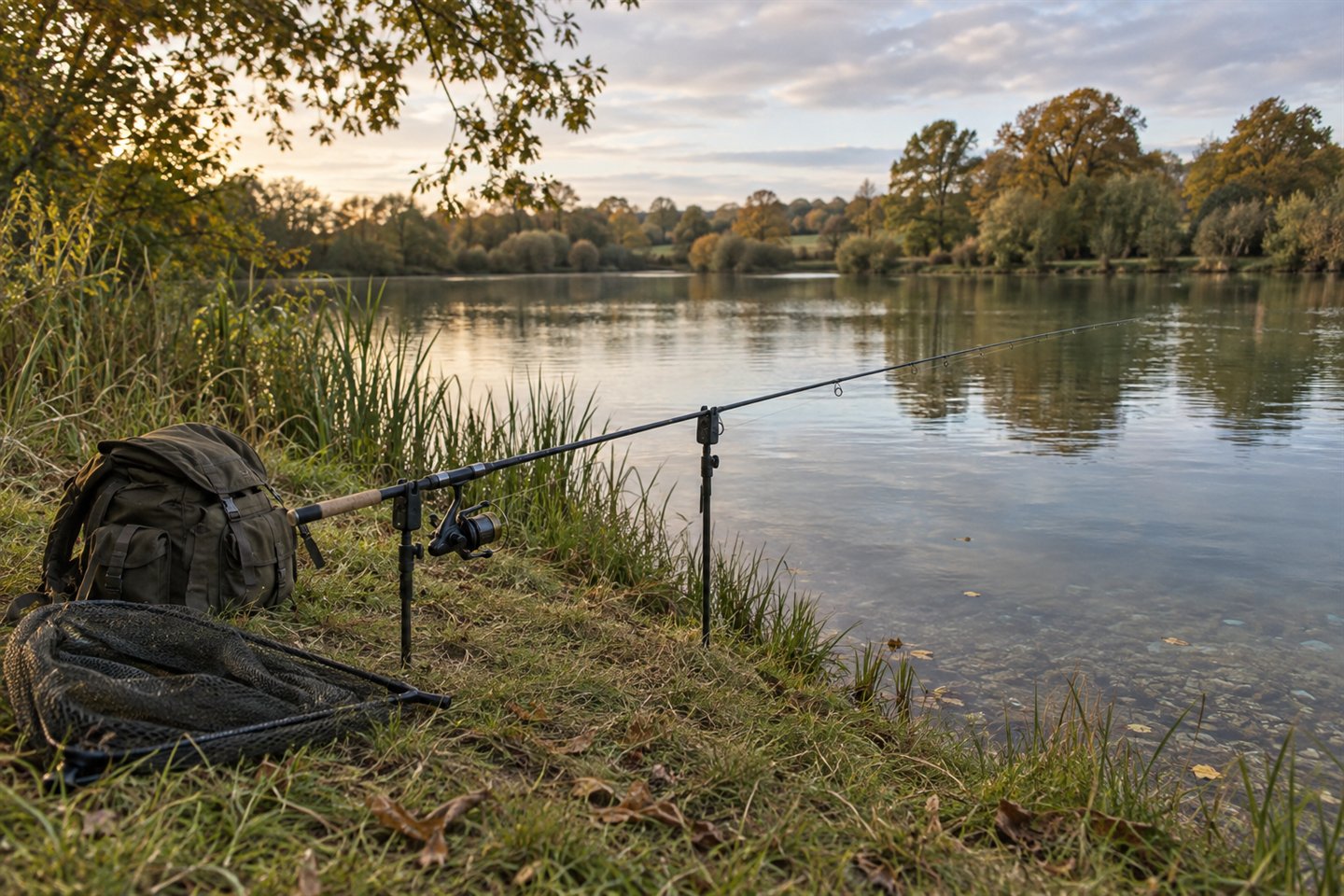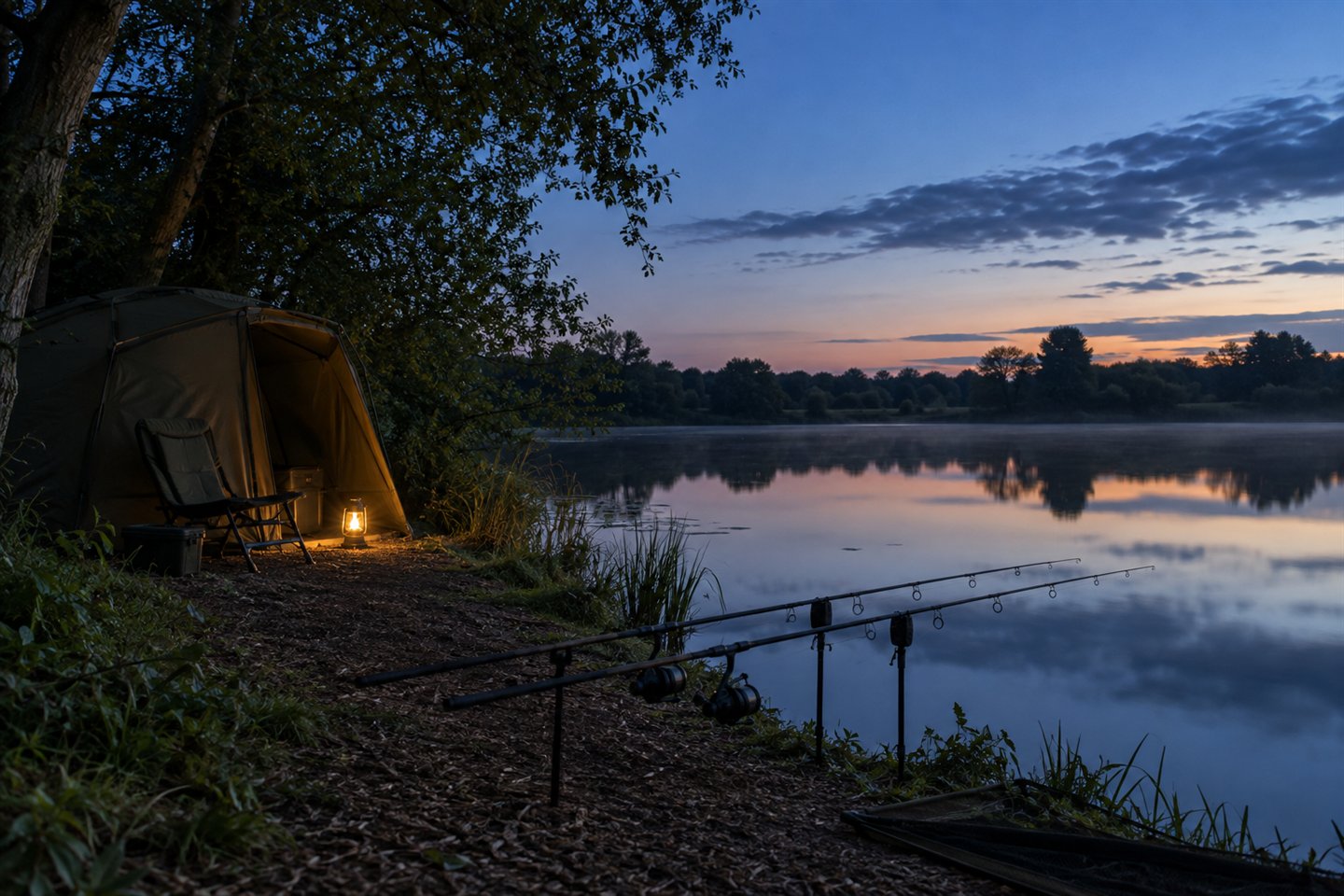
When is the best time of day to catch carp? Dawn and dusk are useful starting points, but the fish don't keep appointments. Look for feeding patterns on your lake and use what you see to plan the next trip.
If you only have three hours, spend them around a feeding spell you have actually seen, rather than squeezing in three quiet hours because an app gives them a green score. This guide will help you choose an arrival time, make the most of daylight and work out whether a morning, afternoon or night session suits your water.
Start with our guide to carp fishing weather if you are comparing whole days. Here, the question is narrower: when should you be ready to fish?
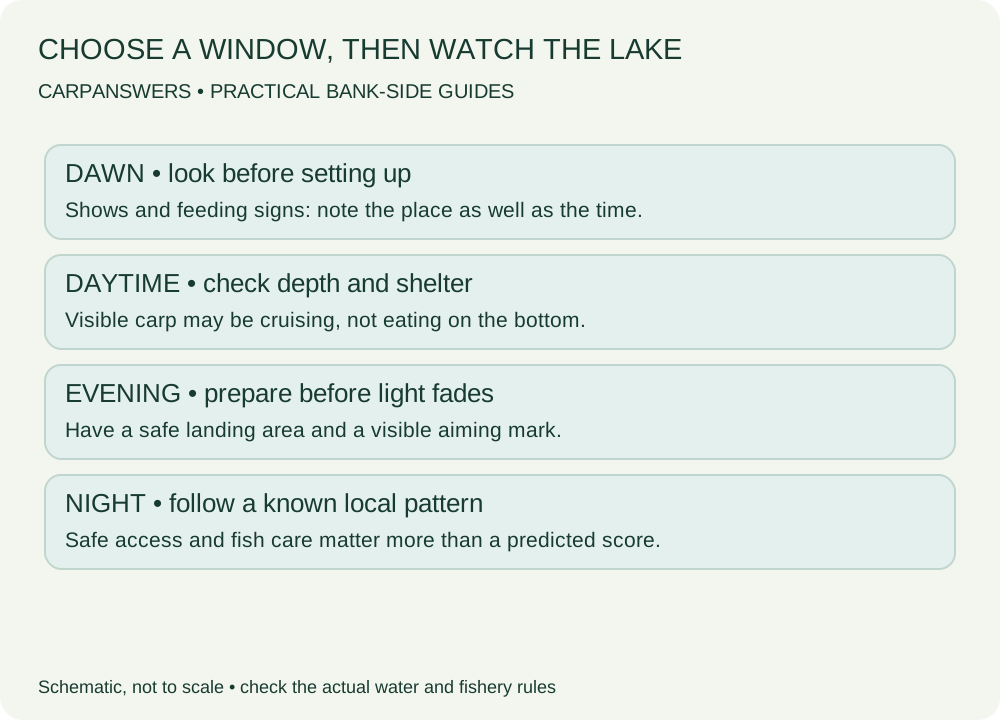
Is dawn the best time to fish for carp?
First light is worth watching, even when you cannot fish. A roll in open water, a swirl beside reeds or repeated bubbling along a shelf can tell you more than a day spent behind rods in the wrong swim. Stand back and watch several areas before deciding where to set up.
Try to separate a fish showing from a fish feeding. One spectacular jump gives you a location, not proof that carp are eating on the bottom. Several fish repeatedly working the same small area make a stronger case for placing a bait nearby.
Getting there at dawn is not the same as fishing effectively at dawn. If access opens at six, and unloading and setting up take forty minutes, be realistic about the window you can cover. Prepare rigs at home and leave the spare kitchen sink there. Have the net and fish-care kit ready before casting.
There is one important summer exception to the appealing idea of a cool dawn session. On a stressed stillwater, oxygen problems can be worst around first light. Follow fishery advice and stop if fish are gasping or distressed; a cooler air temperature is not proof that fishing is safe. The summer fishing guide covers that decision.
What should you do after the early activity stops?
Do not assume the fish have left the lake because the surface has gone quiet. Keep watching the route between the area where they showed and nearby cover, shade or deeper water. A moving patch of coloured water can reveal feeding long after the obvious rolling stops.
On a busy day-ticket lake, arrivals, barrows and repeated casting may change where you see fish. That does not make every quiet corner productive, but it is a reason to look beyond the busiest bank. Ask whether you can move before carrying all your kit into a swim.
If you had a bite at eight yesterday, aim to have the bait settled beforehand today. Avoid doing your noisiest marker work at precisely the time you expect fish to arrive. Record how long the rig had been in place, too: a bite after an undisturbed hour tells a different story from one immediately after a cast to a showing fish.
Can you catch carp in the middle of the day?
Yes. Midday is only a poor choice if it is poor for your lake and conditions. In winter, a short afternoon visit can be more promising than arriving frozen before sunrise, particularly when you have watched fish use a sheltered area later in the day. See the winter carp guide for ways to keep these sessions manageable.
In warmer weather, carp may be easy to see but reluctant to pick up a bottom bait. Do not keep adding feed simply because fish are swimming above it. Watch their depth and behaviour. A surface approach or a correctly set zig may suit, provided venue rules, birds and fish welfare allow it.
Shade is worth checking, not automatically casting into. Work out whether the shaded water is accessible and whether you could land a fish from it. A tempting gap beneath an overhanging branch is no use if the first run puts the carp into submerged roots.
A lunch-break walk is useful even without a rod. Note where fish appear, whether they travel through or stay, and what changes as the shadow moves. You are building a reason to return at a particular time, rather than collecting another theory about feeding hours.
Make the evening count
Evening sessions suit anglers who cannot arrive early, but allow time to look before fishing. Arriving ten minutes before sunset and immediately throwing a lead at the middle gives you very little chance to learn anything.
Watch margins that were busy with people earlier. Carp may revisit these places once the disturbance eases, but check for fish rather than assuming every departing angler leaves a feeding opportunity. Do not add bait to someone else's swim or fish across occupied water.
Choose your far-bank aiming mark while you can still see it. A small bush can vanish against dark trees, whereas a clear skyline feature may remain visible. If you cannot cast accurately after dark, shorten the range or finish while you can still fish safely.
Know the closing time and allow for playing, unhooking and returning a fish. The last legal minute is not a sensible time to launch a final cast if it leaves no margin for a take. Our short-session carp fishing guide helps with planning limited time on the bank.
Are carp more active at night?
Some waters have a reliable night pattern; others produce well in daylight. Darkness is not a universal feeding switch. Recent local information is more useful than deciding all pressured carp must feed after midnight.
If you are trying an overnight session, establish a safe landing area in daylight, keep the route to the rods clear and have a reliable light within reach. Do not fish a hazardous snag because you expect to wake instantly when the alarm sounds. A night plan needs to work when you are tired.
Record quiet nights as well as successful ones. Three catches at two in the morning sound persuasive until you realise you have fished that hour twenty times and barely tried dusk. The first overnight session guide covers the practical preparation; timing should sit alongside it, not replace it.
What is the best time of day to catch carp on your water?
| Conditions | Window worth watching | What could change the plan? |
|---|---|---|
| Cold, settled weather | A known brief feeding spell or sheltered afternoon area | Actual fish signs elsewhere; cooling overnight |
| Spring sunshine after cold nights | Later morning into afternoon | Cloud, cold wind or a different established lake pattern |
| Comfortable summer conditions | Dawn and evening, with daytime observation | Fishery welfare advice; carp visibly feeding at another time |
| Changeable autumn weather | A locally proven spell during your available session | A wind change or fish moving away from dying weed |
These are starting ideas, not a timetable. The useful question is whether the conditions are improving a particular part of the lake, and whether carp are using it. A calendar month alone cannot answer that.
How to identify a carp feeding window on your water
For the next few visits, record arrival, fishing time, fish sightings, bites, location, weather and blank periods in the Session & Catch Log. Note the hours you actually fished. Otherwise you can mistake your own routine for the carp's routine.
Suppose you regularly see fish pass a margin at half past six, but you only get bites after they have passed. Next time, prepare earlier and have one quiet presentation settled before that movement begins. Keep the bait and position similar so that changing the time gives you something useful to compare.
Use the Carp Bite Time Predictor to compare possible windows before leaving home. Its weather and daylight indicators are planning aids, not measured feeding activity. Likewise, the Moon & Solunar Calendar can add context to your notes, but it should not overrule observed fish or safe conditions.
A few common timing questions
How early should I arrive?
Allow enough time to walk, choose a safe swim and set up before the window you want to cover. Access rules come first. If you cannot arrive earlier, simplify your kit rather than rushing the fish-care preparation.
Should I recast just before a predicted bite window?
Only if the presentation needs correcting. Recasting a sound rig simply because a forecast score changes can disturb the spot at exactly the wrong moment.
Is dawn or dusk better for carp fishing?
Neither is always better. Dawn can be productive after a quiet night; dusk can bring carp into shallower feeding areas as light fades. Start with the lake's recent feeding pattern and what you can see. In cold weather, a milder afternoon may be more promising than either. Fish the time you have and keep a note of when bites occur.
Pick one window you can realistically cover and add setup and packing time in the Session Planner. Then let the lake, rather than the clock alone, decide where you fish.