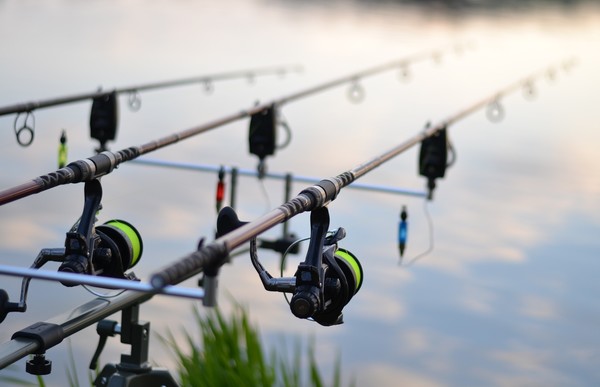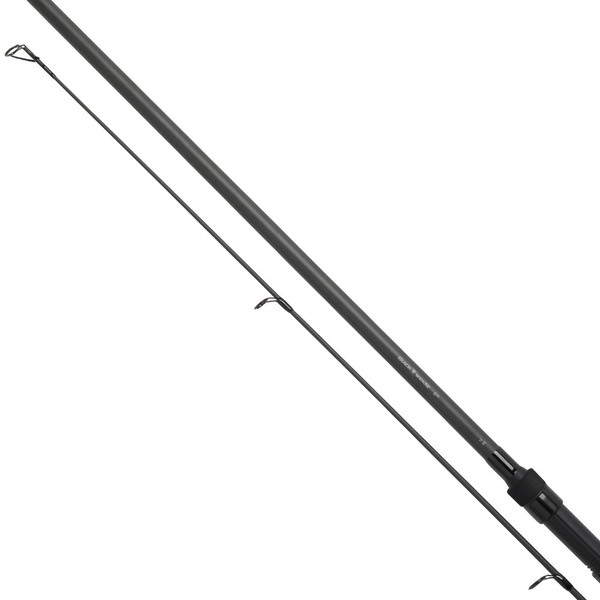
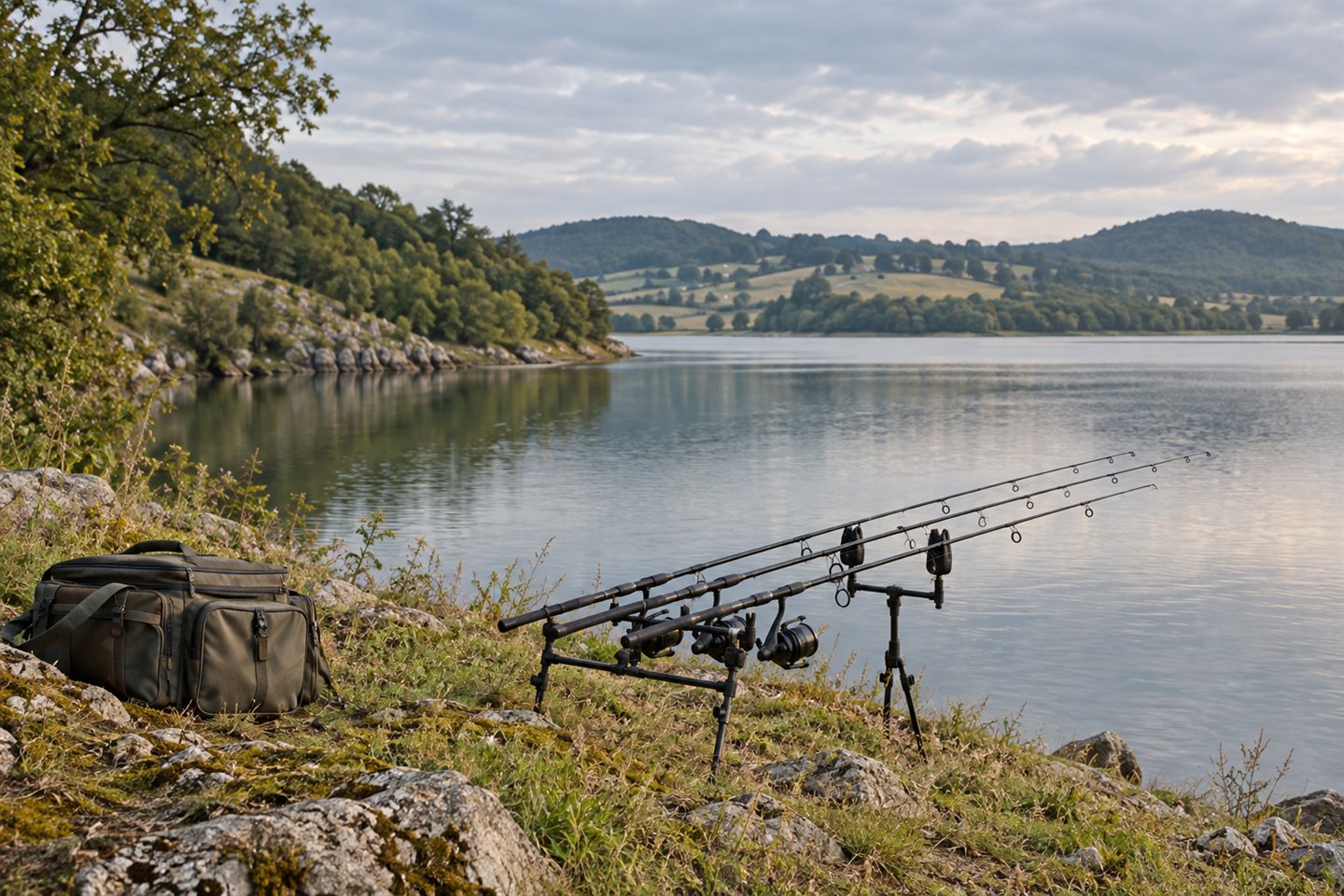
Public or private water for carp fishing in France? They offer different trips, with different permissions, facilities and booking arrangements. Here's what to compare before you commit your holiday to a particular lake.
Compare the whole holiday, not just the fishing ticket. Think about available time, experience, willingness to move, comfort requirements and how much uncertainty your group enjoys. A quiet public reservoir can be a rewarding ambition, but it is a poor substitute for a supported first trip if nobody has researched where fishing is actually permitted.
There is also an important legal distinction. In this article, “public water” and “private lake” describe common holiday models. They are not legal labels that settle French fishing-card requirements. The official categories of open and closed waters depend on matters such as natural fish movement, not simply who owns the bank.
Public carp fishing in France or a private lake: which suits you?
A public-water trip might involve a river, canal, reservoir or lake managed through a local angling association or another rights holder. You normally research the permitted stretch, obtain the appropriate permissions and choose among places available when you arrive. The amount of support and the quality of facilities vary considerably.
A private carp-holiday booking commonly reserves a swim, fishing place or whole lake for agreed dates. The operator may provide accommodation, food, bait, guidance or fish-care equipment, but those are individual contract details. Some private bookings are basic bank-only arrangements with little more infrastructure than an independent trip.
Neither description predicts catch rate. A managed lake can be pressured and technically demanding, while a public water can offer accessible fishing with good local information. Decide using the exact venue and trip design, not a romantic picture of wilderness on one side and guaranteed action on the other.
What permissions do I need for public carp fishing in France?
France's official freshwater fishing guidance distinguishes eaux libres and eaux closes. A privately owned water is not necessarily legally closed, and a private holiday fee doesn't automatically replace a fishing card. Establish the exact status and permission route with the operator or relevant local federation.
This guide was reviewed on 15 September 2026, but it cannot grant permission for a particular bank. Keep the current rules, water boundaries and confirmation of what your booking includes. If the explanation is unclear, resolve it before travelling rather than relying on the fact that other visitors have fished there.
For independent waters, identify both the fishing rights and access arrangements. A map showing water doesn't establish that every adjoining bank is open to anglers, that parking is permitted or that a vehicle can be taken along an access track. Treat those as separate questions with separate answers.
Night fishing needs its own check
Don't assume that a fishing card gives permission to leave carp rods out throughout the night everywhere. Designated areas and local orders matter. Check the current departmental information, the exact limits of the night sector and the conditions attached to it, including bait, retention and access requirements where applicable.
For example, the Gironde federation's 2026 rules describe specific night-carp sectors rather than permission over every listed stretch. That is a regional example, not a rulebook for the whole country. Find the equivalent current information for your destination.
A private booking also needs a clear answer on fishing hours. Ask whether night fishing is included on that exact lake and during those dates. Sleeping in accommodation near water is not the same as permission to keep rods fishing from it, particularly if there are designated fishing positions elsewhere.
Camping and fishing are not the same permission
Being allowed to fish a bank doesn't necessarily permit a tent, bivvy, vehicle overnight stay or cooking equipment. Independent trips can fail at this practical distinction even when the fishing documents are correct. Ask about the shelter arrangement you actually intend to use rather than asking vaguely whether night fishing is popular.
If sleeping away from the water, work out how rods will be made safe and removed before you leave. Don't use a receiver's range as a substitute for attending them. A plan that requires leaving fishing tackle active while driving to accommodation is not an acceptable workaround for restricted overnight access.
At a managed lake, establish where non-anglers may sleep and whether additional tents or vehicles are allowed. Rules about ground protection, fire risk and facilities can apply even when the lake is exclusively booked. Confirming these details supports a straightforward arrival rather than an avoidable dispute.
Compare the research burden honestly
For public waters, useful preparation may include translating current rules, locating authorised banks, checking seasonal restrictions and contacting a local association. You may also need to research parking, drinking water, shops and a fallback place to stay. This can be enjoyable, but it is real work that belongs in the plan.
A private operator can often answer several questions in one conversation. That convenience is part of what a booking may buy. It doesn't remove the need to read the terms or verify important claims, but it can reduce the number of separate organisations you need to contact.
Think about your appetite for administration as well as angling adventure. If you only have a few evenings to prepare, a complex independent itinerary across several departments may be unrealistic. One well-researched water is better than a long list of names with incomplete permissions.
Know whether a swim is actually reserved
On many independent trips, possessing a permit doesn't reserve a place on the bank. You may arrive to find the preferred sector occupied, inaccessible or unsuitable in the conditions. Build the trip around that possibility rather than treating an online photograph as a booking confirmation.
Research alternatives with the same care as the first choice. A fallback must be legally fishable, accessible and within your ability; it is not simply another blue shape on a map. Keep travel distances between options realistic so that moving doesn't consume the remaining holiday.
Private arrangements vary. A named swim, a draw for swims and a lake-exclusive booking each allocate space differently. Get the arrangement in writing and understand whether you can move during the stay. The word “booked” alone doesn't settle where every rod will be placed.
Mobility changes the equipment you need
Independent fishing often rewards an outfit that can be packed and moved without exhausting the angler. That doesn't mean stripping out fish-care essentials. It means reducing duplicate clothing, unnecessary cooking equipment and tackle for methods you don't intend to use, while protecting the core safe setup.
A fixed private swim allows more comfort, but excessive luggage can still make the journey and arrival harder. If vehicles cannot reach the bank after rain, a heavy collection of containers becomes a practical problem. Ask how unloading works in poor conditions rather than planning only for a dry arrival.
Decide whether you want to move water, move swims or remain in one place. Those are different levels of mobility. A comfortable week in a reserved position is perfectly legitimate if it suits the holiday, while a public-water trip may be more enjoyable with enough flexibility to leave an unproductive area.
Don't confuse freedom with unlimited access
Public waters can feel less structured because there's no fixed weekly changeover or host assigning swims. Yet they may have detailed boundaries, navigation rules, protected areas and local restrictions. Freedom within the permitted area is different from unrestricted use of the whole lake or river.
Private lakes may offer a clearly defined space with less uncertainty about neighbouring users. They can also have tighter method, bait or equipment rules. These are not inherently disadvantages; they may protect fish or manage limited space. The question is whether the rules suit the fishing you want to do.
Compare restrictions in practical terms. If you enjoy mobile margin fishing, a booking that confines you to one distant-casting swim may be a poor match. If you want a settled, supported holiday, regularly searching for an unoccupied public bank may feel like work rather than freedom.
How to compare public and private French carp trip costs
A public-water permit can look inexpensive next to a week at a holiday lake, but the comparison is incomplete if accommodation, extra driving, showers, meals and equipment hire are missing. Moving between waters also consumes fuel and time. Price a realistic version of the trip you're willing to take.
Conversely, a managed package may contain services you don't need. Accommodation, food and exclusive access have value only if they fit your group. A solo angler paying for an entire property can face a different calculation from four friends sharing it.
Our France carp-fishing cost guide uses an explicitly illustrative budget to show the arithmetic. Use live quotes for your dates and keep shared vehicle costs separate from personal costs. Neither holiday model has a universal lowest total.
Think about your first day
On a private lake, the first day may begin with a welcome, rules briefing and a defined swim. That structure can be useful after travelling, provided arrival times are clear. Ask whether an early arrival is permitted and whether any time is available for a daylight walk before unloading.
On public water, your first day may involve finding the access point, reading signs and discovering that the preferred area is occupied. Allow daylight and enough energy for these tasks. Arriving late and fishing the first reachable bank because everyone is tired undermines the preparation.
A simple first-day plan is to inspect, confirm, organise fish care and then make a small number of considered casts. Don't treat the length of the drive as a reason to put every rod out immediately. The French carp-fishing guide provides broader fishing context once the venue and access questions are settled.
Match the water to your actual skills
A public river may require reading flow, managing debris and responding to changing water levels. A large reservoir may demand careful location work and a willingness to accept long quiet periods. A private lake can also contain substantial weed, deep margins or awkward casting, so assess the physical water rather than the ownership label.
Ask what the typical fishing requires and compare it with what you regularly do safely at home. If boat use, extreme range or difficult snag fishing is essential, a first overseas trip may not be the right occasion to learn those skills without qualified support.
Be specific when seeking advice. Describe your normal casting distance, experience with larger carp and whether you have fished overnight. This makes recommendations useful and helps a responsible operator or local association suggest water that suits you.
Consider other water users
Independent waters may be shared with walkers, cyclists, swimmers, boaters and other anglers. Research the local pattern of use and keep equipment out of access routes. A quiet photograph taken at dawn doesn't establish that the same bank stays quiet on a warm weekend.
Navigation can be especially important on canals and rivers. Fishing positions and line routes must not create danger or obstruction. Plan how to retrieve safely when traffic approaches, and obey the local rules rather than assuming a boat operator will see your line or understand your intended fishing area.
At a private lake, ask how many anglers and non-anglers can occupy the site. An exclusive booking might still share an access track or facilities with another property. Clear expectations help both kinds of trip, particularly when peace and privacy are a major reason for booking.
What support do you want during a difficult week?
Imagine that a reel fails, a fish-care question arises or the water fishes very slowly. A managed venue may provide advice, a loan item or help locating a nearby tackle shop, but none should be assumed without asking. Find out who is present and how support is requested.
Independent anglers need a realistic self-reliance plan. Carry sensible spares, know the nearest suitable shop and have a way to communicate with local contacts. Travel with a competent companion if your experience or the remoteness of the water makes that the safer choice.
Support doesn't mean somebody else takes responsibility for your rods. Even where staff are helpful, the angler must remain attentive and use suitable tackle. If a problem cannot be managed safely, retrieve and stop rather than continuing because the holiday has been expensive.
Make fish welfare part of the comparison
Check the landing bank, the route to the unhooking area and the equipment required for the largest realistic capture. On an unfamiliar public water, a seemingly convenient position can become awkward when a fish needs netting. Choose safe access before choosing the most attractive feature to cast towards.
Managed lakes may supply nets, cradles or slings and require their use for biosecurity. Confirm what is provided and how it is kept ready. On independent waters, you need your own complete arrangement and a plan to clean and dry equipment between places.
The carp care guide explains preparation and prompt handling. A private venue's trophy stock and a public water's wild setting both deserve the same care; neither is a reason to extend retention for photographs or to accept a poor release area.
Bait supply and storage differ between models
A managed lake may sell a recommended bait or offer pre-orders. Ask for the current stock, quantities, collection time and storage arrangements. This can simplify travel, but don't interpret a package size as an instruction to introduce all of it quickly.
An independent trip may rely on local tackle shops or retailers. Check opening times for the arrival day and identify a permitted alternative if the exact bait is unavailable. A late crossing followed by a Sunday arrival can turn an assumed shopping stop into an unnecessary problem.
For either model, check the product-specific issues around taking bait to France. Don't assume that a small quantity, sealed packet or familiar brand creates an import exemption. A confirmed local supply is often easier to plan around than uncertain luggage.
Agree the group's tolerance for uncertainty
Friends can use the same word, “adventure”, while imagining different holidays. One may enjoy searching several waters; another may expect a fixed swim, reliable shower and a cooked evening meal. Discuss those differences before money is committed, particularly if one person is doing all the research.
Agree how decisions will be made when the first choice is unavailable or fishing is slow. Set limits on additional driving, spending and time away from non-anglers. A group plan works better when moving is a shared option rather than a decision made by the most enthusiastic angler after everyone else has settled.
If the preferences are incompatible, choose a simpler trip or separate activities. A managed base with planned daytime exploration can sometimes work, but fishing permissions must cover each place visited. Don't create an itinerary that depends on leaving rods unattended while part of the group goes elsewhere.
Equipment worth considering
For either trip, concentrate on durable essentials that support safe independence. A reliable headtorch, suitable waterproof layers and organised tackle storage are useful across many waters. A document pouch helps keep permits, booking details and local maps available when a phone has no signal or its battery is flat.
A mobile public-water outfit benefits from compact, sensibly packed luggage, but the landing net and padded unhooking surface still need to suit the fish. Check a managed lake's supplied equipment before buying duplicate large items. Where an accessory is essential to the trip, confirm the rules permit it.
Buy after selecting the water and method. Extra rods, a larger shelter or a bait boat can add cost and loading problems without improving the match. A dependable existing setup used on appropriate water is often a stronger starting point than unfamiliar equipment bought for a vague idea of continental fishing.
For a permitted session that finishes in low light, the NGT rechargeable fishing headtorch (paid link) is an example to assess for hands-free work. A Anker 20,000mAh USB-C power bank (paid link) can support a compatible phone used for saved maps and contact details. These are practical travel aids, not access permissions: charged electronics don't authorise night fishing, camping or parking on either public water or a private lake.
A practical way to choose between two options
Write a one-page version of each trip with confirmed permissions, sleeping arrangements, fishing time, support, journey and total budget. Highlight every unanswered question. The option with fewer unknowns may be the better first trip even if its headline price is higher or the other lake has more dramatic photographs.
Then ask what happens if conditions change. Can you stay safely, obtain food and water, contact help and leave if necessary? A clear fallback makes independent fishing more manageable and is equally useful at a booked venue. Don't rely on a refund or a substitute lake unless the terms actually provide it.
For a first overseas trip, choose the model that leaves enough attention for fishing well. You can increase independence later as experience grows. Selecting support now doesn't make the holiday less worthwhile, and choosing public water should reflect genuine preparation rather than pressure to appear adventurous.
Frequently asked questions
Is public carp fishing in France free?
Don't assume so. Fishing cards, local permissions, access charges and accommodation can apply. Check the exact water and calculate the complete trip rather than using the absence of a private lake booking as evidence of zero cost.
Does a private French lake never need a fishing card?
No. Private ownership alone doesn't settle the legal status. Ask the operator which rules apply and what the booking includes, referring to current official guidance where necessary.
Public or private carp lakes in France for a first trip?
The better option is the one that suits your skills and preparation. A supported private booking can simplify logistics; a well-researched public-water trip can suit an experienced, adaptable angler. Neither guarantees easier fishing.
Final thoughts
Think about how much exploring and organising you'd enjoy, and how much support you want at the water. Compare complete trips, then confirm the legal permissions separately from the booking. Whether you choose public water or a managed lake, pick somewhere you can fish safely and enjoy the time you've set aside.
Sources and further reading
Permission distinctions were checked against Service Public; the night-fishing example comes from the Gironde federation's 2026 regulations. Confirm current departmental orders and the rights holder's conditions for your exact destination. The holiday comparison is editorial guidance, not a legal opinion on an individual water.