
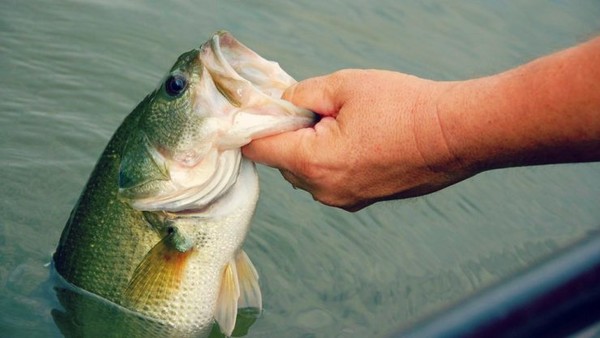
This guide is about North American freshwater largemouth bass. Start from a safe shore with one lure you can fish slowly near cover and one you can use to cover open water. Spend more time learning where and how to work them than choosing a bag full of colours.
Look for cover next to water you can fish
Try a weed edge, a fallen tree with an open approach, a dock you are allowed to fish or a shelf leading to deeper water. Cast down the open side before throwing into the middle of the cover. A parallel cast from the bank lets your lure spend more time near the edge. Leave a feature alone if the only likely result is getting a fish or lure stuck in it.
Try three lines past the same feature. From a permitted bank near a dock, work the lure along its outside edge, then past the end and finally through the open water beyond it. A bite on the shaded edge gives you a particular place to try at the next dock. Keep clear of boats, mooring lines and anyone using the dock.
Use a small set of lures you can control
A soft plastic worm rigged with the point protected as appropriate can help you fish a clean edge slowly. Fit the worm straight and check the hook can come through when the bait is compressed. A spinnerbait can cover clearer lanes at a steady pace. Try the lure beside you first to see how fast it sinks and whether it tracks straight. Pick rod, line and lure weights that work together and suit the cover.
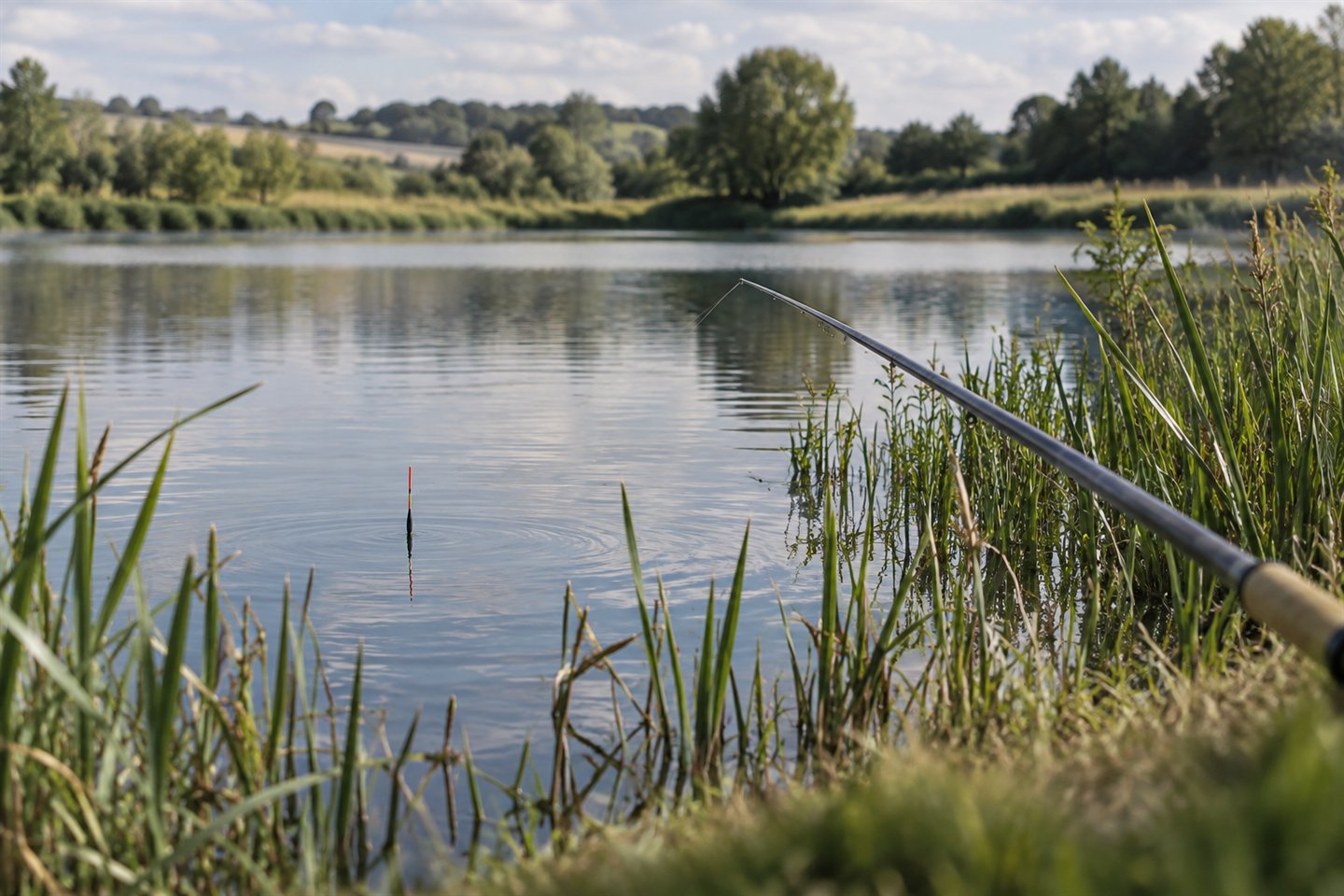
Start with the same lure at two speeds or depths before changing it. If you feel a change on a pause, take up slack and respond according to the lure and tackle. If you have no contacts, cast along a new angle or try another feature. For species and habitat advice, see the Florida Fish and Wildlife Conservation Commission freshwater guide. For another way of working a soft lure slowly along a shelf, our dropshot guide for perch explains how to keep the lure above the weight.
Read the light and watch for baitfish
On a bright summer afternoon, look for the shadow of a dock or the outer edge of deeper weeds. Come back at first or last light and check the nearby shallows. Watch what moves when the surface stirs. If small, silvery baitfish scatter, try a lure near their size and run it through the same open lane. The Illinois DNR’s guide to small lakes and ponds describes the change from shallow feeding at low light to cover during the day.
A lipped crankbait lets you search an open strip at the running depth marked on the pack. A bladed jig gives a distinct vibration you can feel through the rod. Try it where visibility is poor and you can bring it back clear of stems. Choose one of these when you can say what you want to change about the retrieve.
Check your state, water and species
Confirm the local licence, access, season, tackle and catch rules. They vary by state and by water. Don’t assume you are allowed to target spawning fish on beds. Have a suitable net and unhooking tools ready and keep any fish for release supported, wet and out for as little time as possible. Follow the local agency’s guidance for that species and your conditions.