Crayfish and poisson-chat can make short work of a carp hookbait on some waters in France. Find out what the venue is dealing with, then plan bait protection and regular checks. We'll look at the options without assuming one tough bait solves everything.
A harder or protected hookbait may help, but no arrangement should be treated as maintenance-free. Bait stops can move, balancing material can disappear and the hooklink can become tangled even when the bait itself remains intact. Inspect the whole rig and test it in water after every meaningful change.
This guide is for UK anglers preparing for French waters where nuisance species are a known issue. It is not an identification manual or permission to trap, move or release unfamiliar animals. Ask the venue or local federation about species identification and the lawful, humane response to an accidental capture before you begin fishing.
Carp fishing in France: crayfish or poisson chat damage?
Crayfish are crustaceans; poisson chat in this angling context commonly refers to small bullhead catfish, not a juvenile version of every large catfish called silure. Both can interfere with bait, but their presence, behaviour and legal status should not be guessed from a damaged boilie alone.
The Centre–Val de Loire federation's poisson-chat identification sheet describes features including barbels and sharp fin spines. Use competent local identification if you actually catch one. Handling an unfamiliar fish carelessly because it is small can injure both the angler and the fish.
Ask which species are present in the exact lake and how they normally affect fishing around your dates. “There are crayfish in France” tells you little about one swim on one week. The operator's recent experience is a useful starting point, but still test the presentation rather than copying an old solution without checking it.
How to recognise poisson chat damage to carp bait
Bring the first casts back after a purposeful test period agreed with local advice and inspect them under good light. Look for a reduced or hollowed hookbait, missing stop, displaced bait mount, damaged point, missing balancing material and a hooklink wrapped around other components. Record the time the rig was actually in the water.
Damage has several possible causes. A soft bait may break during casting, a stop may have been fitted poorly and a rig may have landed tangled. Don't label every defect “crayfish” without checking the preparation. A careful cast and a water-tested rig give you a better baseline for interpreting what comes back.
Compare like with like. If you change hookbait hardness, colour, rig length and spot simultaneously, you may land a fish but learn little about which change helped. Begin by correcting a visible problem and keeping the rest of the presentation as consistent as practical.
Don't confuse nuisance activity with every alarm signal
Repeated small bleeps can be associated with bait interference, but the alarm only reports line movement. Wind, weed, birds and carp touching the main line can produce signals too. Watch the bobbin, line and water, and remain ready for a developing take rather than dismissing a rod because nuisance species are present.
A sustained run or drop-back still deserves a prompt, controlled response. Don't turn the alarm so insensitive that it hides useful movement merely to stop repeated noise. Check the physical setup and, where necessary, retrieve to inspect the presentation rather than making the electronics compensate for an unresolved problem.
The guide to line bites, drop-backs and runs explains how to separate observation from diagnosis. This matters on a French trip because an assumption that every twitch is a poisson chat can lead to missing a genuine carp pickup.
How often should I check a carp rig with nuisance fish present?
There's no universal number of hours a hookbait remains effective on every lake. Begin with a conservative interval based on the venue's current advice and what your first retrievals show. If a bait is already badly damaged, shorten the interval while you improve the presentation.
If repeated checks show a sound bait and a correctly functioning rig, you may be able to leave it longer. Increase the interval gradually and continue checking after changes in area, temperature or activity. Evidence from yesterday's quiet swim doesn't establish that a new position is equally manageable.
Balance checking with disturbance, but don't use fear of recasting to justify knowingly fishing an empty hair. Choose a practical time to retrieve, inspect efficiently and return a verified rig. The aim is useful fishing time with an effective presentation, not the longest possible period without touching the rod.
Harder hookbaits are a starting option
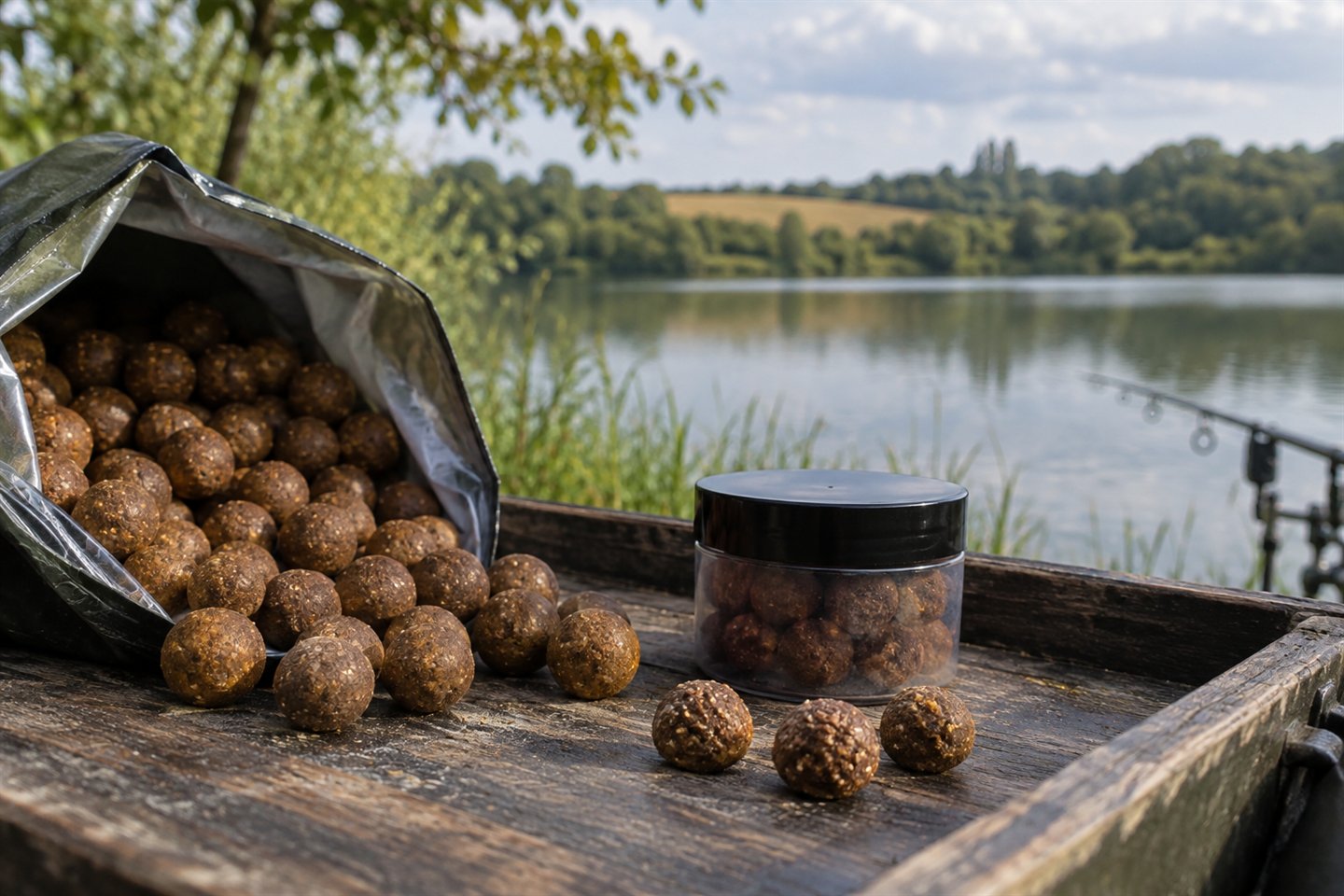
A purpose-made hardened hookbait can resist damage better than a very soft bait, but confirm that it is allowed and can be mounted securely. Hardness doesn't prove immunity, and a large bait is not automatically the best match for the hook or feeding situation. Test the actual combination rather than relying on the description on the pot.
Use an appropriate baiting tool and avoid forcing a needle towards your fingers. If a bait requires drilling, support it securely and use the tool as intended. A split bait with an enlarged hole can lose its stop more easily, undermining the reason for choosing a durable option.
Check the bait after immersion. Some products soften substantially, and flavour coatings or extra liquids can affect storage and texture. Keep a note of how the hookbait behaves in the actual water, not only how hard it feels when removed from a dry container.
How to protect carp hookbaits from crayfish in France
Purpose-made hookbait wraps are one way to reduce damage. Korda describes its Superwrap as a protective coating with openings for attractor leakage. That is a manufacturer's intended use, not proof that a wrapped bait will remain untouched in every swim.
Ask explicitly whether wraps are allowed. A rule permitting natural bait doesn't necessarily permit a plastic covering, and a ban on artificial hookbaits may also affect accessories made from plastic. Get the exact interpretation from the venue rather than assuming that a thin covering is too small to count.
Inspect the covering after each retrieve and remove all damaged pieces from the bank. A wrap that tears or shifts can obstruct the bait mount or hook. Don't leave plastic offcuts in bait buckets or loose around the swim, and never regard a non-biodegradable covering as something that can simply be left in the water.
Apply protection without compromising the presentation
Follow the exact manufacturer's fitting instructions and practise before travelling. Some purpose-made products use controlled heat or steam, which creates a burn risk. Keep hands clear, use suitable tools and never improvise with a naked flame beside a baited rig or combustible fishing shelter.
Once fitted, check that the hookbait remains securely mounted and that the covering has not forced the stop into an unreliable position. The hook point and gape must remain clear. Test buoyancy again because the covering adds weight and may change how a pop-up or wafter behaves.
Gardner's bait-saver information gives another manufacturer example of a protective sleeve. Different products have different fitting details; don't mix instructions between them or replace a purpose-made material with an unidentified household plastic.
Artificial hookbaits are not automatically the answer
A permitted artificial bait can avoid some problems caused by an edible hookbait being whittled away, but it can still be moved, lost from the hair or presented badly. It also changes the rig's buoyancy and attraction profile. Treat it as a different presentation to test, not an indestructible substitute that removes the need for inspection.
Confirm both fishery permission and secure mounting before using plastic corn, nuts or boilies. Check that the bait cannot readily detach and that the rest of the rig remains fish-safe after a breakage. Keep unused artificial baits organised and retrieve damaged pieces rather than allowing them to become litter.
If the water bans artificial bait, don't search for a semantic workaround by calling it a topper or a visual aid. Ask what approved alternatives the operator recommends and select a suitable natural or protected presentation only within the actual rules.
Tiger nuts and particles need separate checks
Anglers sometimes use properly prepared nuts as a durable alternative, but nuts and particles are restricted or prohibited on some lakes. Ask first. Don't arrive with a large bucket because another venue's report describes success, and don't assume a boilie containing nut ingredients has the same properties as a whole prepared nut.
Use a reputable, properly prepared bait and follow the venue's requirements. The particle-bait guide explains preparation and storage considerations. A hard particle is not automatically safe simply because nuisance species have difficulty damaging it.
Keep the import question separate from the fishing question. A bait allowed by the French lake is not automatically allowed in your luggage from Great Britain. Arrange local supply or verify the product-specific requirements using the taking bait to France guide before travel.
Protect the bait stop and hair arrangement
A durable bait is ineffective if it comes off the hair. Check the stop's fit, the size of the hole through the bait and whether the mounting loop can pull back through it. Use compatible components that hold securely without burying the stop in a crumbling or oversized opening.
An extender-style stop can change the distance between hook and bait. That may be useful in an established presentation, but don't add one without checking the new relationship. A modification made to protect the bait can accidentally leave the hair far longer or shorter than intended.
After fitting, give the bait a gentle controlled check with the hook safely contained. Then water-test the complete rig. The aim is a secure, functioning arrangement, not the strongest possible attachment regardless of how the hook and bait move together.
Check balancing material after every retrieve
A pop-up rig may depend on putty or another balancing component. If that component is displaced, the bait can sit much higher than intended even while still looking intact on the hair. Inspect the balance as part of the normal check rather than focusing only on whether the boilie remains present.
Korda's crayfish article discusses interference with bait stops and putty. Its examples are angling experience, not a universal prediction. Use them to decide what to inspect, then follow the instructions and compatibility requirements of your own rig.
Don't clamp an unsuitable weight onto the hooklink as a hurried replacement. It can damage material or change the movement of the rig. Use a permitted, appropriate component and test the finished presentation again, including how it behaves after the expected soaking time.
A resettable rig still needs checking
A presentation with an appropriate boom or anti-tangle arrangement may return to a useful position after minor disturbance, but “resettable” is not a guarantee. Bottom debris, the direction of movement and the way the rig landed can all affect the result. Don't use the label as permission to leave a troubled rod unchecked.
Choose a rig you understand and can tie consistently. The hooklink must suit the lakebed and the hookbait, not merely resist tangling in a demonstration on a clean table. A stiff section can bridge awkward debris or sit poorly if it is mismatched to the actual spot.
The hookbait-type comparison helps define the intended presentation. Test that result first, then consider whether a specific anti-tangle adjustment addresses the interference you have observed. Avoid building an unnecessarily complicated rig around several unverified assumptions.
Changing size, colour or flavour is an experiment
A larger or differently flavoured bait may alter nuisance activity on one water, but it is not a reliable country-wide rule. Avoid claims that a particular colour is invisible to poisson chat or that a nut-based boilie cannot be touched. Such certainty exceeds what an ordinary session can establish.
If you want to compare baits, keep the area, rig and checking interval as similar as practical. Record whether the bait returns intact and whether the presentation still works, not just whether a carp was caught. A blank spell cannot distinguish an ineffective bait from an absence of feeding carp.
Keep the test modest. There is little value in purchasing a large range of unfamiliar pots and changing them every hour. One locally recommended, permitted option with a verified presentation gives a clearer baseline for subsequent adjustments.
Review location before increasing bait
Nuisance activity can vary between areas, so ask whether a safe alternative spot is worth investigating. Moving doesn't have to mean abandoning the entire lake. A different bottom type or location within your permitted water may offer a more manageable presentation, although there's no guarantee it will hold feeding carp.
Don't move into snags or an unsafe landing position merely because the hookbait seems to last longer there. Location still needs to satisfy the same welfare and tackle-control requirements. A quiet rig is not a successful improvement if any hooked fish is likely to reach an obstruction.
Additional loosefeed is not automatically a solution. It may create more activity without protecting the hookbait, and it can make the original comparison harder to interpret. Start with the condition of the presentation and the venue's advice before changing the quantity introduced.
Don't improvise trapping or animal movement
Don't set traps, collect crayfish or transport nuisance fish as a do-it-yourself control programme. Permissions and species-specific rules apply, and some crayfish are protected while others are invasive. Identification mistakes can cause ecological harm as well as legal problems.
French federation guidance distinguishes the handling obligations for particular species; the Morbihan federation's 2026 explanation highlights why different status categories must not be conflated. Obtain current local instructions rather than applying a blanket “release everything” or “remove everything” rule.
If you catch an unfamiliar animal, seek prompt help from the venue and follow lawful, humane instructions. Keep people safe from claws and fin spines, don't leave animals to suffer on the bank and don't move them to another water. Preparing this response before fishing is much better than improvising under pressure.
Keep biosecurity part of the trip
Nets, mats, boots and other wet equipment can carry material between waters. Follow the venue's biosecurity process and the GB Non-native Species Secretariat's freshwater guidance: inspect equipment, clean it properly and dry it thoroughly before moving between waters.
Pay attention to folded mesh, seams, boots and containers rather than cleaning only visible flat surfaces. Remove debris where it was collected and dispose of it as instructed, not at the next lake or in a roadside drain. Equipment that looks tidy on the outside can still contain wet material.
If a venue requires its own nets and mats, respect that requirement and confirm the arrangement ahead of travel. Don't unpack a wet personal backup without asking. Biosecurity is part of the normal fishing routine, not a punishment reserved for waters with an obvious nuisance problem.
Equipment worth considering
A sound baiting needle, appropriate bait drill, sharp scissors and organised terminal storage help prepare durable hookbaits without damaging them. Choose tools for the material being used and keep points safely covered. For night checks, a dependable headtorch with a useful close-work setting is more relevant than maximum advertised brightness alone.
Only consider protective wraps or artificial baits after confirming permission. Inspect dimensions, fitting instructions and the effect on buoyancy before buying. A familiar hookbait paired with the correct permitted protection may be more useful than several unfamiliar alternatives, but no product removes the need to check the rig.
Keep compatible spare stops and balancing components in a small labelled box. The purpose is to restore a known presentation efficiently, not to build a collection of untested rigs while the rods sit out. Replace damaged hooks and line rather than expecting bait protection to solve tackle condition.
Korda RazorBlades scissors (paid link) are a useful example for cleanly rebuilding damaged hooklinks, while the Roddarch four-piece bait-box set (paid link) can keep dry bait choices organised at the swim. These boxes have ventilated lids: don't treat them as watertight liquid containers or proof against pests. Neither product solves crayfish or poisson-chat activity by itself, and no container, coating or tougher bait changes the water's restrictions on fishing or species handling.
A simple first-day approach
On arrival, ask what has been happening recently and inspect the permitted bait options. Prepare one straightforward presentation, test it in water and record the first cast time. Retrieve at the agreed trial interval and examine the complete rig before deciding whether the interval or protection needs changing.
If the bait is damaged but the rig is otherwise sound, address durability or checking frequency. If the bait is intact but the rig is tangled, focus on presentation. If the entire arrangement returns as intended, spend more attention on locating carp rather than continuing to change products for a problem you have not demonstrated.
Before the first night, review whether the planned checking routine remains realistic. If the presentation is failing quickly and you can't maintain it responsibly, retrieve the affected rod and ask for further advice. Leaving it out simply to preserve the feeling of fishing through the night doesn't create useful opportunity.
Frequently asked questions
Will a wrapped hookbait last all night?
Don't assume so. Test the particular presentation and checking interval on the water, inspect the wrap, stop and balance, and follow the venue's advice. Protection can reduce damage without making the rig immune to interference.
Are tiger nuts always allowed in France?
No. Check the exact lake's rules and use properly prepared bait where permitted. The separate import requirements also need checking if you intend to carry any bait from Great Britain.
Should I ignore small bleeps when poisson chat are present?
No. Read the whole indication and remain ready for a carp take. Repeated unexplained signals justify checking the setup and presentation, not disabling useful bite detection.
Final thoughts
Ask the venue about nuisance species before you go, use permitted bait protection and keep checking the whole rig when you reel in. If it comes back damaged or tangled, adjust the approach. Follow the local handling and biosecurity advice too. A bait you know is still fishing is worth more than a label promising it's unbeatable.
Sources and further reading
Technical references include the linked Korda and Gardner manufacturer guidance. Species and handling context comes from the linked French fishing federations, and biosecurity guidance from the GB Non-native Species Secretariat. Reviewed on 15 September 2026. Confirm current local rules and species identification before fishing; no bait-protection success rate or product field test is claimed.