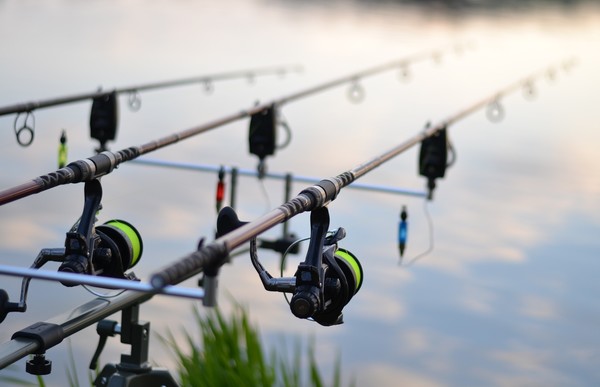
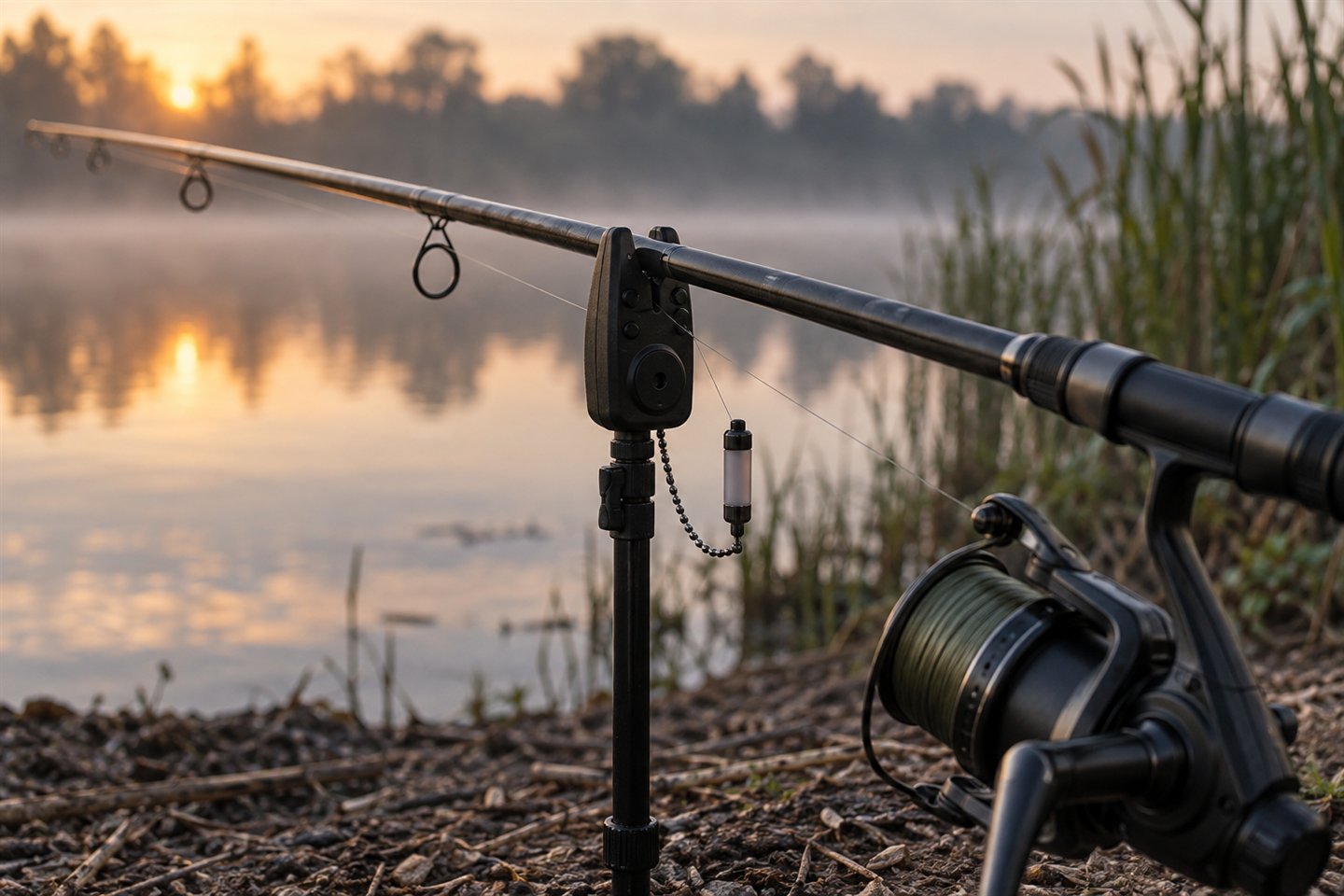
A few bleeps while carp fishing can leave you wondering whether a fish has picked up the bait or brushed the line. We'll look at line bites, proper takes and the clues from your alarm, bobbin and line—without treating any single movement as proof.
That distinction matters because an alarm cannot tell you whether a carp has the bait. Wind, floating weed, boats, birds and movement of the lead can all affect the line. Equally, a genuine pickup need not become a dramatic screaming run. The useful skill is recognising changes in a correctly set system without either striking at everything or waiting indefinitely for certainty.
This guide concentrates on interpreting indications during a UK carp session. If the equipment itself is unfamiliar, first use our guide to setting up carp bite alarms, bobbins and swingers. Once the system has been tested, the patterns below become easier to understand.
Carp fishing line bites: when could the movement be a take?
When an alarm sounds, look at the rod, visual indicator and line together. Is the bobbin still moving? Is line leaving the reel, falling slack or travelling sideways across the surface? Is there a visible bird, boat or gust affecting that direction? Be ready beside the rod while assessing the change; don't make a diagnosis from the sound alone.
A continuing run, a sustained drop-back or a clear developing movement deserves a controlled response. Lift the rod securely, establish contact without an exaggerated strike and use the reel as designed. With slack line, recover it smoothly until the rod loads. Don't stand waiting for the alarm to become louder when the indication already suggests a fish moving towards you.
An isolated beep with everything settling immediately may justify observation rather than a reflex strike. However, repeated unexplained indications are a reason to check the presentation and setup, especially when the rig has been left for some time. There's no safe universal rule that says three beeps mean a carp or one beep can always be ignored.
What the alarm is actually measuring
An electronic alarm responds to movement or vibration at its sensor. Different designs process that information differently, and their controls are not directly comparable. A sensitivity setting on one model may regulate distance of movement while another responds through a different mechanism. Learn the exact device rather than copying somebody else's number.
The visual indicator supplies another piece of evidence. Its position and movement show how line is being taken from, or returned to, the section around the alarm. It also helps maintain contact with the sensor. A bobbin already resting on the ground cannot fall further, while one almost touching the rod has little upward travel remaining.
Delkim's manufacturer guidance explains that drop-back indication depends on the indicator taking up slack, and that distance and line contacting obstacles affect what reaches the bank. The particular manual is for older models; use your current model's instructions for settings. The broader lesson is to test the complete line path.
Establish what normal looks like
After casting, allow the lead and line to settle before deciding where the bobbin should sit. Watch several gusts and the passage of any normal surface ripple. You're learning the background movement of that rod in that swim, not trying to create an absolutely motionless display regardless of conditions.
Check that the supports stay firm, the line follows the intended sensor path and the reel can give line appropriately. Test movement both away from and towards the rod before fishing, using a safe hook-free arrangement. An alarm that beeps when you tug behind it may still give poor indication from the actual fishing direction.
Repeat a brief setup check after a substantial change in wind, water level or fishing distance. If yesterday's quiet margin rod is moved across a wind lane, yesterday's indicator position may no longer be useful. Reliable interpretation begins with knowing that the equipment can show the movement you're trying to interpret.
How to tell a carp line bite from a take
A carp brushing the main line can create a brief lift, twitch or burst that stops. Sometimes the line tightens and then returns to its previous position. That is consistent with contact away from the hookbait, but it is not proof. A hooked fish can also pause, change direction or move too little to sustain an obvious alarm signal.
Look for supporting evidence without inventing a story. A visible fish rolling along the line route may make a liner more plausible. Repeated disturbances several metres short of the bait could suggest fish travelling through that area. Neither observation tells you the exact depth of the fish or establishes that the rig has been rejected.
Don't deliberately fish across a busy route simply to generate information from liners. Excessive contact can disturb fish and increases the chance of an awkward encounter with line. If the evidence points to carp repeatedly using a closer, safely fishable area, consider a careful repositioning that improves presentation and line lay.
Why repeated liners are useful but incomplete evidence
A sequence of suspected liners can mean fish are present, which is useful on an otherwise quiet session. It doesn't automatically mean the hookbait needs changing. Before swapping colour or flavour, consider whether the line crosses a patrol route, sits conspicuously through the water or has lifted off the bottom in undertow.
Ask whether the evidence concerns the baited spot or only the route to it. A fish encountering line halfway between bank and rig has told you little about feeding at the far end. Moving the hookbait towards that activity might help, but only if the area is permitted, accessible and safe to land fish from.
Make one sensible adjustment and observe the result. Recasting every rod, slackening all lines and changing every hookbait together removes the comparison. The companion guide to slack or tight lines for carp fishing explains the presentation and indication trade-offs behind a line-lay change.
What does a drop-back bite look like on a bobbin?
A drop-back occurs when tension reduces and the visual indicator falls as line becomes available. A hooked carp moving towards the bank is one possible cause. A displaced lead, a change in undertow or an obstruction releasing the line can also produce slack. Interpret the continuing movement and circumstances rather than treating the label as a guarantee.
If the bobbin falls steadily or collapses and the line continues to slacken, take control promptly. Pick up the rod and recover slack smoothly, keeping the rod ready to cushion the fish once contact is established. A huge upward strike through loose line is inefficient and can create a sudden shock when the slack finally disappears.
Watch for the indication changing as you approach. The fish may turn and begin taking line away, or the line may travel laterally before loading the rod. Keep your hands clear of moving spool edges and handles. Familiarity with your reel's free-spool or clutch arrangement is particularly valuable when the sequence is not a straightforward run.
Understanding a run
A run is sustained line movement away from the bank or through the indication system. With a properly adjusted reel, it may involve line leaving the spool and a bobbin rising. It is a strong reason to act, but the response should still be composed: reach the rod safely, lift it securely and bring the reel into its normal playing configuration.
On a common semi-fixed carp presentation, there is generally no need for an aggressive overhead strike to drive everything home. Establish contact and let the rod take a controlled load. The exact action depends on the rig and reel, so learn that sequence during a supervised or simple daylight session before relying on it at night.
Don't leave the clutch exceptionally loose just to create a more dramatic run. The setting must suit the water and allow safe control, particularly where fish could reach obstructions. If a swim demands a response faster than you can reliably provide, choose a safer fishing position rather than compensating with a louder alarm.
Small movements can still be significant
A hookbait pickup may show as a repeated tremble, a short lift that stays up or a bobbin held in an unusual position. Close-range fishing, line stretch, changes in direction and contact with the bottom all alter the visible signal. There's no promise that every carp will swim directly away and pull line freely from the reel.
Be especially attentive when a pattern changes from the background. Several identical wind-driven twitches followed by a movement that remains loaded is different from another passing gust. A line that starts travelling sideways while the rest of the swim is calm deserves investigation even if the speaker makes little noise.
This is not an argument for striking at tiny vibrations indiscriminately. It is an argument for staying engaged with the rods and using more than one observation. If a developing indication leaves reasonable doubt, a calm lift and controlled check is preferable to abandoning the rods while waiting for a textbook signal.
Why do my carp bite alarms beep without a run?
Wind can move the rod tip, push an indicator sideways and create changing pressure on line in the water. These effects can generate false bleeps. Check the physical setup first: firm supports, sensible rod alignment, indicator stability and enough travel. Turning sensitivity down until the alarm is silent may also hide movements you need to see.
Undertow is less obvious because the surface may not reveal the direction of water movement below. A gradual loading of the line can lift an indicator or pull it to one side. Observe whether the same change affects neighbouring rods and whether it follows a weather shift rather than assuming a fish is slowly taking every bait.
If the conditions keep moving the lead or building an unmanageable bow, consider changing range or spot within the tackle's safe limits. The right solution may be a less exposed presentation, not a heavier indicator alone. Continual false signals make concentration harder and deserve a practical correction before the next likely feeding period.
Birds, boats and floating debris
Waterbirds can touch submerged or surface line, dive near a hookbait or collect floating food. Watch them rather than waiting for the alarm to explain the disturbance. Retrieve when it can be done safely before a bird reaches the rig, and stop using an area or baiting approach that repeatedly exposes wildlife to hooks.
A drifting weed strand can load a line gradually, then release it suddenly. Boats may create both direct contact risk and a delayed wash. On navigable waters, obey navigation and fishery requirements and keep lines clear of traffic. Never expect a boat operator to identify an invisible fishing line across the channel.
If wildlife becomes entangled, don't jerk or attempt a dangerous water entry. Seek appropriate local rescue or fishery assistance and maintain control only where safe. A preventable bird encounter is not a useful test of bite indication, and retrieving an affected rod is more important than protecting the baited spot from disturbance.
Distance changes the picture
At longer range, more line lies between the hook and the indicator. Stretch, bows, bottom contact and changing angles can absorb or redirect some movement. A small indication at the rod may therefore represent more movement farther out, although it cannot be converted into a reliable distance using a simple formula.
This makes good line management and testing important. It doesn't mean every distant rod needs the tightest possible line or a universally heavy bobbin. Choose tension for the bottom, the lead arrangement and the conditions, then make sure both forward movement and returned slack can produce a useful response.
Our guide to choosing carp main-line strength covers suitability and condition. Stronger or less stretchy line is not automatically a complete indication upgrade; the whole presentation still needs to be safe, legal at the venue and manageable for the angler.
What to do after an unexplained signal
Start by recording what actually happened. Note whether the indicator rose or fell, how long the movement lasted and whether the line position changed. Then check visible causes and remain ready. If everything has settled and there is a convincing wind or debris explanation, immediate recasting may achieve little.
If signals recur without explanation, or the line no longer sits as expected, retrieve carefully at a sensible opportunity and inspect the rig. Look for a missing hookbait, damaged point, wrapped hair, weed or displaced components. An intact presentation doesn't prove there was no pickup; it simply removes several obvious faults from the next cast.
Avoid repeatedly dragging the lead through the swim just to feel whether something is attached. That can move a sound presentation and disturb the bottom while leaving you no clearer. Decide either to observe a stable setup or retrieve for a purposeful inspection, rather than continually half-checking it.
Responding at night without confusion
Before darkness, learn where every rod, landing net and unhooking tool is positioned. Keep the route to the rods clear and suitable footwear accessible. Assign distinct rod tones if the equipment supports them, but make sure you can identify the actual rod visually rather than acting only on a remembered sound.
A receiver is an additional alert, not permission to leave rods unattended or wander beyond a reliable response distance. Test it from the place you'll sit or sleep, with shelter doors in their normal position. Keep its batteries and the alarm batteries serviceable and follow the manufacturer's range limitations.
When alerted, use enough light to move safely without sweeping a bright beam across neighbouring anglers. Establish contact before trying to manage a camera or other non-essential equipment. The basics in our first carp session guide remain useful: tackle control, prepared fish care and a simple sequence beat hurried improvisation.
A calm practice exercise
Practise on dry land with a hook-free line and another person, away from walkways. Have the helper draw a little line away, return some towards the rod and add a gentle intermittent movement. Watch how the bobbin and alarm react together. Keep loads low and never wrap line around fingers to create resistance.
Try the same exercise with the indicator at a different starting height. You should see why spare upward and downward travel matters. Then change one setting, return it to the original position and compare. The purpose is understanding your equipment, not proving that a simulated twitch identifies a particular underwater event.
Finish by rehearsing the reel transition and a smooth pickup of the rod. If the butt sticks awkwardly in the rear rest or the reel handle catches a neighbouring rod, correct that while nothing is at risk. Simple rehearsal removes avoidable hesitation when a real bite arrives.
Equipment worth considering
A dependable visual indicator is worth more here than an accessory bought only for its appearance. Look for a line attachment that works with your line diameter, adjustable weight or tension appropriate to the conditions and enough travel beneath the rod. Confirm that the attachment releases correctly when the rod is lifted and cannot damage the line.
A compact headtorch is useful for inspecting line position and approaching the rods safely after dark. Comfortable controls and a practical low setting matter alongside maximum brightness. Keep a backup light accessible rather than buried in luggage. Fresh batteries, stable supports and an understood reel often improve confidence more than replacing an otherwise reliable alarm set.
Choose equipment after identifying the actual problem. A heavier indicator will not cure a slipping bankstick, and a new alarm cannot remove weed from the line path. Buy the component that addresses a demonstrated need, then test the complete arrangement again.
A Korda Complete Stow indicator (paid link) can provide a visual reference alongside the alarm, and a NGT rechargeable fishing headtorch (paid link) helps you inspect that reference after dark. Check indicator compatibility and learn its release behaviour before using it with a fish on. Keep the torch readily accessible and use only the light required to work safely; extra brightness is not a way to identify the cause of every bleep.
Keep a useful indication record
Record observations in the session log: rod position, range, line tension, weather change, type of signal and what happened next. Write “two short lifts, no fish on retrieval” rather than “two rejected bites”. The first is evidence; the second assumes something that may not have occurred.
Over several visits, the record may reveal a repeatable problem. False signals might cluster on the rod crossing floating debris, or drop-backs might be difficult to read with one indicator position. This is a stronger basis for changing equipment or line lay than one dramatic but unexplained event.
Frequently asked questions
Should I strike at every single beep?
No. Watch the complete indication and its context while remaining ready. A single beep can have several causes, and a developing take can begin quietly. Avoid both automatic striking and the opposite habit of ignoring every small signal until line pours from the reel.
Does a drop-back mean the fish is swimming towards me?
It can, but the indication only confirms that tension has reduced and slack is reaching the system. Treat a sustained, unexplained drop-back promptly: lift the rod, recover slack smoothly and establish controlled contact rather than waiting for a run in the opposite direction.
Do lots of liners prove carp are feeding on my bait?
No. They may indicate fish near the line, which is still valuable information. Distinguish the line route from the actual hookbait location and look for independent signs before changing the baiting plan or deciding that carp are rejecting the rig.
Final thoughts
Get familiar with how your checked setup behaves in the conditions. Watch for changes, investigate sustained movement and respond promptly to a developing take. The alarm tells you about the line, not exactly what touched it. Reading the bobbin and water together will make those mysterious beeps easier to understand over time.
Sources and further reading
The linked Delkim operating guidance supports the discussion of indicator travel and drop-backs. Consult the instructions for your exact current alarm and indicator, together with the fishery's rules. Practical examples in this guide are illustrative, not reports of measured pickup detection or product testing.