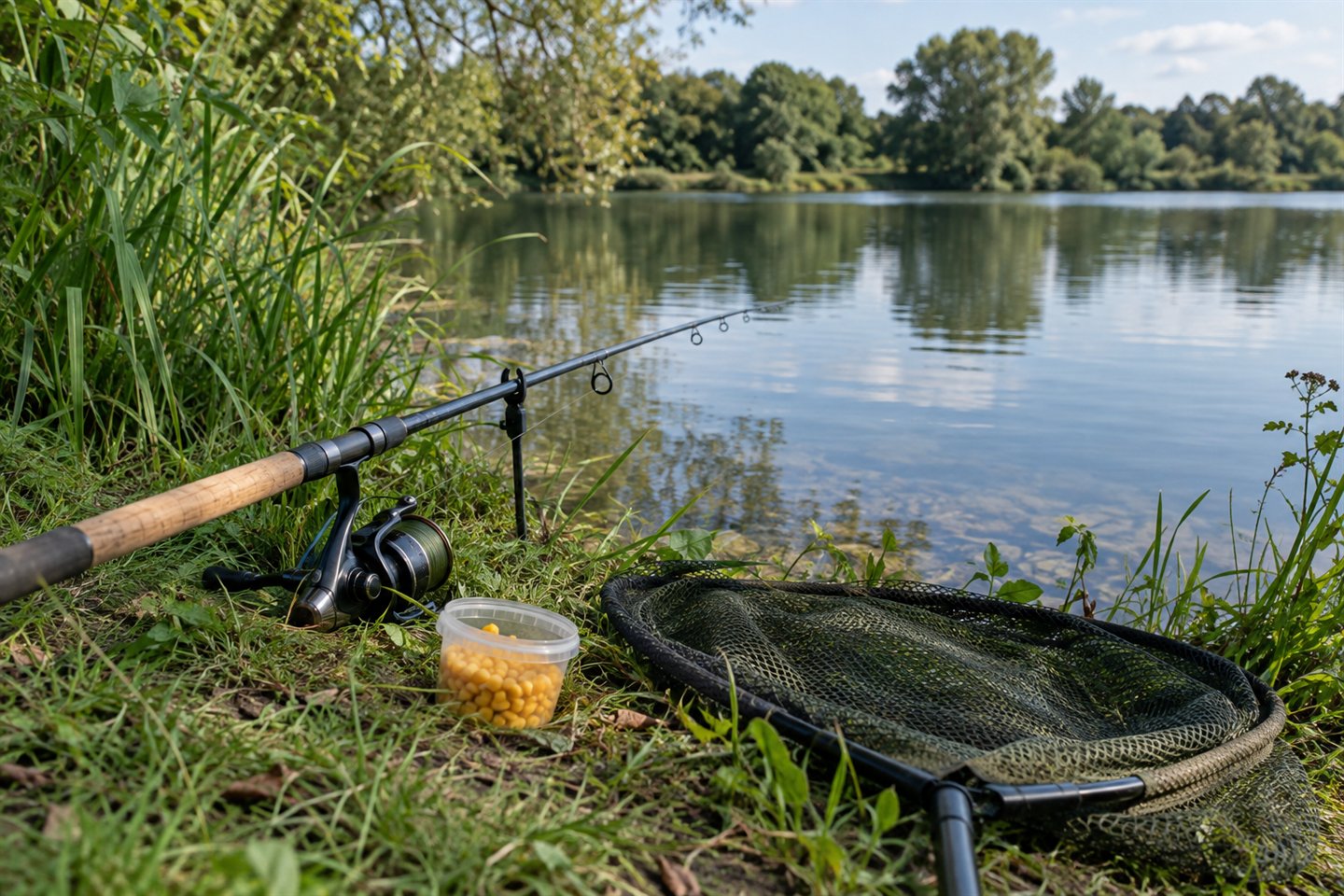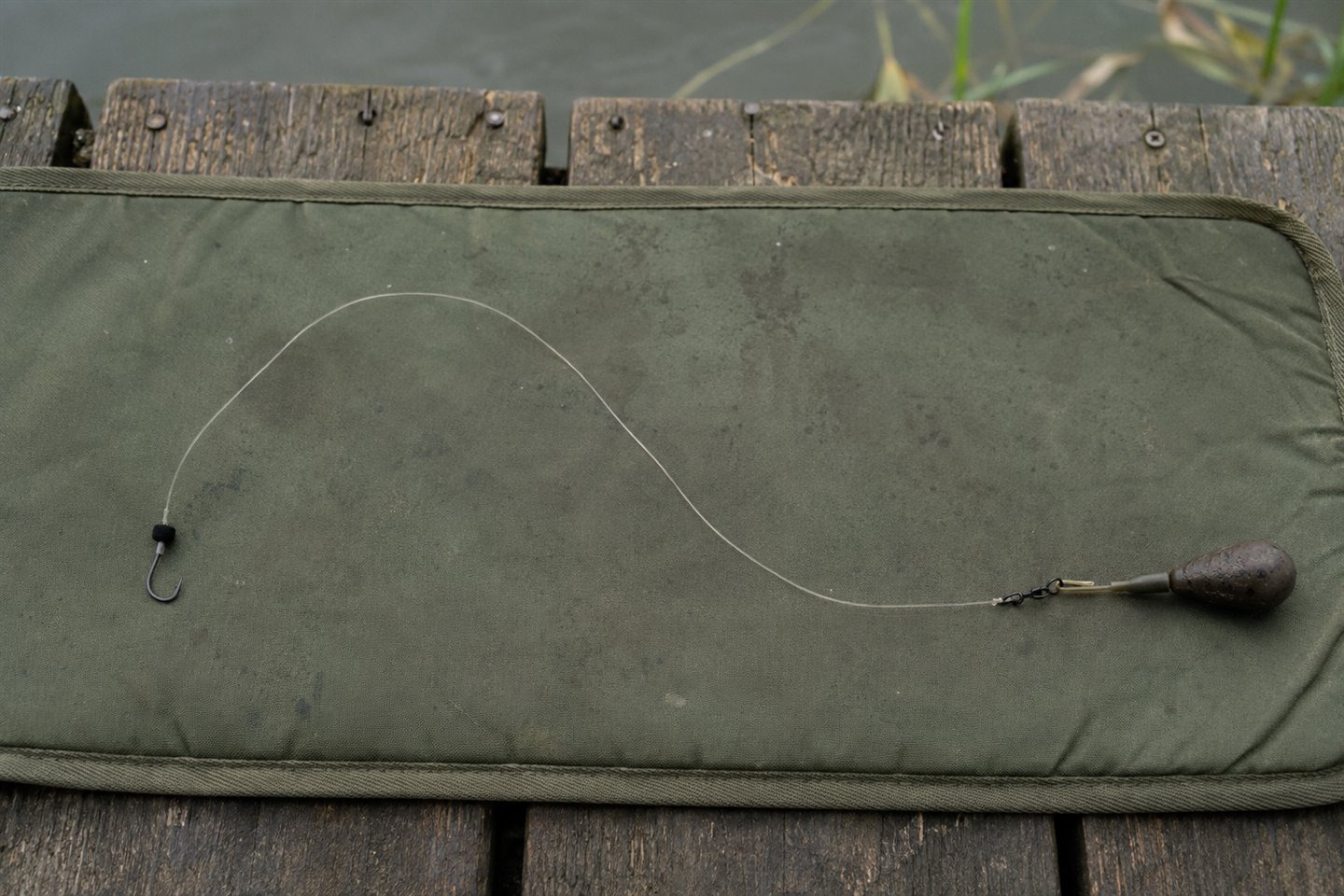
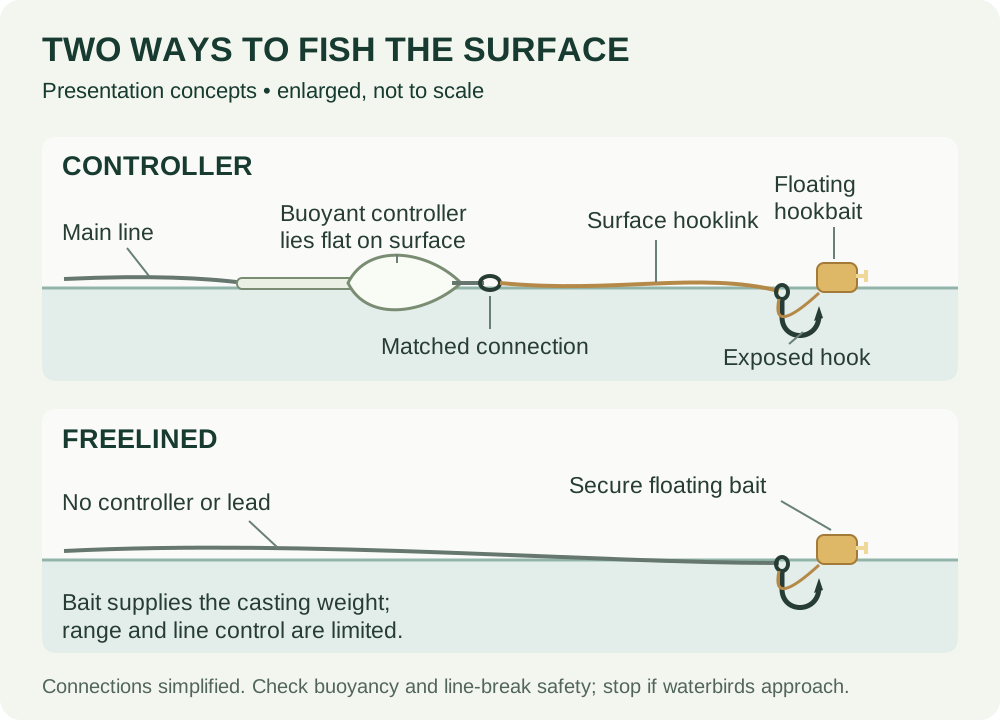
For a labelled anatomy reference and the current Korda-led component checklist, see the illustrated surface and controller fishing guide in our beginner overview. Compare the exact rig before changing materials or connections; named rigs can have more than one version.
Floater fishing is very exciting but also, in my opinion, a highly underutilised method of catching carp.
Many anglers miss the mark when attempting floater fishing for various reasons, which we will explain in this article.
We’ll cover the do’s and don’ts complete with various tips and tricks to ensure you fully utilise floater fishing on your next session.
Let’s get into it!
Get the Carp Feeding
Before we consider the art of floater fishing, we need to talk about the initial work.
Many anglers will simply cast to carp cruising on the surface and wonder why they don’t get any bites.

Carp are wily characters and on high pressured waters, will be even more apprehensive about taking your bait.
In order to solve this problem, you need to build the confidence of the carp by offering up some free baits.
I like to prime several areas of the lake, if possible, and get multiple groups of carp feeding. This can be impractical on busy day tickets waters but use your own judgment and implement this approach where possible.
You will find once the carp feel more at ease they will continue to feed off the top and often in numbers, this is the moment you can start to get your tackle primed.
Don’t Spook the Carp
Now you have the carp feeding off the top with confidence, you can start to think about trying to catch one or two.
Don’t, whatever you do, cast right on top of them.
This will undo all of your hard work in getting them to feed. Instead, cast past the spot you want to fish, then slowly bring back your bait into a prime spot.
This approach is very simple and highly effective in not spooking any carp.
Bait and Attractions
I like to floater fish for carp using a selection of Dynamite Baits floating pellets (paid link). I tend to carry 6mm, 8mm & 11mm. Pellets can be attached using a simple banded hair rig.

For added attraction and to really grab the attention of the carp, I will always soak my pellets in oils (paid link).
These oils will extrude when in the water and, hopefully, be irresistible to a big carp patrolling my swim. Carp seems to really love oils, which makes this tip simple and highly effective.
Light Tackle
Carp have excellent sight and carp tackle just seems more prominent when floater fishing on the surface.
Based on this, you need to use suitably balanced tackle you can get away with to try and keep everything is invisible as possible.
Match the hook size and line to the bait, fish and safe landing route. Korda Mixa hooks are designed for surface fishing, but a brand name cannot decide the correct size for every water.
As far as mainline, I would suggest something like an 8lb or 10lb Korda Kruiser Control floater line (paid link).
These types of mainline are very supple and have low visibility on the surface. They also offer some stretch to minimise hook pulls.
I would highly recommend you pick some dedicated floater fishing line as its very effective and low cost.
The key point is to retain enough control for the fish and surroundings. Do not use an underpowered setup to make the presentation look delicate.
Sharp Hooks
When you get a bite from a big carp, you must ensure you get a good hook hold to lower the chances of losing the fish.
Having very sharp hooks will help with this. Either use brand new hooks or a hook sharpener if you have one.
Soft Fishing Rod Tip
As I mentioned, you should be using lighter tackle than if you were fishing on the bottom. Based on this, if possible, use a softer rod tip to limit the hook pulls.
A softer rod tip works much better with smaller hooks, in my opinion.
The last thing you want is a very stiff fishing rod pulling like mad on a carp that is hooked with a lighter fishing line and a smaller hook!
Bright Pop-ups
As an alternative to oil-soaked pellets, I will always carry a couple of pots of Sticky Signature pop-ups (16mm) (paid link).
On occasion, when the pellets are not working a bright bait sometimes grabs the attention of the carp.
I like to trim down a pop-up to suit the size of the hook I am fishing with.
As an added bonus, these bright pop-up baits are very easy to see when cast out.
Strike at the Right Time
This is a key point, that I think many anglers get wrong.
You want to ensure you strike just at the right time.
I will look for either a carp physically sucking in the bait and will strike when I see the bait disappear into the carps mouth or when I see my line moving off when a carp takes the bait.
Many anglers will strike too early and miss a good hook hold. This takes some practice but you’ll get a feel for the right time to strike after a few takes.
Blend into the Surrounding
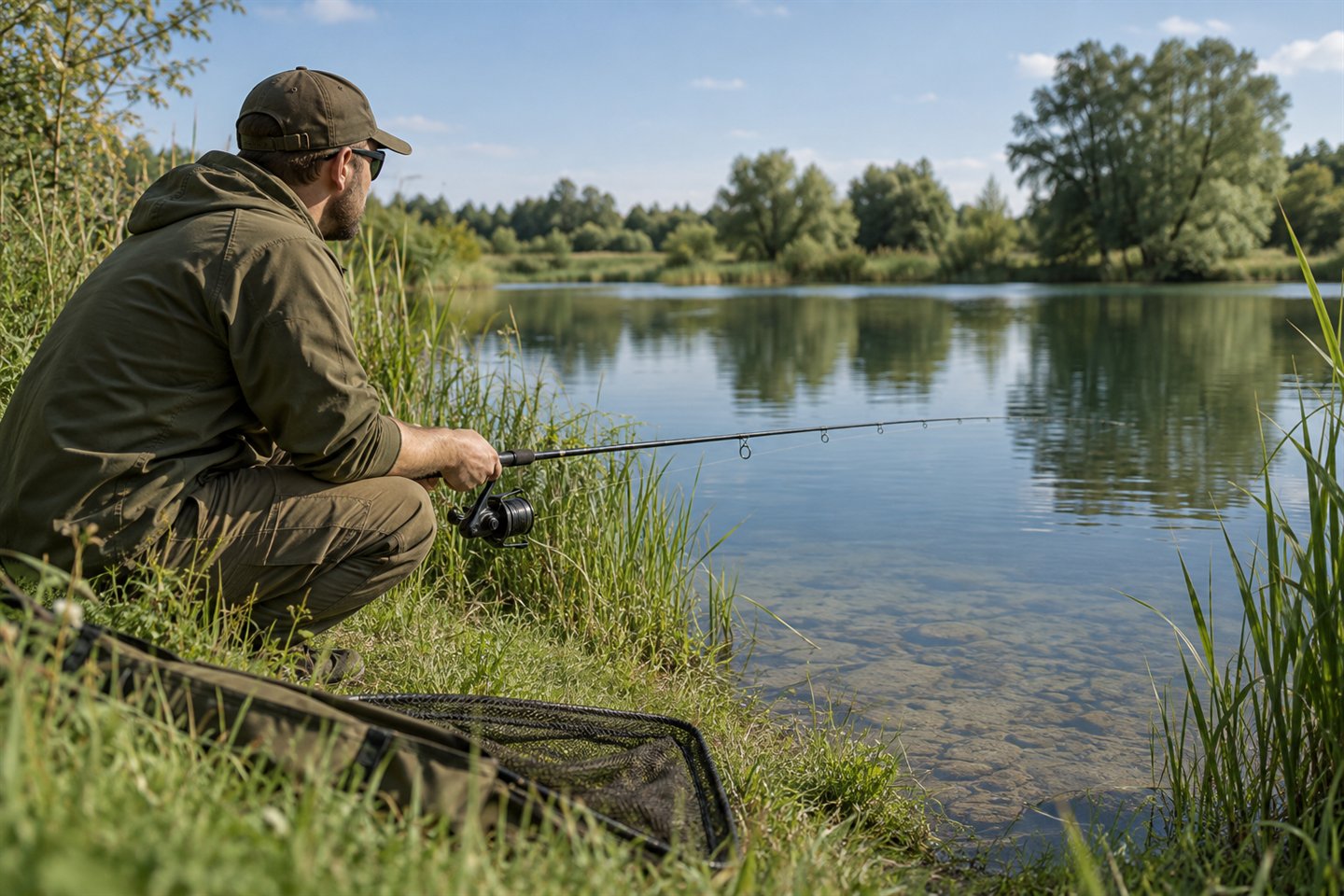
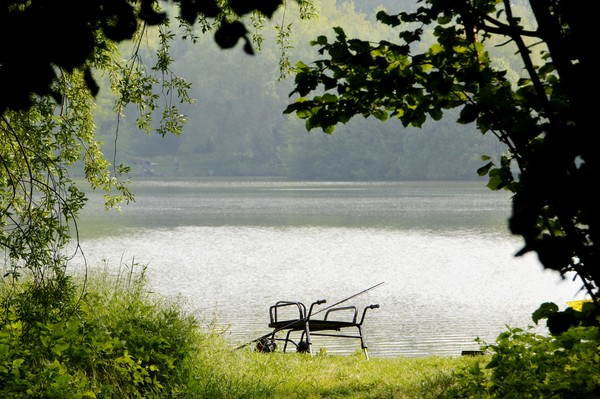
If you are floater fishing at a relatively short distance, make sure you blend into the surroundings.
Carp are very wily and will spot you a mile off if you contrast with the trees, which will ruin any chances of catching a carp.
This is very simple to do, by simply wearing greens/browns/camouflage.
Keep birds away from hooked bait
Birds can reach surface bait quickly, and a hooked offering creates a serious risk. Keep watching both the hookbait and the surrounding water.
Retrieve before a bird reaches the bait or line. Stop feeding and wait, move to a safe alternative or stop surface fishing.

Do not feed birds elsewhere to distract them while fishing. It can attract more wildlife and does not remove the risk around your hooked bait.
If birds repeatedly return, choose a different method you can use safely. The chance of a carp is not a reason to keep a dangerous presentation in the water.
Best Time for a Bite
So many anglers pack up during the early evening, which is actually one of the best times to catch carp on the surface or the bottom for that matter.
I believe at first light and early evening are the best times to catch carp using floater fishing.
These times of the day just seem to produce more bites and so make sure you don’t miss out on these time periods. Let all the other anglers go home and take full advantage.
Essential Tackle
The following is a summary of the essential tackle I believe is required to be successful when floater fishing.
- Brand new (sharp) size 10 or 12 hooks
- Dedicated floater fishing line - 8lbs or 10lbs
- A mixed selection of floating pellets - 6mm, 8mm & 11mm
- Banded hair to attach the pellet to your mainline
- A tub of bright pop-ups
Controller or freelining: choose before casting
A controller gives casting weight for a floating presentation. Freelining uses the bait's own weight without that controller. Neither is automatically better: choose the one that reaches feeding fish while letting you watch and control the hookbait.
At very short range, freelining may be all you need. Farther out, use a purpose-designed controller and follow its exact instructions. Check the permitted line, swivels, hooklink and safe arrangement rather than mixing parts because they look similar.
A Korda Interceptor 30g controller (paid link) is a possible option only when that weight and setup suit your rod, range and conditions. Check the actual listing variant and manufacturer's instructions; the weight you need is not determined by the size of the carp alone.
Make a simple water test
Check that the hookbait supports the intended hook and mounting without sinking unexpectedly. Compare its appearance with the free offerings. If the hooked bait sits differently, change the balance or mounting and test again rather than covering the difference with more feed.
The anatomy illustration near the start of this page helps identify the components. For a beginner, that is more useful than buying several controllers and hoping one assembles itself. Pull-test knots and check the hook point before every attempt.
Control the line without dragging the bait
Cast beyond feeding fish where there is safe space, then bring the bait into position gently. Keep enough control to see a take and respond, but do not tow the hookbait across the surface every time you move the rod.
Watch how wind and surface drift move the free bait. If your hookbait is held back or pulled across that drift, it may behave differently from the food around it. Adjust position or shorten the range before repeatedly changing flavours.
Never leave a surface presentation unattended. You need to see the hooked bait and the wildlife around it. If glare, darkness or distance makes that impossible, choose a method you can monitor properly.
Prepare for a close, lively fight
Have a clear netting area, a suitable net and wet unhooking equipment ready before the first cast. Use tackle strong enough for the fish and surroundings. “Light” means balanced and manageable, not deliberately underpowered.
When the fish takes the bait, take up contact and make a controlled lift rather than a violent strike. Watch for the line moving away as well as the bait disappearing; striking at every splash can pull the bait away too soon.
Keep steady control and guide the carp away from hazards. If the only available surface fish are beyond dense weed or under dangerous snags, leave them alone. A floating bait does not remove the landing problem below it.
Why are they taking everything except the hookbait?
Check three things before reaching for another pot. Does the bait float like the free feed? Is the line moving it unnaturally? Are you repeatedly casting into the fish? Correct the most obvious difference, then watch again.
Give wary fish time. If they stop feeding after your cast, resting the spot or quietly moving may help more than continuing to pepper the area with pellets. The stalking guide explains that observation-led approach.
Surface fishing questions
Do carp have to be feeding before I cast?
You can explore other approaches, but getting permitted loose feed taken confidently gives you a much clearer starting point than casting at every cruising fish.
Can I keep fishing when birds arrive?
Retrieve before birds can reach the hooked bait or line. Stop feeding and wait or move. Do not try to occupy the birds with another pile of food.
Should I buy a dedicated surface rod immediately?
Not necessarily. First check whether your existing rod can handle the chosen casting load and balanced tackle safely. A forgiving setup helps, but buying equipment cannot replace observation and line control.
Use How to Find Carp when there are no obvious feeders, or the zig guide when fish are below the surface rather than on it. Put a realistic daylight window into the Session Planner, and save successful feeding times in the Session & Catch Log.
Summary
Floater fishing is a very exciting method to catch carp but also a very underutilised method.
Use some of the tips and tricks in this article and I’m sure you’ll have success on your next session.