Planning carp fishing with a VISpas? It doesn't cover every water or every type of fishing. Check your chosen water in the official map, then confirm night fishing, rod limits and shelter rules before you book.
For a UK visitor, the official map, current conditions and the organisation controlling the water are the places to confirm permission. Check for local arrangements or temporary restrictions too, rather than relying on a list of supposedly unrestricted waters.
Sort out those checks before booking a trip around one spot. If anything is unclear, ask the organisation responsible for the water and wait for confirmation before planning that activity.
VISpas for carp fishing: which permissions do you need?
Start with your personal document and the exact water it covers. Next establish the permitted fishing times, then the number of rods. Finally check shelter or overnight-stay conditions and practical access to the bank. These questions overlap in everyday conversation, but an answer to one doesn't settle the others.
A water can be available to you for a daytime two-rod session while the proposed night session is not. A night-fishing permission can still leave uncertainty over the shelter you want to use. A lawful fishing position may also have no legal vehicle access beside it. Keeping the questions separate prevents expensive assumptions.
For the wider holiday choices, use the beginner guide to carp fishing in Holland. Use the steps below to turn your chosen trip into a clear document-and-water check. It should leave you able to describe precisely what you intend to do, where you intend to do it and which current information supports that plan.
What the VISpas represents
Official VISpas visitor information explains the link with membership of an affiliated angling club and the associated fishing waters. The cost can vary with the club and circumstances. Don't treat an old price in a travel article as a current national quotation.
Check the membership year and the exact name on the documents. A companion's card doesn't become yours because you share tackle or a booking. If applying shortly before travel, establish what evidence is valid while any physical documents are being supplied, and follow the issuer's current instructions.
A payment receipt and a permission document do different jobs. A receipt may prove you paid, but you should not assume that it contains everything an inspector requires. Read the confirmation carefully and contact the issuer if the actual fishing document, validity period or attached conditions are unclear.
Does a VISpas allow carp fishing on every water?
It is tempting to buy the first convenient VISpas and then search for a bank. A better approach is to shortlist the intended waters and identify the relevant club or rights holder before paying. That avoids discovering that the particular local opportunity you wanted requires a different arrangement.
Ask the organisation whether your proposed documents cover the exact stretch, not just the town or canal name. Include a map location and describe the intended session. A question such as two rods from the west bank during daylight on specified dates gives the recipient something definite to confirm or correct.
Do the same for the backup water. If the main bank is occupied or affected by works, a second water with unverified access is not a meaningful fallback. One additional properly checked option is more useful than a list of ten names collected from fishing videos.
How to check a Dutch carp water in VISplanner
Open the official VISplanner and use the account or document settings appropriate to your permission. The official service provides water information and relevant conditions. Read the current legend and instructions rather than assuming that a colour remembered from an earlier version means the same thing for your account today.
Zoom to the actual bank and select the water itself. Large labels can span several sections, and nearby channels or lakes may have different control. Check the selected water's full name and description before reading the rules. A correct set of conditions for the wrong adjacent water is still the wrong answer.
Use the map as a starting interface, not just a screenshot. Open the detail text, follow the relevant conditions and check any linked information from the rights holder. The useful result is an understood permission, not a blue-looking patch saved without its context.
Confirm both the fishing water and the bank position
A fishing right and a route to the fishing position are not identical. Before visiting, identify the permitted path, the bank you may occupy and any property boundaries. Don't infer access across a garden, industrial yard, marina or fenced area because the water beyond it appears in a fishing map.
Save a clear arrival point and a separate parking point. Satellite images can help you understand the layout, but they don't grant parking rights or reveal every current barrier. Ask about gates, opening times, construction and seasonal restrictions, especially where a long carry would affect whether you can take complete fish-care equipment.
On arrival, compare signs and physical boundaries with the information you collected. If they conflict, don't choose whichever interpretation is more convenient. Pause, contact the responsible organisation and use the confirmed alternative if necessary. Your travel effort doesn't change the permission.
Read the general conditions before the local exceptions
Water-specific notes can make little sense without the general rules they modify. Read the current general conditions accompanying your document, including supervision, permitted tackle, fish handling and any restrictions relevant to carp fishing. Then read the extra provisions for the selected water and the controlling club.
Keep a short personal summary, but don't replace the official wording with your own memory. Write down the parts that affect your setup, such as whether a particular baiting method or piece of equipment is restricted. Store the original conditions alongside that summary so you can check the context later.
If a translation is unclear, ask for clarification before fishing. Automatic translation can help identify the subject of a rule, but a small word about exceptions, dates or prohibition may change the meaning. Explain what you intend to do and request a definite answer rather than asking only whether carp fishing is allowed.
Do I need extra permission for night fishing in Holland?
The Sportvisunie 2026 document-control guide describes night fishing as the period from two hours after sunset to one hour before sunrise. It also explains that local organisations can set their own arrangements and that nature or recreation areas may have different restrictions.
The national night permission is called the NachtVIStoestemming. Check that the selected water carries the matching night-fishing indication and read its conditions, then establish whether that national scheme or a separate local arrangement applies. Don't assume that buying a national add-on overrides a club's separate rules. Equally, don't assume a club arrangement extends to waters outside that club's control.
Calculate the relevant times for the actual location and date, and allow enough time to retrieve and pack safely if you're only authorised for a daytime session. Darkness as you perceive it is not a precise administrative boundary. Agree the plan with companions so nobody quietly leaves a rod fishing beyond the permitted period.
Check the third rod separately
A third rod is a distinct permission question, not an automatic benefit of night fishing. The national additional permission is called the Derde Hengeltoestemming. Check for the matching third-rod indication on the exact water and establish which scheme and additional document apply. The fact that a rod fits on the pod or appears in a neighbouring swim doesn't settle your entitlement.
Club exceptions are real. HSV Ons Vermaak's published regulations, for example, state that national third-rod and night permissions don't apply on its waters. This is an illustration of why local checks matter, not a recommendation that the club suits your intended carp holiday.
For a first visit, one or two rods may be easier to manage even where more are permitted. Legal capacity and sensible workload are separate decisions. More lines can complicate navigation, public-bank use and playing a fish; use only what you can supervise properly in the actual swim.
A shelter symbol is not a general camping licence
Ask specifically about the shelter you intend to use, the bank position and the length of stay. A fishing umbrella, a bivvy, a camping tent and a vehicle used for sleeping may be treated differently. Describe dimensions and whether anyone who is not fishing will stay there, rather than assuming all overnight equipment falls under one rule.
Read the water conditions and check with the municipality or land manager where necessary. Don't extrapolate shelter permissions from another region or from photographs of anglers using larger setups. An old photograph may show a different site, a temporary authorisation or behaviour that was never permitted.
Keep a conventional accommodation option available until the answer is definite. If the trip depends on sleeping beside the rods and the rules don't support that arrangement, change the trip before travelling. Buying a smaller bivvy doesn't solve an unresolved right to occupy the bank overnight.
Watch for club-specific schemes
The Amsterdam angling association's night-permit page shows a local scheme tied to membership and named waters. Such arrangements demonstrate why the name of the issuing organisation belongs in your notes. A generic label such as Dutch night ticket leaves out the crucial question of where it works.
When a local scheme applies, read its application and delivery process carefully. Establish whether a visitor can obtain the document, whether places are limited and whether your dates are covered. Don't wait until arrival to discover that an office is closed or a particular permission requires advance processing.
Keep correspondence that clarifies the exact setup you proposed, while remembering that an informal message cannot override the law. If an answer appears inconsistent with published restrictions, ask the organisation to explain the discrepancy. A calm clarification before travel is better than an argument during an inspection.
Check updates, not just the printed list
The existence of a multi-year water list doesn't mean every condition remains unchanged throughout those years. The official June 2026 digital supplement contains changes and local conditions, illustrating why current updates matter alongside the main publication.
Recheck close to departure and again if your water or dates change. Temporary works, events, access restrictions or fish-welfare concerns may affect a plan that was sound when first researched. Put a final permission review beside the travel-document review rather than treating the angling paperwork as finished months in advance.
Don't rely on an article's review date to guarantee your session. This guide was reviewed on 15 September 2026, but the live sources and notices still need checking for your visit. The purpose of the article is to make that process clear and manageable.
Keep usable evidence with you
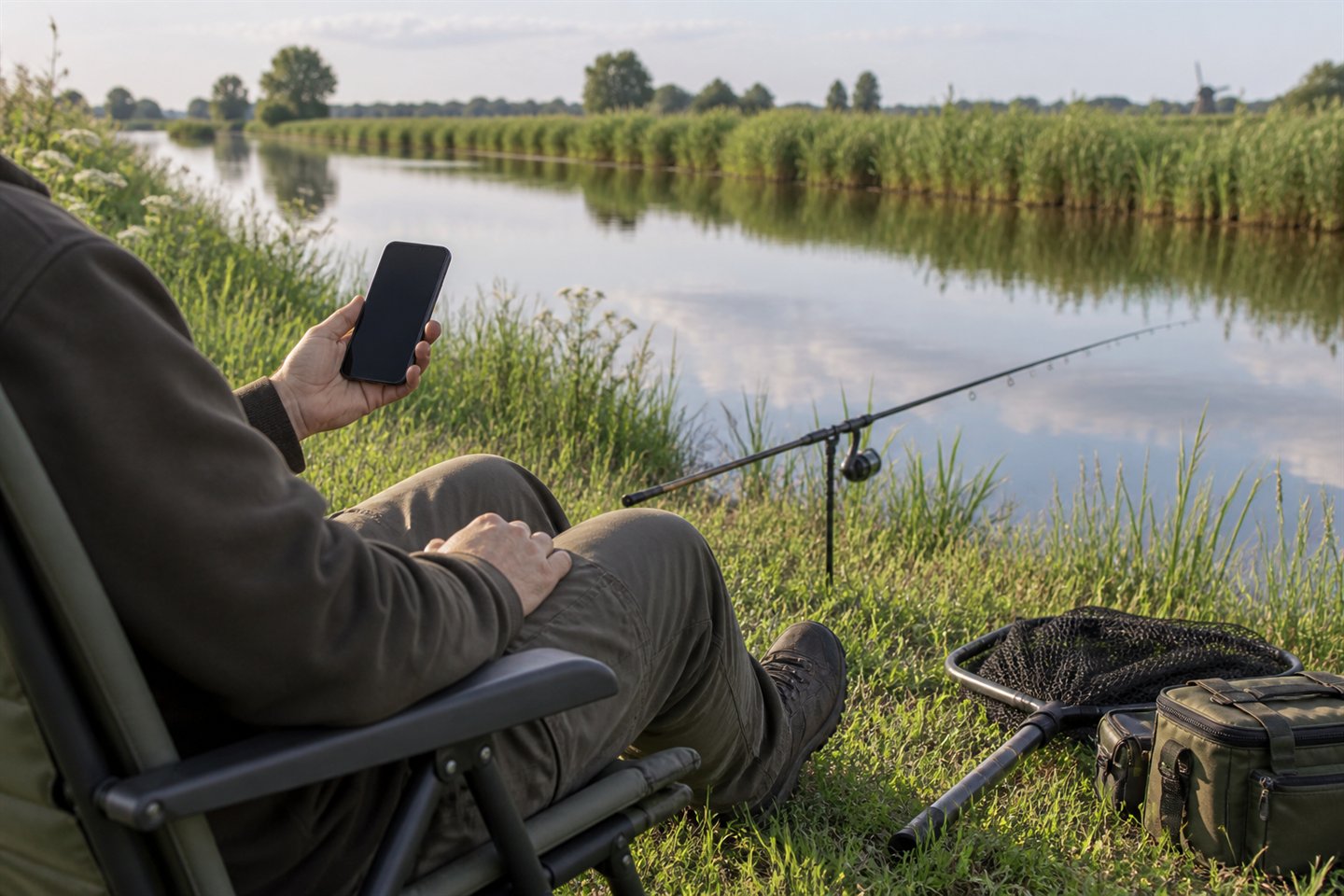
Follow the issuer's requirements for carrying and displaying the actual fishing documents. Check them on the device or in the physical form you'll take to the bank. A successful login at home is not enough if the app later needs an update, the document has expired or the phone cannot stay charged.
Carry a power bank if using digital information and store essential contacts separately. A printed planning summary can include the water name, arrival location and organisation's telephone number. It is useful backup information, but don't assume a homemade summary or screenshot substitutes for the legally required documents.
Keep paperwork dry and accessible rather than buried beneath tackle. If an authorised inspector asks to see it, a tidy document routine makes the exchange straightforward. Listen carefully, cooperate and ask politely for clarification if you don't understand an instruction.
Bait and equipment still need a local check
Permission to target carp doesn't automatically authorise every carp-fishing method. Check the relevant bait and tackle rules, including any restrictions on feeding, bait boats, leaders or other specialist equipment. Ask about the actual items you intend to use instead of expecting the phrase normal carp tackle to convey a complete setup.
Separate fishing rules from customs rules. A bait permitted at the lake may still require import checks when travelling from Great Britain. Conversely, something lawful to transport may be prohibited by the fishery. Plan both parts before buying quantities and use local supply when that makes the arrangements clearer.
Keep the first visit simple enough that an unavailable or prohibited accessory doesn't dismantle the entire plan. The first-session guide offers a practical baseline built around familiar rigs, manageable rod numbers and complete fish care.
Prepare for non-target fish and handling rules
Read the conditions for handling and returning catches, including protected species, minimum sizes and any relevant closed periods. Targeting carp doesn't guarantee that only carp will take the bait. You need to recognise likely non-target species and know what to do promptly if one is hooked.
Carry suitable unhooking tools and a net that reaches the chosen bank safely. Prepare the wet padded surface before casting, and avoid unnecessary retention while sorting photographs or searching for information. The carp-care guide covers the practical handling routine, while Dutch law and the water's conditions govern the local requirements.
If you're uncertain about a handling instruction, resolve it with the club before fishing. Don't improvise by moving fish to another water or keeping them while looking for an answer. A safe session includes knowing the expected response before the first unexpected capture.
A worked permission check
Imagine you have found an attractive canal near your accommodation. Your initial idea is two nights with three rods and a bivvy. Begin by selecting the precise section in the official planner with your own documents, then confirm that the bank and the intended water are covered.
Next read the local conditions. Suppose they confirm daytime fishing but leave the overnight arrangement unclear. The correct next step is not to buy every available add-on. Contact the rights holder with the dates, rod number, shelter description and map position, then wait for a clear explanation of the applicable scheme.
If the final answer supports two daytime rods but not the overnight setup, you have a valid choice: fish that simpler session from booked accommodation or select a different fully checked water. The process has worked because it turned a vague idea into a lawful, practical decision before travel costs were committed.
Questions to send the controlling organisation
Keep the message short enough to answer. State that you're visiting from the UK, give the exact water and dates, name the documents you hold and describe the proposed activity. Ask whether those documents cover the bank, fishing times and number of rods you intend to use.
In a separate paragraph, describe any shelter, non-fishing companion, vehicle access or bait boat. Ask where current rules can be read and whether temporary restrictions are expected. This separates the basic permission from the additional arrangements and reduces the chance of receiving a broad yes that answers only part of the question.
When the reply arrives, compare it with your plan and revise the plan explicitly. Share the result with every angler travelling. A group booking doesn't remove individual responsibility, and one person understanding the rules is not enough if others arrive with different equipment or expectations.
Repeat the check before a canal move
A move along a connected water can feel like a fishing decision only, but it can also change the permission. Before carrying the tackle to a side channel, basin or opposite bank, select that exact position in the official information and check whether the same documents and conditions apply.
The Dutch canal guide explains how rights boundaries interact with navigation and safe access. Keep a short list of prechecked moves so a fresh sighting doesn't tempt you into an area whose status you have not established.
If the information is unclear, observe from lawful public access without fishing and contact the rights holder later. Finding carp is useful even when you can't cast immediately. It gives the next enquiry a precise purpose and avoids turning a promising observation into an avoidable permission problem.
Equipment worth considering
A waterproof pouch and dependable phone charging are useful because this task depends on accessible documents and current information. Choose a pouch large enough for the actual papers without repeatedly folding important details. Test a power bank and cable before departure rather than discovering a faulty connection beside the water.
A small notebook can hold the water name, contacts, permitted session times and the questions still to resolve. Keep that working note separate from the official documents so you don't mistake your summary for the full conditions. Use equipment you already have if it protects the information reliably.
No tackle purchase can correct missing permission. Spend time resolving the water and bank first; only then buy any genuinely necessary item required by the chosen venue.
An Anker 20,000mAh USB-C power bank (paid link) can help keep a compatible phone available for checking water details, and a NGT rechargeable fishing headtorch (paid link) is relevant if night fishing is actually permitted. Save the appropriate documents and carry the form of proof required by the issuing body; buying electronics doesn't replace that proof. Check charging connections and carry a separate backup light rather than relying on the phone torch for every bankside task.
Frequently asked questions
Does a VISpas include night fishing everywhere?
No. Check the exact water and applicable night-permission scheme. Local organisations and particular areas can impose different arrangements. A national add-on should not be treated as overriding a club restriction, and a club permission should not be assumed to apply beyond that club's waters.
Can I use three rods if I have a night permit?
Not on that basis alone. Rod number is a separate check, including any additional permission and the water's own conditions. Use only the number you're authorised to fish and can supervise safely. A two-rod plan may be simpler for a first visit even where a third is available.
What should I do if the map and a bankside sign disagree?
Pause and contact the responsible organisation rather than fishing under the more convenient interpretation. Check that you selected the correct water and bank, and look for current notices. Use a fully checked alternative if the discrepancy cannot be resolved before the session.
Final thoughts and official sources
Check that your documents cover you, the exact water and bank, and the dates and methods you plan to use. Deal with night fishing, a third rod, shelters and access separately. It takes a little organising, but it's far easier at home than at the bank. Then you can enjoy getting to know the water.
Use Sportvisunie's current VISpas information, the official VISplanner, current supplements and the controlling club as the starting sources. Recheck the exact conditions before every new water or changed trip, and ask the relevant authority where public-access or municipal rules remain uncertain.