Canal carp can be surprisingly close to busy paths and passing boats. Finding them is the first job; presenting a bait and landing a fish safely come next. We'll look at a quiet, mobile approach to UK canal carp fishing.
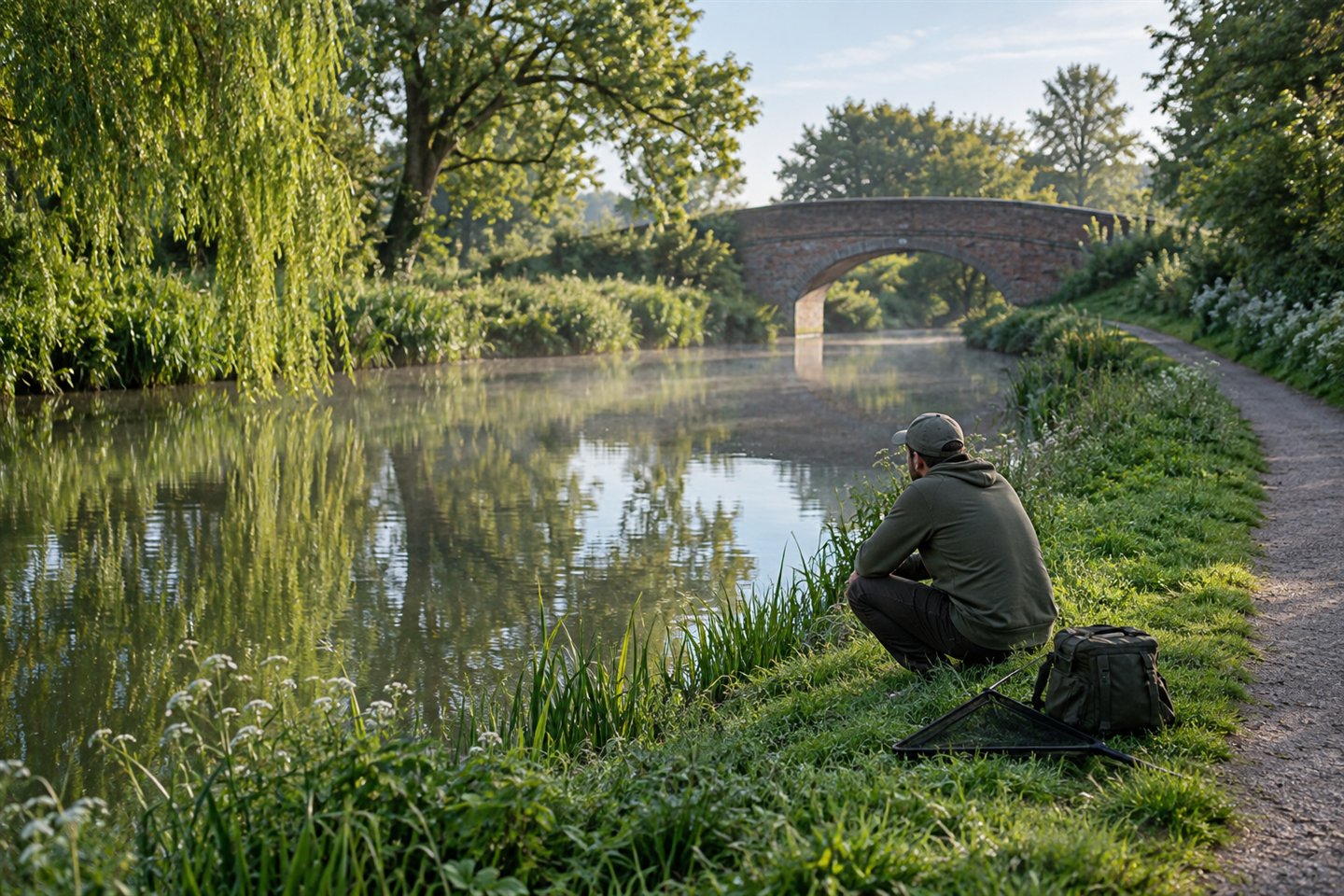
Canals reward a different mindset from a small stocked lake. Carp may be spread through a long pound, spend time beneath cover or pass through an area without stopping. A familiar-looking bridge, reed bed or moored boat is a clue to investigate, not proof that fish are present. Expect some visits to be mainly about observation.
This guide concentrates on targeting carp with a simple rod-and-reel setup, usually on the bottom, rather than general canal coarse fishing. If you're still learning towpath etiquette, basic depth changes and mixed-species methods, begin with the canal-fishing guide for beginners. The carp-specific approach below builds on those foundations.
Canal carp fishing in the UK: how do you choose a first stretch?
Choose a stretch with confirmed carp, clear fishing rights and safe bank access. Walk it at a useful time before unloading everything, identify a reachable spot and fish one controlled presentation with modest bait. Keep the whole setup compact enough to clear the towpath and retrieve promptly when navigation requires it.
Don't confuse mobility with leaving rods fishing while you walk. Search first, then fish; if you want to investigate another area, retrieve the rig and take control of the tackle before moving. One rod is often a sensible beginning because it reduces line management, makes boat interruptions easier and leaves more attention for learning the water.
Your first canal carp need not come from the most dramatic-looking structure. An open stretch where fish regularly pass and can be landed safely is more useful than a dark gap beneath a boat from which a hooked fish has no clear route. Build the session around the complete capture, not just the possibility of obtaining a bite.
Find out who controls the exact stretch
Check the fishing rights before preparing bait or choosing a peg. Different clubs can control neighbouring lengths of the same canal, and a convenient public towpath is not evidence that angling is free. Identify the actual start and end of the permitted stretch and any excluded areas, then carry the required permit or membership information.
The Canal & River Trust's fishing FAQs distinguish the rod licence from permission supplied by the fishing-rights holder. Use the Trust's information and the controlling club's current rules together. Confirm separately whether night fishing, multiple rods, prebaiting or shelters are allowed; none should be assumed from a daytime visit.
Check the applicable close-season and local byelaw position for the named water. Most canals are not treated identically to rivers, but exceptions and connected sections exist. If a map or club description calls the water a navigation, river section or protected canal length, resolve that distinction with the controller rather than relying on the appearance of locks and towpaths.
Don't assume that permission on the towpath side allows access to the opposite bank or inside a marina. Where a basin, private mooring or entrance looks attractive, ask about the exact boundary. A cast can cross a permission boundary just as easily as a person can, even when your feet remain on an authorised path.
Choose a manageable first stretch
Start with credible evidence that carp are present: the controlling club's information, recent verified catches or repeated sightings of identifiable fish. A canal may support excellent roach or bream fishing while carp are sparse. Don't use a photograph from an unnamed location as proof that every pound nearby offers the same opportunity.
Prefer a stretch with level access, manageable bank height and enough room to use a proper landing net. Ask whether there are known obstructions, strong flows around structures or periods of heavy boat traffic. The easiest place to walk is not always the easiest place to land a large fish, so inspect both before deciding.
For a first carp session, avoid lock approaches, narrow bridges, service points and busy visitor moorings. They can create constant conflicts between a static fishing line and the waterway's main uses. A quieter, permitted length with a clear landing route gives you more time to concentrate on location and presentation.
Time the visit realistically. Early or late daylight may allow quieter observation on some stretches, but local traffic, dog walkers, commuters and access rules vary. Watch what actually happens on your chosen water rather than assuming that every canal becomes empty at a particular hour. A short reconnaissance visit can reveal whether the planned session fits normal activity.
Learn the pound before choosing one obvious feature
A pound is the stretch of water between locks, but it need not be uniform throughout. Width, depth, shade, vegetation and bank construction can change markedly. Break a manageable length into sections you can compare, such as a reed-lined straight, an open bend and a wider basin, without needing to cast into every one.
Use safe observation points to look for moving shapes, disturbed sediment, repeated surface activity and fish entering or leaving cover. Polarised glasses can help in suitable light, but coloured water may hide fish completely. In that case, combine the club's information with repeated visits instead of treating lack of visibility as absence of carp.
The watercraft guide provides a useful way to separate direct evidence from assumptions. On a canal, extend that thinking along the water rather than only across it. A carp seen at one point may be travelling, so note direction, timing and whether it returns before deciding where a bait would be most useful.
Watch from a little back from the edge where possible. Repeatedly leaning out over a shallow margin can reveal your presence and make your footing less secure. Keep movement deliberate, avoid casting a large shadow across a visible feeding patch and let the fish show their route without following every individual step for step.
Read the channel and shelves carefully
Many canals have a deeper navigable channel with shallower shelves, but the exact shape varies with construction, maintenance and boat use. Don't assume the far margin is shallow or the middle is clear. Use a controlled depth or bottom check in permitted water when it is safe to do so, and build a simple picture of the area you'll actually fish.
A shelf can offer a manageable presentation if the bottom is suitable and the route back to the net is open. The far bank often looks appealing because it holds cover, yet fishing across the whole channel creates a longer line exposed to passing traffic. A near-bank opportunity may be less conspicuous to the angler but easier to manage responsibly.
Reeds, piling and overhanging plants can mark changes worth observing. They can also conceal roots, sharp edges or discarded objects. Inspect what is visible and listen to reliable local warnings. If repeated casts return frayed line or the lead catches unpredictably, stop treating the area as an intriguing feature and reconsider whether it is safe to fish.
Don't clear branches, cut vegetation or move objects to manufacture a swim without the controller's permission. Apart from possible access and habitat issues, removing what you can see doesn't prove that the underwater route is clear. Choose an existing suitable location rather than creating a difficult engineering job before the first cast.
Moored boats are obstacles, homes and moving craft
Boats can offer shade and contrast, but they are not carp-fishing targets to cast against. Ropes, fenders, hull fittings and propellers complicate the path of a hooked fish. Even a boat that has not moved during several visits may leave without warning, changing the line's position and the availability of the water beneath it.
Respect the occupants' space and privacy. Avoid peering through windows, putting bait or tackle onto a boat or discussing somebody's home as if it were an unoccupied island. If safe fishing would depend on asking a boater not to move or not to use a rope, choose a different spot.
The Trust's good-fishing guidance gives navigation priority in turning areas and explains that anglers may need to move for boats using visitor moorings. Treat those shared-use expectations as part of venue choice, not an interruption to be argued away after settling into a chair.
How to fish for canal carp around boat traffic
Look in both directions before every cast and continue watching while fishing. A boat can approach more quickly than expected when your attention is on a rig or phone. Keep the rod and line arranged so retrieving is straightforward, with no luggage blocking access and no unnecessary second line complicating the task.
Retrieve in good time when a passing boat may encounter your line. Don't rely on an assumption that a sunken line will always lie safely beneath the hull. Depth, propeller draw, underwater contours and slack can make that judgement unreliable. A short interruption is preferable to a line caught by a moving craft.
Wait until the boat has passed and the water has settled enough for a controlled replacement cast. Watch for boats following behind, craft turning or another user approaching from the opposite direction. There's no need to rush the rig back into the channel between movements if the opportunity is too short to manage safely.
After traffic disturbs the swim, reassess rather than immediately adding feed. The water may have coloured, debris may have moved and the original line lay may no longer be appropriate. Some fish remain active in disturbed water, but that doesn't mean every passing boat requires another handful of bait.
What tackle do I need for canal carp fishing?
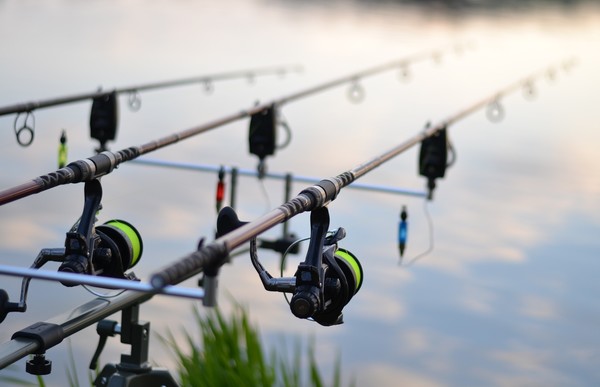
Choose a rod length that you can use safely beneath the available overhead space and that still gives useful control at the bank. A shorter carp rod can be convenient on some stretches, but it is not compulsory. Avoid buying for compactness alone if the rod cannot handle the required lead or provide the control needed for the likely fish.
Match the main line to the venue's rules, the fish and the actual abrasion risks. Canal carp fishing is not an excuse to use delicate tackle beside sharp piling or roots. Equally, a very strong line doesn't make an otherwise impossible landing route acceptable. The entire arrangement, including knots and terminal tackle, must be considered together.
Use a simple, approved rig and a lead system that functions safely if the line breaks. Keep the hookbait appropriate to the presentation and inspect it after boat-related retrieves. A compact PVA offering may help protect the hook during a cast on a suitable spot, but no small parcel can make a snaggy or heavily obstructed bottom safe.
Carry a net and handle suitable for the bank height and likely carp, together with a padded mat, bucket and unhooking tools. Put the mat on level ground without blocking the towpath, and have a clear transfer plan. If the bank is too high to support and release a carp properly from your position, fish somewhere else.
Feed with a reason, not a schedule
Begin with a modest amount of permitted bait that suits the species you're targeting and the nuisance fish present. A few clearly placed food items can help you watch whether a spot is being visited. Large quantities spread along an unknown stretch make it harder to understand where fish are responding and may create needless waste.
Use only properly prepared, permitted bait and store it securely on the towpath. Don't leave open containers where dogs or wildlife can reach them. Avoid loose packaging, hookbaits on exposed hooks and baiting accessories that require firing across a busy path. The way bait enters the swim should be as controlled as the cast.
Prebaiting can help investigate repeat visits, but permission comes first. Ask whether feeding outside a fishing session is allowed, whether quantities are restricted and whether the area can be used without interfering with another angler. The prebaiting guide explains the wider approach; on canals, shared access and navigation make local agreement particularly important.
Keep notes about visits to the spot rather than assuming that missing bait was eaten by carp. Small fish, birds, water movement and passing boats can all alter what you see. A useful prebaiting observation combines bait changes with identifiable carp activity or a repeated pattern, not simply an empty patch on the next walk.
A workable first-session routine
Arrive with a limited stretch in mind and spend the opening period observing it. Confirm that the permit covers the chosen area, inspect the landing route and identify any approaching traffic. Set up the fish-care equipment before putting a baited rig in the water. Choose one spot that answers a clear question about where the carp are travelling or feeding.
Make a controlled cast, settle the line and test the indication. Remain beside the rod with the towpath clear. Watch both the fishing area and the approaches along the canal. If the line collects debris or the lead shifts after traffic, inspect and reset deliberately rather than assuming the presentation remains where it landed.
Give a plausible spot time, but keep moving an option when there is reliable evidence elsewhere. Retrieve everything, secure the hook and move the complete setup before fishing again. Don't leapfrog between distant rods or leave tackle spread along the bank as a way of claiming several areas.
For a time-limited visit, the short-session carp plan helps structure a review point and a sensible finish. On a canal, leave additional room for boat interruptions and the walk back. A session that ends with rushed packing at a narrow bridge was not genuinely planned around the available time.
Playing and landing a carp beside a towpath
Take controlled contact promptly and guide the fish towards the open route you assessed before casting. Don't let it reach ropes, roots or metalwork while searching for the net. If another person can help, make a clear request and keep other towpath users informed without blocking their route unnecessarily.
Maintain steady pressure and use the rod and clutch appropriately rather than clamping the spool to force a carp away from an obstacle. If the swim requires an immediate locked-up battle to make any landing possible, it was not a suitable beginner choice. The snag-safety guide explains why selecting a safer spot is more valuable than trying to rescue a poor setup during a fight.
Keep the fish supported in the net while preparing the transfer, minimise handling and return it promptly once it has recovered properly. A public towpath can attract interested passers-by; a quick explanation is fine, but a growing audience should not lengthen the fish's time out of water. Skip the photograph if the working space is cramped or the fish is unsettled.
How to find carp on a UK canal stretch
When access allows, revisit the same manageable stretch at different daylight times before deciding that a long pound contains no carp. Keep the comparison simple: note boat activity, visibility and any identifiable fish rather than drawing conclusions from water colour alone. A quiet morning and a busy afternoon may reveal different parts of the same route without either being universally better for fishing.
Mark observations against permanent, publicly recognisable references without publishing sensitive details about private property or other anglers. A bridge number, permitted access point or mapped change in width can make a notebook useful on the next visit. Avoid relying on a particular moored boat as the only reference, because it may have moved when you return.
Over several walks, separate a confirmed sighting from a potential fishing spot. You may find carp in water you can't access or beside an obstruction you should not fish. That information still helps explain the stretch, but it should not gradually erode the boundaries you checked at the start. The best first capture often comes from identifying where those fish pass through a safer, permitted area, then being ready there with a simple presentation.
Equipment worth considering
Polarised sunglasses are useful for inspecting marginal water when conditions allow, while a compact tackle box keeps hooks and small tools contained on a public path. A manageable PVA mesh system can suit a small bottom-bait presentation, provided the venue allows it and the ingredients are compatible. None of these items replaces learning the stretch or choosing a clear landing route.
Pay particular attention to the landing-net handle and mat. Check that the handle reaches the water from the safe bank position without requiring you to lean over the edge, and that the net and mat can accommodate the expected carp. Waterproof storage for a phone is also worthwhile, but keep the phone accessible rather than buried in luggage. Compare what the equipment does in the actual swim, not just how small it packs for the walk.
Fortis Bays polarised sunglasses (paid link) may make close-range observation easier where reflections allow, while the NGT 42-inch landing net with 2m handle (paid link) offers a listed handle length to compare with the bank height. Neither makes a steep towpath edge safe. Check the net can be used from a secure position and leave enough width for other canal users before deciding that a swim is fishable.
Frequently asked questions
Can you fish for carp on any UK canal?
No. Carp distribution, fishing rights and local restrictions vary. Find a stretch where carp are confirmed and obtain the correct permission for that exact water. Public access along a towpath doesn't grant fishing rights, and a permit for one section may not cover the next club's water.
Is the far bank always the best place?
No. Carp can use the near shelf, channel and wider areas as well as far-bank cover. Fishing across navigation adds line-management demands. Choose a spot from observed fish behaviour, safe presentation and the landing route rather than treating maximum distance across the canal as an advantage in itself.
Should I use a backlead when boats pass?
Don't treat a backlead as permission to leave a line where moving craft may encounter it. It cannot guarantee clearance from hulls, propellers or submerged obstacles. Retrieve in good time when necessary and follow the waterway's guidance. A simple, visible interruption is easier to manage than an underwater assumption.
Build knowledge one stretch at a time
Get to know one manageable stretch: the permissions, boats, fish movements and places you can land a carp. Keep the gear light and make a few notes when you visit. You don't need to search every bridge in the county. Learning a small area well can give you a much clearer plan for the next session.
Sources and further reading
Checked on 15 September 2026: Canal & River Trust fishing FAQs, good-fishing guidance and the waterway code. Confirm the controlling club's current rules and any closures before travelling.