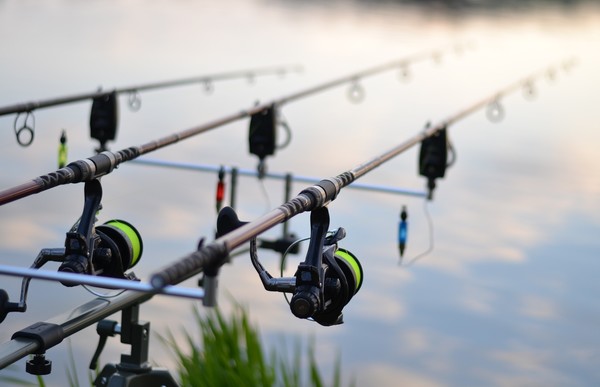
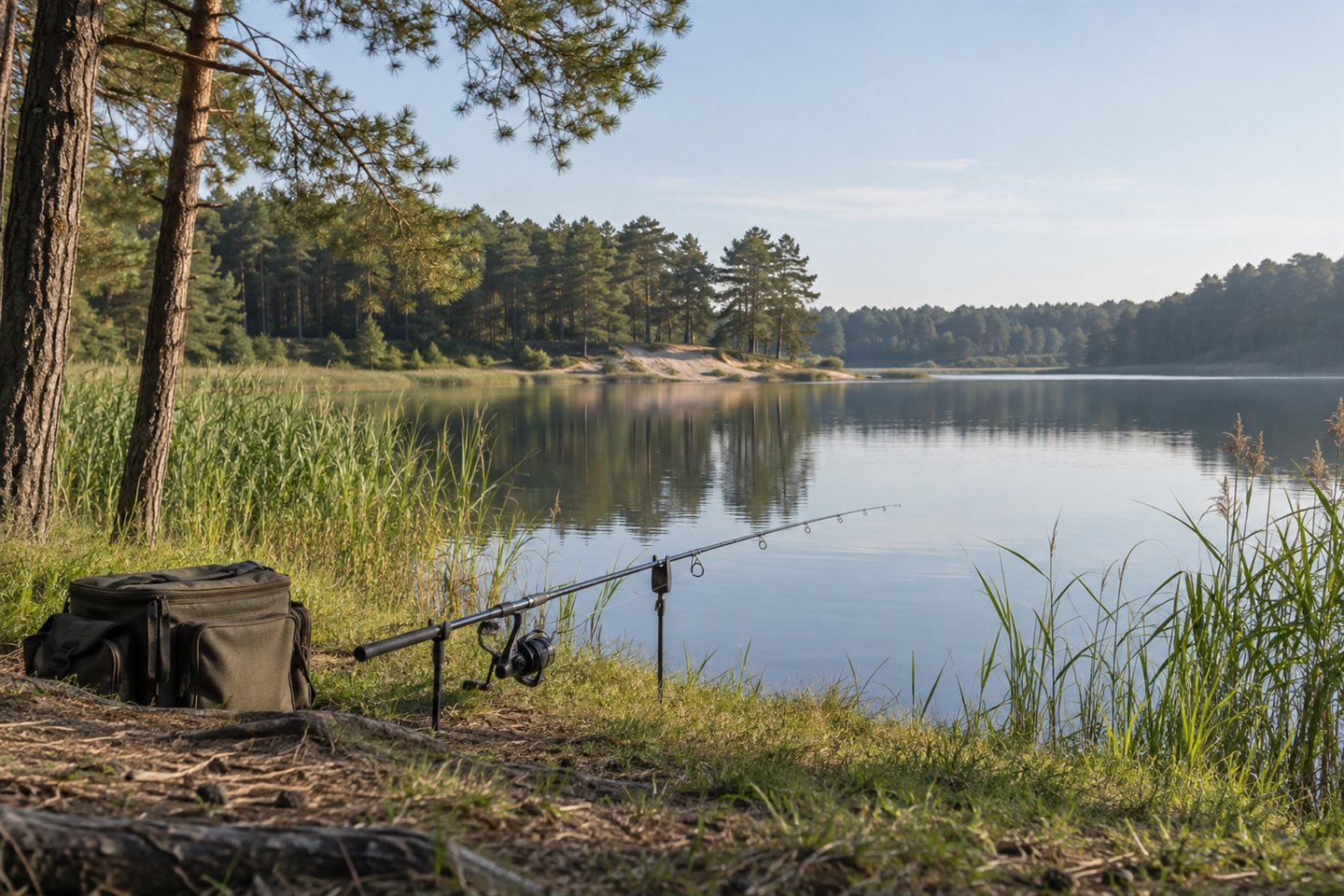
Brandenburg has plenty of water to catch your eye, but start with one lake you can reach and fish legally. We'll look at the permission and access checks, then the practical choices for a manageable carp trip.
Brandenburg also has its own coarse-fishing and visitor arrangements. They should not be transferred to Berlin or any other German state. This guide explains the regional questions that matter to a UK carp angler and turns them into a practical sequence: confirm the documents, select the water, check the bank and organise a safe first session.
Official information was reviewed on 15 September 2026. The ministry's English brochure is useful, but some administrative details have changed since its October 2024 edition. Where the current ministry pages provide newer information, use that current guidance and confirm your own circumstances before travelling.
Carp fishing in Brandenburg: what does the exact water allow?
Choose a lake or stretch that can be reached comfortably from your accommodation and fished with familiar equipment. Ask whether there are safe bank positions for visitors and whether the expected fishing depends on a boat. A place described as excellent for angling may still be unsuitable for your intended bank session.
Identify the exact water name, location and rights holder. Similar names, connected channels and nearby state boundaries can cause confusion. Save the map position and the relevant water code if one is used, then include both when asking about permission.
The broader guide to carp fishing in Germany explains country-level planning and regional differences. Keep this trip deliberately narrower. One thoroughly checked Brandenburg water and one suitable alternative provide a stronger first visit than a long list of lakes with unresolved access.
What documents should a visitor check for fishing in Brandenburg?
The current Brandenburg ministry guidance explains that coarse fishing requires permission for the water and, from age 14, evidence of payment of the fisheries levy. The ministry distinguishes this from the additional fishing-licence requirements associated with predator fishing.
Don't reduce that to carp fishing needs no paperwork. The water permission still matters, the levy requirements must be met where applicable and the method must fit the relevant legal category. Ask the issuing authority to confirm the route for your intended tackle if there is any uncertainty.
Keep the documents on the bank and follow the current instructions for showing them during an inspection. Check names, dates and the exact water coverage before the trip. A payment receipt or an old membership card is not automatically a substitute for the documents required for the session.
Use the updated 2026 levy information
The ministry's 2026 fisheries update states that the levy applies from age 14 and is €12 for one calendar year or €40 for five consecutive calendar years. These figures were checked on 15 September 2026; confirm the current amount and purchase process before paying.
This matters because older brochures and travel articles can contain different youth provisions. Don't combine an old fee table with a new age rule and assume the result is valid. Use the current official page for the complete arrangement and ask the authority if travelling with children or in unusual circumstances.
The levy is only one budget item. It doesn't include every water ticket, access permission or accommodation cost. Keep it separate from the lake charge so a modest administrative fee doesn't become a misleading estimate for the whole fishing holiday.
Check visitor exceptions without broadening them
The official English Brandenburg angling brochure describes an exception for certain short-stay anglers who are not resident in Germany, while still requiring the relevant levy evidence, water permission and identification. Confirm that the current exception fits your circumstances before relying on it.
For a straightforward carp visit, it may be simpler to establish the applicable coarse-fishing route directly. Don't add predator fishing to the holiday merely because a general visitor paragraph appears to allow more. Each intended method and water should be checked in advance.
Carry identification in the form required for your visitor arrangement. Keep a clear record of the contact that confirmed your documents and the current rules they referred you to. An informal discussion in a tackle shop can be helpful, but the competent authority is the right place for an unresolved legal question.
How to check LAVB water categories before carp fishing
The Landesanglerverband Brandenburg water directory distinguishes association waters from contract waters. It explains that day and week tickets apply to the association-water category, while contract waters can require qualifying membership and, in some cases, an additional ticket.
Check the category of the exact lake before buying a guest ticket. The fact that both categories appear in one directory doesn't mean they are included in the same visitor product. Read the water's entry, restrictions and any additional requirements rather than stopping at the map marker.
The official LAVB ticket shop is useful for checking available products and their scope. A ticket name is not the whole contract, so open its conditions and confirm the intended dates. If the water falls outside the product, contact its rights holder for the correct arrangement.
Ask a water-specific set of questions
Send the rights holder your exact dates, proposed bank and fishing method. Ask whether visitors can obtain the necessary permission and whether any current restrictions affect carp fishing. Then ask about rod number, permitted baits, tackle rules and the handling of catches.
Follow with practical questions about parking, walking distance, safe landing points and facilities. Ask whether recent changes in water level, vegetation or access works have affected the bank. A photograph taken in a different season cannot answer those questions reliably.
Keep the reply with your planning notes and share it with companions. If one angler plans to use a boat, more rods or a different shelter, that is a different proposal and may need a separate answer. A group's general booking doesn't resolve every individual's intended activity.
Check your rig classification and local tackle rules
Read the current Brandenburg Fisheries Ordinance alongside the water conditions. It contains definitions and restrictions for fishing tackle, as well as supervision requirements. Don't assume that calling a setup a carp rig automatically settles its legal classification.
If relying on a coarse-fishing route, describe the actual hook arrangement and bait to the authority or authorised issuer. Section 7(2) includes rods fitted with fixed single hooks whose point-to-shank gap exceeds 7 mm in the predator-rod definition. That is a specific tackle provision, not a blanket statement about every rig used to target carp. Hook-size numbers alone don't establish the measured gap or legal classification, so have the exact arrangement checked before relying on the coarse-fishing exemption.
Keep the first setup straightforward and familiar. The safe lead-systems guide explains breakage behaviour, but local approval remains separate. A fish-safe arrangement must also comply with the applicable rules; neither requirement cancels the other.
Rod number and supervision deserve a deliberate plan
The current ordinance sets a general maximum of two rods for this style of angling and requires direct, continuing supervision. Water permissions may impose additional conditions. Check the exact rule before packing a three-rod holiday setup simply because that is familiar from a different country.
One or two rods are also easier to manage while learning an unfamiliar bank. Place them so a fish can be played without crossing the other line and so you can reach them immediately. Avoid a layout that requires stepping over bags or climbing down an awkward edge to respond.
Reel in before leaving the rods to inspect a distant bay, collect shopping or resolve paperwork. A receiver doesn't replace proper supervision. Keep the fish-care equipment assembled until the last baited rod has been retrieved, including when preparing to move.
Fish-handling rules must be clear before the first bite
Don't assume either unrestricted catch and release or compulsory killing of every fish. Ask the competent authority and rights holder how the relevant fisheries and animal-welfare rules apply to your intended carp fishing. Confirm the response to protected, undersized, out-of-season and non-target fish as part of that conversation.
The English ministry guide emphasises prompt decisions and welfare-conscious handling. Avoid unnecessary delay for photographs, weights or waiting for a companion. In addition, section 11(4) of the Fisheries Ordinance prohibits returning fish that have been kept in Hälterung, meaning the regulated holding or storage of live fish. Don't copy a UK retaining-sling or keepnet routine while waiting for a photograph. Deliberate holding is a different question from the brief supported landing and unhooking process; ask the authority to clarify your proposed handling routine before fishing rather than treating the two as interchangeable.
Prepare the tools and skills required for the lawful approach before travelling. If that approach doesn't fit the kind of carp holiday you want, select another destination. It is better to change a booking plan than to arrive with an unresolved conflict between your expectations and the applicable requirements.
Forest roads require their own access check
A fishing ticket doesn't automatically allow a vehicle down a forest track. Brandenburg's forestry authority explains that driving access can require the owner's permission and describes different arrangements for relevant association members and other anglers.
Confirm the exact authorised route, not just permission somewhere in the forest. Ask where the vehicle may be parked and whether the arrangement covers your dates and vehicle. A barrier left open or tracks from another car don't establish access rights.
If permission is unavailable, calculate the real carry from lawful parking. Test whether you can move the required net, mat, tackle and personal supplies comfortably. Choose a nearer or more accessible bank if necessary rather than leaving essential fish-care equipment behind to save weight.
Weather shelter is not the same as a camping holiday
The ministry's English guidance describes a limited weather-protection arrangement, including a maximum two-person capacity, no waterproof floor, subdued colours and a 12-hour limit in one place, subject to further restrictions. It distinguishes this from overnight accommodation and ordinary camping. Confirm the current application for the precise bank and shelter.
Don't treat removing a groundsheet as a universal solution. Location, purpose, duration and protected-area rules can also matter. A bivvy model being sold as fishing equipment doesn't establish that it is permitted wherever fishing is allowed.
For a first visit, ordinary accommodation or an authorised campsite can make the plan clearer. You can fish a confirmed session and sleep somewhere explicitly intended for that purpose. If continuous bankside nights are central to the holiday, choose a venue whose legal arrangements support that exact plan before booking.
Protected areas and private bank facilities
Check whether the proposed position lies in a protected area and ask which local restrictions apply. A water can appear in a fishing directory while particular banks, reedbeds or access routes remain restricted. Read signs and maps together rather than assuming a water permission overrides conservation rules.
Don't enter private jetties, residential grounds or working premises without the necessary consent. A structure that would make landing convenient may belong to somebody else. Ask for a legitimate alternative rather than relying on the absence of a fence or a person on site.
Avoid cutting reeds, clearing vegetation or constructing a platform to create a swim. Choose an existing authorised position that supports the session safely. If the permitted bank doesn't offer a realistic landing area, that water is not suitable for your current plan.
Choose a bank-fishing lake, not merely a beautiful lake
For a beginner visit, assess the practical shoreline before the scenery. A level open bank, safe casting space and a reachable landing area are valuable. Dense reeds, abrupt drops or long stretches of soft ground can limit fishing even when the water looks inviting from a map.
Ask whether carp can reasonably be targeted at comfortable range and whether fish normally visit accessible features. You don't need a guarantee of catches, but you do need a plausible fishing task. A huge low-stock water may require more time and local knowledge than a short holiday permits.
The watercraft guide helps turn that task into observation: repeated shows, patrol routes and suitable areas where a presentation can be made safely. Don't begin by assuming the farthest reachable spot is the most promising.
Keep boats out of the first plan unless they are genuinely necessary
A boat can introduce permissions, navigation rules, launching restrictions, weather exposure and equipment requirements. Don't add one casually because a lake is large or somebody else's catch report involved boat work. Ask whether a bank-only approach is realistic before selecting the water.
If boat use is necessary, establish the exact legal arrangement and obtain suitable training and equipment. Confirm the launch, permitted areas and local operating restrictions. A lifejacket is essential where required and sensible for appropriate boating, but it doesn't compensate for unfamiliar handling or an unsuitable forecast.
Never use an unplanned boat trip or wading attempt to recover tackle. Choose a presentation that can be managed safely from the bank, and accept that losing a piece of equipment is preferable to putting yourself in danger. For many first visits, choosing a different lake removes the problem entirely.
Bait supply and a measured feeding approach
Ask about allowed bait types, feeding quantities and local supply before travelling. A small range of familiar, permitted hookbaits and feed is easier to manage than several untested recipes. Confirm collection times if ordering bait and don't assume a shop will be open when the journey finally ends.
Check customs and import requirements for bait carried from Great Britain into the EU. Ingredients can matter, and fishing bait should not be assumed unrestricted merely because it is packaged for anglers. Use official advice or source suitable bait locally if the transport position remains uncertain.
Start with modest feeding based on evidence of carp in the area. The bait-quantity guide explains a measured approach. Large waters and long journeys don't justify emptying large quantities into a swim before you understand the response.
Prepare for the journey and the final approach
Plan the route from home to lawful parking, not just to the nearest town. Include crossing check-in, rest breaks, food and enough daylight to inspect the bank. Brandenburg can be a substantial drive from the UK, so build the schedule around a rested arrival rather than the earliest possible first cast.
Check current government travel advice for Germany and every transit country, plus your carrier and vehicle requirements. Keep travel documents separate from fishing documents so both can be found quickly. Confirm accommodation check-in and the procedure if traffic delays your arrival.
Pack in the order the trip needs. Waterproofs, identification and the arrival notes should be accessible before the tackle. The net and fish-care kit should be easy to unload at the water. Good packing prevents a late arrival turning into a hurried, disorganised session.
A sensible first day in Brandenburg
Begin by checking the current water notices and comparing the bank with the information supplied. Walk the permitted area, identify safe landing points and confirm where the fishing boundaries lie. If access has changed, contact the issuer rather than improvising a route through restricted ground.
Choose one manageable area and assemble the complete setup before casting. The first-session guide provides a useful sequence for rods, net, mat and tools. Keep the methods simple enough that you can concentrate on the unfamiliar water.
Record fish signs, depths, activity times and the condition of retrieved rigs. If the first session is quiet, use those observations to make one justified adjustment. A blank on a new water is information about that visit, not proof that the region requires a special bait or an entirely new tackle system.
A short-stay example that avoids common traps
Imagine a visitor choosing a lake from the LAVB directory. Before paying, they check its category and discover that the guest product they first considered doesn't cover every water shown nearby. They select a confirmed association water and obtain the documents appropriate to that exact session.
The access enquiry then reveals that driving to the bank requires a separate arrangement. Rather than assuming the fishing ticket covers it, they use lawful parking and choose a closer safe position. The overnight plan is simplified to nearby accommodation because the proposed bivvy stay has not been confirmed.
Those changes may look less adventurous than the original idea, but they preserve the fishing time. On arrival, the visitor can focus on locating carp and presenting a bait instead of resolving paperwork, moving a car or dismantling an unsuitable camp.
Equipment worth considering
A waterproof document pouch, a reliable power bank and a concise printed arrival note are useful for a regional trip with several permissions. Keep the original conditions available and make important contacts easy to find. A translation aid can support conversation, but it should not replace clarification of a rule you don't understand.
For walking access, prioritise comfortable luggage and a complete but compact fish-care kit. Match net-handle reach to the actual bank, and carry spare line and hooks suited to the approved setup. Test the packed weight before departure.
Don't buy a larger bivvy, boat or long-range outfit until the water and its permissions establish a genuine need. A carefully chosen accessible lake is often the most valuable first-trip decision.
A Anker 20,000mAh USB-C power bank (paid link) can support a compatible phone used for saved water information, and a NGT rechargeable fishing headtorch (paid link) can help at an authorised low-light session. Confirm the specific permission and permitted hours first. Neither product makes an ordinary camping setup lawful on a Brandenburg bank; select your shelter and overnight arrangements separately, using the water operator's requirements and the applicable rules.
Frequently asked questions
Is carp fishing in Brandenburg licence-free?
That phrase is misleading without context. Brandenburg has a coarse-fishing route that differs from the predator-licence requirements, but water permission and the applicable levy evidence still matter. Confirm that your actual method and circumstances fit the route rather than treating the absence of one document as absence of all requirements.
Does an LAVB guest ticket cover every listed lake?
No. The directory distinguishes association waters from contract waters with different eligibility and possible extra permissions. Check the category and conditions of the exact water before purchasing. A lake appearing on the same website as another is not proof that both are included in your ticket.
Can I camp beside a lake while fishing?
Don't assume so. Limited weather-shelter provisions are not a general camping permission, and protected-area or local restrictions can apply. Describe the exact shelter and intended stay to the responsible organisation. Use authorised accommodation if the bankside arrangement cannot be confirmed.
Final thoughts and sources
Confirm the current Brandenburg documents, water category and bank access, then settle the shelter and fish-handling questions before booking. Take familiar tackle and give yourself time to look around on arrival. One well-researched water is plenty for a first visit, and what you learn there will help you plan another.
The linked ministry pages, English brochure, Fisheries Ordinance, LAVB directory and forestry guidance were reviewed on 15 September 2026. Prefer current official updates over older brochure figures, and reconfirm water-specific conditions and temporary restrictions before your visit. This planning guide is not a substitute for a decision from the competent authority on an unclear case.