High pressure doesn't mean you have to leave the carp rods at home. It does mean looking carefully at where the fish are and which layers they're using. We'll consider location, depth and baiting alongside the rest of the weather.
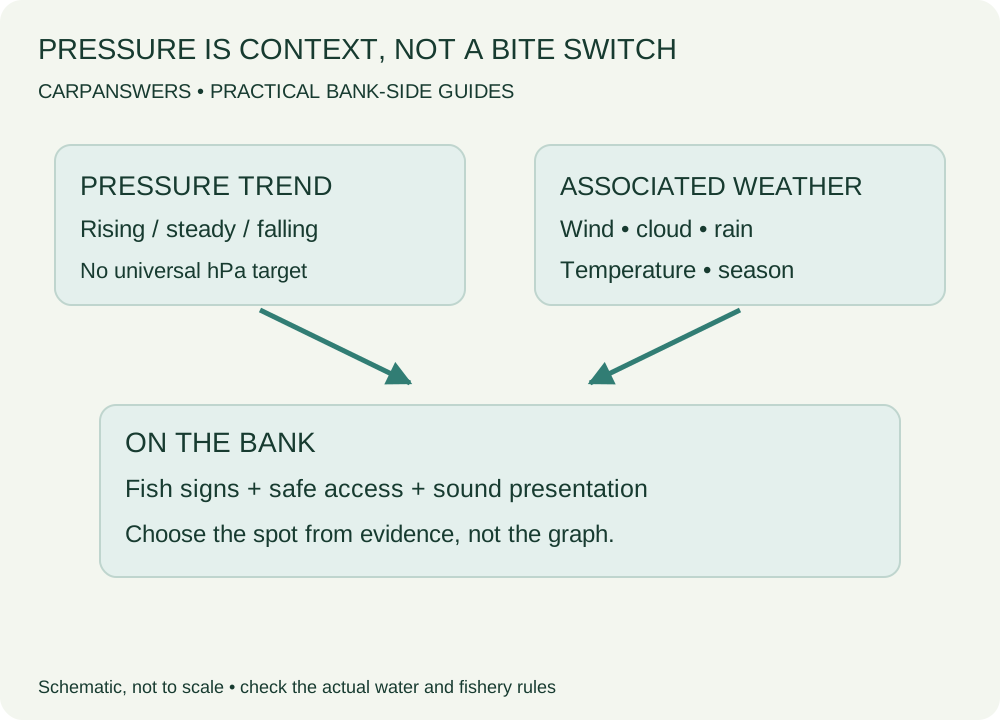
No pressure reading guarantees that carp will stop feeding, sit at a fixed depth or accept a particular rig. A settled summer afternoon and a frosty winter morning can both occur under high pressure while presenting very different fishing conditions. Treat the weather as context for observation rather than a substitute for it.
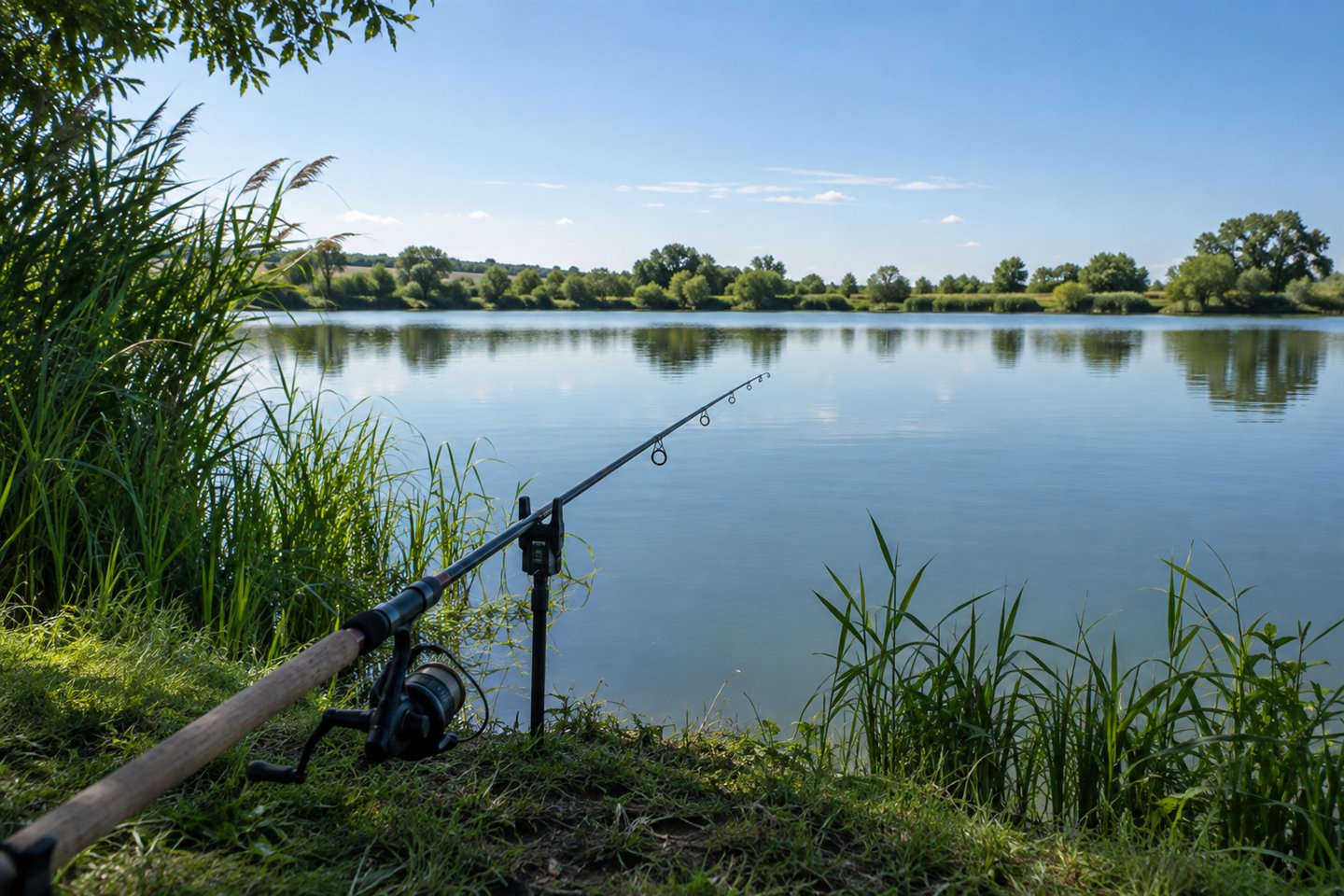
This guide focuses on bright, calm UK sessions. It gives a practical sequence for choosing a swim and a method, explains when a zig or surface approach is worth considering, and separates fishing decisions from the fish-welfare concerns that sometimes accompany prolonged hot weather.
Carp fishing in high pressure: where are the fish sitting?
Arrive with a flexible plan, look for actual carp activity and avoid introducing large quantities of bait before you understand the response. In clear water, a quiet approach and careful line placement deserve extra attention. Search different depths and shaded areas rather than assuming every fish will be on the bottom or at the surface.
If carp are visibly cruising well above the lakebed, a suitable zig or permitted surface method may be more relevant than repeatedly changing bottom-bait flavours. If fish are feeding on a clean shallow shelf, a simple bottom presentation may be exactly right. The fish's behaviour should choose the method.
Check the fishery's current notices before travelling, particularly during heat, drought or suspected oxygen problems. A closure is a reason to stop, not a challenge to find a loophole. Even without a formal closure, visibly distressed fish or unsafe banks can make observation without fishing the correct decision.
What high pressure actually tells you
The Met Office explanation of pressure systems describes high pressure as commonly associated with settled conditions and lighter winds. That broad weather pattern is useful background, but it is not a carp-feeding forecast. Look at cloud, wind direction, temperature and recent conditions as well as the pressure value.
A single reading cannot describe the water beneath it. Lake depth, shade, water clarity, inflows and the previous weather all influence what you encounter on arrival. Two waters a few miles apart can fish differently on the same afternoon because their physical features and fish populations differ.
Use the broader carp-weather guide to build that context. Then narrow the question from whether high pressure is good or bad to where a safe, convincing presentation can meet fish today. That smaller question leads to actions you can check.
Read recent weather, not just the afternoon symbol
Before leaving, compare the coming session with the preceding days. Has there been a sharp change from cloudy, windy weather to bright calm conditions, or has the lake been settled for a week? Is the day warming after a cold night, or continuing a long spell of heat? Those are different starting points.
Don't convert that comparison into a rigid rule. A cold night may make an early shallow area less appealing, but visible feeding there is stronger evidence than your expectation. Likewise, a warm forecast doesn't prove the carp will occupy every sunny margin. Use predictions to decide where to look first, then let observations revise them.
Keep the forecast tied to the exact venue and time available. A brief lunchtime session requires a different plan from an overnight stay that includes dawn. If your only fishing window is bright midday, make the best of it through mobility and careful presentation instead of spending the whole visit wishing you had arrived earlier.
Where to look for carp in sunny settled weather?
Begin with a deliberate walk where access permits. Look along reed edges, beneath the edge of shade and across shallow shelves from safe, low positions. Polarised glasses and a brimmed hat can improve visibility, although stained water or the angle of the light may still prevent you seeing much below the surface.
Watch for movement rather than just a recognisable carp outline. A brief flash, a tail pattern, a moving cloud of silt or repeated turns in the same place may reveal more than a distant roll. Take time to separate fish movement from wind ripples, drifting debris and other species.
Keep back from the skyline and avoid heavy footfalls near the edge. On a still day, the bank can feel unusually quiet, and your own activity becomes easier to notice. The watercraft guide develops this observation routine without requiring risky tree climbing or repeated exploratory casting.
Shade is a place to investigate, not a guarantee
Overhanging trees, bankside vegetation and the shaded side of an island can be worth checking in bright conditions. The important distinction is between shade you can fish safely and a snag that happens to contain carp. Visible fish under branches are not an invitation to place a bait where you can't prevent an immediate snagged run.
Look for an open approach route or a clean area near the cover instead. If carp patrol beyond the danger periodically, you may be able to intercept them with a clear line and a safe landing plan. If they remain deep inside roots or fallen timber, choose another opportunity.
Shade changes during the day. Note where its edge will move and whether your bait will remain on a plausible route. A spot that looks ideal when you set up can be fully exposed an hour later. Observing that transition is more useful than automatically recasting simply because the sun has become stronger.
Choose depth from evidence
Carp visible near the surface are showing you where they are at that moment, not necessarily where they are feeding. Watch whether they are steadily cruising, taking items from above, turning down or holding almost motionless. Each pattern suggests a different question to investigate, and none can be answered by pressure alone.
Where you can't see fish, use known depth changes and local information to make a controlled comparison. One clean shelf and one deeper open area may provide a more useful test than several rods lined up at the same depth. Keep the spread manageable and avoid crossing lines or interfering with neighbouring swims.
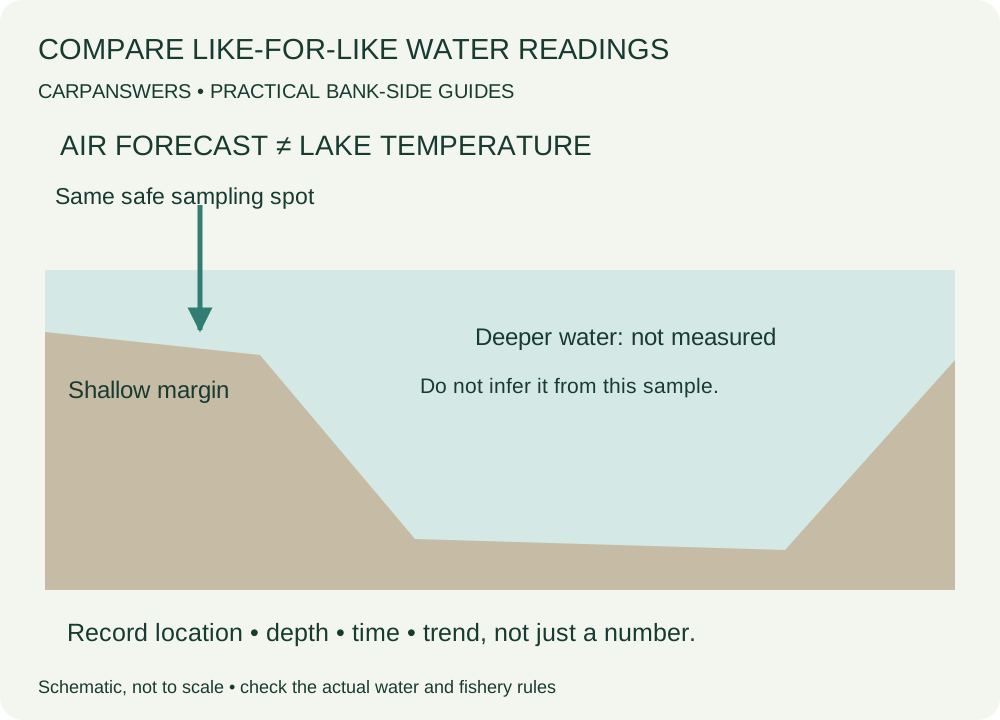
Don't assume the deepest water is automatically the safest or most oxygenated refuge in hot conditions. Dissolved oxygen varies with several processes, and depth alone doesn't measure it. The USGS guide to dissolved oxygen explains why temperature and daily biological activity matter. Leave actual water-quality assessment to the fishery's monitoring.
Bottom-bait fishing can still be the right approach
If fish are grubbing on the bottom, creating repeated silt clouds or visiting a known feeding area, there's no reason to abandon a familiar bottom presentation. Choose a clean enough place for the rig, make an accurate cast and avoid adding complexity simply because the sky is blue.
Pay attention to where the main line travels. A line cutting through a shallow route can undermine a well-placed bait, while excessive slack can reduce effective indication in unsuitable situations. Set the line for the actual distance, bottom profile and hazards rather than copying a general high-pressure recommendation.
A balanced hookbait may suit light feeding, but its buoyancy must be checked with the complete rig. Use a fresh, sharp hook and a fish-safe lead arrangement. Changes that improve a specific presentation are worthwhile; adding unfamiliar rig parts in the hope of solving the weather is not a sound plan.
Should I use zigs for carp on bright calm days?
A zig presents a buoyant hookbait above the bottom and can be useful when carp are spending time higher in the water. It is not restricted to high pressure and is not guaranteed to work whenever fish are visible. First establish the approximate water depth, check that the method is allowed and choose a setup you can cast safely.
Begin with one controlled depth choice and record it. If you change the zig length, do so deliberately and keep enough of the other setup unchanged to interpret the result. Randomly changing length, bait colour and position after every cast produces activity on the bank without necessarily improving what you learn.
The zig-rig guide explains fixed and adjustable arrangements, depth selection and casting considerations. Long hooklinks can tangle or catch vegetation behind you, so the swim needs a clear working area. Keep loose hooks away from other people and don't attempt a complex zig cast beneath overhead obstacles.
Surface fishing needs feeding evidence and wildlife control
Where venue rules allow it, surface fishing can turn visible carp into a practical opportunity. Start by observing whether they take permitted free offerings confidently. Fish that simply swim past food may not be ready for a hooked bait, and repeated casts through them can make the situation less promising.
Only introduce surface feed where birds can be kept clear. If ducks, gulls or swans approach the bait or line, stop feeding and retrieve safely before they become entangled. Never use casting or deliberately placed hookbaits to discourage wildlife. Move, pause or change method when birds make the approach unsuitable.
The complete floater-fishing guide covers controller choice and presentation. On calm water, carefully controlling the line and keeping a low profile may matter more than casting far. Choose a reachable group of fish with a safe landing route rather than pursuing every shape you can see.
Reduce disturbance before reducing tackle strength
Clear, quiet conditions encourage anglers to think about finesse. The first improvements should be accurate casting, a tidy bank, sensible line placement and fewer unnecessary disturbances. Dropping line strength or using an undersized hook is not a safe shortcut when the swim contains weed, roots or large carp.
Keep the outfit balanced for the fish and surroundings. A tackle choice that obtains a bite but leaves you unable to land the carp is not a successful adjustment. Ask the fishery about minimum line diameter and approved rigs, and choose an open swim if your current equipment or experience cannot manage the hazards.
Consider the total disturbance created while setting up. Repeated marker casts, a noisy barrow and a large baiting campaign can undo the care taken with the final rig. Where a familiar safe spot exists, a single deliberate cast may answer more than an extensive search conducted directly over visible fish.
Feed to the response you can justify
Begin modestly when you have little evidence of active feeding. A single hookbait or a small permitted offering leaves options open if fish move or fail to respond. There's no need to compensate for a difficult-looking day by creating the largest possible food signal.
If fish begin feeding confidently, increase the amount in measured stages rather than sticking stubbornly to a minimal plan. Record what was introduced and how the activity changed. The correct quantity depends on the venue, stock and session, not simply on whether the pressure is above or below a chosen threshold.
In sustained heat, excess bait is particularly hard to justify when fish are inactive or the fishery has water-quality concerns. Follow any feeding restrictions and take unused bait home. A photograph of several prepared buckets is not evidence that the water needs their contents.
Use dawn and dusk intelligently
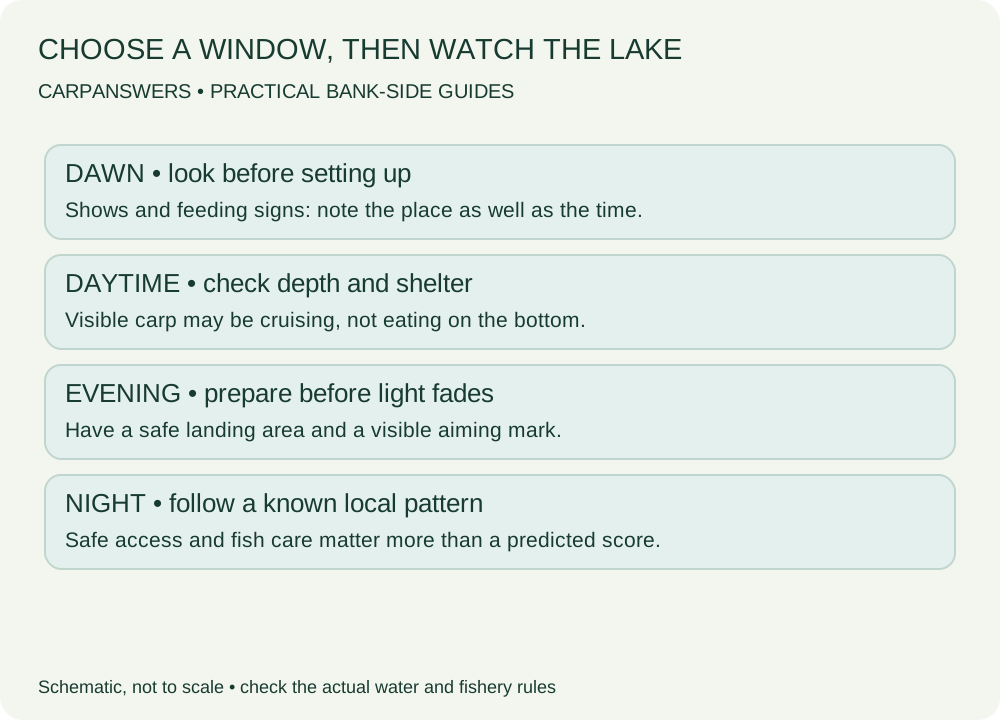
Quieter light levels can be valuable opportunities to observe movement and fish with less bank disturbance. If your schedule permits, arrive early enough to watch before the first cast or keep a safe, organised setup for the evening. These periods are opportunities to investigate, not guaranteed feeding appointments.
Don't assume dawn is automatically the safest time for fish during a hot spell. Oxygen patterns can change overnight, especially in productive waters, so fishery advice and actual fish condition remain important. An early start is a timing choice, not protection against an oxygen problem.
For an evening session, set a firm pack-up time that leaves safe light for the route home unless night fishing is both authorised and planned. Prepare the net and unhooking area before fishing, and reel in before dismantling them. A last-minute bite should not find the essential equipment already in the car.
Hot-weather stop rules
If fish are persistently gasping, gathering unusually around an inflow, struggling after capture or showing other signs of distress, stop fishing and contact the fishery manager. Don't diagnose the cause from appearance alone or move fish between waters. The owner may need to investigate water quality, disease or another problem.
Keep mats and slings out of direct sun, wet them before use and minimise handling. A hot surface can become unsuitable even when the equipment was comfortable earlier. Prepare photographs in advance if you intend to take one, but release and recovery take priority over a picture or a weight.
Protect yourself too. Take drinking water, shade, suitable clothing and any personal medication. If you feel unwell or cannot remain attentive to the rods, reel in. A bright, calm day can still include hazards, and an angler who is exhausted or dehydrated is less able to handle a fish safely.
A practical bright-day session plan
Imagine a permitted day-ticket session beginning late in the morning. The sky is clear, there is little wind and the first walk reveals carp moving between an open shelf and the edge of island shade. No fish are visibly feeding on the surface, so a floater setup is not yet the obvious first choice.
You choose a safe swim that reaches the open shelf without casting into the branches. One tested bottom presentation covers the clear route while you continue watching the upper layers. Baiting stays modest because there's no evidence that several fish are feeding heavily in the swim.
During the next review, the fish either provide a reason to adjust or they do not. Repeated midwater movement may justify one carefully set zig; clear bottom feeding may justify leaving the first rod alone. If the fishery reports a welfare concern, the plan ends. The sequence is observe, present, review and respond, not chase the barometer.
Record patterns without inventing certainty
Keep a short record of the venue, session times, visible activity, chosen depths and actual changes. Add cloud, wind and recent weather as context. Write down blank results as carefully as captures, otherwise your notes will overrepresent the memorable days and encourage rules that don't hold up.
Separate observation from interpretation. Fish cruising beside the island at noon is an observation. High pressure forced them to the surface is an explanation you have not proved. That distinction keeps your record useful when the same pressure reading produces a different result the following week.
Review several comparable sessions before changing your overall approach. One well-observed blank can identify a better timing window or reveal an unfishable feature. It doesn't establish that a whole season, wind direction or pressure band should be avoided.
Keep one dependable presentation as a reference
When several methods look possible, avoid changing every rod at once. If a familiar bottom presentation is fishing a safe, credible spot, it can remain your reference while one other permitted rod tests a different depth. That comparison gives you more information than replacing the entire setup whenever a carp appears near the surface.
Write down the reason for the test and what would make you stop it. A zig may be intended to investigate repeated midwater movement; if the hooklink returns tangled, the next task is to correct the presentation, not infer that the fish dislike its colour. A surface attempt may end because birds arrive, even when carp still look interested.
Keep the comparison within your ability to supervise and land fish safely. One rod can be enough if the swim is small or public-bank activity makes a second awkward. The reference is a way of thinking clearly, not a requirement to put more lines in the water.
At the end, record the sequence rather than only the result. A capture after cloud arrived, a depth changed and feed was added cannot confidently be assigned to any single cause. Clear notes help the next bright-day session begin with useful questions instead of another rigid weather rule.
Equipment worth considering
Useful additions for bright, calm sessions are mostly practical: polarised eyewear, a brimmed hat, reliable sun protection and a way to keep drinking water accessible. Choose glasses that fit securely and help with glare without assuming they make an unsafe vantage point acceptable. A compact notebook can preserve the observations that matter after the session.
Carry only the terminal tackle needed for methods you understand and the venue permits. If you intend to try zigs, prepare and test the relevant components at home instead of buying an unfamiliar bundle at the last minute. Suitable fish-care equipment remains essential whichever depth you fish.
A small shelter may improve comfort where allowed, but it should not block the view of the rods or encourage you to ignore them. Check dimensions, stability and venue restrictions before spending money on another piece of kit.
Fortis Bays polarised sunglasses (paid link) are useful to consider when glare prevents you observing a bright-water margin. If a permitted pop-up presentation suits the spot, Sticky Baits Signature pop-ups (paid link) offer one hookbait example to test with the rig. Neither product is a high-pressure cure, and neither justifies repeatedly casting at inactive fish. Change presentation only when the water, fish behaviour and safe fishing position support that decision.
Frequently asked questions
Is high pressure bad for carp fishing?
Not automatically. It often accompanies settled weather, but carp location and feeding depend on more than a pressure reading. Observe the actual lake, choose an appropriate depth and reduce unnecessary disturbance. A familiar safe presentation near active fish is a better starting point than assuming the session is already lost.
Should I always use zigs in high pressure?
No. Zigs are worth considering when there is a reason to present above the bottom and the method is permitted. Fish feeding on the lakebed may be better approached with a bottom bait. Choose from the behaviour and depth you can establish rather than from the weather label alone.
Does high pressure mean there is less oxygen?
You can't assess a lake's dissolved oxygen from that statement alone. Water temperature, mixing and biological activity all matter. Warm water can hold less oxygen than cooler water, but only suitable monitoring establishes the actual conditions. Follow fishery advice and stop if fish show distress rather than experimenting through a suspected problem.
Final thoughts and sources
Use the bright conditions to look for fish, then choose a method you can present safely. Change one thing at a time and keep an eye on welfare, especially in hot weather. A high-pressure forecast doesn't tell the whole story. There may still be an enjoyable session to have if you let the lake guide the plan.
Weather background was checked against the Met Office's weather guidance, and water-temperature context against USGS temperature and water information. These explain environmental processes; neither supplies a guaranteed carp-feeding formula.
For what the reading itself means, use the air-pressure explainer. Keep that weather context separate from the practical location and presentation decisions above; there is no hPa number that guarantees a feeding spell.