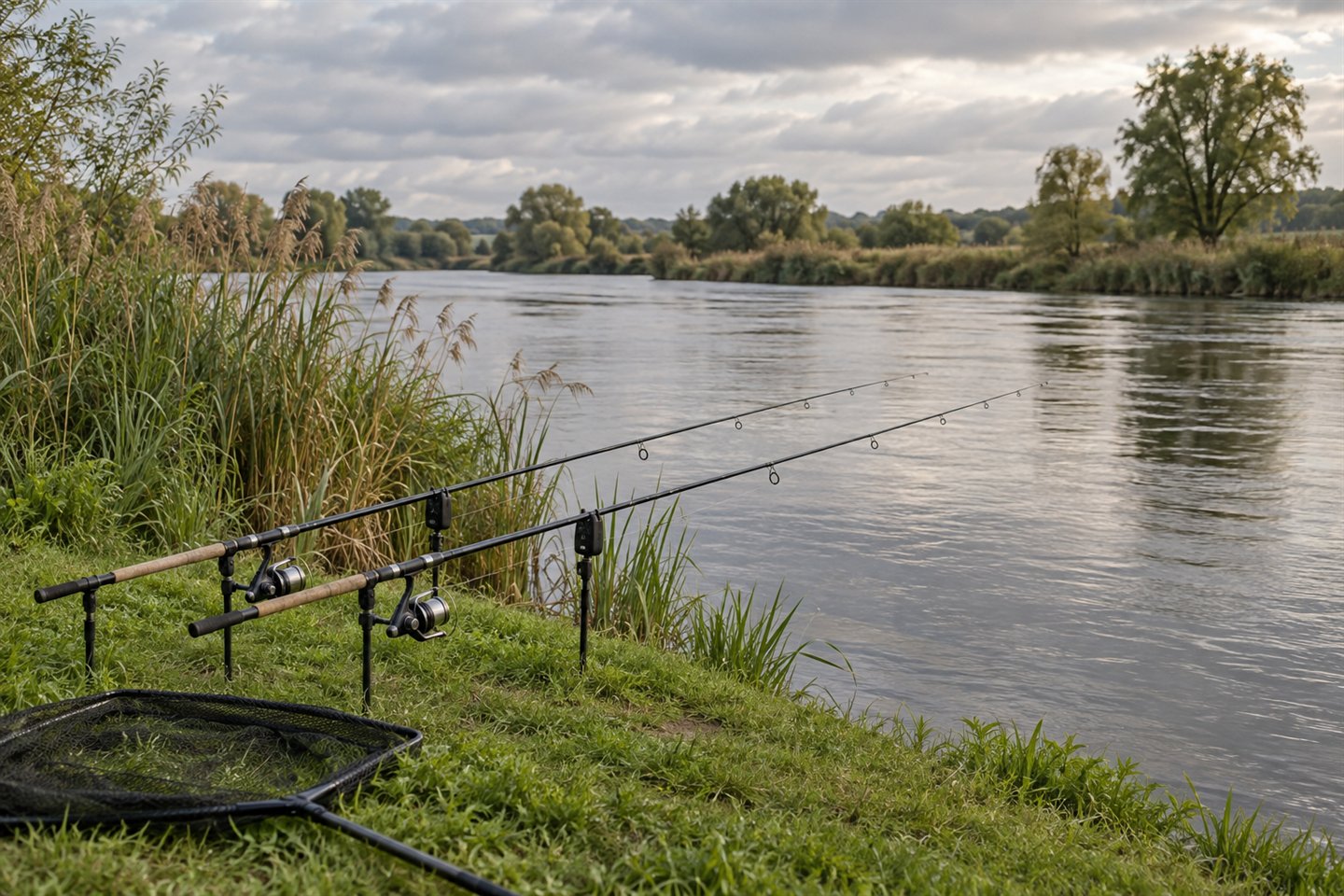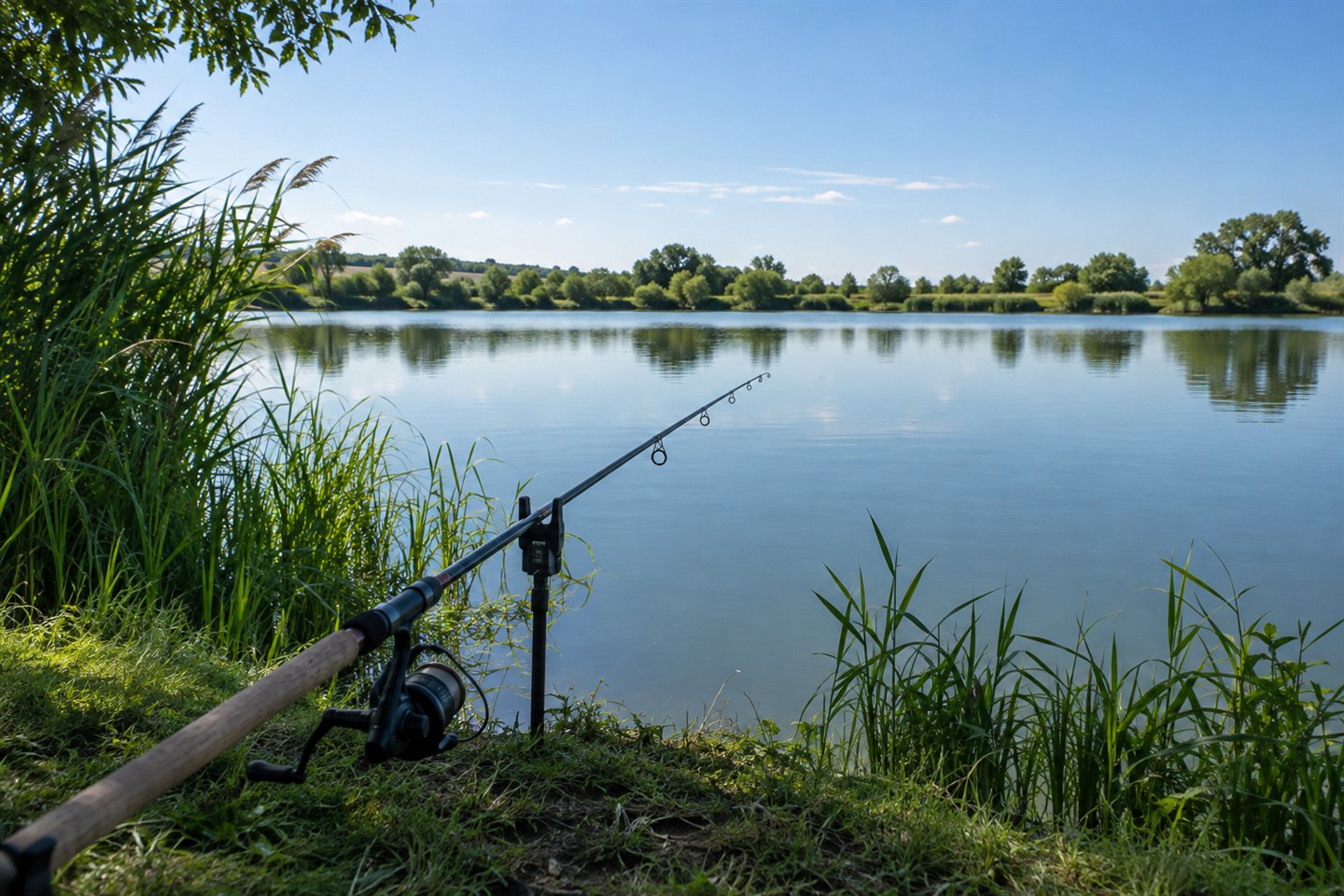

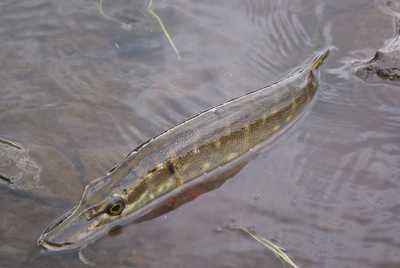
Pick a bank you can walk and a landing place you can reach before you start looking for pike. A bend with a quiet edge to the current can be worth a look. If the river is rising, there is debris coming down or the bank is slippery and steep, leave the swim and look for somewhere safer.
Read the line between fast and slow water
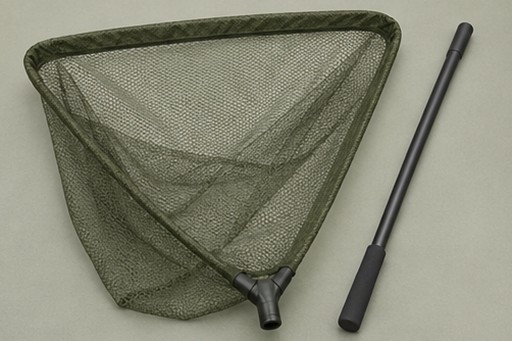
Look for sheltered water on the inside of bends, near boat or bridge features where fishing is allowed, or along an eddy with an open side. Prey fish may use quieter water near a seam. Watch for small fish or repeated movement instead of fishing the strongest part of the current by default. Check for overhead lines, branches, passing boats and a safe position for both the rod and net.
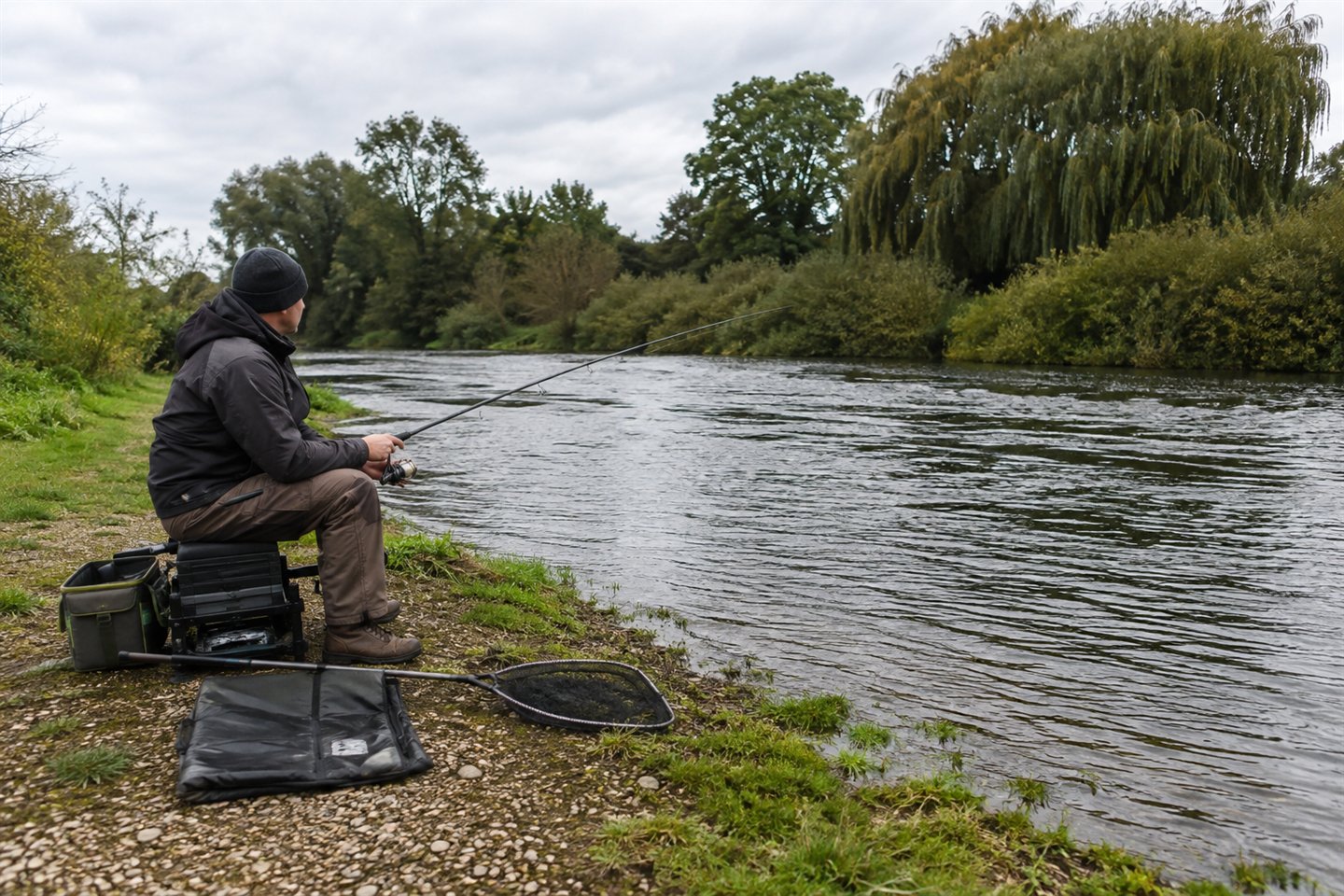
Learn the bend before you bring a rod
If you mean to fish a bend in winter, walk the same stretch when the river is low and clear. From the permitted bank, mark a bay mouth, the tail of an island or the end of a gravel shelf. Sketch which side carried the stronger flow and where there was room for the net. In coloured water that reference is more useful than assuming the deepest channel always runs down the middle.
Keep the bait under control
Start on the quiet edge as close as you can still fish effectively. Choose a permitted float or leger setup and enough weight to control the bait without continually dragging it through snags. In current, the bait can fish at a different depth and angle than it did in the margin. Check the first retrieve and try one angle at a time. If debris keeps moving the line, stop and change position.
Mackerel and lamprey were two of the deadbaits the author discussed for rivers such as the Trent and the Idle. Ask what bait the club permits and choose a portion the rod can cast comfortably with the weight you need. If the float runs into branches on every pass, shorten the drift or find a clearer seam. A bigger bait won’t make that line fishable.
Know how your gear shows a drop-back
Use appropriate wire and pike tackle. Test the indicator for line leaving the rod and for slack coming back. Watch each cast and pick up promptly if the indication changes suddenly or travels against the flow. Wind down to contact and make a controlled strike. Do not wait for another run. The Pike Anglers’ Club code of conduct covers safe wire traces, bite response and handling kit.
On a tidal reach, the slack you fished last time may disappear as the tide turns. Note the tide stage as well as the time of any take. Keep the exit route in sight and leave while it is still dry and clear. Rising or flooded water is a reason to reassess the bank before you put a bait out.
Move from a safe swim to another safe swim
Note which types of water you have covered before trying a different feature. Bring rods in and secure hooks before walking. Check the local rules and any close season at GOV.UK for England and Wales, and check the exact beat or fishery for access, bait and tide limits. If you cannot safely bring a fish into slack water for the net, fish another peg.