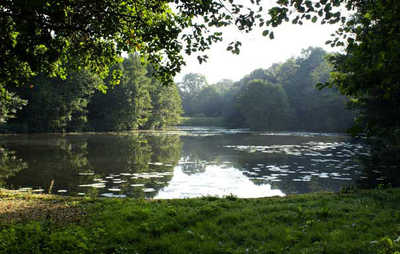
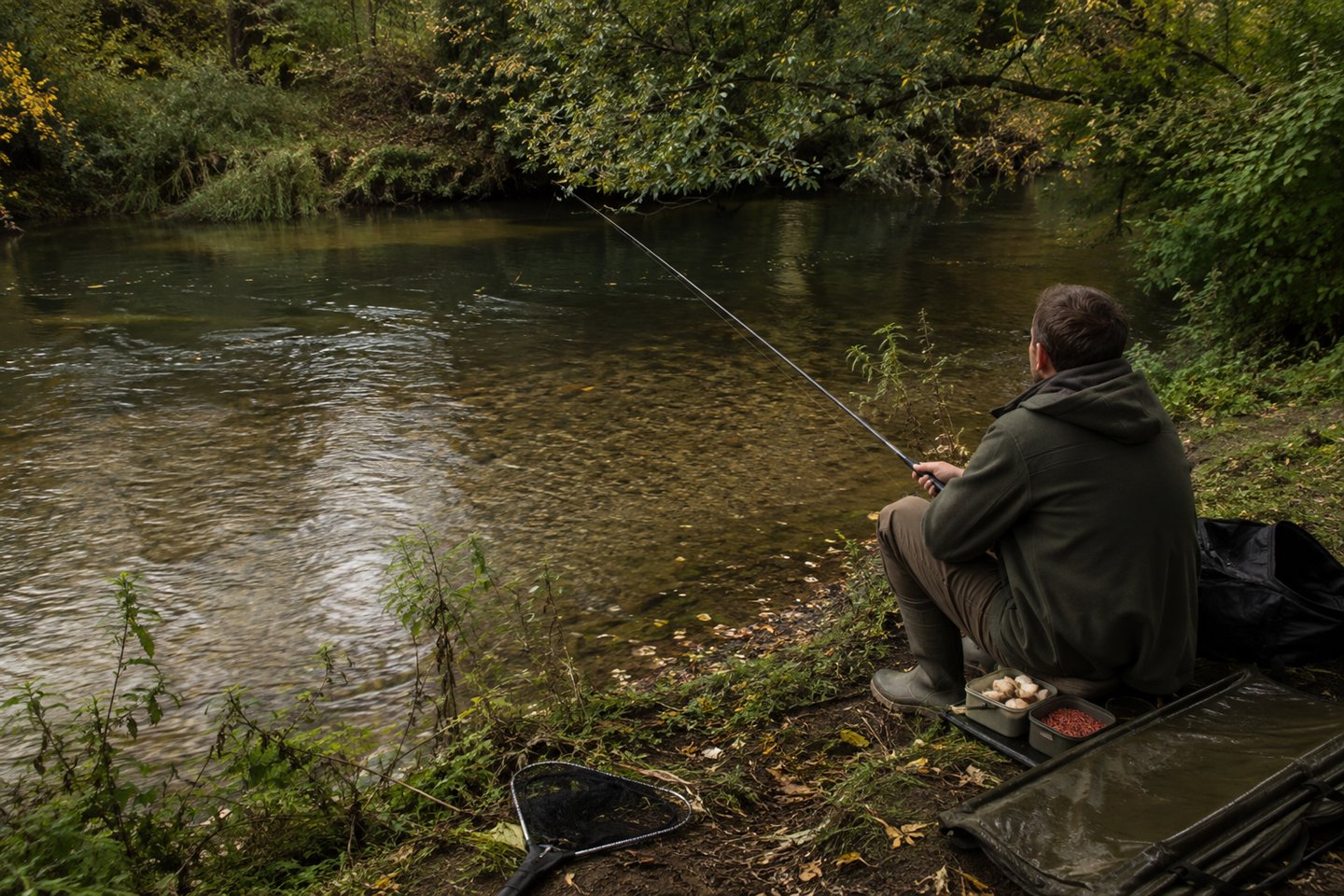
For chub fishing, a quiet approach can be worth more than a bag full of tackle. Look for a manageable swim, keep disturbance down and choose bait you can present in the flow. Here's how to put those pieces together.
A simple first chub session uses a float or light feeder on a line that can be landed from firm ground. Bread, maggots, casters and worms are useful where permitted. Feed sparingly, keep tackle balanced for a strong first run and leave enough open water between the hookbait and branches, roots, rafts or piling.
We'll use straightforward coarse-fishing methods for chub. Check the river season, local byelaws and club rules before your trip. Pay particular attention in hot weather: low oxygen can make recovery harder after a fight, so follow fishery advice and stop if conditions put fish at risk.
Chub fishing for beginners: where should you look first?
Choose a legal, accessible river stretch with a known chub population and stable conditions. Walk quietly and look for steady glides, current seams, deeper bends and the controllable edges of cover. Set the landing net before fishing and use a rod, line, hooklength and hook capable of turning the largest likely fish away from danger.
Loose-feed a few maggots or casters through a float line, trot bread or worm through a glide, or use a small running feeder with a suitable hookbait near the bottom. Give each swim a measured test. If the only presentation requires casting beneath an obstruction from which a fish cannot be extracted, don't fish it.
What makes a chub distinctive?
Chub are robust, blunt-headed coarse fish with a broad mouth and dusky silver to bronze body. Larger fish have a substantial rounded shape. Small chub can be confused with dace, which are generally more slender, so identification should use several structural features rather than colour alone.
The broad mouth reflects an opportunistic diet that can include aquatic insects, worms, molluscs, plant material and small fish. For the angler, this means several baits can work; it doesn't establish one “natural” bait for every river. Availability, fishery rules and presentation narrow the choice.
The Canal & River Trust notes that chub are typical river fish but thrive in some canals. They often associate with overhanging vegetation and roots. Those features should be approached from a landing plan, because the same cover that offers shelter can take broken tackle.
Licence, permission and close season
In England and Wales, anglers aged 13 or over need the appropriate rod fishing licence. Club membership, a day ticket or landowner permission is separate. A public right of way beside a river doesn't include a right to cast from the adjoining bank.
The statutory coarse fishing close season on rivers, streams and drains runs from 15 March through 15 June inclusive. Some canals and designated stillwaters are also covered, and clubs can impose additional restrictions. Check the exact water in the regional byelaws and current club book.
The rod licence guide offers a starting explanation. Scotland and Northern Ireland operate different permission and licensing arrangements, so advice for an English club river should not be transferred across the UK.
Check river conditions before leaving
Review rainfall throughout the catchment, current level, forecast, daylight and access notices. A chub swim that was gentle in summer can become fast and inaccessible after upstream rain. Coloured water may encourage feeding, but a rapidly rising river carrying debris is a safety problem.
Set a point at which the trip is postponed. Flood warnings, lightning, extreme heat, blocked access or a level beyond personal experience are enough. Don't travel with the expectation that a heavier feeder can solve conditions that remove a safe margin.
Tell somebody the venue and return time, keep a charged phone protected from water and wear footwear suitable for the bank. If the safe landing area is below a steep drop or requires entering unknown water, choose another swim.
Approach quietly
Chub can use very close cover, including undercut banks and near-side rafts. Heavy footsteps, a silhouette on a high bank and tackle dropped beside the water may move them before the rig is ready. Stop back, observe and assemble small items away from the edge.
Use vegetation as visual cover without damaging it or creating a hazardous casting tunnel. Keep the body low where safe and avoid shining light across clear water. Quiet approach is not permission to crawl onto unstable edges or hide where other river users cannot see an obstruction.
Feed can reveal fish before a hook is introduced. A few floating crumbs or loose maggots, where legal and safe for wildlife, may show movement or a flash. Don't encourage birds, and stop immediately when ducks or swans enter the feeding line.
Where should a beginner look for chub in a river?
Overhanging trees, root systems, bridge shade, rafts, weed edges and undercut banks are familiar chub features. Also inspect smooth glides, the tail of faster water, deeper outside bends and current creases. Chub need not be hidden beneath the most dangerous object in the river.
A steady seam lets fish hold in slower water and intercept food moving beside them. Present on the accessible side and feed so items pass through the chosen line. This can draw chub away from roots while keeping the rig close to a natural route.
In winter, deeper, slower water near cover can hold groups of fish. In summer, oxygenated flow and shade may matter, but water temperature sets a welfare limit. Seasonal tendencies are starting points; recent sightings and catches from the controlling club are stronger evidence.
The river coarse fishing beginner guide explains creases, glides, flow and safe access in more detail. Use that framework before selecting a chub-specific bait.
Don't cast into an unlandable snag
Identify where a hooked chub can run and where the angler can move. A fish beside roots needs immediate controlled pressure and open water in which to turn. If the rod angle, bank or line strength cannot create that route, move the hookbait farther away.
Stay beside the rod and keep the butt secure. Chub bites on feeder tackle can be forceful. A rod left loosely on one support can enter the river before an alarm or tip movement becomes useful.
After any contact with a snag, inspect the main line, hooklength, hook and knots. Abrasion can be difficult to see. Cut back beyond damaged line rather than trusting it for the next fish.
Float or feeder fishing for chub in a small river?
Float fishing suits an even glide where the bait can travel through a feeding lane. Feeder fishing suits deeper or steadier water when a controlled bottom presentation is needed. Free-lining can be effective at very short range, but only where bait weight, line control and bite detection are adequate.
A beginner should not carry all three through steep vegetation. Choose the method from depth, pace and access. The stick-float beginner guide covers trotting, while the feeder beginner guide covers a safe running setup.
Give a promising swim a defined period, then move within the permitted stretch if practical. Chub often respond early to a well-presented bait. Repeated heavy casting and feeding into a quiet swim can reduce the value of a mobile approach.
Rod and reel for float fishing
A float rod with enough length for line control and a forgiving action can trot small baits while handling a better chub. A fixed-spool reel is accessible and versatile; a centrepin offers direct trotting control but adds a skill that is not required for a first session.
Main line must resist the river's abrasion and turn a fish from cover. A controlled lighter hooklength may protect the main setup and refine presentation, but it should not be selected from a fixed “chub strength” without considering snags and fish size.
The Hunter Pro 10ft carbon float rod-and-reel combo (paid link) is one current option. Check its length and action. Check casting guidance, line rating, reel capacity and warranty; a product title mentioning chub doesn't confirm suitability for a specific snaggy swim.
Rod and reel for feeder fishing
A feeder rod must cast the full feeder comfortably and retain enough power to control a fish. Select a quivertip that holds a readable curve against current without being pulled solid. The reel clutch should release line smoothly only when the fish cannot be safely held.
Secure the rod on stable supports and keep the hand close. Point the rod to manage line bow while leaving a working bend in the tip. If weed and debris continually load the line, retrieve and reconsider rather than waiting for a false bite to become a breakage.
Don't use a fixed heavy feeder because the target is strong. A free-running arrangement that complies with local rules should remain simple and tested. The fish's power calls for balanced tackle, not a tether.
Hooks and hooklengths
Hook pattern and size follow the bait. Several maggots need a smaller presentation than a large bread flake or worm, but the point and gape must remain clear. Follow venue rules on barbs and maximum size, and replace hooks that strike gravel or open under pressure.
Long hooklengths can present naturally in flow, while shorter ones may improve bite registration. Begin with a moderate arrangement and change only when bite evidence supports it. A hooklength that tangles every cast is not subtle.
Pull-test knots and inspect the first metre of main line regularly. Chub often occupy abrasive areas. Good line care reduces the chance that an old scrape becomes trailing tackle on a fish.
Landing net and unhooking equipment
A large chub needs a soft knotless landing net and a padded wet mat. Position the net before fishing and ensure its handle reaches the margin from firm ground. Don't plan to beach a fish on stones or step into unfamiliar flow.
A search for a chub fishing landing net and unhooking mat (paid link) shows folding and fixed-frame options. Compare knotless mesh, head size, spreader strength, handle reach and padding. Local net-drying or supplied-net rules still control use.
Keep forceps or a suitable disgorger beside the mat. A camera and scales are optional; fish care is not. If a photograph cannot be prepared before lifting the fish, return it rather than extending handling.
Bread for chub
Bread can be used as floating crust, flake, paste-like compressed crumb or feed, subject to rules and wildlife. Flake pinched around the shank leaves a soft irregular bait, while crust can present at the surface only when birds and line safety allow.
Liquidised bread delivered sparingly through a feeder or as small balls can create fine attraction. Too much can travel, fill fish or draw them away from the hookbait. Test where the crumb settles in current.
Protect bread from rain and crushing, and change a hookbait that has become waterlogged. White colour is visible in coloured water, but visibility alone doesn't make it safe to fish against a snag.
Maggots and casters
Loose-fed maggots or casters can bring chub into a float line and also attract dace and roach. Feed a few regularly so the bait travels naturally. If small fish intercept everything, try a larger hookbait or reduced feeding rather than adding handfuls.
On a feeder, maggots can be included in a suitable bait mix or delivered through an appropriate feeder. Check local rules, particularly for live bait quantities. Keep containers ventilated and shaded, and don't release leftovers into the river.
Worm, meat, cheese and pellets
Worm is a useful natural bait that can be presented whole or in sections according to hook size. Chopped worm can add attraction in a feeder. Avoid burying the hook point, and store live bait responsibly.
Meat, cheese and pellets can all catch chub where permitted, but they deliver a richer, larger mouthful. Cut or prepare a size the hook can present and the fish can take cleanly. Some venues restrict meat, pellet brands or quantities, so check before packing.
The existing coarse bait guide compares common choices. Start with two baits suited to the method rather than carrying every traditional chub option.
Feed a float line
Introduce small loose baits upstream so they sink through the intended catching point. The faster and deeper the water, the farther they may travel. Begin close enough to see where the float and feed align.
Cast or lower above the line, straighten the rig and trot at a natural or deliberately checked pace. Hold back briefly to vary presentation, but don't drag the float sideways across currents. A positive bite can be a dip, stop, lift or acceleration.
Feed can draw chub from cover. Move the catching point gradually towards open water while maintaining the stream of bait. This is safer than placing the first cast tight under branches and hoping tackle strength solves the landing.
Use a running feeder
Choose a cage, open-end or maggot feeder whose filled weight suits the rod. It should settle predictably and release bait in a useful period. If it rolls towards snags, shorten the cast, change shape or choose steadier water.
Cast to a far-bank marker, feather the feeder and tighten gently. A search for a river cage and open-end feeders (paid link) shows cages, open-end feeders and attachments. Check actual weights, running compatibility and rod limits rather than buying the largest assortment.
Chub can give a decisive pull, but liners, debris and feeder movement also affect the tip. Establish a stable curve and stay ready. Lift smoothly into repeated or sustained movement while keeping the rod away from branches.
Playing a chub
Apply controlled side strain to guide the fish towards open water while keeping the rod bent. Don't lock the reel clutch completely or allow unchecked line. The first seconds near cover matter, so the tackle and body position should have been planned before the bite.
Once clear, use steady pressure and let the rod absorb lunges. Avoid exhausting the fish on overly fine tackle. Bring it upstream of the net where possible and allow the current to guide it over submerged mesh.
Support the net frame when drawing a large fish close. Never lift it vertically by an extended handle or line. Keep the chub in the water while the unhooking area is confirmed ready.
Unhook and return chub
Wet the mat and hands, keep the fish low and support its full body. Remove the hook with forceps or a disgorger, avoiding eyes and gills. Chub can move powerfully on the bank, so maintain gentle control without squeezing.
The coarse fish care guide gives the full landing and release sequence. Return a river chub facing upstream, letting water pass naturally through the front of its gills. Don't push it backwards and forwards.
Release only when the fish maintains balance and swims strongly. In warm conditions, omit weighing and photography if they delay recovery. A capture is complete only when the fish leaves under its own control.
Hot-weather chub welfare
As water warms, its capacity to hold dissolved oxygen falls. Large hard-fighting fish use oxygen during the fight and may recover slowly. Current Environment Agency-backed Angling Trust advice says that when river water is above 21°C, anglers should consider not fishing for large chub, barbel and pike.
This figure is a caution threshold, not a guarantee below it. Sudden warming, low flow, algae and local conditions can create risk earlier. Use a water thermometer, follow fishery instructions and stop if fish show distress or don't recover promptly.
A cooler time of day doesn't erase a high water temperature. Measure water, not air, and never continue merely because chub appear concentrated in oxygenated water. Their presence may be a refuge response.
Chub through the seasons
After the legal river season opens, chub may use faster summer lines, cover and shade. Avoid spawning activity and treat warm water cautiously. In autumn, stable flow and falling light can make both float and feeder productive.
Winter chub often gather in deeper, steadier swims and may feed during limited windows. Bread, maggots and worm can all work with restrained feed. Mobile fishing between a few pre-checked swims is often more useful than heavy bait in one place.
Flooded or highly coloured water may move chub towards slacker margins, but safe banks and exits become the main concern. Don't step closer to a crumbling edge because fish may be near.
Canal chub
Some canals, particularly river-connected waters, hold chub near cover, bridge shade and deeper channels. Permission, close-season status and navigation rules vary. Retrieve the rig before a boat reaches the line and never fish against a moored craft without a safe clear route.
Float, pole and feeder methods can work, but towpath space limits tackle. Choose a compact setup and keep sections away from walkers and cyclists. Feed can draw fish from far-side cover towards a safer open line.
Common beginner mistakes
The most serious mistake is placing a bait where a fish cannot be landed. Others include leaving the rod unattended, using line too light for roots, feeding without accounting for current and moving noisily over a close fish.
Changing baits constantly is another distraction. Chub may eat many things, but a well-presented simple bait in an occupied swim is the goal. Give each approach enough time to produce evidence.
Finally, don't treat warm weather as an automatic summer opportunity. Check water temperature and recovery conditions. Choosing not to fish is part of competent chub fishing.
A simple half-day plan
Select three safe swims within the permitted length: an open glide, a crease near cover and a deeper steady area. Begin with the one best suited to the chosen method, feed lightly and fish it quietly for a defined period.
If signs or bites appear, stay and refine depth or feed. If not, retrieve all tackle, check the peg and move compactly. Don't leave bait or a rod operating while inspecting another swim.
Finish before conditions or light reduce safe access. Record river level, temperature, productive feature, bait and time. Those observations create a better next session than copying a catch made under different flow.
Frequently asked questions
What bait should I use for river chub fishing?
Bread, maggots, casters and worms are all useful where permitted. Choose one that fits the method and can be fed accurately. Location, quiet approach and a safe presentation matter more than a universal favourite.
Should chub be fished for beside snags?
Fish the controllable edge, not an obstruction from which the fish cannot be landed. Use feed to create separation, balanced tackle and immediate attendance. If no safe buffer exists, choose another swim.
When is it too warm to fish for chub?
Current Angling Trust advice backed by the Environment Agency says to consider not fishing for large chub when river water exceeds 21°C. Local fishery limits, fish distress or low flow may require stopping earlier.
Final thoughts
Look for a manageable feature and plan how you'll land a fish before putting a bait near it. Approach quietly, feed sparingly and use balanced tackle that lets you guide a chub into open water. A simple session done well is a much better introduction than testing your tackle against the thickest snag on the stretch.
Sources and further reading
Canal & River Trust: chub species guide covers identification, habitat, diet and common baits.
GOV.UK: when and where freshwater fishing is permitted sets out the river coarse close season.
Angling Trust: fishing during hot weather publishes current Environment Agency Fisheries guidance, including the 21°C large-chub caution.
Angling Trust: Best Practice Guide to Freshwater Angling provides handling, recovery, safety and biosecurity guidance.